AI Adoption Surges and Exposes the Real Enterprise Problem
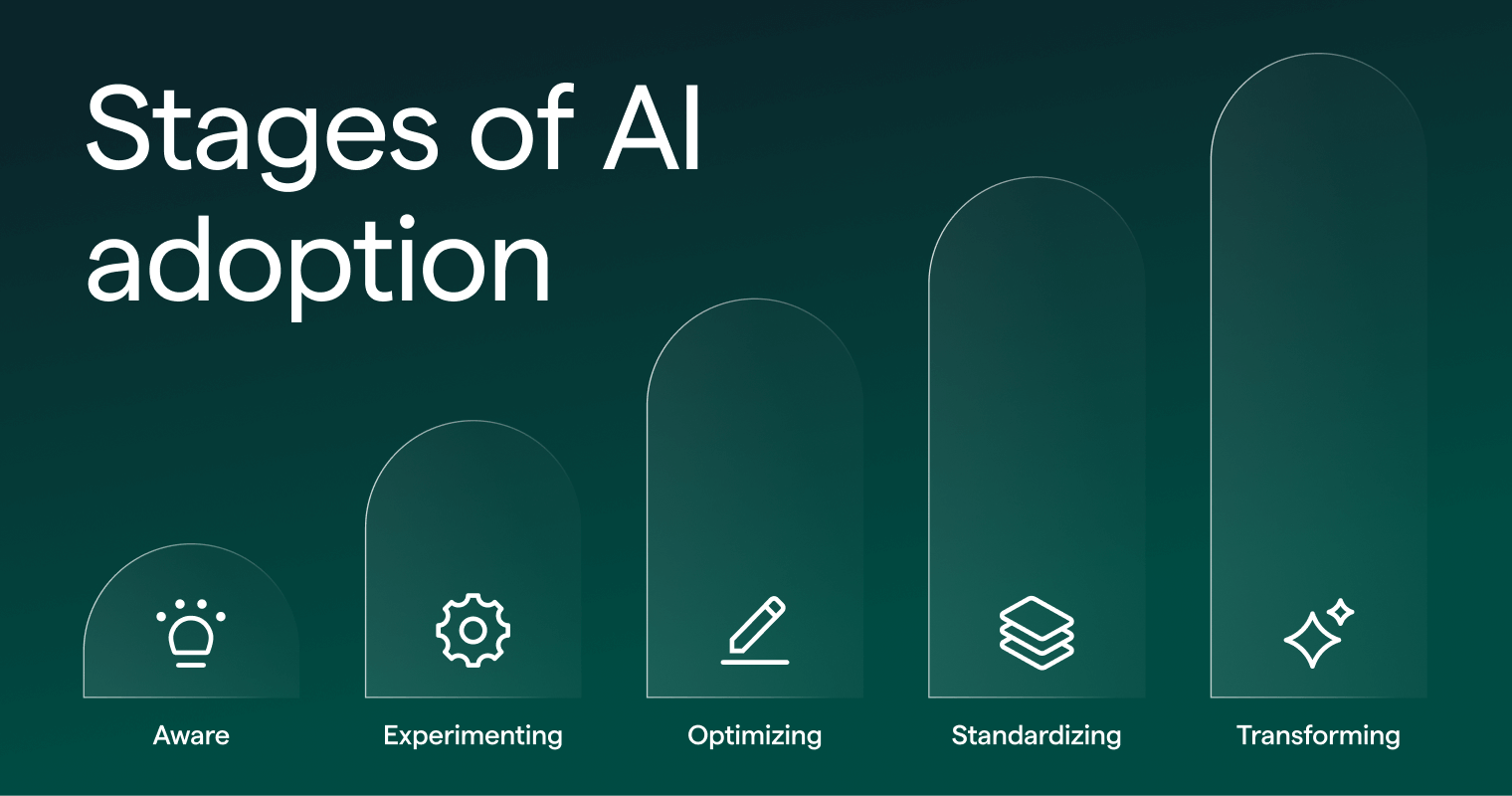
AI adoption is moving faster than most enterprises can govern it, and that gap is becoming the real story. The hype cycle has already done its job: executives want AI everywhere, employees are experimenting whether leadership approves or not, and vendors are racing to repackage old software with a new machine learning veneer. But the pressure point is no longer whether organizations should adopt AI. It is whether they can do it without creating security holes, compliance headaches, and expensive internal chaos.
That tension is what makes the current wave of enterprise AI adoption so consequential. The companies that win will not be the ones that simply buy the most tools. They will be the ones that treat AI as a workflow redesign problem, not a novelty purchase. And that requires discipline, not just enthusiasm.
- AI adoption is outpacing internal governance, creating risk for security, compliance, and productivity.
- The biggest challenge is workflow fit, not model quality alone.
- Enterprises need measurable use cases before scaling deployments.
- Human oversight still matters because AI outputs can be wrong, biased, or context-blind.
- The next phase of competition is operational: integration, training, and accountability.
AI adoption is now a management problem
For years, the conversation around AI focused on capability: how smart the models were, how much data they could ingest, and how close they were getting to human-level performance. That framing is now too narrow. The hard part is not the demo. It is the deployment.
When organizations roll out AI without adjusting process design, they often create more friction than value. Employees get inconsistent outputs, managers struggle to interpret results, and compliance teams are left chasing shadow usage across departments. A tool that should save time can end up adding another layer of review.
The shift here is subtle but important: enterprise leaders are no longer asking, “Can AI do this task?” They are asking, “Can AI do this task reliably, securely, and at scale?” That is a much tougher question, and it is why so many pilots stall before reaching meaningful ROI.
Why enterprise AI adoption keeps stalling
There is a familiar pattern in technology cycles. Early excitement produces rapid experimentation, then reality sets in. With enterprise AI adoption, that reality includes fragmented data, unclear accountability, and an overestimation of what automation can safely replace.
Three bottlenecks show up again and again:
1. Data quality is still the foundation
No model can compensate for messy, contradictory, or incomplete data. If customer records are inconsistent, if internal documentation is outdated, or if business logic lives in spreadsheets no one trusts, AI will simply surface those weaknesses faster. In other words, bad data does not disappear when you add machine learning. It becomes more visible.
2. Integration is harder than procurement
Buying an AI product is easy compared with stitching it into CRM, ERP, support systems, and internal knowledge bases. This is where many pilots collapse. A model may be accurate in isolation but useless if it cannot access the right context at the right time.
3. Trust is a workflow requirement
Employees need to know when to trust AI and when to verify it. If the system is perceived as opaque or error-prone, adoption slows. If it is too permissive, leaders worry about hallucinations, security leaks, and poor decisions made too quickly. Trust must be engineered into the process, not assumed.
AI rarely fails because it is not powerful enough. It fails because organizations ask it to operate inside broken processes and then expect magic.
What smart companies are doing differently
The strongest AI programs are not starting with broad promises. They are starting with narrow, repeatable use cases that have clear business value. That usually means a process with measurable inputs, known failure modes, and a human reviewer in the loop.
Think customer support triage, document summarization, sales call analysis, or internal search. These are not glamorous use cases, but they are practical. They let teams test output quality, estimate time saved, and understand how the system behaves under real-world pressure.
A useful pattern is to define a small set of rules before rollout:
- Choose one process with obvious bottlenecks.
- Set success metrics such as turnaround time, error rate, or resolution speed.
- Require human review for high-stakes decisions.
- Audit outputs regularly for bias, drift, and compliance issues.
- Train employees on what the system can and cannot do.
This is not just good governance. It is how companies avoid the classic mistake of scaling a tool before they understand its behavior.
AI adoption and the hidden cost of speed
There is a temptation to treat rapid deployment as proof of innovation. That is a dangerous assumption. Speed can be a competitive advantage, but only if it is paired with control. Otherwise, faster adoption simply means faster mistakes.
One of the biggest hidden costs is operational drift. A team starts using an AI assistant to draft emails, then another team uses it for reporting, then a third uses it to summarize legal language. Soon there is no consistent standard for review, no common policy on data handling, and no clear ownership when something goes wrong.
This is why AI governance matters so much. Governance sounds bureaucratic, but in practice it protects momentum. It gives organizations a way to expand without losing confidence in the output. That matters even more in regulated sectors where mistakes are not just embarrassing, they are expensive.
The security angle cannot be ignored
Every new AI workflow is also a new potential exposure point. Sensitive data can leak through prompts, output can reveal internal logic, and third-party tools can create vendor risk. Companies that treat AI like a standard software rollout often discover too late that it behaves more like an access-layer transformation.
Pro tip: if a tool can access private data, it should be treated like a privileged system. That means logging, access controls, and explicit retention policies should be in place before broad rollout, not after.
Why this matters for the next phase of competition
The market is moving from AI experimentation to AI execution. That changes the competitive landscape. The winners will not necessarily be the first to announce a strategy or the loudest to tout generative features. They will be the ones who embed AI into everyday operations in ways that are measurable, repeatable, and defensible.
This also changes how vendors should be evaluated. Buyers should be skeptical of platforms that lead with vague productivity claims but cannot explain model governance, audit trails, or integration depth. The right question is not whether a product can generate output. It is whether it can generate value without forcing the organization to rebuild itself around the tool.
AI is becoming less of a feature and more of a management layer. That is where the real power – and the real risk – lives.
How to build a stronger AI adoption strategy
A durable enterprise AI adoption strategy should look less like a moonshot and more like an operating plan. The goal is not blanket automation. The goal is leverage.
Start with these steps:
- Map high-friction workflows where time is lost on repetitive tasks.
- Classify data sensitivity before connecting AI to internal systems.
- Define human-in-the-loop checkpoints for all critical outputs.
- Create usage policies for employees and vendors.
- Measure business impact after deployment, not just activity levels.
For technical teams, that may involve simple guardrails such as prompt templates, approval gates, and output validation rules. For example, a support team might use a structured prompt like Summarize the case, identify urgency, and flag missing information. That is far better than giving a general-purpose assistant a vague task and hoping for consistency.
Pro tip for leaders
Do not confuse enthusiasm with readiness. If your organization has not defined ownership for AI incidents, data handling, and model review, you are not ready to scale. A pilot can be messy. A platform cannot.
The future of enterprise AI will be less flashy and more useful
The next phase of AI will likely be less about jaw-dropping demos and more about embedded utility. Expect tighter integration inside core systems, stronger governance features, and more emphasis on domain-specific models that understand business context better than generic copilots.
That future will also expose a divide. Some organizations will use AI to deepen capabilities, speed up decisions, and reduce repetitive work. Others will deploy it superficially, collect little value, and wonder why the technology never lived up to the promise.
The difference will come down to execution. AI adoption is no longer an innovation trophy. It is an operational test. Companies that understand that will move faster in the long run because they are building on stable ground.
And that is the part many leaders still miss: the most impressive AI strategy is not the one with the boldest slide deck. It is the one that quietly improves the business every day.
The information provided in this article is for general informational purposes only. While we strive for accuracy, we make no guarantees about the completeness or reliability of the content. Always verify important information through official or multiple sources before making decisions.