AI Flags Pancreatic Cancer Earlier
AI Flags Pancreatic Cancer Earlier
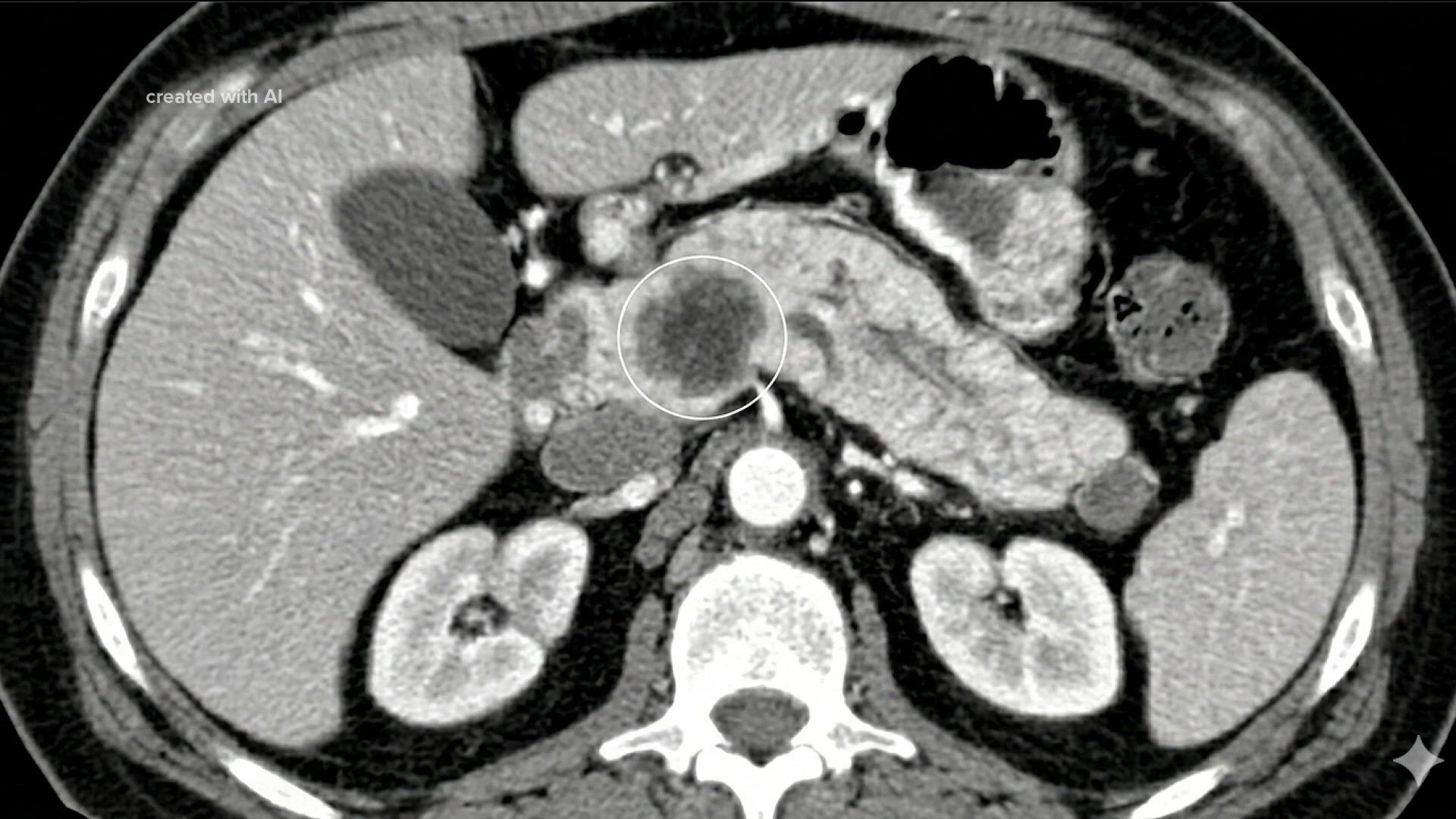
AI pancreatic cancer detection is chasing one of medicine’s hardest problems: finding a lethal disease before it announces itself too late. Pancreatic cancer is notorious for vague symptoms, fast progression, and grim survival odds once a tumor is finally visible on a scan. That is why fresh reporting on an AI system that may spot early warning signs before tumors even develop feels bigger than a lab curiosity. It hints at a shift from reactive oncology to predictive surveillance.
For clinicians, the promise is straightforward but profound: use patterns hidden inside routine medical data to identify high-risk patients earlier. For patients, the stakes are existential. Earlier intervention can mean more treatment options, more surgical opportunities, and better odds in a cancer category that has long punished delays. The hard part, as always, is separating exciting signal from hype and proving the model can work in messy, real clinical settings.
- AI pancreatic cancer detection could identify risk before a tumor is visible, potentially reshaping screening timelines.
- Pancreatic cancer is especially hard to catch early because symptoms are subtle and often appear late.
- The biggest opportunity is not replacing doctors but helping them prioritize who needs closer monitoring.
- Real-world validation, bias testing, and workflow integration will decide whether this becomes clinical reality.
Why AI pancreatic cancer detection matters now
Pancreatic cancer remains one of the most feared diagnoses in oncology for a simple reason: it is often discovered after the disease has already spread or become surgically difficult to treat. Unlike cancers with established, broad screening pathways, pancreatic cancer has never had an easy frontline detection playbook for the general population.
That gap is exactly where AI has become so compelling. Modern models can sift through imaging, lab values, electronic health records, and longitudinal health patterns at a scale no human team can match. The ambition is not magical diagnosis. It is pattern recognition: finding weak but meaningful signals earlier than conventional practice can.
The real breakthrough is not that a machine can “see” cancer. It is that a machine may detect the probability of cancer before the disease is obvious enough for standard workflows to catch it.
That distinction matters. If an AI system can identify patients whose pancreas is changing in subtle, precancerous, or early-risk ways, clinicians can escalate follow-up sooner. That may mean additional imaging, specialist referrals, genetic workups, or tighter longitudinal monitoring.
The Deep Dive into what the model is actually promising
The most important editorial point here is restraint. Early reports about medical AI often leap from pilot results to implied clinical transformation. The smarter reading is more nuanced. The system described is promising because it may find signs associated with future pancreatic cancer before tumors develop, not because it has already solved pancreatic cancer screening at scale.
It is looking for patterns before obvious disease
Traditional diagnosis often depends on visible abnormalities: a mass, obstructive changes, suspicious lesions, or symptoms severe enough to trigger a workup. An AI model can be trained to detect far subtler patterns in data that humans may overlook or discount. These may include imaging features, tissue changes, metabolic hints, or combinations of risk indicators spread across time.
That is the key advantage of machine learning in medicine. A radiologist or clinician can excel at interpreting visible findings, but a model can aggregate thousands or millions of examples to uncover associations too granular for routine practice.
It could change who gets monitored more aggressively
If validated, this kind of system would likely be most useful as a risk stratification tool. In plain English, it could help decide who needs extra attention. That matters because universal pancreatic cancer screening is not practical today. The disease is relatively uncommon compared with breast, colon, or lung cancer, and broad screening risks too many false positives, unnecessary procedures, and cost burdens.
A smarter model could narrow the field. Instead of screening everyone the same way, health systems could focus on people whose records or scans suggest elevated risk. That is a much more realistic path to adoption.
Earlier does not always mean actionable
This is the uncomfortable but necessary caveat. Detecting risk earlier is only useful if clinicians know what to do next. A flag from an algorithm must lead to a care pathway: additional scans, biomarker testing, specialist consultation, or enrollment in surveillance programs. Without that infrastructure, AI becomes a notification without a plan.
That is where many healthcare AI stories hit friction. Building a model is hard. Building a model that fits into reimbursement, staffing, radiology queues, oncology workflows, and patient communication is much harder.
Why pancreatic cancer has resisted early detection
To appreciate the significance of this development, it helps to understand why pancreatic cancer has been such a brutal outlier. The pancreas is tucked deep in the abdomen, making early tumors difficult to detect physically and often hard to notice clinically. Symptoms such as back pain, weight loss, digestive trouble, or jaundice may appear only after disease progression. By then, timing matters in the worst possible way.
There is also a data problem. Screening programs thrive when there is a common disease, a reliable test, and a clear threshold for action. Pancreatic cancer offers none of those conveniently. Risk is concentrated in certain groups, including some people with family history, inherited syndromes, chronic pancreatic conditions, or new-onset diabetes, but identifying exactly who should be watched and how often remains challenging.
That makes AI pancreatic cancer detection appealing not because it simplifies medicine, but because it may help manage complexity.
Where the excitement meets clinical reality
Validation has to go beyond a good headline
Medical AI often performs best in controlled environments and worse in real hospitals. Differences in scanners, patient demographics, record quality, imaging protocols, and clinician behavior can all affect outcomes. A model that works in one dataset may stumble elsewhere.
For that reason, the next chapter is not publicity. It is validation across multiple institutions, diverse populations, and prospective settings. Clinicians will want to know basic but vital details: sensitivity, specificity, false-positive rate, and whether the model meaningfully improves outcomes rather than simply generating more follow-up tests.
Bias and equity are not side issues
Any healthcare algorithm trained on incomplete or skewed data can underperform for groups that were underrepresented in development. That is not a theoretical concern. It is a patient safety issue. If an AI model misses early risk in some populations or overflags others, it can widen existing disparities in cancer care.
The stronger systems will need careful monitoring, transparent performance reporting, and periodic recalibration. In clinical AI, fairness is not a branding exercise. It is part of efficacy.
Doctors need interpretable outputs, not black-box alerts
Most physicians do not want an unexplained alert that says a patient is high risk. They want enough context to trust the recommendation. That could mean highlighting the imaging region of concern, correlating with structured clinical factors, or surfacing relevant longitudinal changes. In technical terms, hospitals are more likely to adopt models that support some degree of explainability and clean integration into EHR workflows.
Pro tip for health systems evaluating these tools: ask not only whether the model is accurate, but whether it produces outputs clinicians can use in under a minute.
How this could actually show up in hospitals
The most plausible near-term future is not an AI app diagnosing cancer on its own. It is a quieter, infrastructure-level deployment inside imaging and records systems.
- Radiology support: AI reviews abdominal scans and flags subtle pancreatic changes for second review.
- Risk scoring: The model combines age, history, labs, and prior imaging to identify patients for surveillance.
- Care escalation: High-risk results trigger referral pathways to gastroenterology, oncology, or pancreatic specialty clinics.
- Longitudinal monitoring: Repeat data is compared over time to detect progression patterns humans might miss.
At a workflow level, it could look something like this:
routine_scan -> AI_risk_assessment -> clinician_review -> follow_up_imaging_or_referral
This is important because the winning healthcare AI products are rarely flashy. They reduce missed opportunities, trim decision lag, and insert usable intelligence into already crowded systems.
The business and policy angle is impossible to ignore
There is a broader industry implication here. If models like this prove reliable, they will strengthen the case for AI as a foundational healthcare layer, not just an administrative add-on. Investors, hospital networks, payers, and regulators are all watching for examples where AI improves high-stakes clinical outcomes.
Pancreatic cancer is exactly the kind of use case that could move the conversation. The disease burden is severe, the unmet need is obvious, and the potential upside of earlier action is substantial. A validated model could influence reimbursement debates, screening guidelines for high-risk populations, and even how imaging archives are reused as predictive assets.
If generative AI has been the loud story in tech, predictive oncology may become the consequential one.
But policy will matter. Regulators will want evidence that the tool is safe and generalizable. Payers will ask whether it lowers downstream costs or mainly increases diagnostic workups. Hospitals will ask whether the staffing exists to act on more high-risk findings. Clinical value alone does not guarantee adoption.
What patients and clinicians should watch next
For patients
This kind of progress is encouraging, but it is not a reason to assume routine care has suddenly changed. Most people will not encounter an AI pancreatic cancer screening tool tomorrow. The practical takeaway is awareness: if you are in a higher-risk category, conversations about family history, genetic predisposition, and unexplained metabolic or digestive changes still matter.
For clinicians
The bigger question is whether these models can augment judgment without increasing noise. Clinicians should look for published performance details, independent validation, and evidence that the model catches cases early enough to change management. That last point is the one that counts.
For health systems
Now is the time to think about readiness. Any deployment of AI pancreatic cancer detection will require governance, workflow design, patient communication standards, and post-deployment auditing. Buying a model is easy compared with operationalizing one responsibly.
The bottom line on AI pancreatic cancer detection
The promise here is real, and so is the skepticism it deserves. Pancreatic cancer has remained deadly partly because medicine usually meets it late. An AI system that can surface early warning signs before tumors become apparent would represent a meaningful shift in timing, and timing is everything with this disease.
Still, this is not the moment to declare victory. It is the moment to pay attention. If the model holds up in broader testing and plugs into clinical care in a way doctors can trust, it could become one of the clearest examples yet of AI doing what the healthcare industry actually needs: not writing emails, not summarizing meetings, but helping catch life-threatening disease when there is still time to act.
That would not just be a technical milestone. It would be a new kind of medical advantage.
The information provided in this article is for general informational purposes only. While we strive for accuracy, we make no guarantees about the completeness or reliability of the content. Always verify important information through official or multiple sources before making decisions.