Apple Encryption Fight Reshapes Privacy
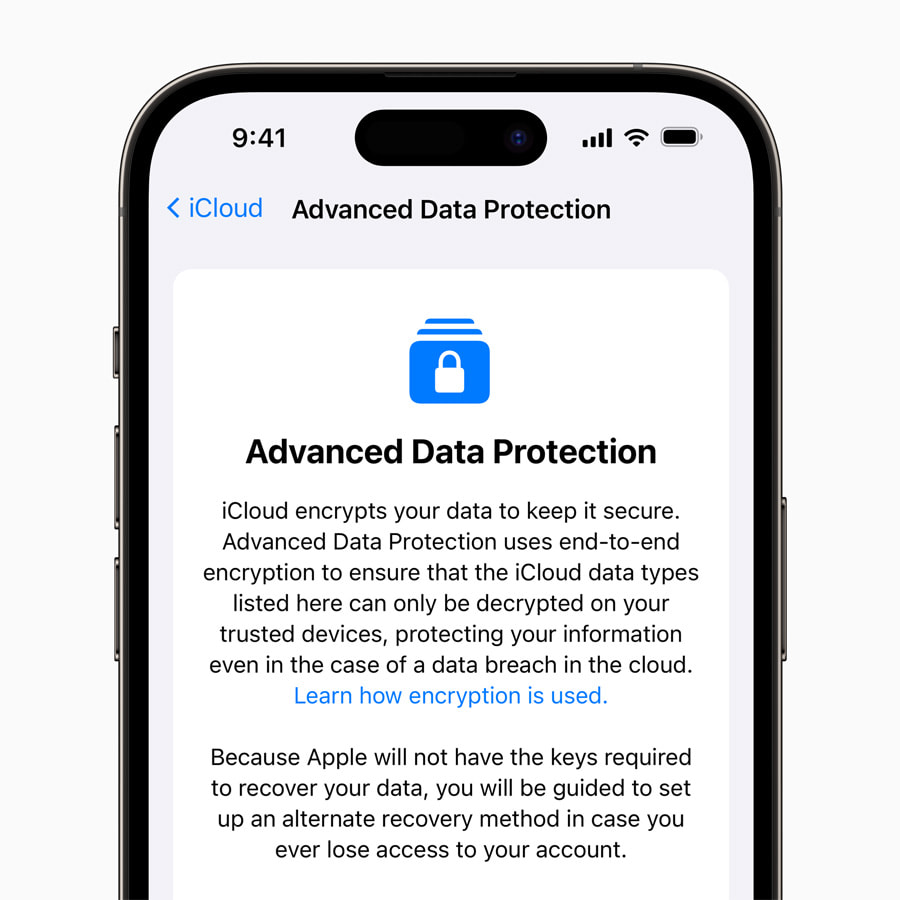
The fight over Apple encryption is no longer a niche argument between privacy engineers and national security officials. It is now a stress test for the entire consumer internet. If governments can force access to protected cloud data, every platform promising secure messaging, private backups, or locked-down devices has to answer the same uncomfortable question: is privacy a product feature, or a political negotiation?
For users, the pain point is brutally simple. You want your photos, messages, health records, passwords, and device backups to stay private. Law enforcement wants access when serious crime is involved. Apple wants to sell trust at global scale without becoming the company that built a master key. That triangle is getting harder to hold together.
- Apple encryption has become a global proxy war over privacy, security, and state access.
- Any mandated access mechanism risks weakening protections for ordinary users, not just criminal suspects.
- The dispute matters because cloud backups increasingly contain the most complete copy of a person’s digital life.
- Tech companies are likely to double down on privacy branding while quietly redesigning services for legal resilience.
Apple Encryption Is Not Just A Settings Toggle
It is tempting to treat Apple encryption as another iPhone feature, something buried in Settings beside Face ID, iCloud, or Advanced Data Protection. That framing misses the stakes. Encryption is infrastructure. It determines who can read data, who can recover it, and who can be compelled to hand it over.
At the center of the debate is the difference between ordinary cloud security and end-to-end encryption. With conventional cloud encryption, a company may protect data in transit and at rest while still retaining technical ability to access it. With end-to-end encryption, only the user’s trusted devices hold the keys. Even the service provider is locked out.
The uncomfortable truth is that a system cannot be both mathematically sealed from the platform operator and conveniently open to authorities on demand.
That is why government pressure on encrypted services is so explosive. Officials often argue that they are not asking for broad surveillance, only targeted access under lawful authority. Privacy advocates counter that software does not understand political restraint. A vulnerability created for one government can become a template for others, a prize for criminals, or a precedent for broader demands.
Why Apple Encryption Has Become A Government Flashpoint
Apple is a uniquely high-value target in this debate because it controls the full stack: iPhone, iPad, macOS, iCloud, secure hardware, app distribution, and account recovery. That vertical integration lets Apple make strong privacy promises. It also makes Apple the obvious company for governments to pressure when they want access.
The modern smartphone is not just a phone. It is a location log, a banking terminal, a family album, a medical notebook, a two-factor authentication hub, and a private messaging device. Cloud backups often preserve that world in one place. For investigators, that makes backups incredibly useful. For users, it makes them incredibly sensitive.
Apple’s privacy posture has also become central to its brand. The company has spent years telling customers that the device in their pocket is different because it is designed to minimize data exposure. Features like App Tracking Transparency, on-device processing, and stronger account protections all reinforce that message.
But the stronger the promise, the bigger the clash when governments ask for access. If Apple weakens protections in one jurisdiction, it risks undermining the credibility of its global privacy pitch. If it refuses, it risks legal battles, service changes, or regulatory retaliation.
The Core Technical Problem
The technical problem is not whether Apple can design complex access systems. It can. The problem is whether any exceptional access system can remain exceptional. A mechanism that allows third-party access to encrypted data must be authenticated, maintained, audited, and defended. That creates an attack surface.
Security engineers tend to be allergic to phrases like backdoor because they sound political, but the concept is straightforward. If someone other than the user can unlock protected data, the system has an additional path to disclosure. That path might be guarded by courts, internal controls, or hardware security modules. It is still a path.
Pro Tip: Users who care about maximum cloud privacy should review whether enhanced protections such as Advanced Data Protection are available and enabled on their accounts. Strong privacy features often require trade-offs, including stricter recovery requirements if you lose access.
The Apple Encryption Debate Exposes A Bigger Cloud Problem
This dispute is not only about Apple. It is about the migration of personal life into cloud infrastructure. The average user no longer stores their most important data in one folder on one laptop. It is fragmented across iCloud, Google Drive, Microsoft OneDrive, messaging apps, password managers, smart home platforms, wearables, and AI assistants.
That shift changes the power dynamics. Cloud companies become custodians of intimate data. Governments increasingly see those companies as gateways to evidence. Users assume that privacy settings mean privacy in practice, even when legal and technical realities are more complicated.
The next frontier will be even messier. AI systems are beginning to process emails, summarize documents, remember user preferences, generate images, schedule meetings, and act across apps. If those systems have access to personal context, the privacy implications multiply. The debate over encrypted backups may look simple compared with future disputes over AI memory, private assistants, and agentic software.
The more useful a digital service becomes, the more tempting it becomes as a target for surveillance, subpoenas, hacks, and regulatory leverage.
Why This Matters For Businesses
Businesses should not dismiss this as a consumer privacy drama. Enterprise security depends on predictable rules around data access, encryption, and jurisdiction. If a vendor can be compelled to alter security architecture or provide special access, risk officers need to know how that affects compliance, customer trust, and incident response.
Companies using Apple devices at scale should pay attention to managed backups, device enrollment, recovery workflows, and data residency requirements. The strongest security setting is useless if employees bypass it because account recovery is confusing or collaboration becomes painful.
- Audit cloud backup policies: Know what is stored, where it is stored, and who can access it.
- Review recovery controls: Secure recovery keys, trusted contacts, and administrative access paths.
- Train employees: Privacy features fail when users disable them to solve short-term friction.
- Track jurisdictional exposure: Global teams may face different legal demands in different markets.
Apple Encryption And The Trust Economy
Trust is now a commercial asset. Apple, Signal, WhatsApp, Proton, Google, Microsoft, and a growing class of privacy-first startups all compete on the promise that user data is protected. But trust is fragile because it depends on both engineering and governance.
Apple’s challenge is especially delicate. The company must convince users that privacy is real while operating in countries with very different laws and political expectations. A decision made to satisfy one government can become a global talking point overnight. A refusal can become a diplomatic flashpoint.
This is why privacy debates rarely stay technical for long. They become debates about sovereignty, child safety, terrorism, journalism, domestic abuse, political dissent, and corporate power. Each side reaches for the hardest case. Governments highlight serious crime. Privacy advocates highlight authoritarian abuse and mass surveillance. Both are real concerns. The hard part is designing systems that do not pretend one risk cancels out the other.
The Consumer Takeaway
For ordinary users, the practical lesson is not to become a cryptographer. It is to understand that convenience and privacy are often in tension. Seamless account recovery, automatic backups, family sharing, cross-device sync, and AI-powered search all require data flows. Stronger encryption can limit those flows, but it may also make recovery harder.
If you enable stronger protections, protect your recovery methods. If you do not, understand that your cloud provider may retain more technical ability to help recover or disclose data. Neither choice is perfect. The right answer depends on your threat model, your tolerance for inconvenience, and the sensitivity of your data.
The Future Of Apple Encryption Will Be Political
The likely outcome is not a clean victory for either side. Expect more legal challenges, more country-specific service changes, and more careful product language. Apple and its peers will keep pushing privacy as a differentiator, but they will also design systems with regulatory pressure in mind.
That may lead to more on-device processing, more granular backup controls, stronger account recovery education, and clearer separation between data Apple can access and data it cannot. It may also accelerate a broader shift toward user-held keys and decentralized identity tools, though those remain too complex for mainstream adoption at scale.
The bigger question is whether lawmakers can create rules that acknowledge technical reality. Demanding secure encryption with guaranteed exceptional access is like demanding a locked door that only the right strangers can open. It sounds reasonable in policy language. It is much harder in code.
The bottom line: Apple encryption is now a defining battle over who controls the digital self. If Apple holds the line, privacy becomes a stronger consumer expectation. If governments force a compromise, every encrypted service will feel the aftershock.
The information provided in this article is for general informational purposes only. While we strive for accuracy, we make no guarantees about the completeness or reliability of the content. Always verify important information through official or multiple sources before making decisions.


