Apple Intelligence Stumbles
Apple Intelligence Stumbles
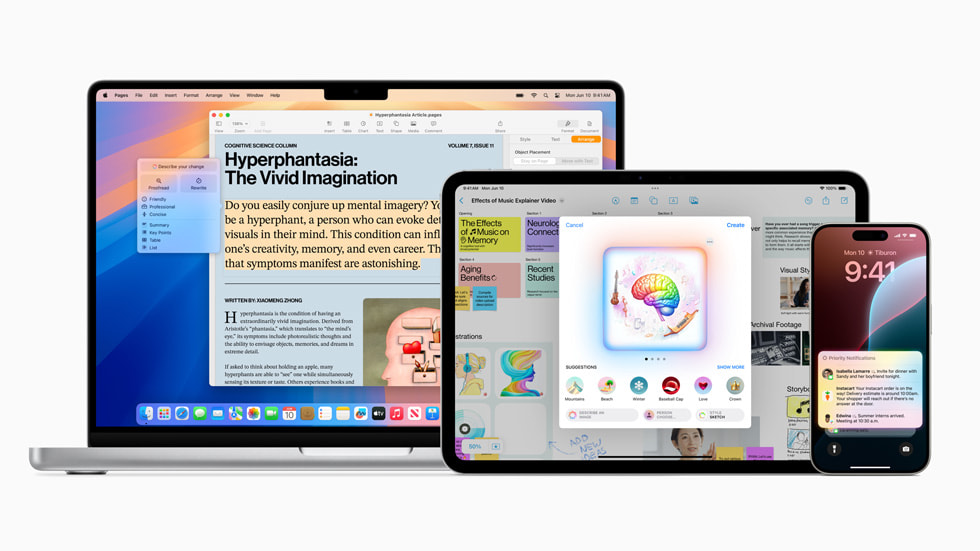
Apple Intelligence was supposed to be the company’s clean, polished answer to the generative AI rush. Instead, it is arriving with the kind of friction that makes even loyal users pause. The pitch is still powerful: on-device privacy, smarter writing tools, a more useful Siri, and AI features that feel integrated rather than bolted on. But the execution so far tells a more complicated story. Rollouts are uneven, the most compelling features are not always the first to ship, and Apple is asking users to trust that the best parts are still on the way. For a company built on control and precision, that is a risky place to be. The bigger issue is not whether Apple can ship AI. It is whether it can make AI feel unmistakably Apple before the rest of the market moves on.
- Apple Intelligence is positioned as a privacy-first AI platform, but the rollout is proving slower and messier than expected.
- The company’s biggest challenge is not feature count, but making AI feel genuinely useful inside everyday workflows.
- Siri remains the pressure point: if Apple cannot fix voice interaction, the entire strategy looks unfinished.
- Apple’s advantage is still its ecosystem, yet that advantage only matters if the features ship reliably across devices.
- What happens next will shape how consumers judge Apple’s relevance in the AI race.
Apple Intelligence and the problem with premium AI
Apple has never wanted to play the same AI game as its rivals. While others rushed to put large language models everywhere, Apple framed Apple Intelligence as something more restrained and more trustworthy. That sounds smart, especially in a market where users are increasingly skeptical about data collection, hallucinations, and product bloat. But restraint only works if the product feels complete. Right now, Apple Intelligence risks landing in the awkward middle ground between elegant concept and unfinished reality.
The company is betting that most users do not want a chatbot inside every app. They want sharper summaries, better notifications, cleaner writing, and a voice assistant that can finally handle the basics. That is a sensible thesis. It is also a high bar. AI features are no longer novel simply because they exist. They have to save time, reduce friction, and work consistently enough to become habits.
Apple’s real challenge is not to prove that it can do AI. It is to prove that its version of AI is better enough to matter.
Why the Apple Intelligence rollout feels so exposed
One reason the rollout feels so exposed is that Apple set expectations by talking about a coherent, consumer-friendly AI layer across its devices. That creates a different standard than a standalone app or experimental assistant. Once AI is embedded into the operating system, every missing capability feels visible. Every delay feels strategic. Every half-finished feature feels like a promise deferred.
The company also has to navigate a difficult balance between speed and trust. Ship too quickly and Apple risks the kind of quality issues that damage its brand. Ship too slowly and it looks like the company has been outmaneuvered by rivals that are iterating faster and getting users into daily AI habits now.
The privacy pitch is still Apple’s strongest card
Apple’s on-device processing story matters because privacy is not just a policy choice here. It is the core of the product positioning. If Apple can keep more tasks local on the device, it can argue that its AI is safer, more personal, and less intrusive than cloud-first competitors. That is a compelling message for consumers, especially as AI systems become more deeply embedded in personal communication and content creation.
Still, privacy alone will not carry the strategy. Users will forgive a lot for a genuinely useful feature set, but they will not remain loyal to a privacy narrative if the product feels underpowered.
The Siri problem is bigger than Siri
For years, Siri has been the most obvious weakness in Apple’s software lineup. Consumers do not just complain that Siri is behind. They complain that it feels static. That matters because voice is supposed to be one of the defining interfaces for AI. If Apple Intelligence cannot make Siri meaningfully better, the entire platform risks looking like a collection of nice additions rather than a transformation.
This is not just about answering questions more accurately. It is about understanding context, handling follow-up requests, and making the phone feel more proactive without becoming creepy. That is a difficult engineering problem, but it is also a user-experience problem. Apple has to make AI feel calm, competent, and immediate. If Siri still feels tentative, the rest of the ecosystem will not hide that weakness.
What better Siri actually needs to do
A better Siri should not merely respond. It should reduce the number of taps and decisions required to finish a task. That means handling reminders with context, summarizing messages in a usable way, and moving across apps without forcing the user to re-explain everything from scratch. It also means knowing when not to answer, which may sound trivial but is crucial to building trust.
Put differently, the next-generation assistant has to become a reliable intermediary between the user and the device. If Apple can get that right, the rest of Apple Intelligence becomes much more persuasive.
How Apple Intelligence can still win
There is a path here, and it is very Apple. The company does not need to win the AI race in the abstract. It needs to win the moments that matter inside its own ecosystem. That is a narrower challenge, but it is still massive because Apple controls the hardware, software, and distribution layer.
Here is what would make the strategy work:
- Make the basics flawless – Summaries, rewrites, image generation, and notification cleanup need to work quietly and consistently.
- Upgrade Siri with real context awareness – Voice should feel like the most natural way to use Apple Intelligence, not the most frustrating.
- Keep the privacy story credible – Users need to know what happens on device, what goes to the cloud, and why.
- Ship across the ecosystem – If the experience feels fragmented across
iPhone,iPad, andMac, the magic disappears. - Avoid overpromising – Apple’s brand is strongest when it underlines polish, not speculation.
That last point matters more than it sounds. The AI market is crowded with demos, teasers, and inflated claims. Apple usually wins by doing less theater and more delivery. If it keeps the messaging grounded, it can still distinguish itself.
Pro tip for users watching the rollout
If you are evaluating Apple Intelligence as features arrive, do not focus only on the headline demos. Watch how often the tools save time during ordinary tasks. A useful AI feature is one you stop noticing because it quietly removes steps from your day.
That is the standard Apple should be held to as well. Not novelty. Not hype. Utility.
What this means for the wider AI market
Apple’s moves matter because the company rarely enters a category without changing consumer expectations. If Apple Intelligence succeeds, it could normalize a more private, more integrated style of AI that feels less like a standalone product and more like a system behavior. That would pressure competitors to think harder about trust, interface design, and actual usefulness rather than just model size.
If it struggles, the opposite lesson lands: even Apple cannot paper over weak fundamentals with branding. That would embolden rivals that already ship faster and give users more obvious day-to-day value.
There is also a broader industry implication. Consumers are becoming more selective about AI. They are no longer impressed by the mere existence of a generative feature. They want proof that the feature is accurate, helpful, and worth the trade-offs. Apple is entering this environment at exactly the moment when skepticism is rising. That makes execution even more important.
In the next phase of AI adoption, trust will matter almost as much as capability. Apple knows that. The question is whether it can deliver both at once.
The bottom line on Apple Intelligence
Apple Intelligence is not a failed idea. It is a strategically sensible one with real potential. But the rollout exposes the difference between having a good AI story and shipping a great AI product. Apple has enormous advantages: a loyal installed base, deep ecosystem integration, and a brand built on making complex technology feel simple. Yet those strengths only matter if the experience is cohesive, fast, and meaningfully smarter than what users already have.
For now, Apple Intelligence looks like a platform with a strong thesis and an imperfect launch. That may still be enough if the company can execute quickly and refine aggressively. But Apple can no longer rely on reputation alone. In AI, as in everything else, users will judge what the product actually does, not what the keynote promised.
The next few months will tell us whether Apple Intelligence becomes a defining upgrade or just another ambitious feature set that arrived before it was ready.
The information provided in this article is for general informational purposes only. While we strive for accuracy, we make no guarantees about the completeness or reliability of the content. Always verify important information through official or multiple sources before making decisions.