Apple TV Scores Big With iPhone 17 Pro Live Sports
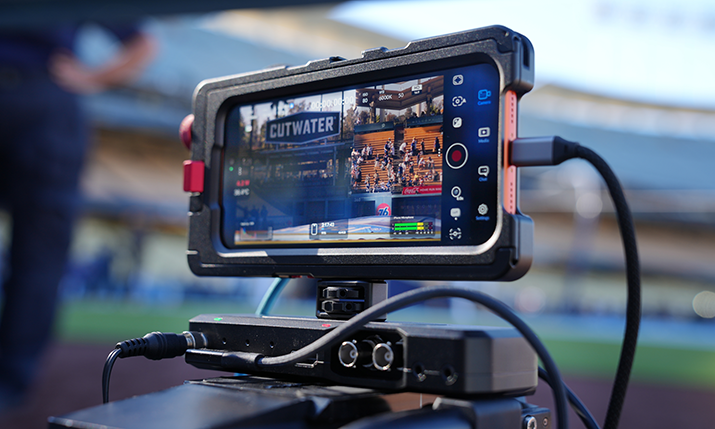
Apple TV is testing the next era of live sports
Apple is doing something that would have sounded borderline absurd a few years ago: using an iPhone 17 Pro to help capture a major live pro sports event for Apple TV. That is not just a flashy demo. It is a direct challenge to the old assumption that premium broadcast work requires a truck full of specialized gear, a crew of veterans, and cameras that cost more than a car. If Apple can pull this off at scale, the implications reach far beyond one game. It points to a future where mobile hardware is no longer a backup plan, but a legitimate production tool for live television.
- Apple is pushing the
iPhone 17 Prointo real broadcast-grade territory. - The move could lower production costs and expand live coverage options.
- It signals a broader shift toward flexible, mobile-first sports storytelling.
- Quality, reliability, and latency will decide whether this becomes a template or a stunt.
Why this iPhone 17 Pro sports broadcast matters
This is not just about Apple being Apple. It is about the economics and logistics of live sports, one of the last bastions of expensive, rigid media production. Traditional broadcasts are built around redundancy: multiple camera angles, dedicated operators, hardened infrastructure, and a mountain of backup systems. That model is effective, but it is also expensive and slow to scale. If Apple TV can credibly air a major live pro sports event shot on iPhone 17 Pro, it suggests a new production stack is emerging – one that is more portable, more modular, and potentially far cheaper to deploy.
The bigger story is not whether smartphones can “match” cinema cameras in the abstract. The real question is whether they can meet the practical demands of live sports: fast autofocus, stable capture, reliable connectivity, low-light performance, and robust color consistency across dozens of camera feeds. If the answer is yes, then smaller leagues, regional events, and even leagues with thin margins get a powerful new option.
For broadcasters, the real disruption is not image quality alone. It is the ability to put high-quality capture into more places, faster, with fewer people and less gear.
What Apple is really signaling about live production
Apple has spent years turning its devices into serious creative tools, from ProRes recording to advanced computational imaging. The company has also steadily positioned Apple TV as a premium destination for live sports and scripted content alike. Putting an iPhone 17 Pro into the live sports pipeline is the logical next step: prove the hardware can operate not only as a consumer device, but as a production instrument.
Mobile capture is moving upmarket
For a long time, smartphone filmmaking lived in the shadow of professional gear. It was good enough for behind-the-scenes clips, social content, and the occasional guerrilla-style shoot. That era is fading. Today’s top-end phones can already deliver cinematic stabilization, impressive dynamic range, and production-friendly codecs. The iPhone 17 Pro goes further by becoming part of a live broadcast workflow, where consistency and uptime matter more than bragging rights.
That shift matters because it changes who gets to produce premium-looking live content. A smaller production team could, in theory, cover more ground with fewer barriers. A league could experiment with alternate camera angles, tighter specialty feeds, or localized event coverage without bringing in the usual broadcast heavy artillery.
Computational imaging is the quiet engine here
The most important camera feature on a phone is often not the sensor size, but the software stack behind it. Apple has leaned heavily on computational photography and video processing to make its cameras behave beyond their physical footprint. In a live sports scenario, that intelligence can help manage exposure swings, rapid motion, and chaotic lighting changes in ways that a traditional camera operator might otherwise need to compensate for manually.
That does not eliminate the need for skilled people. It changes their role. Instead of spending all their energy fighting the gear, production teams can focus more on shot selection, narrative pacing, and live editorial judgment.
How the Apple TV play could reshape sports coverage
The most obvious upside is flexibility. A phone-based setup can be deployed in tighter spaces, mounted in unconventional positions, or used for specialty angles that would normally be too cumbersome to justify. Think locker-room tunnel shots, bench-level perspectives, concourse coverage, or rapid pop-up studio segments around the venue.
That flexibility opens the door to a different kind of sports broadcast. Not necessarily a replacement for the main feed, but a companion layer of coverage that feels closer, faster, and more personalized. For Apple TV, which lives at the intersection of premium entertainment and platform strategy, that is a valuable differentiator.
- More camera placements without major infrastructure investment.
- Faster setup for one-off events and experimental formats.
- Potentially lower barriers for emerging leagues and niche sports.
- Better support for hybrid coverage that blends broadcast and social-style storytelling.
Pro tip for broadcasters watching this closely
If this model proves reliable, the smartest teams will not think of it as a full replacement for conventional cameras. They will treat it as an additional layer in the production stack. The winning workflow is likely hybrid: flagship cameras for the main program feed, iPhone 17 Pro units for specialty angles, auxiliary coverage, and fast-moving editorial inserts. That is where the economics get interesting.
And that hybrid approach is exactly what major media companies have been inching toward. The old binary of “professional” versus “mobile” is collapsing. What matters now is whether a device can deliver broadcast-safe output, integrate cleanly into the production pipeline, and survive the chaos of live event conditions.
What still has to go right
Enthusiasm is warranted, but skepticism is healthier. Live sports is unforgiving. A camera that looks excellent in controlled conditions can still fall apart when pushed through a real event. Heat management, battery behavior, storage throughput, wireless interference, and camera app stability all become major issues once the pressure rises. A single dropped feed or color mismatch can become a visible problem in seconds.
Then there is the matter of trust. Broadcast professionals do not adopt tools because they are clever. They adopt them because they are dependable. The iPhone 17 Pro will need to prove it can withstand the messiness of live production without introducing new fragility into the workflow.
Innovation only becomes infrastructure when nobody notices it during the game.
That is the standard Apple has to meet. Not wow factor. Not marketing theater. Invisible reliability.
The quality bar is higher than it looks
Consumers may see a gorgeous livestream and assume the problem is solved. Producers know better. Sports broadcasting is a choreography of synchronization: audio timing, color matching, frame consistency, switching latency, and transmission stability all have to line up. A great image is just one piece of a much larger system. If Apple wants this to matter, it has to demonstrate that the phone can behave like part of a larger professional ecosystem, not just a clever gadget with a good camera.
Why this matters for Apple and the broader media industry
For Apple, this is a strategic flex with upside on multiple fronts. It reinforces the iPhone 17 Pro as a flagship creative device, gives Apple TV a new angle in the crowded sports streaming battle, and deepens the company’s relationship with creators and production professionals. It also strengthens the narrative that Apple hardware is not merely capable of content capture – it is shaping the future of content creation itself.
For the rest of the industry, the signal is harder to ignore. If a premium live sports event can be shot on a phone without collapsing under the weight of expectation, then the default production model has officially started to crack. That does not mean broadcast trucks are dead. It does mean the range of viable tools is expanding, and fast.
We should expect competitors to watch this closely. Streaming platforms want differentiation. Sports rights holders want lower costs and more flexible coverage. Hardware makers want proof that their devices can do more than social clips and vacation footage. Apple’s move touches all three.
The likely next phase for iPhone 17 Pro live sports
The first real milestone is not whether one event looks good. It is whether this becomes repeatable. If the answer is yes, the next phase could include more events, more camera roles, and more integration with professional production software and workflows. That would make the iPhone 17 Pro less of a headline and more of a platform.
Long term, the practical impact could be enormous. Smaller broadcasters could cover more events with fewer resources. Teams could add more immersive behind-the-scenes feeds. Broadcasters could deploy temporary coverage in venues that never justified permanent installations. And audiences could get more intimate, more dynamic access to live sports than the old broadcast model ever allowed.
Apple is not just showing off a phone camera. It is testing whether the future of live sports is lighter, faster, and more software-defined than anyone expected. If this works, the industry will not simply adopt a new tool. It will have to rethink what a live broadcast system even is.
The information provided in this article is for general informational purposes only. While we strive for accuracy, we make no guarantees about the completeness or reliability of the content. Always verify important information through official or multiple sources before making decisions.