Armed Man Arrested at Trump Golf Course
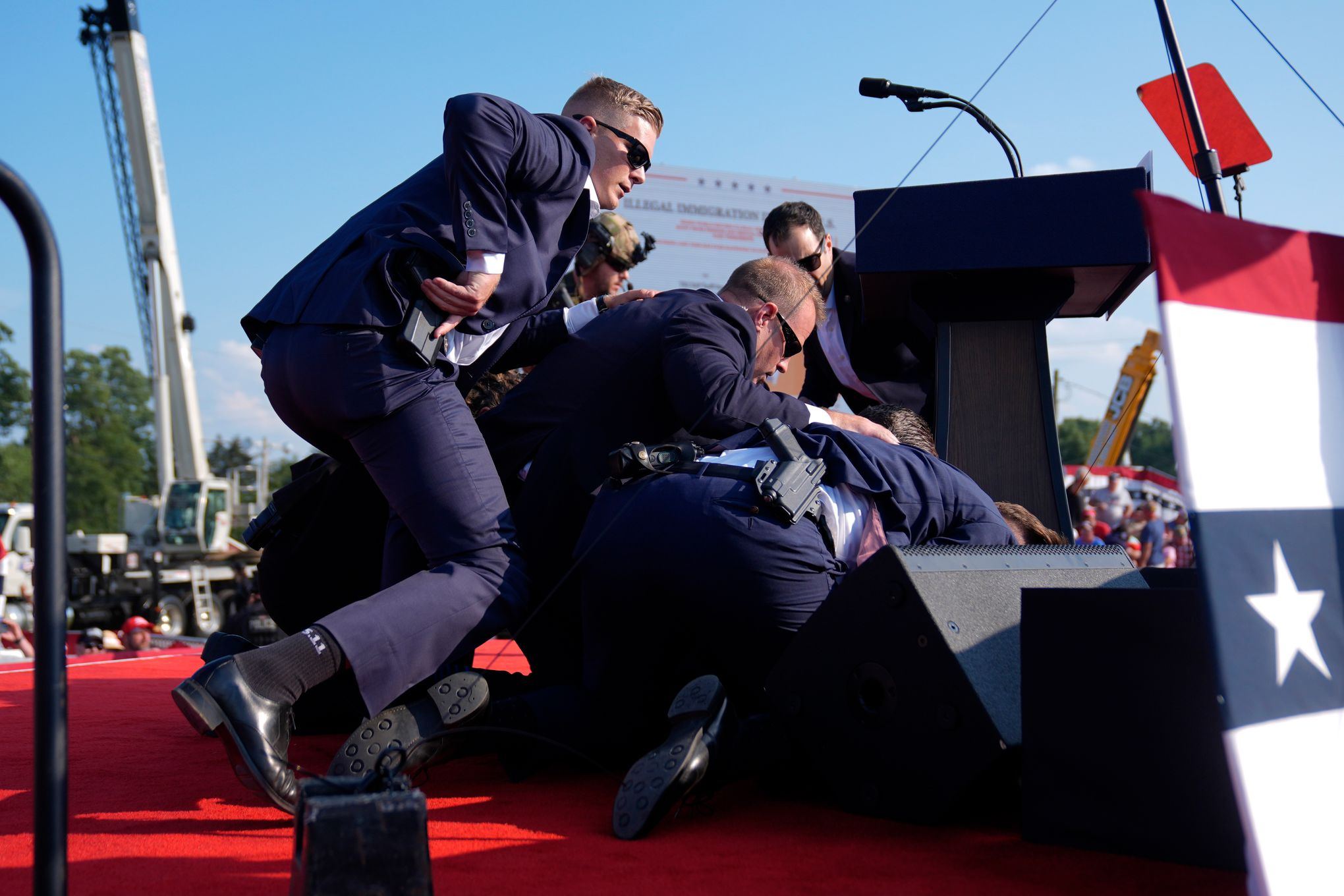
Armed Man Arrested at Trump Golf Course
An armed arrest at Donald Trump’s Los Angeles golf course is more than a security incident. It is a reminder that presidential protection is never just about bodyguards, metal detectors, and perimeter fences. It is about anticipation, intelligence, and the permanent tension between open-access public spaces and the need to harden them against a fast-moving threat. When an armed man is taken into custody ahead of a presidential visit, the question is not only how the breach was stopped. It is how close the system came to failing, and what that says about the state of political security in an era of rising threat volatility.
- The arrest puts presidential security back under a harsh spotlight.
- Public-facing venues like golf courses remain difficult to secure without disrupting access.
- The incident underscores how quickly a routine site can become a high-risk protection zone.
- Security agencies now face growing pressure to balance visibility, intelligence, and deterrence.
- The bigger story is not the arrest itself, but what it reveals about modern threat management.
Why the presidential security problem keeps getting harder
Golf courses look peaceful from the outside, but they are operationally messy environments for presidential security. Wide-open sightlines, public reservation systems, staff turnover, delivery traffic, and irregular terrain all create soft spots. Unlike a fully controlled federal facility, a golf course is built to welcome movement. That makes it inherently harder to lock down without broadcasting that a major protective operation is underway.
That tension matters because high-profile protectees increasingly move through semi-public spaces that were never designed for fortress-level defense. The challenge is no longer limited to Washington, airports, or campaign rallies. It extends to resorts, private clubs, restaurants, and recreational venues where the line between private access and public exposure is thin. Every such location expands the attack surface.
Security is not just about reacting to danger. It is about making it difficult enough for a threat to reach the point where reaction is needed.
What this arrest suggests about threat detection
Authorities have not publicly spelled out every detail of how the armed suspect was identified, but the fact of the arrest before the president’s arrival suggests one of three things: the threat was flagged by intelligence, noticed by on-the-ground personnel, or disrupted by a rapid security sweep. In practice, effective protective work is rarely a single-system success. It is usually a chain of small wins: surveillance, coordination, local policing, and plain-old human suspicion.
That is the part the public rarely sees. The visible action is the arrest. The invisible work is the coordination that likely made it possible. If the suspect was detected before the president arrived, that means the protective perimeter was established with enough lead time to catch something out of place. If it happened after the site had already begun security preparations, it shows the value of layered screening and immediate escalation protocols.
Layered defense is the real story
Modern threat prevention depends on layers, not miracles. A strong security posture at a presidential site usually includes:
- Advance site sweeps and route checks
- Vehicle screening and perimeter control
- Plainclothes observation and behavioral analysis
- Close coordination with local law enforcement
- Rapid communication between field agents and command staff
Any single layer can fail. The goal is to keep a failure at one level from becoming a breach at the next. That is why these incidents matter even when they do not turn into tragedies. They test whether the entire protective chain is functioning under pressure.
Why golf courses are uniquely hard to secure
There is a reason security professionals dislike open recreational spaces. A golf course combines public interface with low-visibility blind spots. Players and staff move across large areas. Access points are numerous. Landscaped terrain can hide movement. And because golf is often treated as a low-risk environment, the venue can present a false sense of calm right up until the moment it does not.
For a visiting president, that creates a resource problem. The more protection you add, the more you transform the venue into a hardened zone. The less you add, the more vulnerable you leave the perimeter. There is no perfect answer, only tradeoffs. And those tradeoffs become politically sensitive very quickly when the venue belongs to a public figure already under intense scrutiny.
That is why incidents like this can trigger broader debate about whether presidents and candidates should spend less time in flexible private venues and more time in spaces that can be fully controlled. The catch is obvious: visibility is part of politics. Candidates need to be seen, and presidents need to move. Security can reduce risk, but it cannot eliminate it without changing the nature of public leadership itself.
The political meaning of a security scare
Any arrest near a presidential visit instantly becomes political, even if the facts are still developing. Supporters see evidence of vigilance. Critics see a warning sign about lapses and overexposure. The media sees a story about vulnerability. Law enforcement sees a test of coordination. All of those reactions can be true at once.
This is also why the language around these events matters. A security scare is not the same as an attempted attack, and an arrest does not necessarily mean an attack was imminent. Still, the presence of an armed suspect near a president is enough to raise serious concern. Public confidence depends on the perception that protection systems can spot danger before it becomes irreversible.
The real issue is not whether a threat was stopped. It is whether the system had enough margin to stop it before the situation narrowed to a single bad outcome.
That margin is shrinking across many forms of public protection. Threats are less predictable, more individualized, and easier to stage with little warning. In that environment, security services cannot rely on fixed assumptions. They need constant adaptation, better intelligence sharing, and a willingness to treat routine venues as potential flashpoints.
What this means for future presidential visits
The immediate response to incidents like this is usually a tighter perimeter, more visible patrols, and a review of procedural gaps. But the long-term implication is bigger. The protective model for political leaders is shifting toward more mobile, more data-driven security. That means more pre-screening, more digital intelligence, and more coordination with local agencies that understand the ground better than anyone else.
Expect continued pressure on venues that host high-profile events to invest in surveillance, access control, and emergency response planning. Expect more scrutiny of venue selection itself. And expect security teams to keep narrowing the list of places where presidents can move without creating a small temporary fortress around them.
Pro tip for venue operators
If a property might ever host a candidate, president, or major public figure, the time to plan is not the day of the visit. Operators should build reusable protocols for access control, staff vetting, emergency lock-down, and communication with law enforcement long before any advance team arrives. A venue that has rehearsed the process is far more resilient than one that improvises under pressure.
Why this matters beyond one arrest
This arrest is a local event with national implications. It highlights a broader reality: political security is becoming more complex, more expensive, and more visible. As threats evolve, the spaces leaders inhabit will keep shrinking or hardening. That affects not just presidents, but candidates, judges, lawmakers, and public officials whose safety now depends on constant vigilance.
For the public, the concern is not simply whether one armed suspect was stopped. It is whether the system around the presidency can keep pace with a threat environment that is increasingly decentralized and unpredictable. The answer will shape where leaders campaign, how they travel, and how much of public life can still happen in open spaces.
That is why a golf course arrest resonates far beyond the fairway. It is a stress test for modern protection: a reminder that in the age of fragmented threats, even a routine visit can become a high-stakes operation in seconds.
Main takeaway: the arrest is not just a security headline. It is evidence that presidential protection now lives in the uneasy space between access and lockdown, where every venue is only one missed signal away from becoming a national concern.
The information provided in this article is for general informational purposes only. While we strive for accuracy, we make no guarantees about the completeness or reliability of the content. Always verify important information through official or multiple sources before making decisions.