BBC News Website Outage Exposes Fragile Digital News Infrastructure
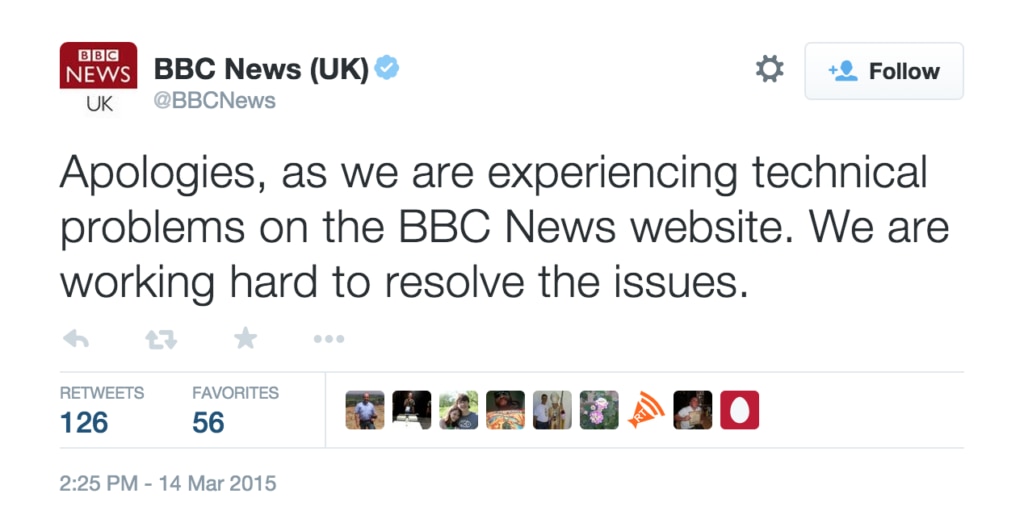
BBC News Website Outage Exposes Fragile Digital News Infrastructure
The BBC News website going down is more than a temporary annoyance. For a newsroom that millions of people rely on for breaking coverage, every minute of downtime is a visibility crisis, a trust test, and a reminder that even the most mature media operations can still be vulnerable to basic infrastructure failure. When a platform built for constant availability stumbles, readers do not just lose access to headlines. They lose the assumption that the internet will be there when it matters most. That is the real story here: digital news infrastructure is only as strong as its weakest dependency, and the pressure on publishers has never been higher.
- The outage highlights how dependent audiences are on a few central news platforms.
- Even established publishers remain exposed to infrastructure, traffic, and delivery failures.
- Reliability is now part of editorial credibility, not just technical maintenance.
- Redundancy, failover, and transparent incident response are becoming strategic necessities.
Why the BBC News website outage matters now
The BBC News website outage lands at a moment when audience expectations are unforgiving. Readers expect live updates, fast-loading pages, and uninterrupted access across devices, even during major events when traffic spikes hardest. That makes uptime a newsroom issue, not just an engineering metric. If a service disappears at the exact moment people need it most, the failure is amplified by urgency. This is especially true for public-interest media, where outages can ripple into misinformation, social chatter, and second-hand reporting from less reliable sources.
There is also a broader industry tension at play. News organizations have spent years optimizing for speed, search visibility, and mobile engagement, but that optimization often hides a brittle backend. Content delivery networks, cloud hosting layers, authentication services, analytics tags, and third-party widgets all create points of failure. One problem in the chain can make a polished front end vanish for users.
The hidden cost of digital fragility
Outages are often treated as short-lived technical blips. They are not. For a large media brand, the fallout can include lost traffic, degraded trust, frustrated advertisers, and an SEO penalty if crawlers encounter repeated availability issues. A homepage that is down for ten minutes might be shrugged off internally, but users remember the experience. So do search engines and social platforms that rely on consistent signals of authority and freshness.
Media companies also operate in an ecosystem where speed is part of the product. If a breaking story cannot be delivered instantly, competitors fill the vacuum. That means resilience is now competitive advantage. The newsroom may write the best story, but the platform still has to survive the rush of attention that story creates.
Reliability is no longer a backstage IT concern. For digital publishers, uptime is part of the brand promise.
What usually breaks first
When a high-profile news site fails, the root cause is often less glamorous than it looks from the outside. Common culprits include overloaded origin servers, misconfigured caching, DNS problems, expired certificates, deployment errors, or traffic surges overwhelming an untested edge layer. Sometimes the issue is not even the core website but a dependent service such as sign-in, live blog publishing, or image delivery.
That is why incident diagnosis matters. A user only sees a page that will not load, but engineers have to trace the failure across layers: DNS, CDN, load balancer, application servers, databases, and third-party scripts. In large publishing stacks, the complexity is the vulnerability.
What the BBC News website outage says about modern publishing
The larger lesson is that the modern news stack has become a high-wire act. Publishers have embraced modular tooling because it is flexible and fast to ship, but each module adds operational debt. A clean editorial workflow may depend on several invisible services working at once. If one of those services slips, the audience experiences it as a single failure.
This is particularly risky for outlets that serve a global audience. A regional issue can be indistinguishable from a total platform collapse to readers who simply see a blank page or a timeout. And because audiences now arrive through search, notifications, social feeds, and direct links, an outage can block multiple entry points at once.
The strategic implication is blunt: digital journalism now requires infrastructure thinking at the editorial level. Editors, product leaders, and engineers need shared incident playbooks. A resilient newsroom is one that can answer three questions quickly: what failed, how broadly, and how fast can we restore trust?
Pro tips for publishers under pressure
- Design for graceful degradation: show text-only fallbacks if media services fail.
- Test failover regularly: do not assume backup systems will work when traffic spikes.
- Reduce third-party dependence: every widget is a possible outage multiplier.
- Monitor user-facing availability, not just server health.
- Publish status updates quickly: silence makes a technical issue feel worse.
How publishers can harden against the next outage
The solution is not to over-engineer every page into oblivion. It is to build for failure as a normal condition. That means investing in observability, redundancy, and better deployment discipline. It also means treating traffic surges like predictable events rather than surprises. Major elections, crises, sports finals, and breaking geopolitical news all create load patterns that can be modeled in advance.
Publishers should also think about content survivability. Can readers still access the story if video, live chat, or personalization fails? Can a cached copy keep the core reporting alive while nonessential layers recover? These questions matter because the most valuable part of a news article is usually the text, not the surrounding scaffolding.
Engineering teams can strengthen resilience with a few practical moves:
rate limitingto absorb traffic spikes without collapsing the origin.multi-region failoverto reduce the risk of a single-zone outage.health checkstied to real user paths, not just server availability.cache-first deliveryfor high-read, low-edit content.rollbackprocedures that are fast enough to matter during live incidents.
None of that is exotic. The hard part is cultural. Many media teams still separate editorial urgency from technical discipline. That is outdated. If a newsroom expects its audience to trust it during breaking news, it needs to deliver that news through systems that can actually stay online.
The business case for reliability
The financial case is equally clear. Outages weaken audience retention and can depress the downstream value of subscriptions, registrations, and ad impressions. For ad-supported publishers, every minute of instability can disrupt campaign delivery and reduce inventory quality. For subscription businesses, the damage is subtler but just as serious: if the product feels unreliable, the brand feels less worth paying for.
There is also a reputational asymmetry at work. A smooth week rarely gets noticed, but one outage can dominate the memory of a whole month. That is why reliability should be measured not only in uptime percentages, but in how often it interrupts the user relationship. For a news brand, trust is a compounding asset. Break it often enough and the audience starts to look elsewhere.
For publishers, the real competitive edge is not just speed. It is the ability to stay visible when attention is most expensive.
What happens next
If this outage was a reminder, the industry should take it seriously. The next phase of digital publishing will not be won by the site with the flashiest interface. It will be won by the one that can maintain editorial continuity under pressure. That includes better automation, smarter traffic management, and a stronger habit of testing failure before users do.
Expect more publishers to invest in status pages, incident comms, and architecture designed around rapid recovery. Expect engineering and editorial teams to collaborate more closely on launch risk. And expect audiences to become even less forgiving of downtime as alternative sources multiply across platforms and AI-driven discovery tools.
The BBC News outage is not just a technical event. It is a snapshot of the modern media bargain: scale brings reach, but it also magnifies failure. The outlets that recognize this first will not just survive the next incident. They will earn a deeper form of credibility – the kind that comes from being there when the story breaks.
Main takeaway: if news organizations want to remain authoritative, they have to treat resilience as a core editorial function, not a hidden infrastructure problem.
The information provided in this article is for general informational purposes only. While we strive for accuracy, we make no guarantees about the completeness or reliability of the content. Always verify important information through official or multiple sources before making decisions.