Can Israel Defeat Hezbollah
Can Israel Defeat Hezbollah
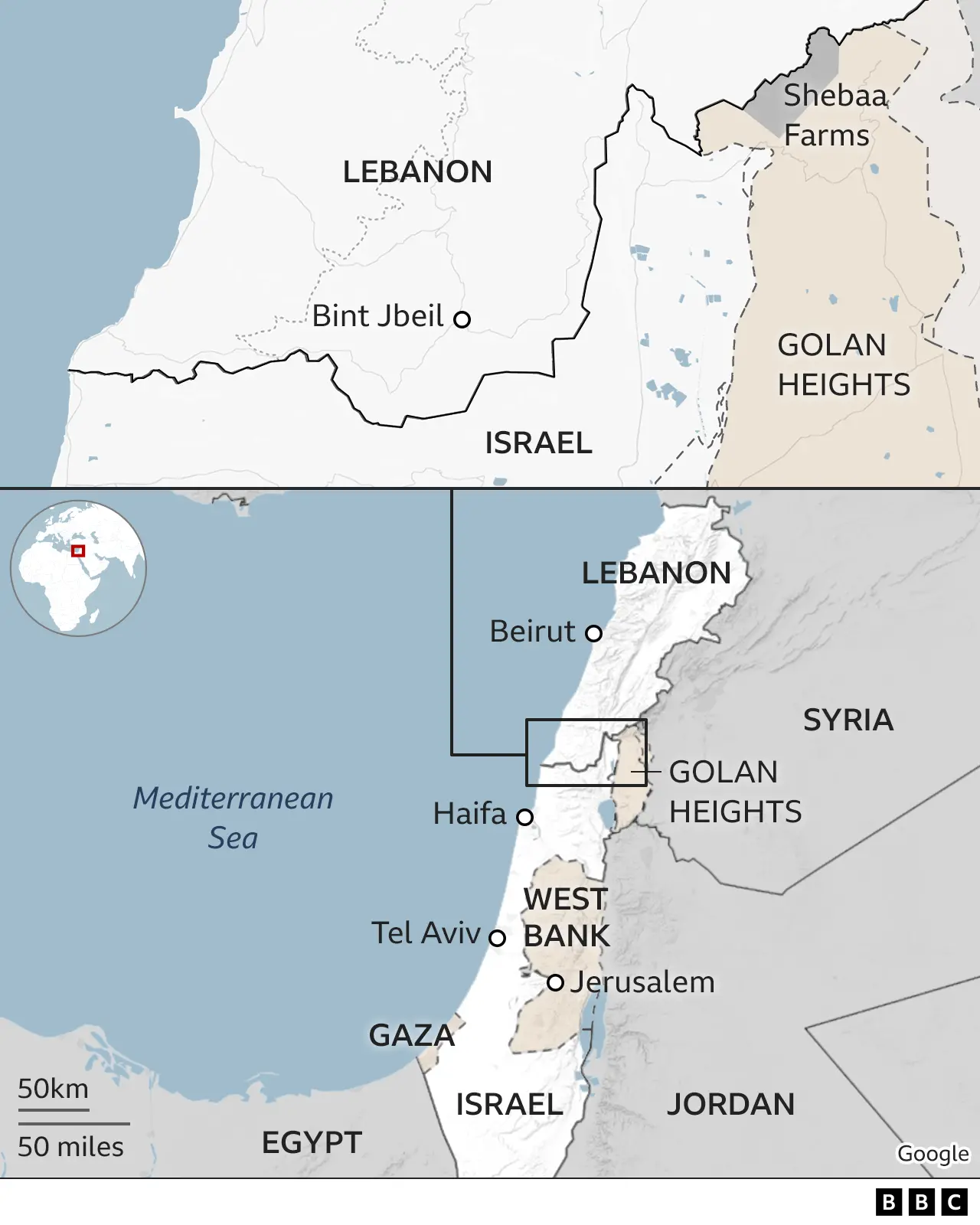
Israel Hezbollah Lebanon is no longer a narrow security question – it is a test of what military power can actually achieve against a deeply embedded political and armed movement. That is why the debate matters far beyond the border. For Israeli leaders, the promise of pushing back or dismantling Hezbollah speaks to deterrence, domestic credibility, and long-term security. For Lebanon, it raises the risk of yet another devastating conflict layered onto state weakness, economic collapse, and regional interference. And for the broader Middle East, it exposes a hard truth that policymakers often sidestep: destroying an organization like Hezbollah is not the same as neutralizing the conditions that sustain it. The real issue is not whether Israel can inflict massive damage. It is whether force alone can deliver the political outcome implied by the rhetoric.
- Hezbollah is more than a militia: it is a military, political, and social actor deeply rooted in Lebanon.
- Israel can degrade capabilities, but eliminating Hezbollah outright is a far more difficult objective.
- Any large-scale war would hit Lebanon hard while also imposing steep military, diplomatic, and economic costs on Israel.
- The regional dimension matters: Iran, deterrence, and postwar governance shape what any battlefield victory would mean.
- The central question is political: what replaces Hezbollah if its infrastructure is shattered?
Why the Israel Hezbollah Lebanon question keeps coming back
The phrase sounds simple enough: can Israel get rid of Hezbollah in Lebanon? But that framing hides the complexity. Hezbollah is not just an armed group with rockets and fighters. It is also a political force with parliamentary representation, patronage networks, local legitimacy among key constituencies, and strong ties to Iran. That makes the idea of “getting rid of” it much harder than defeating a conventional army or dismantling a standalone insurgent cell.
Israel has repeatedly shown that it can strike Hezbollah targets, kill commanders, disrupt logistics, and impose serious costs. The problem is that tactical success does not automatically become strategic closure. Groups like Hezbollah are built to absorb punishment, adapt, and reconstitute themselves politically and militarily.
Military campaigns can destroy infrastructure quickly. They rarely erase ideology, constituency, and regional sponsorship on the same timeline.
That gap between battlefield damage and durable political outcome is where this entire debate lives.
Hezbollah is not a conventional target
It operates across several layers at once
Any serious analysis has to start with Hezbollah’s structure. It functions simultaneously as a military force, a political organization, and a social-service network. Those overlapping roles matter because they complicate any campaign designed to uproot it.
A state can bomb command centers, storage sites, launch positions, roads, and communications nodes. It can assassinate leaders. It can occupy territory. But if the group retains community support, access to external financing, and a narrative of resistance, complete elimination becomes much less likely.
Its deterrence model is built for survival
Hezbollah’s strategic logic has long rested on deterrence through persistence. Survive the assault, keep firing, preserve enough command continuity, and claim political victory even after severe losses. That playbook does not require winning in a traditional military sense. It requires enduring and remaining relevant.
This is where public rhetoric often outruns operational reality. Saying a group will be removed is one thing. Designing a campaign that prevents it from resurfacing in altered form is another.
What Israel can do militarily
Israel’s military edge is not in question. It has superior airpower, intelligence, precision strike capacity, and a far more advanced command structure than Hezbollah. In a full-scale confrontation, it could devastate physical infrastructure across southern Lebanon and beyond. It could destroy weapons depots, target senior operatives, and heavily disrupt launch networks.
That matters. A campaign of this kind could significantly degrade Hezbollah’s ability to sustain high-intensity fire over time. It could also reshape the tactical map near the border and temporarily reduce immediate threats to northern Israel.
But there is a difference between degrading a threat and removing it permanently.
The problem with the endgame
The deeper Israel pushes toward maximal aims, the more difficult the endgame becomes. If the goal is to merely push Hezbollah back from the border, that is one type of operation. If the goal is to erase Hezbollah as a functioning force inside Lebanon, that points toward a much larger undertaking with unclear exit conditions.
That larger undertaking raises unavoidable questions:
- Who governs and secures affected areas after major fighting?
- Can the Lebanese state realistically fill the vacuum?
- Would international forces be willing or able to enforce a new order?
- How would Iran respond over time?
Without convincing answers, military victory risks becoming a revolving door.
Why eliminating Hezbollah is harder than it sounds
Embedded movements are resilient
Modern conflict keeps delivering the same lesson: organizations rooted in local communities and backed by regional networks are extraordinarily difficult to wipe out. They can lose men, materiel, and territory yet remain politically alive. Sometimes they emerge weakened. Sometimes they return stronger, especially if civilian devastation feeds their recruitment and narrative.
Hezbollah’s resilience does not mean it is invulnerable. It means the threshold for total defeat is much higher than political slogans imply.
Lebanon’s state weakness changes the equation
A stronger Lebanese state might, in theory, absorb or displace a non-state armed actor over time. But Lebanon’s chronic institutional fragility makes that scenario difficult. The economy has been battered. Public trust is low. Sectarian power-sharing remains brittle. State institutions have limited capacity. In that context, a campaign that shatters Hezbollah militarily without a credible political replacement could simply deepen fragmentation.
The hardest part of any anti-militia strategy is not the strike phase. It is the day after.
And in Lebanon, the day after is usually where outside powers discover the limits of force.
The regional stakes are bigger than the battlefield
No discussion of Israel Hezbollah Lebanon is complete without the regional layer. Hezbollah is central to Iran’s network of influence. That alone changes the strategic math. A war that severely weakens Hezbollah would not be interpreted only as a local Lebanese event. It would be read across the region as a direct blow to an allied deterrence architecture.
That creates escalation risks. Iran may not need to respond in a single dramatic move to complicate Israel’s objectives. It can respond through time, resources, political messaging, and proxy adaptation. In other words, even if Israel wins militarily in the short term, the strategic contest may continue through new channels.
Deterrence cuts both ways
Israel wants to restore or reinforce deterrence by proving that attacks carry unbearable consequences. Hezbollah also seeks deterrence by showing it cannot be uprooted at acceptable cost. Both sides therefore operate inside a dangerous logic where restraint can look like weakness and escalation can look like necessity.
That is one reason these confrontations are so hard to close decisively. Each side is fighting not just for territory or targets, but for future credibility.
The humanitarian and political costs cannot be separated
There is no clean version of a large war in Lebanon. Any full-scale campaign would likely bring immense destruction to civilian infrastructure, displacement, and deeper social trauma. That matters morally, obviously, but also strategically. Civilian suffering is not a side issue to military planning. It shapes legitimacy, diplomacy, and the postwar balance of power.
For Israel, this creates a paradox. The more overwhelming the campaign, the more likely it is to generate international backlash and strengthen arguments that military means cannot solve the underlying problem. For Lebanon, the cost is even more direct: more damage to a country already under exceptional strain.
Why This Matters: wars against hybrid actors are judged not only by what they destroy, but by what they leave behind. If the aftermath is a vacuum, radicalization, and reconstruction failure, then even a stunning tactical campaign can age badly.
The more realistic question is not elimination
A more serious framework asks whether Israel can contain, degrade, or deter Hezbollah more effectively – not whether it can simply erase it. Those are less dramatic goals, but they are closer to the strategic realities of the region.
That shift in framing matters because maximalist language often traps policymakers. Promise total removal, and anything short of that looks like failure. Define more limited objectives, and the gap between rhetoric and outcome narrows.
Possible outcomes on a realistic spectrum
- Short-term degradation: Hezbollah loses capabilities and operational freedom for a period.
- Border reconfiguration: pressure pushes forces farther from sensitive areas.
- Temporary deterrence: both sides step back after a costly exchange.
- Strategic stalemate: damage is severe, but Hezbollah survives and claims endurance as victory.
Notice what is missing from that list: neat, final elimination.
An opinionated bottom line
The blunt answer is that Israel can hurt Hezbollah badly, perhaps more badly than at any previous point, but getting rid of Hezbollah in Lebanon is a far taller order than public rhetoric suggests. Not because Hezbollah is unstoppable, and not because military power is irrelevant, but because the target is political as much as military, local as much as regional, and social as much as organizational.
That distinction is everything. If leaders confuse destruction with resolution, they risk replaying a familiar cycle: overwhelming force, vast damage, temporary deterrence, incomplete political settlement, and eventual reconstitution of the threat.
If the objective is lasting security, the real challenge is not only how to strike Hezbollah. It is how to reshape the conditions that make Hezbollah durable.
That is the uncomfortable truth at the center of this debate. Military action can change the map. It cannot, by itself, settle Lebanon’s fractured politics, dissolve Iran’s regional strategy, or manufacture a stable replacement for an entrenched armed movement. Anyone asking whether Israel can simply eliminate Hezbollah is asking a harder question than it first appears. The more honest answer is this: it can try to weaken, contain, and deter Hezbollah. Erasing it is another matter entirely.
The information provided in this article is for general informational purposes only. While we strive for accuracy, we make no guarantees about the completeness or reliability of the content. Always verify important information through official or multiple sources before making decisions.