Cannabis Commercialisation Drives Use
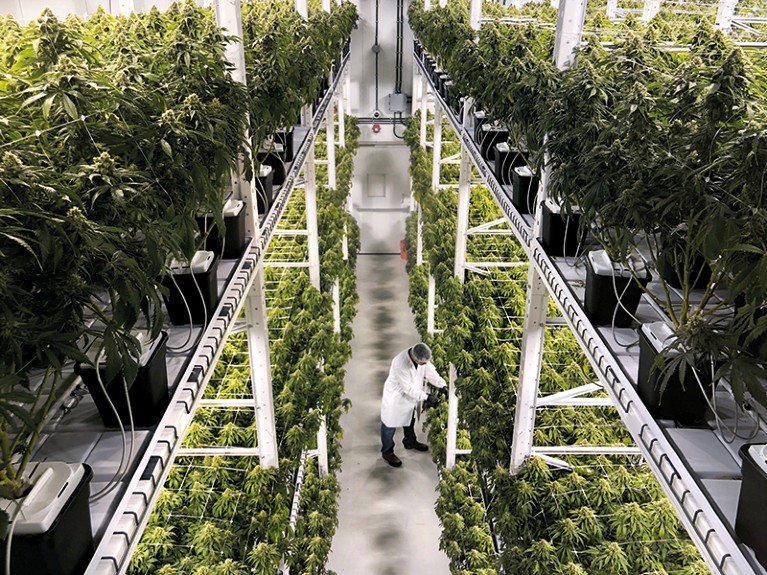
Cannabis Commercialisation Drives Use
Cannabis policy debates have spent years orbiting the same false binary: legalise or criminalise, and somehow the rest will sort itself out. The latest research cuts through that noise with an uncomfortable conclusion: commercialisation, not decriminalisation, is what pushes usage higher. That distinction matters because governments are not just choosing whether to relax penalties. They are deciding whether to build a market that actively sells more product, more often, to more people. For public health officials, educators, parents, and regulators, that changes the entire conversation around cannabis commercialisation. This is no longer a philosophical argument about personal freedom alone. It is a practical question about advertising, retail density, product potency, pricing, and how quickly a supposedly controlled market can start behaving like any other growth-hungry consumer industry.
- Commercialisation is the key driver of higher cannabis use, not decriminalisation on its own.
- Retail expansion, branding, and product variety can normalize and accelerate consumption.
- Policy design matters more than slogans: market structure shapes public health outcomes.
- Regulators may need tighter rules on marketing, potency, and outlet density.
- The real debate is not just legality, but how much industry the state is willing to tolerate.
Why cannabis commercialisation matters now
The difference between removing criminal penalties and building a retail market is not semantic. It is the difference between reducing harm from arrest and creating an industry with incentives to expand. That is why cannabis commercialisation is emerging as the most important variable in policy outcomes. Decriminalisation can reduce the damage caused by policing and prosecution without necessarily increasing access through aggressive sales channels. Commercialisation, by contrast, introduces the machinery of consumption: storefronts, promotions, shelf space, product engineering, loyalty tactics, and a steady push to normalize use.
That matters because markets do what markets do. They expand demand. If regulators allow cannabis to be packaged like lifestyle branding, sold in dense retail corridors, and differentiated into ever-stronger or more appealing products, usage is likely to rise. That does not automatically mean prohibition is the answer. It means the policy design must be far more disciplined than many legalization campaigns have been willing to admit.
The study’s core warning
The study’s central message is simple, but politically inconvenient: if you commercialize cannabis, you should expect usage to rise. That seems obvious once stated, yet public debate often conflates decriminalisation with legalization and assumes both produce the same social effects. They do not. Decriminalisation can lower the stakes of possession without turning cannabis into a mass retail category. Commercialisation changes the incentives entirely.
“The real policy lever is not simply whether cannabis is legal. It is whether the state creates a market that is engineered to grow.”
That insight should force regulators to look beyond whether adults can legally buy cannabis and ask how the product is sold, promoted, and normalized. If the industry is given standard consumer-market freedoms, usage patterns will likely follow the logic of alcohol, nicotine, and other widely distributed vice categories: broader availability, stronger branding, and rising experimentation, especially among younger adults.
Commercialisation versus decriminalisation
These two ideas are often bundled together in political messaging, but they are radically different policy tools. Decriminalisation reduces or removes criminal penalties for possession, usually for small amounts. Commercialisation creates a legal market where companies can compete for consumers. One is a justice reform. The other is an economic model.
What decriminalisation changes
Decriminalisation can cut arrest rates, reduce court burdens, and limit the lifelong damage caused by criminal records. It can also make it easier for users to seek help without fearing punishment. These are real gains, and they are often the strongest argument for reform.
What commercialisation changes
Commercialisation changes behavior at scale. It tends to increase access, reduce social friction around buying, and encourage product innovation designed to capture new users or raise consumption among existing ones. In a commercial market, the question is not just whether cannabis is legal. It is whether the system is designed to maximize sales.
That is where the public health tension lives. Policy makers can support justice reform without handing over the keys to an aggressive retail ecosystem. But once commercial incentives enter the picture, it becomes much harder to contain usage growth.
How cannabis markets pull demand upward
Commercial cannabis markets do not increase use through a single mechanism. They do it through a stack of small pressures that add up quickly. The more normalized the product becomes, the less effort it takes to try it. The more visible the stores, the more routine the purchase feels. The more product variants available, the easier it is for consumers to find a format that fits their preferences or lowers their resistance.
Retail density
When outlets are easy to find, easy to enter, and easy to revisit, consumption tends to rise. Density matters because convenience changes behavior. A substance that used to require informal networks or risk-heavy transactions now sits behind a clean counter with branding and menus.
Marketing and branding
Even where advertising restrictions exist, the industry finds ways to signal identity through packaging, store design, and product naming. That matters because brand familiarity lowers the psychological barrier to trial. It also helps reposition cannabis from a stigmatized substance into an everyday consumer good.
Product innovation
As competition heats up, companies often move toward stronger, sweeter, more convenient, or more discreet products. This is where public health concerns intensify. More potent products can change use patterns, increase the risk of heavy consumption, and make the market more attractive to novice users.
Why this matters for regulators
Regulators often talk as if legalization is a single policy switch. It is not. It is a bundle of design choices, and each one influences how fast use grows. If governments want to keep a lid on consumption while reducing criminal harms, they need to act like regulators, not just deal-makers.
That means thinking about the entire commercial stack: who can sell, where they can sell, how many outlets can open, what products can be sold, how strong those products can be, and how visible the marketing can be. A loose framework gives the industry room to expand demand faster than health systems can respond.
- Limit retail concentration to avoid oversaturation.
- Set potency caps where appropriate to reduce high-risk products.
- Restrict branding that targets younger consumers or normalizes frequent use.
- Monitor price floors and tax policy to avoid ultra-cheap products driving higher uptake.
- Invest in treatment, education, and surveillance before the market scales.
The public health tradeoff the industry prefers not to discuss
Every commercial market has a core tension: growth is good for business, but growth can be bad for health. Cannabis is no exception. The industry may frame expansion as consumer freedom and legal progress, but the public health consequences do not disappear because the sales are legal.
“A legal market can still behave like a saturation engine if policy lets it.”
That is the uncomfortable part of this debate. A state can be right to end punitive enforcement and still be wrong to let a new consumer category scale unchecked. If cannabis commercialisation is allowed to mirror alcohol and nicotine playbooks, governments should expect the same familiar outcomes: normalization, heavier exposure, and pressure on vulnerable groups.
The likely next policy fights
The next phase of cannabis reform will not be about whether possession should be punished. It will be about the fine print of market control. Expect increasingly hard fights over advertising rules, product labels, edibles, vape formats, delivery services, and the number of licenses a region can issue.
Potency and product design
One of the most consequential issues is potency. High-strength products can intensify risks, especially for new or frequent users. If regulators ignore this, they may end up authorizing a market that is safer in legal terms but riskier in clinical terms.
Data and surveillance
Governments also need better real-time monitoring. If usage spikes after new retail rules or product categories are introduced, policymakers should know quickly, not years later. Without timely data, commercial expansion can outrun the ability to correct course.
Local control
Municipalities are likely to become the frontline of implementation. Some cities will welcome tax revenue and retail jobs. Others will resist clustering stores near schools or low-income neighborhoods. That uneven geography will shape who bears the costs of commercialisation.
The bigger lesson for policy makers
The main lesson here is not that cannabis reform has failed. It is that policy outcomes depend on the model adopted, not the slogan attached to it. Decriminalisation can be a public health and civil liberties win. Commercialisation can be a public health risk if it is treated like a growth strategy rather than a controlled exception.
If governments want to avoid repeating the mistakes made with other addictive products, they need to stop treating cannabis as a simple moral issue and start treating it as a market design problem. That means tighter rules, slower rollout, and a willingness to prioritize health over industry scale.
For readers, the takeaway is equally clear: the real argument is no longer about whether cannabis should be legal in some form. It is about what kind of legal regime society is willing to build around it. And if the evidence keeps pointing in the same direction, the answer may be blunt: the market itself is the message.
The information provided in this article is for general informational purposes only. While we strive for accuracy, we make no guarantees about the completeness or reliability of the content. Always verify important information through official or multiple sources before making decisions.