Cardinals catcher Ivan Herrera seizes the moment and reshapes St Louis depth chart
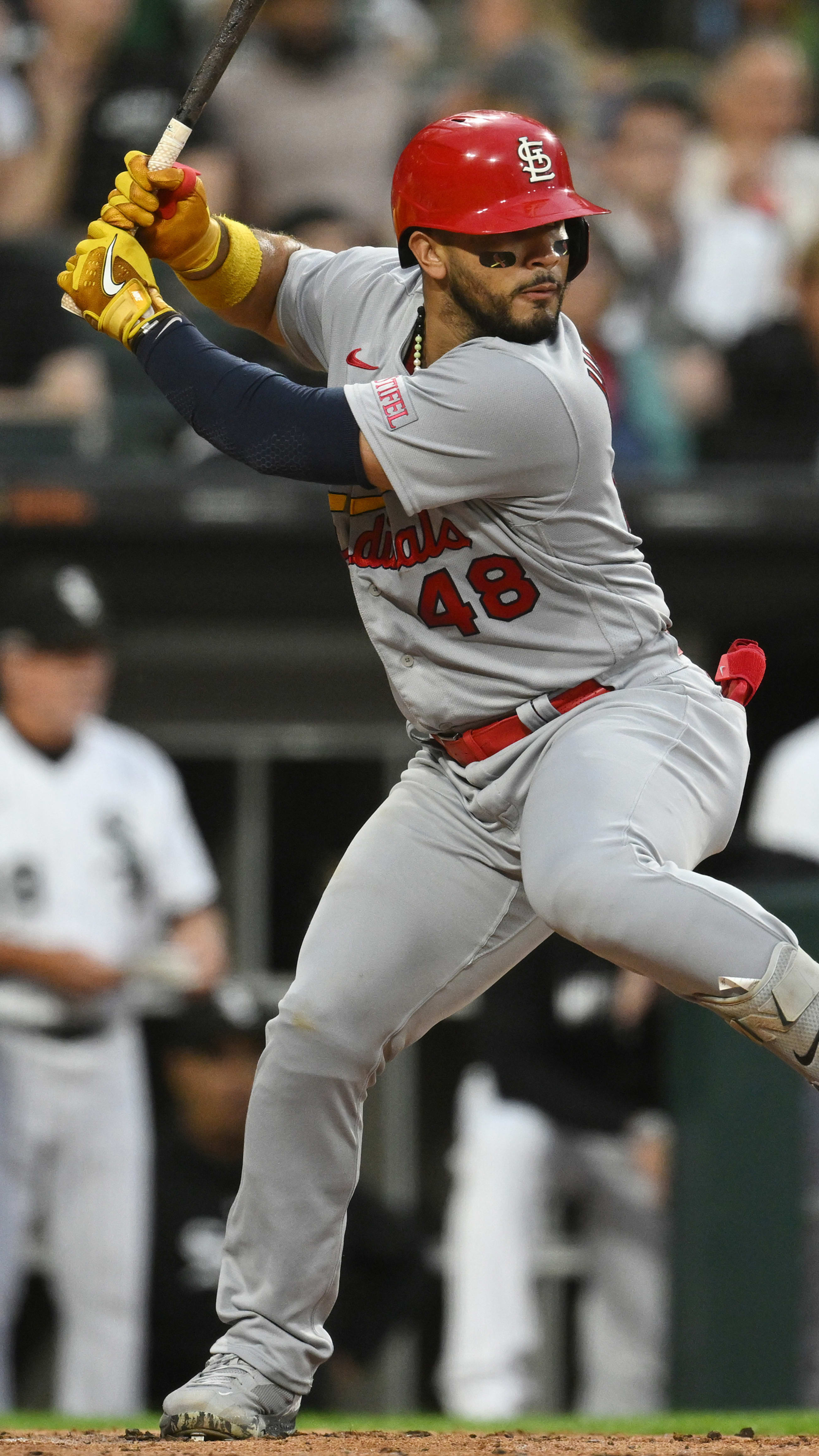
Cardinals catcher Ivan Herrera seizes the moment and reshapes St Louis depth chart
The St Louis Cardinals keep insisting they are a pitching-first franchise, yet the most urgent storyline right now is a young bat in catcher gear. Cardinals catcher Ivan Herrera is not just filling in for an injured veteran; he is flashing on-base skill, hard contact, and defensive growth that challenge every assumption baked into the front office plan. For fantasy managers and Cardinal diehards, the clock is ticking on whether the club leans into this surge or retreats to safer veteran options. The backdrop: a rotation patched together, a bullpen searching for stability, and a farm system dangling arms like Gordon Graceffo and Tink Hence as lottery tickets. The catch is simple: Herrera is hitting now, and the rest of the roster has to catch up.
- Herrera’s emergence is forcing the Cardinals to reconsider a veteran-first depth chart at catcher.
- Up-and-down pitching prospects like Matthew Liberatore and Michael McGreevy are pushing for rotation relevance.
- Role clarity for swingmen such as Andre Pallante could stabilize the bullpen and protect fantasy ratios.
- Contending window pressure means St Louis must balance development with aggressive moves.
Why Cardinals catcher Ivan Herrera changes the calculus
St Louis bet heavily on Willson Contreras as a middle-order bat, accepting defensive variance to keep the lineup dangerous. With Contreras sidelined, Cardinals catcher Ivan Herrera delivered a refined approach: lower chase rate, improved framing, and a contact profile that hints at a sustainable .360 OBP. That blend is rare in a league starving for offense behind the plate. The Cardinals like to stage prospects slowly, but Herrera is burning the redshirt. He blocks pitches better, moves laterally with less wasted motion, and has quelled past concerns about transfer speed on throws. That uptick narrows the defensive gap to Contreras while preserving the bat-first upside.
Plate discipline that translates
Herrera owns a patient eye, posting minor league walk rates north of 12 percent. Translating that to Busch Stadium is not trivial; pitchers challenge young catchers until they prove they will not fish. Herrera has obliged by spitting on breaking balls just off the black and ambushing hittable heaters early in counts. The mechanical tweak: a quieter load that lets his barrel stay through the zone longer. The result is fewer rollovers and more line drives to the alleys, a profile that supports sustainable fantasy value in OBP formats.
Defense that no longer lags
Framing numbers are noisy, but Herrera’s one-knee setup and minimal glove movement keep borderline strikes alive for groundballers like Steven Matz. Blocking remains a work in progress, yet coaches note better anticipation on sliders in the dirt. If the Cardinals trust him with sinker specialists, his playing time risk plummets, making him rosterable in two-catcher leagues and a viable streamer in standard leagues when the schedule softens.
Rotation puzzles: McGreevy, Liberatore, and the innings crunch
While catcher drama grabs headlines, the rotation is a Rubik’s Cube. Michael McGreevy flashed command in Triple-A with a 55 percent groundball rate, giving him a pathway as a strike-throwing innings eater. Yet his margin for error is thin; a 92 mph sinker without plus breaking action can get torched by patient lineups. The Cardinals have to choose between accelerating his debut or letting him sharpen a sweeper that only recently appeared in his repertoire. Pushing McGreevy up now could steal innings from Matthew Liberatore, whose own developmental arc oscillates between mid-rotation starter and leveraged bulk reliever.
Liberatore’s curveball conundrum
When Liberatore lands the big curve for strikes, he looks like a No. 4 starter; when he yanks it, hitters sit on the fastball and force him into the air. The addition of a cutter helped, but it flattened in recent outings. The club may need to simplify his pitch mix: lead with the curve, pair it with a firmer four-seam up, then finish with a changeup to righties. Without that, the bullpen beckons, where he could mirror Josh Hader‘s early-career path as a two-inning weapon. For fantasy, that volatility means streamer-only status unless the curve regains consistency.
Workload management
St Louis must ration innings across young arms to avoid dead-arm phases in August. Expect tandem starts or piggybacking McGreevy with Liberatore, which caps win potential but preserves ratios. For fantasy managers, that is a headache: fewer quality start chances, more middle-innings exposure, and a thin margin for WHIP stability.
The Andre Pallante swing role and bullpen stabilization
Reliever Andre Pallante has oscillated between short relief and bulk outings. His sinker-slider combo sinks barrels when his command is fine; when it drifts, his groundball magic evaporates. Deploying Pallante as a dedicated fireman for high-leverage groundball needs could let the Cardinals shorten games without burning the starter. That role mirrors what the Guardians do with Enyel De Los Santos: target double play scenarios, avoid third time through, and protect health. Fantasy implications are subtle: ratio help, occasional vulture wins, and potential holds if your league tracks them.
Metrics that matter
Pallante’s ideal usage hinges on GB% and sinkers above 60 percent usage. When his slider touches 87 mph, hitters struggle to differentiate spin out of the hand. If velocity dips, expect the Cardinals to shelve him for lower-leverage innings, limiting his fantasy relevance.
Where Contreras fits when healthy
Contreras will return, but the question is how the Cardinals allocate at-bats. The team could:
- Lean into offense: Contreras at DH, Herrera catching, maximizing on-base and slug.
- Split duties: alternate starts, keeping both fresh and match-up optimized.
- Trade chip calculus: showcase Contreras or Herrera for pitching, though the latter is unlikely given age and cost.
The first option is most fantasy friendly. Herrera’s OBP profile in front of middle-order bats would yield runs, while Contreras keeps his hard contact without the grind of catching every day. The risk: clubhouse dynamics and a veteran’s expectation to catch regularly. Navigating that requires transparent role communication.
Strategic Guide: how to play the Cardinals depth chart
Fantasy managers need a plan while St Louis experiments. Here is the game script:
Step 1: Prioritize the bat
Add Cardinals catcher Ivan Herrera in all two-catcher formats and as a bench stash in 12-teamers. The plate discipline + contact quality combo is sticky, and even if the batting average dips, the on-base floor props up runs scored.
Step 2: Stream the arms with intent
Use McGreevy at home against groundball-friendly lineups; sit him in hitter havens. Liberatore is a matchup-dependent southpaw: start versus lefty-heavy orders, bench versus power righties. If the club announces piggybacks, chase bulk relievers for sneaky wins, but monitor pitch count reports.
Step 3: Exploit bullpen roles
Add Pallante only in leagues counting holds or with deep ratio needs. Watch slider velocity; if it slides under 85 mph, bench. If the Cardinals install him as a primary fireman, he becomes a cheap source of wins when starters exit early.
Step 4: Track trade season signals
Should the Cardinals move an outfielder or veteran bat, DH at-bats open, boosting Herrera’s volume. Conversely, acquiring a veteran catcher could push Herrera back to part-time. Stay ahead by monitoring beat reports on role clarity.
Why this matters for the Cardinals window
St Louis is caught between competing timelines: an impatient fan base, a division that is often winnable with 88 wins, and a farm stocked with arms that are not ace-level but could stabilize innings. Embracing Herrera as a core piece frees the front office to trade from surplus elsewhere, perhaps moving a corner outfielder to rent a power arm. Passing on Herrera’s momentum would waste a rare internal offensive spark at a premium position. The calculus is simple: ride the hot bat, fortify the rotation, and let defense catch up.
Development versus contention
Trying to win while developing pitchers is delicate. The Cardinals have historically leaned on pitch-to-contact arms, trusting their defense. With rule changes shrinking defensive shifts, that strategy requires more swing-and-miss. Herrera’s framing gains help, but the organization must also prioritize arms with strikeout ceilings. McGreevy and Liberatore have to prove they can miss bats, or the front office must import velocity at the deadline.
Future proofing the catcher spot
Even if Contreras remains under contract, roster construction shifts when Herrera demonstrates starter-level value. A two-catcher platoon with DH rotation keeps both healthy and productive. If Herrera sustains 110 wRC+, the Cardinals suddenly possess a top-five offensive catching tandem. That kind of depth is trade leverage and lineup security rolled into one.
Pro tips for fantasy and dynasty players
- Dynasty stash: Herrera should already be rostered, but if a league mate fears a playing time crunch, buy. Catcher scarcity makes his
OBPand emerging defense invaluable. - Prospect squeeze: McGreevy is safer for innings than upside; pair him with a high-strikeout arm to balance risk.
- Streaming filter: Use park factors. Busch dampens homers; target Cardinals starters at home, fade on the road against top-five offenses.
- Deadline hedge: Hold a bench bat to pivot if the Cardinals acquire a veteran that cuts into Herrera’s volume.
Outlook: can St Louis thread the needle
The Cardinals do not have the margin to slow roll this. Cardinals catcher Ivan Herrera is producing now, and the rotation cannot afford more blowups. The blueprint should prioritize:
Lock Herrera into 5-6 starts a week, deploy Contreras at DH to keep the bat in the lineup, and filter young arms through soft landings until one seizes a rotation spot.
Executing that keeps the team competitive without mortgaging the future. Fail, and the season drifts into mediocrity while a promising catcher gathers dust.
Final verdict
Herrera’s rise is the rare internal spark that can reboot a season. His blend of patience and improving defense offers the Cardinals a way to modernize a lineup that too often leans on groundballs and veteran deference. The pitching puzzle remains unsolved, but clarity on the catching plan is the first domino. For fantasy managers, the play is straightforward: buy Herrera, stream Cardinals arms carefully, and stay nimble as roles evolve.
The information provided in this article is for general informational purposes only. While we strive for accuracy, we make no guarantees about the completeness or reliability of the content. Always verify important information through official or multiple sources before making decisions.


