China Protest Case Tests Australia
China Protest Case Tests Australia
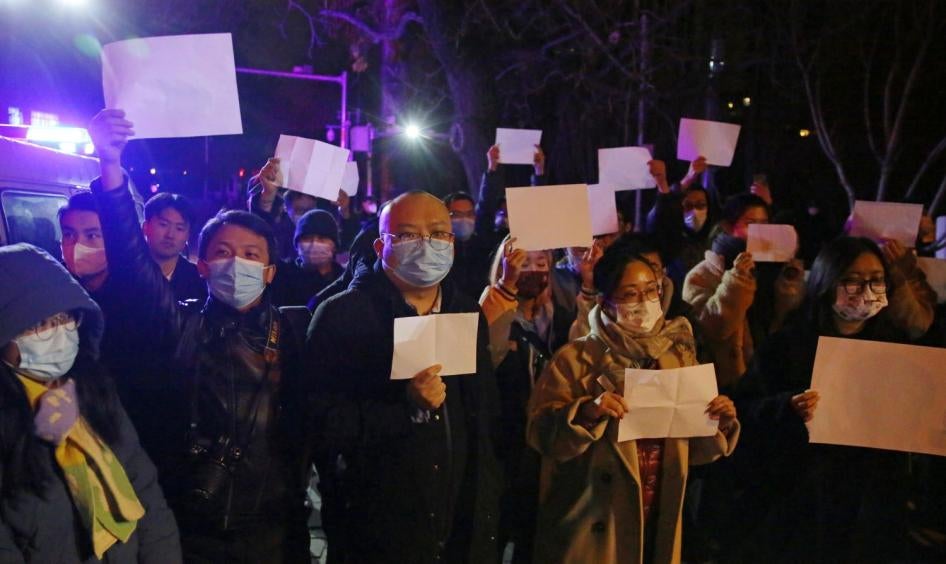
The allegation is as explosive as it is clarifying: a student who took part in a pro-democracy protest in Australia was allegedly later jailed in China. If true, this is not just a disturbing individual case – it is a stress test for Australian democracy, university safety, and the practical limits of free expression when authoritarian power can reach across borders. For students, migrants, and diaspora communities, the message is chilling. Political speech that is lawful in Australia may still carry life-altering consequences once someone crosses another border. For policymakers, the issue is even bigger. This is where human rights, foreign interference, national sovereignty, and campus security stop being abstract talking points and become a single, urgent policy problem. The China protest case is no longer just about one person. It is about whether democratic protections still mean anything when fear travels internationally.
- The China protest case raises major questions about whether political activity in Australia can trigger punishment abroad.
- Australian universities and policymakers may face pressure to strengthen protections for students vulnerable to transnational repression.
- The case sharpens debate over foreign interference, diaspora intimidation, and freedom of expression on campus.
- A human rights inquiry could become a turning point if it pushes Australia from concern to concrete action.
Why the China protest case matters far beyond one student
At first glance, the story looks narrowly legal: a student allegedly participates in a protest in Australia, returns to China, and is reportedly jailed. But the broader implications are geopolitical and deeply personal. Democracies often assume that rights exercised on their soil are protected by their own laws. That assumption starts to break down when another state effectively imposes consequences after the fact.
This is the core threat posed by transnational repression: governments extending pressure, intimidation, surveillance, or punishment beyond their own borders. Sometimes that pressure takes the form of online harassment. Sometimes it comes through family threats, visa leverage, or informal monitoring. In the most serious cases, it can lead to detention or imprisonment once a person re-enters the home country.
If lawful speech in Australia can allegedly result in imprisonment elsewhere, then free expression is protected in theory but vulnerable in practice.
That is why this case lands so hard. It touches students, activists, academics, and policymakers all at once. It also forces institutions to confront a difficult truth: globalized education has created campuses where local freedoms and foreign authoritarian pressure coexist in the same classroom.
The strategic fault line for Australia
Australia has spent years debating foreign interference, especially in relation to universities, research partnerships, critical infrastructure, and diaspora communities. But the China protest case adds a more intimate and combustible dimension. It is not just about espionage or influence operations. It is about whether people in Australia can safely engage in political speech without fearing overseas retaliation.
That distinction matters. Foreign interference is often framed as a national security issue. This case also makes it a civil liberties issue. If students self-censor because they worry their names, photos, or social posts could follow them overseas, the damage is immediate. The right to protest remains formally available, but the climate around it becomes distorted by fear.
Universities are now on the front line
Australian universities are especially exposed because they are both civic spaces and international marketplaces. They host politically active students from around the world, including from countries with restrictive speech environments. They also rely heavily on global enrolments, which can create institutional hesitation when geopolitical controversies emerge.
That creates a difficult balancing act. Universities are expected to defend free inquiry and student safety. At the same time, they are managing reputational risk, diplomatic sensitivity, and commercial pressure. Cases like this make neutrality harder to sustain.
A campus cannot credibly champion open debate if some students reasonably believe participating in a peaceful protest could endanger them later. That does not mean universities can solve cross-border repression on their own. It does mean they can no longer treat it as someone else’s problem.
Why a human rights inquiry could matter
The mention of a human rights inquiry is significant because inquiries can do what headline-driven politics often cannot: force institutions to document patterns, hear testimony, and recommend structural reform. A credible inquiry could move the conversation from outrage to architecture.
That architecture might include clearer reporting channels for intimidation, stronger coordination between universities and law enforcement, and more explicit guidance for students at risk of surveillance or retaliation. It could also push Canberra to sharpen its legal and diplomatic response to cross-border coercion.
The real test is not whether officials express concern. It is whether they build systems that make concern operational.
How transnational repression works in practice
The phrase transnational repression can sound abstract, but its mechanics are often brutally straightforward. A student attends a rally. Images appear online. Names circulate in private groups or on social media. Contacts back home receive visits or warnings. The student returns abroad or tries to renew documents, and pressure escalates.
Not every case follows the same script, and allegations always deserve careful scrutiny. But the pattern is increasingly familiar across multiple democracies. Authoritarian states do not need to police every dissident abroad directly. They only need enough visibility and enough selective punishment to create a wider climate of deterrence.
That is what makes this kind of case so powerful. Even one credible allegation can affect thousands of people who see themselves in it. The result is a chilling effect that extends well beyond the individual involved.
The digital layer makes everything harder
Modern protest is inseparable from digital exposure. Attendance can be documented through livestreams, tagged images, chat groups, event pages, and location data. A demonstration that feels local can quickly become globally searchable. For vulnerable students, that means the line between public participation and personal risk has become dangerously thin.
Pro tip: Institutions that host politically sensitive events should think beyond physical security. Risk planning now includes digital exposure, image circulation, and the preservation or removal of identifying information where possible and lawful.
Even basic digital hygiene can matter. Students and organizers may need advice on reviewing privacy settings, limiting unnecessary metadata, and understanding how content spreads across platforms. None of this removes the larger threat, but it can reduce avoidable exposure.
What Australia may need to do next
If the China protest case becomes a catalyst rather than a one-cycle scandal, Australia will need a response that spans education policy, policing, diplomacy, and human rights enforcement. Symbolic statements will not be enough.
1. Build formal reporting pathways
Students who fear retaliation need somewhere credible to go. That means processes that are easy to access, trauma-informed, and linked to real follow-up. A reporting system that goes nowhere will simply deepen distrust.
- Universities should create dedicated channels for reporting intimidation tied to political expression.
- Government agencies should provide clear escalation pathways when threats cross into coercion or foreign interference.
- Student services should be trained to recognize patterns specific to diaspora-targeted intimidation.
2. Treat campus speech as a security issue when necessary
This does not mean securitizing ordinary protest. It means recognizing that some threats to speech originate outside the normal bounds of campus conflict. If a student fears monitoring by a foreign state or its proxies, that is not just a disciplinary or welfare matter. It may have national security implications.
3. Update university risk frameworks
Many institutions are good at planning for physical protests and reputational controversies. Fewer are prepared for the aftermath when foreign retaliation is alleged. Risk models need to account for students who may face danger not in Australia, but upon departure, re-entry, or contact with family overseas.
That may sound bureaucratic, but frameworks shape action. If a risk does not exist in policy, it often does not exist in practice.
4. Use diplomatic pressure carefully but visibly
Australia cannot dictate another country’s legal system. But it can signal that allegations involving punishment for lawful speech conducted in Australia will receive sustained scrutiny. The point of diplomacy here is not theatrical outrage. It is to establish that these cases affect bilateral trust, educational exchange, and the safety expectations attached to studying in Australia.
When democratic states fail to respond visibly, the silence itself becomes part of the deterrent effect.
Why this matters for the global student economy
There is also a market consequence here. Australia is one of the world’s major international education destinations. That status depends not only on academic quality but on a perception of safety, openness, and institutional reliability. If students begin to feel that campuses cannot protect them from the downstream risks of political participation, that promise weakens.
This is not an argument for universities to discourage activism. Quite the opposite. Their credibility depends on proving that they take the risks around activism seriously, especially for students from politically sensitive backgrounds. Global education cannot advertise freedom while ignoring how unevenly that freedom is experienced.
The uncomfortable reality behind the debate
Cases like this are difficult because they disrupt a comforting fiction: that democratic space is self-contained. It is not. A protest in Sydney, Melbourne, or Brisbane may be physically local, but politically it can be international the moment a participant is identifiable to authorities elsewhere.
That reality creates unequal costs. A domestic student may attend a rally and go home. An international student may attend the same rally and spend months worrying about family pressure, document issues, border scrutiny, or future detention. Formally, both have the same right to protest. Functionally, they may face radically different levels of risk.
That gap should concern anyone serious about civil liberties. Equal rights mean little if only some people can exercise them without fear.
What the China protest case tells us now
The China protest case is ultimately a warning about the next phase of democratic vulnerability. The challenge is no longer just whether a state can censor speech inside its borders. It is whether fear of consequences outside a democracy can quietly reshape behavior inside one.
Australia now faces a choice. It can treat this as an alarming but isolated allegation, express concern, and move on. Or it can recognize the pattern, strengthen protections, and set a standard for how open societies defend people targeted beyond their own frontiers.
That is why this story matters. Not because it is sensational, but because it exposes a structural weakness. If lawful political expression in Australia can allegedly lead to punishment elsewhere, then safeguarding free speech requires more than permitting protest. It requires protecting the people who take the risk of showing up.
The information provided in this article is for general informational purposes only. While we strive for accuracy, we make no guarantees about the completeness or reliability of the content. Always verify important information through official or multiple sources before making decisions.