China Pushes Manned Robot Hype Into Reality
China Pushes Manned Robot Hype Into Reality
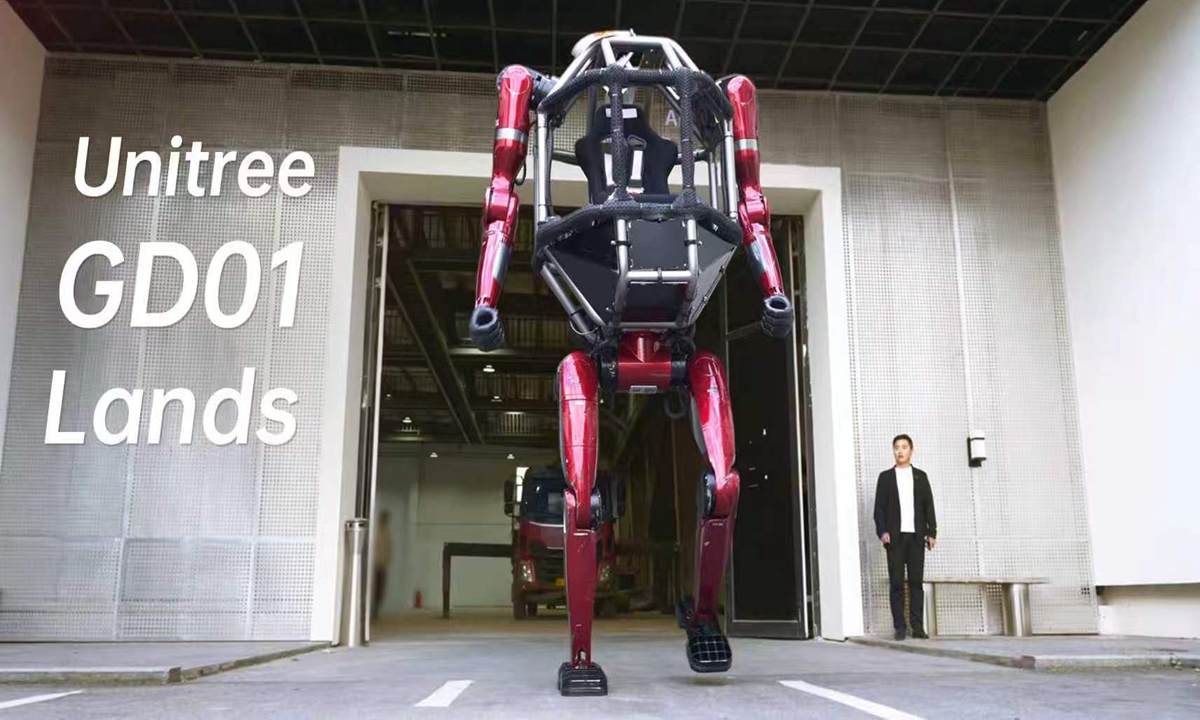
The manned robot era has spent years trapped between trade-show fantasy and engineering reality. That gap just got a little smaller. A Chinese firm has unveiled a transformer-style manned robot, and while the internet will inevitably fixate on the spectacle, the more important story is what this machine says about the direction of robotics, mobility, and industrial ambition. For founders, engineers, investors, and policymakers, this is the real signal: manned robot projects are no longer just props for viral clips. They are becoming testbeds for control systems, power management, human-machine interfaces, and national tech branding. The machine itself may not be ready to redefine transportation tomorrow, but it does something just as significant today – it forces the market to take the category seriously.
- A Chinese transformer-style manned robot is a serious branding move, but it also reflects real advances in mobility and control systems.
- The manned robot category matters because it sits at the intersection of humanoid robotics, exoskeletons, and future vehicles.
- Technical constraints remain brutal: power, balance, safety, weight, and cost will determine whether these machines evolve or stall.
- China’s robotics push is strategic, tying spectacle to manufacturing strength, talent recruitment, and geopolitical tech signaling.
- The biggest near-term impact may be industrial and defense-adjacent, not consumer entertainment.
Why this manned robot instantly matters
At first glance, a transformer-style machine looks tailor-made for headlines. It is cinematic, theatrical, and easy to dismiss. That would be a mistake. The unveiling lands at a moment when robotics is shifting from software-first experimentation to hardware deployment. The industry is no longer asking whether machines can move with increasing autonomy. It is asking which form factors will win, which applications can justify the cost, and which countries can scale production.
A manned robot sits in a fascinating middle ground. It is not a pure humanoid robot operating independently. It is not simply an exoskeleton strapped to a worker. And it is not just an electric vehicle wearing a sci-fi costume. It combines elements of all three. That makes it commercially messy, but strategically important.
What looks like a stunt today often becomes tomorrow’s prototype stack. Robotics history is full of flashy machines that quietly advanced sensors, actuators, and control software long before the business model made sense.
This is why the reveal deserves more scrutiny than eye-rolls. Even if this particular machine never enters mass production, the technologies behind it could feed into warehouse systems, rescue robots, military mobility platforms, heavy industry tooling, and advanced entertainment hardware.
The deeper story behind China’s robotics momentum
China has become increasingly adept at pairing technical development with public spectacle. That formula matters because attention is not separate from industrial progress – it helps attract capital, talent, procurement interest, and political support. A transformer-style manned robot is not just a machine. It is a statement about what kind of future a company, and by extension a country, wants to be associated with.
Chinese firms already hold meaningful advantages in manufacturing scale, battery supply chains, electronics integration, and rapid prototyping. Those strengths do not automatically solve robotics, but they make iteration faster and cheaper. In a field where every kilogram, every watt-hour, and every millisecond of response time matters, manufacturing depth becomes a strategic asset.
Hardware advantage is the hidden headline
Too much robotics coverage focuses on concept videos and not enough on the boring parts that decide success. The hard truth is that advanced robotics is a supply-chain business as much as a software one. If a company can source motors, structural materials, battery packs, sensor arrays, and onboard compute at scale, it has a real chance to compress development cycles.
That is where China’s broader ecosystem matters. A manned robot requires tightly integrated subsystems:
actuatorspowerful enough to move a heavy frame and human operatorbattery systemsthat can deliver high output without catastrophic thermal riskstability control softwareto manage shifting loadshuman-machine interfacesthat keep operation intuitive under stresssafety redundanciesthat prevent injuries if a subsystem fails
None of that is trivial. But none of it is science fiction either.
National signaling is part of the product
There is also an unmistakable geopolitical layer here. Robotics is now viewed as a strategic industry with implications for manufacturing resilience, logistics, labor substitution, disaster response, and defense. A public reveal of a transformer-style machine sends a message: domestic firms are experimenting beyond practical factory bots and into prestige robotics.
That matters because perception shapes policy. When governments believe a nation is pulling ahead in advanced robotics, funding and incentives tend to follow.
Manned robot engineering looks cool because it is brutally hard
This is where the hype needs friction. Building a functional manned robot is extraordinarily difficult. Every design choice introduces painful tradeoffs. If the frame is large enough to look imposing, it gets heavier. If it gets heavier, it demands more power. More power means larger batteries or alternative energy systems. Larger batteries add weight. And all of that compounds the challenge of maintaining balance, especially when a human operator shifts position inside the machine.
Power and endurance remain the biggest barriers
Battery density has improved, but mobility hardware still runs into a simple constraint: big moving machines burn through energy fast. A transformer-style manned system is likely to face short operating windows unless it is tethered, lightly loaded, or designed more for demonstration than sustained field use.
That is why near-term commercial success probably depends less on long autonomous operation and more on tightly scoped use cases. Think controlled environments, staged tasks, or applications where dramatic mobility is worth the energy penalty.
Balance and safety are not optional features
A falling humanoid robot is bad. A falling humanoid robot with a human inside is far worse. This is where control systems become everything. The machine needs to interpret body movement, terrain changes, actuator feedback, and dynamic load shifts in near real time. It also needs fail-safes that can trigger safe shutdowns or mechanical stabilization.
Pro tip for evaluating these projects: ignore the exterior styling for a moment and ask three practical questions:
- How does the system handle
power loss? - What is the emergency egress design for the operator?
- Can the robot maintain stability during uneven motion or partial actuator failure?
If those answers are vague, the machine is more concept than platform.
The interface problem may be just as important as locomotion
One underappreciated challenge is control. A manned robot cannot succeed if operation requires fighter-pilot levels of training for basic movement. The ideal interface blends instinctive human input with software-assisted stabilization. In practical terms, that likely means layered control logic where the operator sets intent and onboard systems manage posture, balance, and motion smoothing.
This is one reason the category overlaps with exoskeleton research. The best future designs may borrow from gesture mapping, force feedback, and assistive motion control rather than rely on brute-force manual piloting.
Where a manned robot could actually find a market
If you strip away the pop-culture framing, the obvious question is simple: who would pay for this? Not many consumers, at least not anytime soon. But that does not mean there is no market.
The first successful manned robot business will probably sell capability, not fantasy. The winning pitch is less “become a mech pilot” and more “perform tasks conventional machines cannot do safely or efficiently.”
Industrial and hazardous environments
This is the clearest opportunity. In environments where human judgment is essential but exposure is dangerous, a manned robot could provide physical separation, lifting support, or terrain mobility beyond existing tools. The catch is cost. The machine would need to beat or complement cheaper alternatives such as remote-operated systems, cranes, tracked robots, or specialized vehicles.
Disaster response and rescue
Search-and-rescue scenarios often involve unstable terrain, debris, and tasks requiring dexterity under pressure. A manned robot sounds compelling here, especially if it can traverse spaces that wheeled platforms cannot. But rescue applications are unforgiving. Reliability matters more than style, and emergency agencies tend to buy proven systems, not ambitious experiments.
Defense-adjacent applications
This is the area many observers will think about immediately, even if companies avoid saying it outright. A manned robot could theoretically be useful for logistics, engineering tasks, rough-terrain mobility, or protected operation in dangerous zones. Whether that becomes real depends on survivability, endurance, maintenance demands, and doctrine fit. Militaries are often interested in concept evaluation, but they are ruthless about practical limitations.
Entertainment, tourism, and premium experiences
Do not underestimate this lane. High-end themed attractions, live events, experiential venues, and promotional showcases can justify expensive machines if they deliver attention and ticket sales. For some robotics companies, entertainment revenue may become the bridge that funds more serious R&D.
Why the manned robot trend deserves skepticism
It is worth resisting the urge to overstate the breakthrough. Spectacular reveals can hide shallow capability. A machine that stands, poses, or performs limited transformations under controlled conditions is not the same as a robust platform ready for daily deployment. The robotics industry has a long memory of prototypes that looked extraordinary but never crossed the valley into dependable operation.
There are also structural reasons to be cautious:
- Unit economics may be ugly, especially if maintenance and energy costs stay high.
- Regulatory frameworks are unclear for large human-operated robotic platforms in public or mixed-use spaces.
- Training burdens could limit adoption if operators need extensive certification.
- Liability risks are significant when heavy moving machines interact with people.
In other words, the path from viral prototype to durable business is narrow.
What to watch next in manned robot development
The real test is not whether more videos appear. It is whether the next generation of machines demonstrates measurable improvements. Here is what serious observers should track over the next 12 to 24 months.
Operational time
If endurance meaningfully improves, the category gets more credible fast. Watch for claims around battery runtime, recharge strategy, and thermal performance.
Terrain capability
Flat-stage movement means very little. Real progress shows up in stairs, uneven surfaces, tight turns, and controlled recovery from instability.
Operator safety systems
Expect more attention to rollover protection, redundant braking, emergency exit mechanisms, and AI-assisted balance correction.
Commercial pilots
The strongest signal will be actual deployments, even small ones. A paid trial in industrial inspection, themed entertainment, or hazardous maintenance says more than any launch event.
The bigger takeaway for the robotics industry
The transformer-style reveal is not important because everyone will soon own a manned robot. That is almost certainly not happening. It is important because it expands the design space the industry is willing to explore. Robotics is entering a phase where boundaries between vehicle, machine, and embodied interface are starting to blur. Some products will look like humanoids. Others will look like industrial tools. A few will look like sci-fi fever dreams with a legitimate engineering roadmap underneath.
China’s latest manned robot reveal captures that tension perfectly. It is part spectacle, part prototype, part strategic signaling. And that combination may be exactly the point. The machine does not need to be fully market-ready to matter. It only needs to convince the industry that the next leap in robotics might come from categories people once dismissed as pure theater.
That is the real shift. The manned robot is no longer just a fantasy object. It is becoming a serious experiment in how humans and machines might share mobility, strength, and control. Whether this specific platform succeeds is almost secondary. The important thing is that the race is now visibly on.
The information provided in this article is for general informational purposes only. While we strive for accuracy, we make no guarantees about the completeness or reliability of the content. Always verify important information through official or multiple sources before making decisions.