China’s Export Surge Reshapes Global Trade
China’s Export Surge Reshapes Global Trade
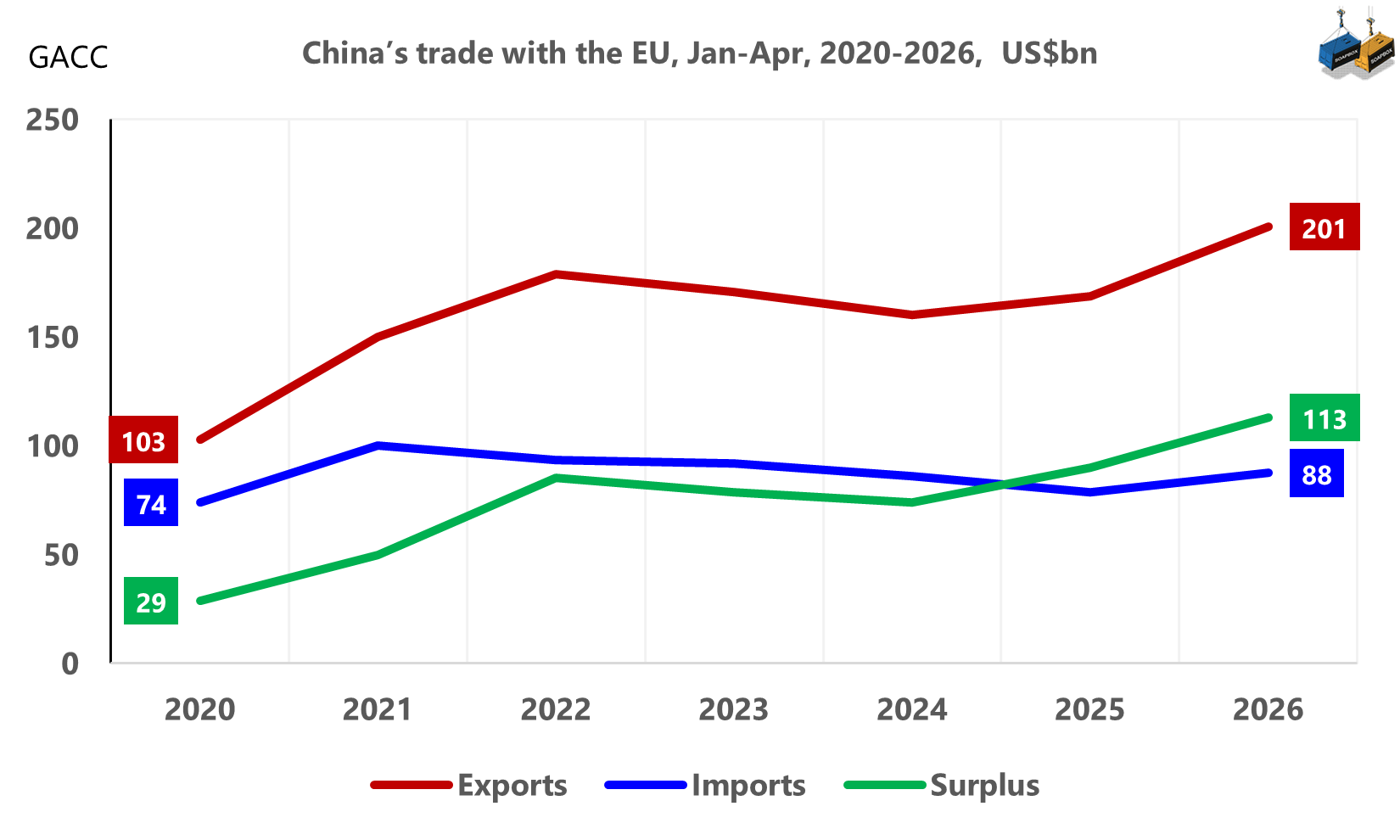
China’s export surge is no longer just a trade statistic. It is a pressure test for the global economy. When one manufacturing giant keeps shipping at scale while demand softens elsewhere, the ripple effects hit everything from factory hiring to shipping rates to political campaigns built on economic anxiety. For governments already trying to rebuild domestic industry, the challenge is brutal: how do you compete with a country that can flood markets with cheap, fast, and increasingly sophisticated goods? That question now sits at the center of trade policy, industrial planning, and corporate strategy. And the answer is getting harder, not easier, as exporters in China adapt faster than many of their rivals expected.
- China’s export surge is reshaping pricing, supply chains, and trade policy worldwide.
- Manufacturers in Europe, the US, and emerging markets face sharper competition on cost and speed.
- Tariffs alone are not a full fix because companies can shift routes, products, and sourcing models.
- The biggest winners are firms that can balance resilience, diversification, and market-specific strategy.
- The next phase of trade conflict will likely focus on technology, autos, batteries, and advanced manufacturing.
Why China’s export surge matters now
The latest wave of exports is not just about volume. It is about leverage. China has built a system that blends industrial depth, state support, logistics scale, and supplier density in a way few countries can match. That gives Chinese companies an advantage when global demand gets shaky. They can cut prices, move quickly into new markets, and absorb shocks that would force smaller competitors to retreat.
For buyers, this can look like a gift. Cheaper goods help control inflation and keep shelves stocked. For domestic manufacturers, though, it feels like a squeeze. Margins narrow, investment gets delayed, and factory jobs become harder to protect. That is why China’s export surge is not only an economic story. It is a political one, too.
Trade is no longer just about who makes the product. It is about who can scale, adapt, finance, and deliver faster than everyone else.
The machinery behind China’s export surge
China’s export strength did not happen by accident. It is the result of decades of industrial policy, infrastructure investment, and supplier ecosystem development. Ports, rail, power grids, and industrial parks all reinforce one another. A company can move from prototype to mass production with fewer bottlenecks than in many other countries.
That matters because modern manufacturing rewards speed and coordination as much as low wages. A factory that can source parts locally, automate quickly, and ship globally has a structural edge. Chinese exporters have also become more sophisticated at navigating changing demand. When one market slows, they can pivot to another. When one category faces tariffs, they can redesign products or reroute shipments through third countries.
The result is a system that behaves less like a single national supply chain and more like a distributed export machine. That makes it resilient. It also makes it difficult to regulate with blunt policy tools.
Scale is not the only advantage
It is tempting to reduce China’s export power to cheap labor, but that explanation is outdated. Labor is still part of the picture, yet the real advantage comes from ecosystem density. Suppliers, tooling firms, component makers, logistics operators, and financing channels are all tightly connected. If one piece of the chain is weak, another can usually fill the gap.
This is especially visible in sectors such as consumer electronics, batteries, solar equipment, and electric vehicles. In each case, Chinese firms are not just exporting finished goods. They are exporting industrial capability.
How the rest of the world is responding
Countries are reacting in familiar ways: tariffs, subsidies, export controls, and local content rules. But each of these tools has limits. Tariffs can raise prices for consumers and downstream manufacturers. Subsidies are expensive and take time to bear fruit. Export controls work best on narrow, strategic technologies, not broad categories of goods. Local content rules can help domestic production, but they can also raise costs and slow deployment.
That tension explains why policymakers are trapped between two priorities. They want to protect domestic industry, but they also want to avoid inflation and shortages. Those goals are often in conflict. The more aggressive the response to Chinese competition, the more likely consumers and businesses pay the bill.
For businesses, the response is more pragmatic. Many are pursuing a China-plus-one strategy, which means keeping some production in China while adding capacity in places like Vietnam, India, Mexico, or Eastern Europe. The aim is not to abandon China entirely. It is to avoid being overexposed to one country, one policy regime, or one geopolitical shock.
Why tariffs are a blunt instrument
Tariffs can slow imports, but they rarely solve the underlying competitiveness gap. Companies can shift assembly lines, absorb some costs, or move shipping routes. In some cases, they can even pass costs to consumers if market conditions allow. That means tariffs often function more like friction than a wall.
They can still matter, especially in strategic sectors. But if the goal is to rebuild industrial capacity, governments need a broader playbook: energy costs, workforce training, permitting reform, capital access, and long-term demand signals. Without those pieces, tariffs become symbolic rather than transformative.
China’s export surge and the tech sector
The technology sector is where the stakes get sharper. Advanced manufacturing now sits at the crossroads of trade, national security, and innovation policy. Batteries, chips, robotics, telecommunications gear, and electric vehicles are not just products. They are strategic assets.
China’s export machine has become especially powerful in industries that benefit from scale and learning curves. The more units produced, the faster costs fall and quality improves. That creates a compounding effect. Competitors who hesitate can find themselves falling behind on both price and capability.
For global tech companies, this creates a difficult balancing act. They want access to low-cost inputs and massive production capacity. At the same time, they face pressure from regulators and investors to reduce dependency on Chinese supply chains. The result is a slow, expensive reconfiguration of the global tech map.
For executives, the real risk is not just competition. It is being locked into a supply chain strategy built for yesterday’s geopolitical climate.
What this means for electric vehicles and batteries
Few sectors illustrate the issue better than electric vehicles and batteries. China has built deep strength across the value chain: minerals processing, cell production, pack assembly, and vehicle manufacturing. That lets Chinese companies price aggressively while still improving technology.
For rivals, this is a nightmare scenario. They must build capacity, secure raw materials, train workers, and manage regulation at the same time. Even with subsidies, catching up is slow. That is why many countries are now trying to lock in local supply chains before Chinese exporters dominate the market further.
What companies should do next
Companies cannot afford to treat China’s export surge as background noise. It is reshaping procurement, pricing, and risk management right now. The smartest firms are not simply pulling out of China. They are redesigning their operating model around flexibility.
- Diversify suppliers across multiple regions so a single policy change does not disrupt production.
- Map tariff exposure by product line, not just by country, because the pain is often uneven.
- Invest in dual sourcing for critical components where delays can shut down entire product lines.
- Use scenario planning to test how pricing, demand, and margins change under trade restrictions.
- Build market-specific product strategies so one global design does not become a liability everywhere.
Pro tip: the best supply chain strategy is not the cheapest one. It is the one that still works when shipping rates rise, sanctions expand, or a new tariff regime lands overnight.
The political fallout will keep growing
Trade debates are becoming domestic politics by another name. Voters may not follow customs data, but they do notice when local factories shrink, wages stagnate, or communities lose industrial jobs. That gives China’s export surge outsized political importance in countries already wrestling with deindustrialization.
Expect more pressure on governments to show they are defending strategic sectors. Expect more scrutiny of subsidized imports. Expect more conflict over whether open trade still works in a world defined by security competition and economic nationalism.
But the uncomfortable truth is that no country can simply tariff its way back into competitiveness. Industrial renewal takes years, not quarters. It requires investment, patience, and policy consistency – three things politics often struggles to provide.
The bigger question is what comes next
China’s export surge may be the beginning of a new trade phase rather than a temporary spike. If domestic demand inside China remains uneven, exporters will keep looking outward. If global demand softens, price competition could intensify further. And if geopolitical tensions rise, trade restrictions could become more fragmented and more unpredictable.
That leaves the world with a hard choice. It can try to decouple more aggressively, accepting higher costs and slower growth. Or it can keep trading with China while trying to reduce the risks through diversification and selective protection. Most governments will end up somewhere in the middle.
That middle ground may be messy, but it is probably the only viable path. China’s export surge has exposed the limits of older assumptions about globalization. The next era of trade will be less seamless, more political, and far more contested.
For businesses, that means one thing: build for volatility now, because the old playbook is already obsolete.
The information provided in this article is for general informational purposes only. While we strive for accuracy, we make no guarantees about the completeness or reliability of the content. Always verify important information through official or multiple sources before making decisions.


