Climate Change Manual Rethinks Science
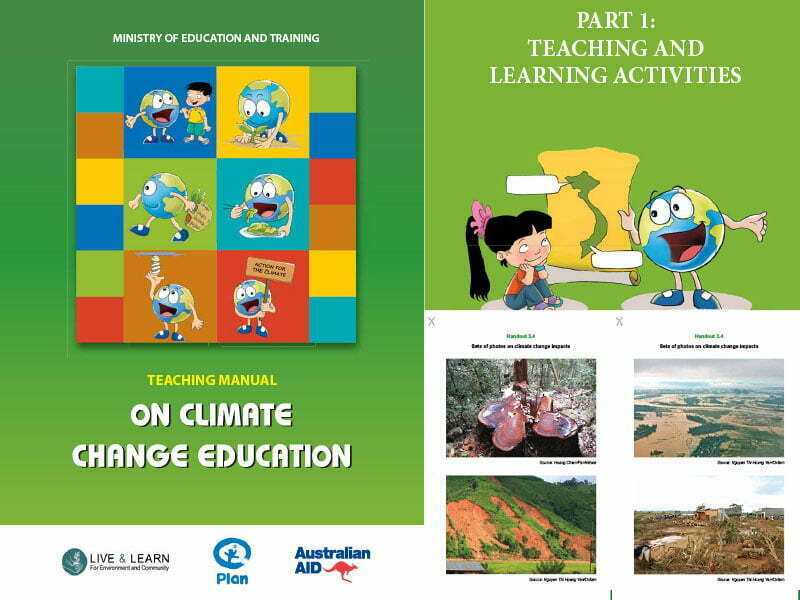
Climate Change Manual Rethinks Science
Climate change is no longer a debate about whether the risks are real. The fight now is about how science is framed, shared, and trusted before the next heat wave, flood, fire, or insurance shock lands on someone’s doorstep. That is why a climate change manual from the National Academy of Sciences matters more than it might first appear. It is not just another academic document. It is a signal that the language of climate science is being retooled for a world that is tired, polarized, and increasingly expensive to ignore. For governments, schools, journalists, and civic leaders, the stakes are brutally practical: if the message fails, the response fails with it.
- The new climate change manual is as much about communication as it is about science.
- Public trust, not just data, is now the bottleneck in climate action.
- Clearer framing could improve policy, education, and local preparedness.
- The manual reflects a broader shift toward usable, decision-ready climate science.
- The real test is whether institutions can turn guidance into action.
Why the climate change manual matters now
The timing is the story. A climate change manual arriving in 2026 lands in a landscape where climate impacts are no longer theoretical. Communities are already dealing with stronger storms, longer fire seasons, strained power grids, and heat that makes entire neighborhoods functionally less livable. Against that backdrop, a manual from a major scientific institution is not just a publication. It is an attempt to reset how climate knowledge moves from research papers into the real world.
That matters because climate communication has often suffered from two failures at once. First, it can be too technical for the people who need it most. Second, it can be too vague to help decision-makers choose a specific next step. A strong climate change manual tries to bridge that gap by translating complex systems into usable guidance without flattening the science into slogans.
The real climate challenge is not a lack of evidence. It is the distance between evidence and decisions.
What the climate change manual is trying to fix
The best climate guidance today has to do more than explain greenhouse gases or rising temperatures. It has to help institutions answer uncomfortable questions: What should a city do with its flooding map? How should a school district plan for extreme heat? What does a utility do when demand spikes and infrastructure is already fragile? A climate change manual becomes valuable when it turns abstract risk into operational planning.
This is where many older public-facing science efforts have fallen short. They often describe the problem well, but stop before the part where engineers, administrators, and policymakers need implementation detail. The newer model of climate guidance is more pragmatic. It treats climate change as a cross-cutting operational issue, not a standalone environmental topic. That shift may sound subtle. It is not. It changes who feels responsible, who budgets for adaptation, and who gets blamed when the next event hits.
From awareness to decision support
Effective climate guidance increasingly behaves like a decision-support tool. It does not merely say a risk is increasing. It helps people assess exposure, prioritize interventions, and weigh tradeoffs. For example, local officials do not need another reminder that heat kills. They need a framework for deciding where to place cooling centers, how to protect transit workers, and which neighborhoods are most vulnerable during multi-day heat events.
That is the larger promise of a climate change manual: move from awareness toward action. The climate conversation has been crowded with warning labels for years. What has been missing is a more disciplined bridge between warning and implementation.
Climate change manual and the trust problem
Any climate change manual today has to operate in a credibility crisis. Public skepticism is no longer just about scientific findings. It is about institutions, motives, and whether experts speak in ways that feel useful rather than condescending. That makes tone just as important as technical accuracy.
Scientific bodies have learned, sometimes the hard way, that people are less likely to act on climate information if it feels abstract, moralizing, or politically coded. The challenge is not to simplify the science into something cheap. It is to present it with enough clarity that non-specialists can use it without needing a doctorate in atmospheric chemistry.
This is where editorial and institutional discipline matter. The most effective climate communication avoids panic, avoids false balance, and avoids the trap of speaking only to insiders. A climate change manual should help experts explain uncertainty without sounding evasive, and urgency without sounding theatrical.
Trust is the delivery system for climate science. Without it, even the best data gets ignored.
How the climate change manual could reshape practice
The practical impact of a climate change manual depends on who adopts it. If schools use it, students get a better baseline for understanding climate risk. If local governments use it, adaptation planning gets more consistent. If journalists use it, public reporting may become less reactive and more grounded in systems thinking. If private sector leaders use it, climate risk can move from a branding issue to a balance-sheet issue.
That broad usefulness is the point. Climate change is not a siloed topic anymore. It touches insurance, housing, food systems, labor, energy, migration, and public health. A useful manual acknowledges that reality and gives each audience a different entry point without contradicting the science.
What strong guidance should include
- Plain-language summaries that explain risk without losing precision.
- Decision frameworks for local, regional, and institutional planning.
- Scenario thinking that shows multiple futures instead of one assumed outcome.
- Equity considerations so vulnerability is not treated as evenly distributed.
- Action steps that can be tracked, funded, and revised over time.
Those elements do more than educate. They make climate science administratively usable. That is critical, because the biggest barrier to climate action is rarely a complete lack of knowledge. It is often fragmented responsibility, limited budgets, and short political timelines.
Why this climate change manual could matter for the next decade
The next decade of climate response will be defined less by dramatic breakthroughs than by execution. Cities will need better risk maps. Utilities will need smarter load planning. Public health agencies will need heat-response systems that are actually staffed. School districts will need infrastructure plans that assume the climate of the past is no longer a reliable guide.
A climate change manual can help shape that execution if it becomes more than a reference document. The best case is that it becomes a common language across agencies and institutions. That would reduce the current chaos of inconsistent standards, mismatched assumptions, and communication gaps that appear every time disaster strikes.
There is also a political dimension. Climate action often collapses when it is sold as either apocalypse or sacrifice. A more grounded manual can support a better frame: resilience, preparedness, and smarter risk management. That framing may be less cinematic, but it is more durable. It speaks to budgets, safety, operations, and continuity – the language institutions actually use when they are serious.
The limits of any climate change manual
Still, no manual can solve a problem this large on its own. Climate change is too entangled with energy systems, land use, consumer behavior, industrial policy, and global inequality for a single publication to serve as a master key. The danger is that institutions mistake guidance for implementation. They publish the manual, hold a panel, and then return to business as usual.
That would be the most familiar failure mode of all. Good climate communication is useful only when it changes incentives, not just vocabulary. A manual can help organizations align around facts, but it cannot force them to spend money, redesign infrastructure, or absorb political backlash. Those are governance decisions, not editorial ones.
Even so, a strong climate change manual can still do something powerful: reduce excuses. When institutions claim they do not know how to begin, clear guidance narrows that escape route. And when the next disaster arrives, as it surely will, better preparation will matter more than better rhetoric.
The bigger editorial shift behind the manual
What stands out about this moment is not simply that scientists are publishing another climate guide. It is that scientific institutions are adapting to a world where information must be actionable, not just authoritative. That is a profound shift in how public science works.
For years, the assumption was that better facts would naturally produce better outcomes. Reality has been harsher. Facts compete with fatigue, misinformation, and institutional drift. A climate change manual reflects the recognition that science must now be packaged with implementation logic, communication strategy, and an understanding of how people actually make decisions under pressure.
That is a healthier model. It acknowledges that expertise is not self-executing. It has to be translated, adopted, and maintained. In a climate era defined by urgency and distrust, that may be the most important scientific upgrade of all.
Bottom line
The climate change manual from the National Academy of Sciences is important because it sits at the intersection of science, policy, and public trust. Its real value will not come from elegantly phrased pages. It will come from whether institutions use it to make climate risk legible and actionable. If it succeeds, it could help move climate science from a warning system into a decision system. And that is the kind of shift the next decade badly needs.
The information provided in this article is for general informational purposes only. While we strive for accuracy, we make no guarantees about the completeness or reliability of the content. Always verify important information through official or multiple sources before making decisions.