Colombia Election Shakes a Fractured Democracy

Colombia Election Shakes a Fractured Democracy
The Colombia election is becoming a referendum on far more than one government. It is a test of whether voters still believe the political center can manage insecurity, economic anxiety, and institutional distrust – or whether the country is about to swing harder toward a more confrontational brand of politics. That is the real tension driving this race. Colombia is not just choosing a successor to an embattled leadership circle. It is deciding how to respond to public frustration that has been building for years: rising fear over violence, skepticism toward reform promises, and a growing appetite for candidates who frame politics as a battle rather than a negotiation. For investors, diplomats, businesses, and ordinary citizens, the stakes are immediate. Election cycles in Latin America increasingly reshape trade, migration, security cooperation, and democratic norms. Colombia now sits squarely in that pressure chamber.
- The Colombia election is being shaped by voter fatigue with traditional leadership and anxiety over security.
- Establishment allies face a harsher political environment as outsider and right-leaning messages gain traction.
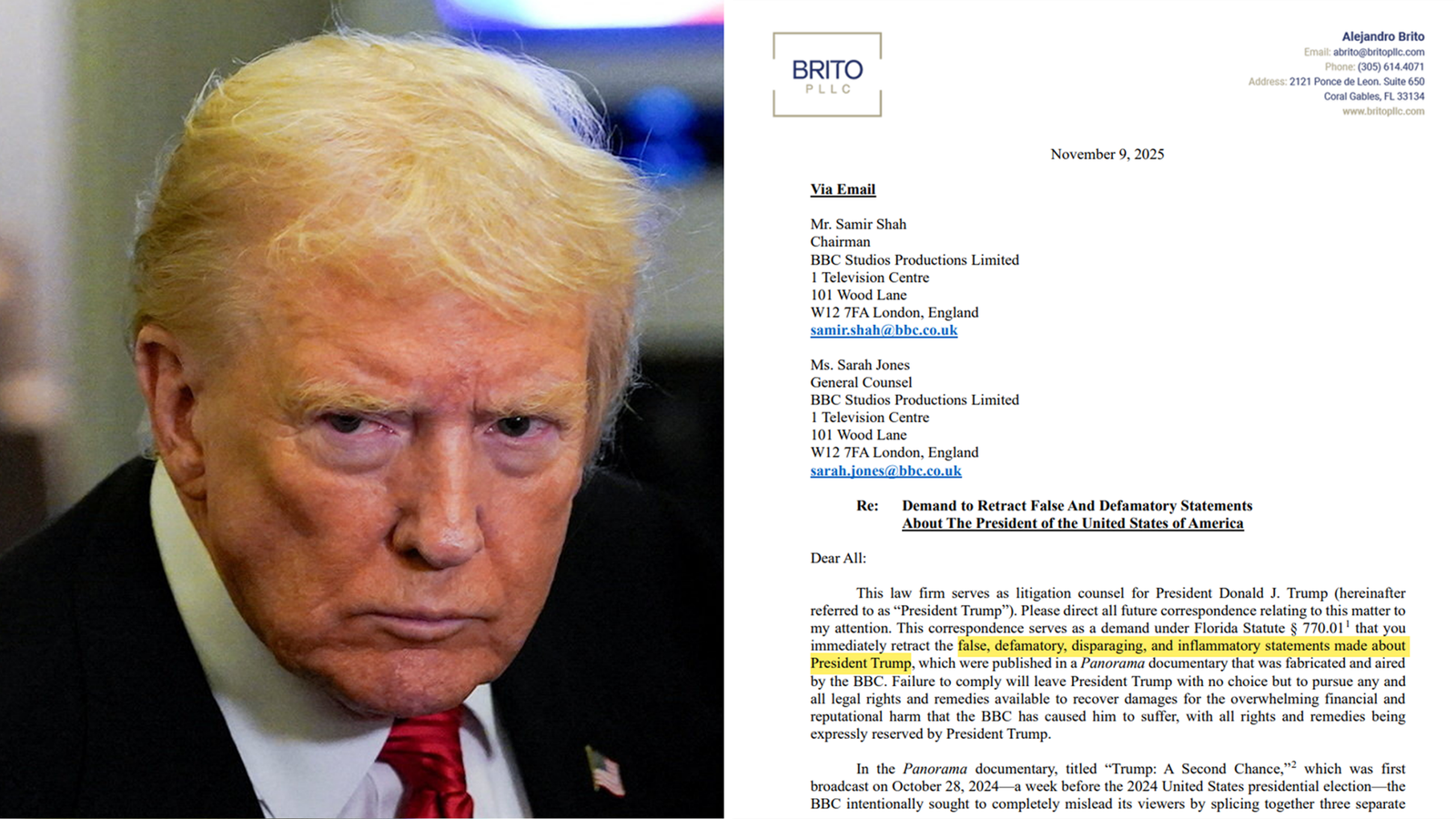
- Pro-Trump political branding signals a broader regional shift toward polarizing campaign tactics.
- The result could affect governance, foreign policy, investment confidence, and regional stability.
Why the Colombia election feels bigger than a normal transfer of power
Every election comes with claims of historic importance. This one earns the label. Colombia has spent years navigating a difficult mix of post-conflict expectations, uneven economic recovery, and public disappointment with the pace of institutional change. When those pressures stack up, elections stop being simple partisan contests and become stress tests for the state itself.
The current mood appears defined by contradiction. Many voters want order, but they are wary of old elites. They want reform, but they are unconvinced by abstract promises. They want strong leadership, but Colombia’s recent political history has made many citizens suspicious of concentration of power. That contradiction creates the opening for rival narratives to flourish at the same time.
One side argues that continuity, even if imperfect, is safer than rupture. The other says continuity is exactly what produced the current malaise. That is why the Colombia election matters beyond party branding: it reflects a broader democratic argument over whether moderation still has political market value.
The candidates are competing on emotion as much as policy
Modern campaigns rarely turn on white papers. They turn on emotion, perception, and storytelling. Colombia is no exception. Candidates tied to the outgoing leadership must defend a record in an environment where public patience is thin. Their challenge is not just technical. It is psychological. They must persuade voters that incomplete progress still counts as progress.
Opposition figures, especially those leaning into hardline rhetoric or borrowing from global populist styles, have a simpler message architecture. They can channel anger. They can collapse complex governance problems into a moral frame: the country is weak because leaders are weak. That argument may not survive deep scrutiny, but campaigns do not always reward nuance.
When elections become battles over public mood, the candidate who best names the frustration often outperforms the one with the more coherent governing plan.
This is where pro-Trump positioning becomes politically relevant. It is less about direct policy imitation and more about political signaling. It says toughness, anti-elite combativeness, culture-war clarity, and suspicion of establishment institutions. In a fragmented political environment, that branding can be powerful even when local realities differ sharply from US politics.
Security still dominates the emotional map
Security remains one of Colombia’s most potent electoral issues. That is not surprising. In countries where violence, organized crime, and state legitimacy are persistent concerns, public perception of safety can outweigh macroeconomic indicators or long-term reform agendas. Voters often judge governments on whether daily life feels more stable, not whether a ministry met a technical benchmark.
If people believe the state has lost control – whether fully true or partly amplified – candidates promising force and clarity gain an advantage. This dynamic is especially important for any contender linked to a governing coalition seen as struggling to convert ambition into order.
Economic frustration is more political than spreadsheets suggest
Inflation, employment insecurity, and cost-of-living pressure do not always produce straightforward ideological outcomes. Sometimes they fuel demand for social protection. Other times they trigger backlash against incumbents of any stripe. In Colombia, economic frustration appears to be feeding a broader anti-establishment current.
That matters because even voters who support reform in principle may pivot if they feel household pressure is intensifying. Electoral behavior is often less about abstract ideology than about whether the future feels more expensive, less predictable, and harder to navigate.
What pro-Trump candidates actually represent in Colombia
Labeling a candidate “pro-Trump” can be analytically useful, but only if treated carefully. It should not be read as a full import of US policy debates. In Latin America, the label usually signals a political method rather than a literal platform. It suggests media-savvy confrontation, anti-establishment theatrics, nationalist messaging, and a willingness to polarize if polarization mobilizes turnout.
That approach can work because it is optimized for distrust. If citizens assume institutions are failing, then candidates who openly attack institutions may seem authentic rather than reckless. The risk, of course, is that this strategy can degrade democratic norms while claiming to defend them.
Pro-Trump politics in Latin America is often less about Washington and more about the local profitability of outrage.
For Colombia, that raises a deeper question: does the electorate want a manager, a reformer, or a fighter? The answer may decide not only who wins, but how governable the country remains afterward.
What the outgoing leadership’s ally is up against
An ally of an outgoing administration inherits both assets and liabilities. The asset is structure: networks, experience, institutional access, and message discipline. The liability is association. If voters are restless, every unresolved problem becomes part of the candidate’s biography whether they directly caused it or not.
That burden is especially heavy in a polarized campaign. Opponents do not need to prove total failure. They just need to convince enough voters that the status quo is exhausted. That is often enough to make continuity sound like complacency.
The governing camp’s best case is to reframe the choice as imperfect progress versus dangerous disruption. But that argument only works if voters still see institutions as capable of delivering results. If confidence has slipped too far, then warnings about disruption may sound less like wisdom and more like self-preservation.
The challenge of defending complexity
Incumbent-aligned candidates usually must explain trade-offs. They talk about constraints, implementation timelines, fiscal limits, and legal realities. Those are real issues, but they are not emotionally efficient campaign messages. Outsiders can promise decisive fixes. Insiders must explain why fixing things is hard.
That asymmetry is one of the defining structural problems in contemporary democratic politics. It does not guarantee the outsider wins, but it does mean the governing side needs unusually sharp communication to survive voter impatience.
Why this matters for business, diplomacy, and the region
Election outcomes in Colombia reverberate beyond domestic politics. Colombia remains a strategically important country for regional security, trade relationships, migration management, and investor sentiment. A government that pivots sharply in tone or policy can alter expectations across several sectors at once.
Businesses tend to watch three things during politically volatile races:
- Regulatory predictability: whether contracts, taxes, and sector rules are likely to shift abruptly.
- Security conditions: whether transport, logistics, and local operations face greater risk.
- Institutional stability: whether political polarization spills into governance paralysis.
Diplomats, meanwhile, will be watching for signs of how the next administration could recalibrate relations with regional neighbors and major powers. A leader who campaigns on ideological confrontation may govern more pragmatically, but markets and governments usually price in the rhetoric before they can verify the reality.
The deeper regional pattern behind the Colombia election
Colombia is not operating in isolation. Across the Americas, electorates are showing lower tolerance for traditional party systems and greater openness to emotionally charged, personality-driven campaigns. The common ingredients are familiar: distrust of elites, frustration with insecurity, weak faith in institutions, and digital media environments that reward conflict over coherence.
That trend does not always produce the same ideological result. Sometimes it empowers the left. Sometimes the right. Increasingly, the more important divide is not left versus right but establishment versus anti-establishment, negotiation versus confrontation, institutional gradualism versus political shock therapy.
The Colombia election fits squarely inside that pattern. It is a local race with regional implications because it offers another data point in a continental debate: can democratic systems still produce legitimacy through moderation, or do they now require a permanent performance of conflict?
What to watch on election night and after
If the result is close, the post-election environment may matter as much as the vote itself. Colombia’s democratic resilience will be judged not only by who wins but by how political actors respond to uncertainty, contestation, and narrow margins.
Key signals to watch include:
- Whether losing candidates quickly recognize the legitimacy of the result.
- Whether security concerns intensify around the voting process or aftermath.
- Whether the winner governs toward coalition-building or doubles down on campaign combat.
- Whether economic and market actors interpret the result as stabilizing or destabilizing.
A contested narrative can outlast a clean count. That is one of the central lessons of modern democratic politics. Elections are now information wars as much as civic procedures.
The bottom line on the Colombia election
The Colombia election is not merely a personality contest between an establishment ally and insurgent challengers. It is a measure of how much frustration Colombian voters are prepared to convert into political risk. If continuity prevails, it will suggest that enough of the electorate still believes institutions can be repaired from within. If a more confrontational candidate breaks through, the message will be harder to miss: voters are no longer willing to wait for complex reforms to produce visible security and economic gains.
That is why this race deserves close attention. Colombia is standing at a hinge moment where public exhaustion, ideological branding, and democratic resilience are colliding. The result will say a lot about one country. It may say even more about where politics across the region is heading next.
The information provided in this article is for general informational purposes only. While we strive for accuracy, we make no guarantees about the completeness or reliability of the content. Always verify important information through official or multiple sources before making decisions.