Congress Presses Hegseth on Iran War Budget
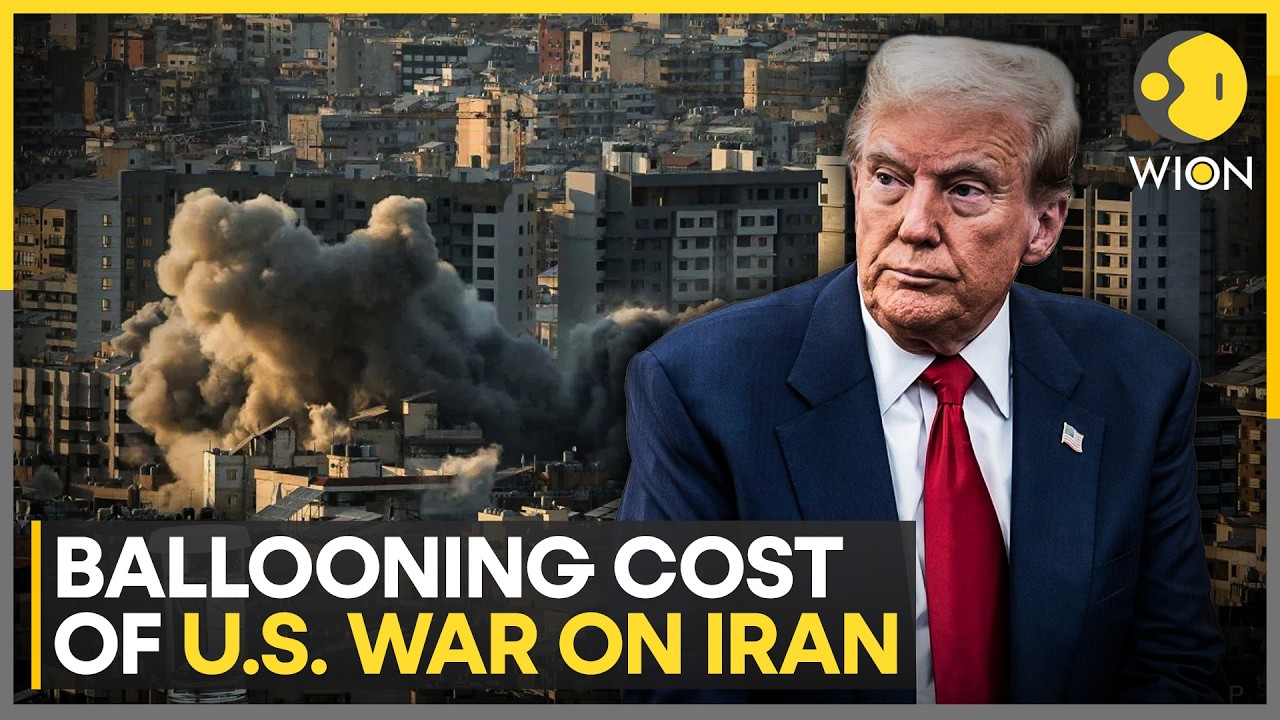
Congress Presses Hegseth on Iran War Budget
The Iran war budget debate is no longer a hypothetical policy exercise. It is becoming a live stress test for how Washington handles military planning, public accountability, and the price tag of escalation in the Middle East. When lawmakers publicly question Pete Hegseth over funding tied to a potential conflict with Iran, they are not just debating line items. They are confronting a familiar and dangerous pattern: strategy that can move faster than scrutiny, rhetoric that can outpace planning, and costs that can spiral long before voters understand what is at stake.
That is why this moment matters. Budget hearings are often treated like procedural theater, but they are one of the few places where political messaging collides with operational reality. If the numbers do not hold up, the strategy probably does not either. And if Congress is uneasy now, that unease could shape everything from readiness and procurement to deterrence and diplomatic leverage.
- Lawmakers are using the Iran war budget debate to test whether strategy matches spending.
- Questions aimed at Pete Hegseth reflect broader concerns about oversight, escalation, and military readiness.
- A potential conflict with Iran would carry long-tail costs far beyond immediate operations.
- Congressional skepticism signals that fiscal approval is becoming a proxy for strategic legitimacy.
Why the Iran War Budget Debate Matters Now
Washington has a long history of underestimating the true cost of military action. Initial projections often focus on immediate operational expenses like deployments, munitions, logistics, and force protection. But a conflict with Iran would almost certainly be larger than a short campaign model suggests. Iran is not a marginal actor with limited regional reach. It has asymmetric capabilities, proxy networks, cyber options, missile forces, and the ability to disrupt global energy markets.
That means the Iran war budget cannot be viewed as a simple request for short-term defense spending. It is better understood as the opening balance sheet for a conflict that could widen quickly. Any serious congressional review is likely asking several hard questions at once: What is the operational objective? How long is the commitment expected to last? What assumptions are driving the budget estimates? And what happens if those assumptions fail?
When lawmakers challenge a war budget, they are often challenging the strategy underneath it.
This is where the hearing pressure on Hegseth becomes politically significant. Public questioning is not just about optics. It is about whether the administration or defense leadership can prove that planning is disciplined, realistic, and accountable.
Pete Hegseth Faces the Core Oversight Test
Pete Hegseth has long been associated with muscular national security messaging, and that public identity makes budget scrutiny especially important. Hawkish rhetoric can be politically powerful, but appropriations demand specifics. Congress does not fund posture alone. It funds operations, matériel, troop support, intelligence integration, replenishment cycles, and contingency planning.
That is the tension lawmakers appear to be probing. If leaders are arguing that pressure on Iran is necessary, legislators want to know whether there is a coherent path between policy goals and military expenditure. That includes not only what money is being requested, but what outcome that money is supposed to buy.
The numbers are never just numbers
Defense budgeting has its own language, and it can obscure as much as it reveals. A request may be framed around readiness, emergency procurement, force mobility, or strategic deterrence. But in practice, those categories can function as signals of expected conflict intensity. Spending on precision-guided munitions, naval positioning, air defense, refueling capacity, intelligence-surveillance-reconnaissance assets, and regional basing support tells a story about what planners think might happen next.
If lawmakers are pressing Hegseth, they are likely trying to decode that story before it hardens into policy. Once money moves, momentum follows. And in national security, momentum can be hard to reverse.
Oversight is the real battlefield in Washington
Congressional questioning also reveals a deeper institutional issue. Modern war powers debates often arrive too late, after troops are positioned, alliances are activated, and public messaging has narrowed the political options. Budget hearings become one of the few arenas where Congress can still force executive branch clarity.
That matters because a war with Iran would not be a narrow or isolated operation. It would involve regional allies, shipping routes, energy infrastructure, cyber defense, and likely retaliatory activity beyond a conventional battlefield. Any budget discussion that does not account for those layers risks becoming dangerously incomplete.
What a War With Iran Would Actually Cost
The headline number attached to a possible conflict is almost never the real number. The direct military cost is only the first layer. A fuller accounting includes replacement of expended munitions, maintenance stress on aircraft and naval assets, hazard pay, rotational fatigue, medical care, intelligence operations, force protection at regional bases, and long-term veteran support.
Then there are the macroeconomic effects. Even limited strikes can trigger market reactions, shipping insurance increases, supply chain disruptions, and oil price volatility. A prolonged confrontation in or around the Persian Gulf would hit global trade and likely feed domestic inflation pressure. That turns a defense budget argument into a broader economic policy issue almost overnight.
This is the uncomfortable truth behind the Iran war budget debate: the cost is not confined to the Pentagon. It can bleed into consumer prices, political stability, and allied coordination.
Pro Tip for reading defense budgets
Watch for broad terms wrapped in technical language such as contingency operations, supplemental appropriations, readiness enhancement, or theater support. Those labels can be legitimate, but they can also mask the scale of what is being prepared. If the public sees a modest request while the force posture suggests a much larger commitment, skepticism is warranted.
The Strategic Risk Behind the Spending
Supporters of hardline policy often argue that showing strength prevents wider war. Sometimes that is true. Deterrence can work when the signal is credible, limited, and paired with a clear understanding of the adversary’s thresholds. But deterrence can also fail when military moves are interpreted as preparation for regime-scale confrontation.
Iran has spent years developing tools designed specifically to complicate superior conventional force. That includes proxy escalation, maritime disruption, dispersed missile systems, cyber retaliation, and political influence through regional networks. Any budget that assumes a clean, controllable exchange risks importing fantasy into appropriations.
A war budget is also a forecast of what leaders think the enemy can do.
If Congress is asking difficult questions now, that may reflect a recognition that military superiority does not automatically equal low-cost success. The United States can dominate in many conventional metrics and still face a strategically expensive conflict.
Why Lawmakers Are Pushing Harder This Time
There is also a political memory at work here. After decades of conflict in the Middle East, many lawmakers have learned that authorizations, emergency spending, and limited-objective language can evolve into open-ended commitments. Public trust around war planning is thinner than it used to be, and budget scrutiny has become one of the clearest ways to signal caution without appearing weak.
That makes the current exchange more than partisan sparring. It is part of a larger recalibration in Washington. Legislators increasingly understand that if they do not challenge assumptions early, they may lose leverage later. Questioning Hegseth over a possible war budget is therefore both substantive and symbolic. It says Congress wants proof before permission.
Why this matters for allies and adversaries
Foreign capitals watch these hearings closely. Allies want reassurance that US policy is coherent and sustainable, not just reactive. Adversaries look for signs of division, uncertainty, or overextension. The tone and substance of congressional questioning can influence how credible US threats or commitments appear abroad.
That means domestic budget oversight has international effects. A muddled case for war spending can weaken deterrence just as easily as an under-resourced posture can. The challenge is finding a middle path where planning is robust but escalation is not automatic.
The Bigger Question Washington Cannot Dodge
The central issue is not simply whether money should be allocated. It is whether the United States has defined a realistic political objective in relation to Iran. Budgets can support tactics, but they cannot substitute for strategy. If the end state is vague, every appropriation becomes a gamble.
That is the point lawmakers seem to be forcing into the open. What exactly is being bought here: deterrence, punishment, sustained degradation, regional reassurance, or the infrastructure for a longer war? Each goal has a different cost profile, a different legal posture, and a different risk of escalation.
Without that clarity, the Iran war budget debate becomes a warning light. It signals that spending may be getting ahead of consensus, and that Congress is trying to slow the machine before events dictate the next move.
What Comes Next
Expect this issue to intensify, not fade. Budget questions tend to multiply once lawmakers sense that assumptions are soft or objectives are underspecified. More requests for classified briefings, force posture explanations, contingency estimates, and legal framing are likely to follow. Even if immediate funding moves forward, the political appetite for blank checks appears limited.
For readers watching this from outside Washington, the key takeaway is straightforward: budget fights are often the earliest visible sign of a much larger strategic contest. They reveal whether leaders have done the hard work of matching ambition to reality. In the case of Iran, that match matters enormously because the downside risk is not abstract. It is measured in lives, regional instability, fiscal strain, and the possibility of a conflict that begins with a number on paper and ends somewhere far more costly.
The scrutiny facing Pete Hegseth is therefore not a side story. It is the story. If the answers on cost, scope, and objective are weak, the case for escalation weakens with them. And in a system that too often asks questions after the fact, that kind of pressure is not obstruction. It is the minimum requirement for democratic accountability.
The information provided in this article is for general informational purposes only. While we strive for accuracy, we make no guarantees about the completeness or reliability of the content. Always verify important information through official or multiple sources before making decisions.