Curiosity Finds Mars Honeycomb Patterns
Introduction
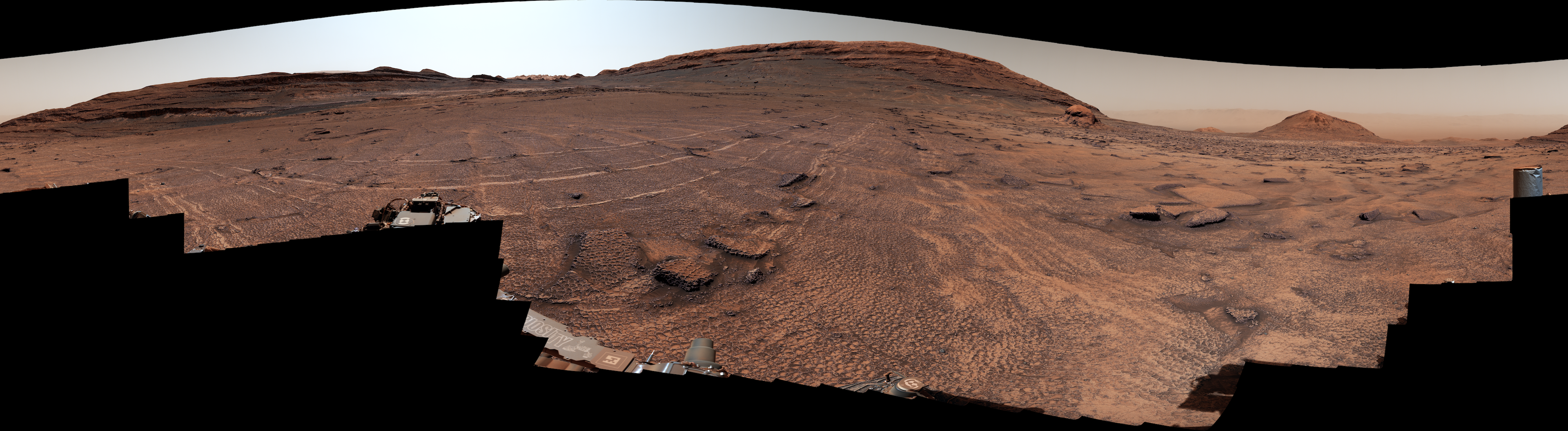
Mars just handed scientists another puzzle, and this one looks like something nature should not have been able to build. NASA’s Curiosity rover has spotted a field of honeycomb textures etched into the Red Planet’s rocks, the kind of pattern that immediately raises the stakes for anyone trying to decode Mars’ ancient environment. These formations are not just visually strange. They may preserve a record of how water, minerals, and wind worked together billions of years ago, turning a once-wet landscape into the barren surface we see today. For planetary scientists, the Curiosity Mars rover honeycomb textures discovery matters because it adds another data point to one of the biggest questions in space science: how did Mars change so dramatically, and could it once have supported life?
- The Curiosity Mars rover honeycomb textures suggest complex mineral and environmental processes shaped Martian rock.
- These patterns may point to ancient groundwater or mineral-rich fluids moving through cracks in the rock.
- Curiosity’s findings help scientists reconstruct how Mars transitioned from wetter to drier conditions.
- The discovery adds context to where future missions should look for preserved chemical clues.
What Curiosity actually found
The rover observed a stretch of terrain marked by repeating, cell-like textures that resemble honeycomb patterns. On Earth, similar structures can form when minerals precipitate in rock fractures, when groundwater circulates through sediment, or when erosion exposes pre-existing veins and polygons. On Mars, the same shapes are more mysterious because the planet’s environment has spent most of its recent history aggressively stripping away evidence.
That is why the Curiosity Mars rover honeycomb textures are so important. They are not a single odd rock. They are a field of patterned formations that suggest the region experienced more than one geological process. The terrain likely went through a sequence of deposition, alteration, and erosion, with each stage leaving a faint fingerprint behind. Curiosity’s cameras and spectrometers are doing the slow, unglamorous work of turning those fingerprints into a story.
These textures matter because they are not random decoration. They are the residue of a planet that used to be active, chemically dynamic, and potentially habitable.
Why the Curiosity Mars rover honeycomb textures matter
The easiest mistake is to treat the discovery as a novelty. It is not. The textures provide clues about the chemistry of ancient Mars, especially whether water once moved through the rock in ways that could concentrate minerals and alter surface layers. That kind of activity is exactly what scientists look for when they are trying to determine whether Mars had long-lived habitable conditions.
Curiosity has spent years climbing through Gale Crater, reading layered rock like a history book. Each new formation adds a chapter. Honeycomb-like structures may indicate that the rocks were once fractured and later filled or cemented by mineral-rich fluids. Alternatively, they could reflect stress patterns caused by drying, heating, or repeated environmental shifts. Either way, the textures suggest Mars was not a static rock pile. It was a planet with evolving systems.
Why this matters: if fluids moved through these rocks, they may have redistributed elements that are critical for habitability, including sulfur, carbon, and iron compounds. That gives scientists a better chance of identifying where Mars preserved the most promising geochemical records.
How these formations may have formed
The most likely explanation is a combination of geological cracking and mineral infill. On a planet like Mars, where temperatures swing sharply and surface conditions are harsh, rocks can fracture from thermal stress or shifting underground pressures. If water or briny fluids later seeped through those cracks, they may have left behind mineral deposits. Over time, erosion can strip away softer material and expose the denser pattern underneath, creating a honeycomb effect.
Possible formation pathways
- Fracture and cementation: cracks open in rock, then fill with mineral-rich fluids that harden over time.
- Desiccation and shrinkage: sediment dries out and contracts, producing polygonal patterns that later become visible at the surface.
- Erosion sculpting: wind removes surrounding material and reveals a pre-existing network of mineral seams.
- Repeated fluid activity: more than one episode of groundwater movement alters the rock in stages.
None of these explanations are simple, which is exactly why scientists care. Mars is a planet that often hides its history in plain sight. The honeycomb textures may be the visible edge of a much more complicated subsurface past.
Curiosity’s role in reading Mars like a geologist
Curiosity is not just driving around taking pretty pictures. It is a mobile geology lab. Its Mastcam system captures high-resolution imagery, while its onboard instruments analyze rock chemistry and mineral composition. Together, they let scientists compare visual textures with chemical signatures, which is the difference between guessing and actually building a coherent model of the past.
The rover’s mission has always been about context. A single mineral detection means little without knowing how the rock is layered, cracked, weathered, and exposed. The Curiosity Mars rover honeycomb textures offer that context. They give researchers a way to connect shape, structure, and chemistry in one place.
Curiosity’s value is not just discovery. It is patience. The rover turns scattered visual clues into a geologic timeline one rock face at a time.
What the textures could tell us about ancient water
Water remains the most important variable in Mars science. Not because it proves life, but because it makes life plausible. The honeycomb patterns may suggest that water was present long enough to alter rocks in a sustained way rather than in a brief, one-off event. That distinction matters. Short-lived runoff is interesting. Long-lived groundwater systems are transformative.
If mineral-rich fluids moved through this terrain, they may have deposited salts or other compounds that hardened into the structures Curiosity sees today. Those deposits can act like time capsules, preserving chemical conditions from a past era. In practical terms, that means these rocks could help scientists determine whether Mars’ environment was merely wet or actually habitable.
Pro tip for reading Mars discoveries: look for evidence that combines shape, chemistry, and layering. One clue is interesting. Three clues start to look like a process.
Why this matters for future Mars missions
Every new Curiosity finding influences the next wave of Mars exploration. The better scientists understand which rock types preserve ancient environmental records, the smarter future landing site selection becomes. That applies to both robotic missions and long-term human exploration planning. A landscape with mineralized cracks, layered sediments, and preserved surface textures may offer a better scientific payoff than an apparently smooth plain.
The Curiosity Mars rover honeycomb textures also reinforce a broader mission strategy: follow the water, then follow the minerals. Future sample-return campaigns will depend on identifying rocks that can tell a durable story about planetary habitability. Textures like these may point researchers toward the kinds of deposits most likely to preserve biosignatures or other chemical traces.
Potential future implications
- Better targeting of rocks that preserve ancient fluid activity.
- Improved models of how Mars lost surface water over time.
- Stronger site selection for sample collection and return missions.
- More refined estimates of where habitable environments may have existed.
The bigger picture on Mars geology
Mars has a habit of looking simple from orbit and complicated up close. That is the story Curiosity keeps uncovering. Every region the rover studies adds texture to our understanding of a planet that once had rivers, lakes, and probably a far more dynamic interior than it does now. Honeycomb textures are just one more reminder that the Red Planet’s surface is the product of long, layered change.
The real lesson is not that Mars has weird rocks. It is that Mars keeps preserving evidence of its past in forms that only a rover can properly interpret. In an era when planetary science is moving toward more ambitious exploration, discoveries like this are the bridge between curiosity and proof. They tell us where to look, what to test, and which stories the planet is still willing to tell.
For now, the Curiosity Mars rover honeycomb textures stand as a sharp visual clue and a scientific challenge. They may not answer the question of whether Mars once hosted life, but they absolutely sharpen the search. And on Mars, sharper search means better science.
The information provided in this article is for general informational purposes only. While we strive for accuracy, we make no guarantees about the completeness or reliability of the content. Always verify important information through official or multiple sources before making decisions.


