David Attenborough Turns 100 and Still Commands the Screen
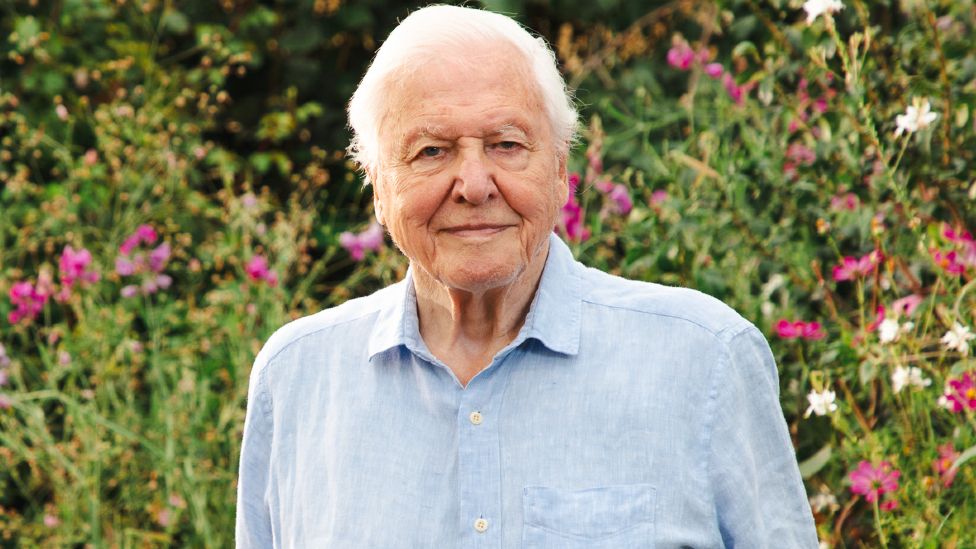
David Attenborough Turns 100 and Still Commands the Screen
Very few media figures survive long enough to become bigger than the platforms that made them famous. Fewer still reach 100 while remaining central to the conversation about television, science communication, and public trust. That is why the David Attenborough 100th birthday moment lands with unusual force. It is not just a celebration of longevity. It is a referendum on whether a single voice can still cut through a fragmented media landscape, make viewers care about biodiversity, and turn natural history into appointment viewing. At a time when attention is scattered across feeds, clips, and algorithms, Attenborough still represents something rare: authority without bombast, wonder without naivete, and storytelling that can make a collapsing ecosystem feel heartbreakingly immediate.
- David Attenborough 100th birthday marks a cultural milestone far beyond television nostalgia.
- His career helped define modern natural history broadcasting and elevated environmental storytelling into mainstream entertainment.
- Attenborough’s enduring relevance reveals what audiences still want: trusted narration, visual ambition, and moral clarity.
- His legacy now sits at the intersection of media power, science communication, and climate urgency.
Why the David Attenborough 100th birthday matters now
Anniversaries are easy to flatten into sentiment. This one resists that. The David Attenborough 100th birthday arrives during a period when the institutions that once shaped public understanding are weaker, noisier, and more contested. Broadcasters no longer hold the same monopoly on attention. Experts no longer receive automatic deference. And yet Attenborough remains one of the few figures who can speak about the natural world and still be heard across generations.
That kind of relevance is not accidental. It was built over decades through consistency, patience, and a remarkable ability to evolve with the medium. From early broadcast television to high-definition documentary spectacle, from linear schedules to on-demand streaming, Attenborough has not simply endured these transitions. He has often helped define them.
Attenborough’s real achievement is not just explaining nature. It is making audiences feel implicated in it.
That distinction matters. Plenty of presenters inform. Attenborough persuades through tone, framing, and scale. He does not just describe a species or habitat. He situates it inside a story about survival, fragility, adaptation, and consequence. That is why his work has remained potent even as viewing habits have changed dramatically.
How Attenborough built a television language of awe
Natural history television existed before him, but it did not carry the same cultural weight. Attenborough helped turn it into prestige programming. He proved that audiences would show up for films about birds, oceans, forests, insects, and ice fields if the storytelling was cinematic enough and the perspective expansive enough.
His technique looks deceptively simple. A calm voice. Clean scripting. A refusal to oversell. But beneath that surface is a highly engineered editorial formula: combine visual discovery with emotional pacing, layer in scientific context, and end with a larger point about interdependence. That structure became the blueprint for much of modern documentary television.
The voice as technology
It may sound strange to describe a narrator’s voice as infrastructure, but in Attenborough’s case it fits. His delivery functions like a user interface. It guides the viewer through complexity without friction. It also creates a sense of trust at a time when audiences are increasingly skeptical of mediation.
That trust has editorial value. When Attenborough shifts from wonder to warning, viewers feel the tonal change. The message lands because it has been earned over years of restraint. He does not begin with panic. He begins with observation. That progression gives his environmental arguments unusual persuasive power.
The image economy of modern nature documentaries
Another reason his work scales culturally is that it anticipated the premium visual economy now dominant across streaming. Sweeping aerial shots, ultra-close behavioral footage, underwater sequences, and time-lapse transformations are not just technical flexes. They are emotional architecture. They make invisible systems visible.
In that sense, Attenborough’s documentaries were early proof that nonfiction could compete with prestige drama for visual grandeur. Long before every platform wanted event television, his projects were already operating like events.
From broadcaster to environmental conscience
There has been a notable shift in Attenborough’s public role. Earlier in his career, the emphasis was discovery. In later decades, the emphasis turned increasingly toward loss, degradation, and responsibility. That evolution tracks with the science, of course, but it also reflects a broader editorial transformation. The neutral observer became a moral witness.
This change could have alienated viewers who prefer documentaries to remain purely descriptive. Instead, it expanded his influence. Why? Because the evidence became impossible to separate from the storytelling. If a coral reef is bleaching or a habitat is collapsing, omitting the cause is not balance. It is distortion.
Attenborough’s late-career pivot did not politicize nature television. It clarified what nature television had been documenting all along.
That is a crucial point for understanding his staying power. He did not abruptly become activist in style. He became more explicit in conclusion. The films themselves had already amassed the visual proof.
What television loses when figures like Attenborough disappear
The David Attenborough 100th birthday also prompts a less comfortable question: what happens after a figure like this is gone? The obvious answer is that no successor will replicate the exact mix of authority, curiosity, and institutional memory. But the deeper issue is structural. Media systems are not especially good anymore at producing universally trusted voices.
Today’s talent pipeline rewards speed, personality, and platform fluency. Those are useful skills, but they are not the same as credibility built over decades of rigorous work. Attenborough emerged from an era in which broadcasters invested heavily in expertise, field production, and long-form editorial development. That model is harder to sustain in a fragmented market obsessed with immediate returns.
Fragmentation changes the messenger
The modern media environment tends to distribute authority horizontally. Instead of one globally recognized narrator, audiences encounter many niche experts, creators, and commentators. That has advantages. It broadens participation and perspective. But it also means fewer shared reference points.
Attenborough functioned as one of those rare common reference points. Families watched together. Teachers assigned clips. Policymakers invoked his documentaries. Streaming has widened access, but it has also narrowed simultaneity. People can watch more than ever, yet share less of it at the same moment.
The challenge for the next generation
Whoever carries natural history storytelling forward will need more than charisma. They will need editorial discipline, scientific seriousness, and the ability to speak across cultural lines without flattening complexity. That is a high bar. It is also the real lesson of Attenborough’s career.
Pro Tip: For media teams building science or documentary brands, the Attenborough model still applies: prioritize trust, write for clarity, and let the evidence do the heavy lifting. Spectacle gets attention. Credibility keeps it.
Why the David Attenborough 100th birthday resonates beyond entertainment
It would be easy to file this milestone under Entertainment and move on. That would miss the bigger story. Attenborough sits at the crossroads of culture, science, education, and environmental politics. His documentaries have influenced how millions of people understand extinction, habitat loss, migration, ocean health, and climate risk.
That impact is hard to quantify neatly, but its contours are clear. He helped normalize the idea that the natural world is not a remote backdrop. It is a living system under pressure, and humans are deeply entangled in its future. For many viewers, his work served as an entry point into scientific literacy long before they encountered those topics in formal policy debates.
There is also an important generational angle here. Attenborough has bridged audiences that consume media very differently. Older viewers associate him with the golden age of public broadcasting. Younger viewers meet him through clips, streaming libraries, classroom use, and social media excerpts. Very few public figures can travel that smoothly across distribution models without losing coherence.
The business lesson hidden inside the legacy
If you step back from the emotion of the moment, there is a strategic media lesson here too. Attenborough’s body of work proves that premium nonfiction can become franchise-level intellectual property when it combines trust, visual ambition, and a clear editorial mission.
That matters for broadcasters and streamers hunting for durable brands. Scripted hits can burn bright and disappear. Natural history, when executed at the highest level, has a longer shelf life. It also travels internationally with unusual strength because the core subject matter transcends language and region. A snow leopard, a whale migration, or a rainforest canopy does not require much cultural translation.
In platform terms, Attenborough became both talent and format. His presence signaled quality before viewers pressed play. That is an asset class many media companies would love to manufacture but rarely can.
Prestige without cynicism
One reason the brand held up is that it never felt engineered in the cynical sense. The programs were polished, yes, but not hollow. The prestige emerged from craft and seriousness rather than market positioning alone. That distinction is subtle, but audiences feel it quickly.
It is also why his work remains resistant to parody. The style is distinctive, yet the underlying commitment is sincere. In a media ecosystem saturated with irony, sincerity can be a competitive advantage.
What comes next for nature storytelling
The future of the genre will likely be more immersive, more data-rich, and more interactive. Emerging production tools can capture animal behavior at extraordinary resolution. AI-assisted workflows may speed up cataloging, translation, and archive retrieval. New formats may let viewers explore ecosystems through layered maps, live environmental data, or companion educational experiences.
But the technology itself will not solve the editorial challenge. Better cameras do not automatically produce better meaning. The next era of natural history storytelling will still depend on framing: what to show, how to contextualize it, and how directly to connect ecological change to human systems.
If there is a forward-looking lesson in the David Attenborough 100th birthday, it is this: audiences still crave depth when the storytelling is good enough. They still respond to expertise when it is communicated with humility. And they still make room for wonder, even in an exhausted information economy.
At 100, Attenborough is not just a beloved presenter. He is evidence that media authority can be earned slowly and spent responsibly.
A century old and still urgently modern
There is something almost defiant about Attenborough’s continued relevance. He belongs to an older media order, yet his central message feels more contemporary than ever. The planet is interconnected. Human activity has consequences. Beauty is not protection. Observation must lead to responsibility.
That is why this birthday is not merely ceremonial. It is clarifying. It reminds the television industry what durable public service can look like. It reminds audiences that expertise need not be cold or inaccessible. And it reminds everyone paying attention that the natural world still has storytellers powerful enough to change how people see it.
The David Attenborough 100th birthday is, on the surface, a celebration of one extraordinary life. Beneath that, it is a challenge to the rest of media: make work that lasts, tells the truth clearly, and leaves viewers with more than distraction. Attenborough did that for decades. At 100, that may be the most astonishing feat of all.
The information provided in this article is for general informational purposes only. While we strive for accuracy, we make no guarantees about the completeness or reliability of the content. Always verify important information through official or multiple sources before making decisions.