Deshaun Watson Owns the Early Browns QB Battle
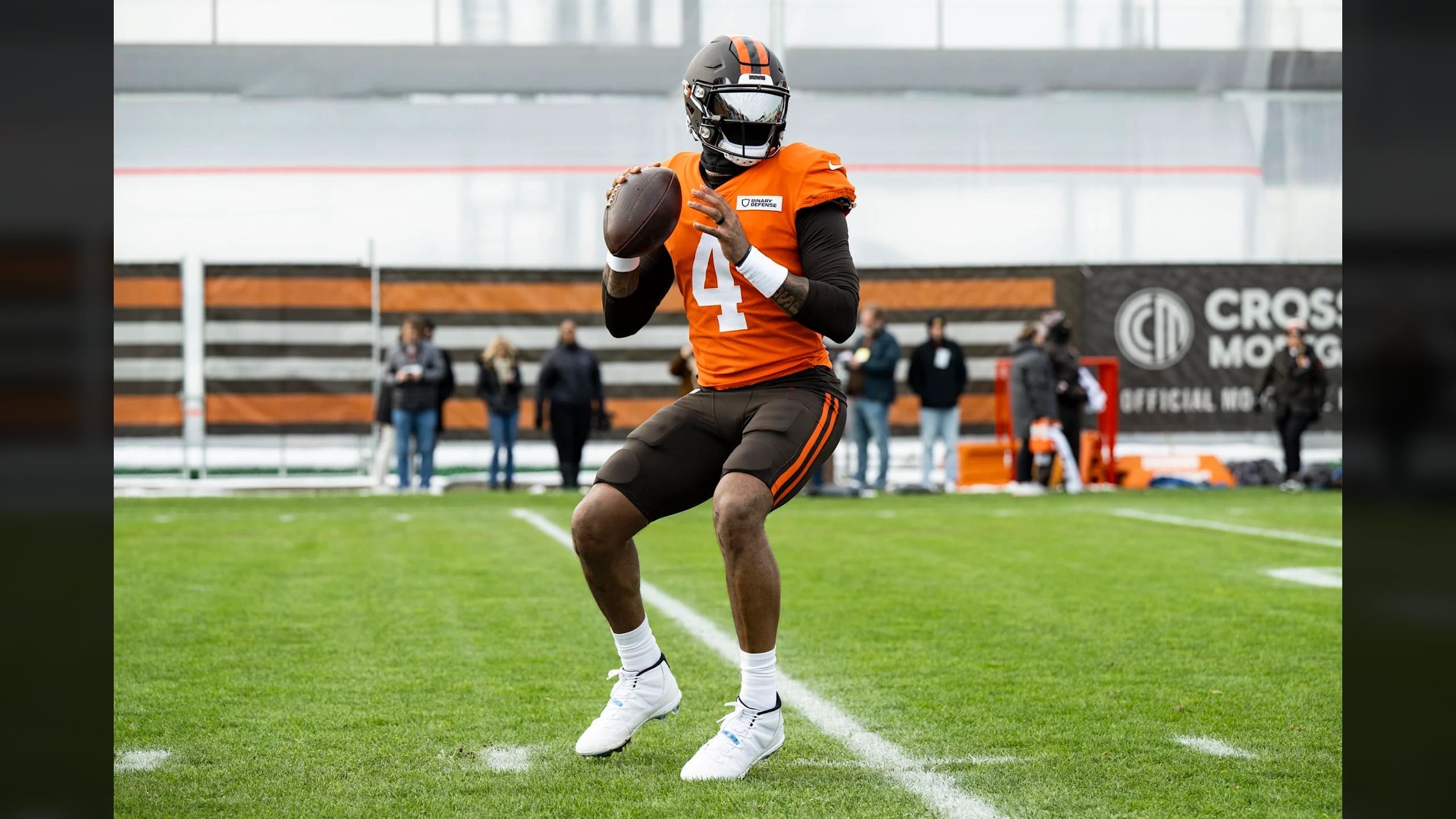
Deshaun Watson Owns the Early Browns QB Battle
The Deshaun Watson Browns QB competition was never going to be a perfectly even race, no matter how loudly offseason optimism tried to sell it. Quarterback battles sound democratic in June. They rarely are in reality. In Cleveland, the gap is not just about arm talent or familiarity with the playbook. It is about money, organizational commitment, timeline, and the uncomfortable truth every NFL team eventually confronts: when you invest heavily in a quarterback, you build the entire operation around proving that bet was justified.
That is why Watson holding a significant early edge is not surprising. It is the expected shape of the Browns’ offseason. The more revealing question is not who leads today. It is whether Cleveland has created the conditions for Watson to reclaim high-end play and whether the team has enough insulation if the answer is no.
- Watson’s early lead is structural, not just performance-based.
- The Browns are signaling continuity, investment protection, and urgency.
- Backup competition matters, but it does not erase the franchise’s quarterback hierarchy.
- Cleveland’s season ceiling still depends on whether Watson can translate camp advantage into real production.
Why the Deshaun Watson Browns QB competition was never truly equal
Every training camp comes with the same ritual: coaches preach open competition, veterans say the right things, and fans try to read hidden meaning into every rep. But the NFL is not a startup demo day where all ideas receive equal runway. It is a capital allocation business. Cleveland’s quarterback room reflects that.
Watson entered this phase with a built-in edge because he is still the quarterback the franchise has chosen to prioritize. That matters more than any spring headline. Repetition with the first team matters. Comfort in the system matters. Institutional patience matters. The Browns can call it a competition, but the ecosystem tells a different story.
The first truth of any NFL quarterback battle: if one player has the contract, the organizational history, and the top-unit reps, he is not just competing – he is defending incumbent status.
This does not mean coaches are blind. It means context drives evaluation. A backup or challenger can win admiration in camp. Winning the actual job requires a collapse from the presumed starter or a performance gap too wide to ignore. Early on, nothing suggests that kind of disruption has happened.
The power of first-team reps
Quarterback development is not an isolated drill. Timing with receivers, command in protection checks, chemistry in red-zone concepts, and comfort in situational football all improve with top-unit work. When a quarterback gets those reps early, he gets more than opportunity. He gets momentum.
That can create a feedback loop:
- More first-team snaps lead to better rhythm.
- Better rhythm leads to cleaner practice periods.
- Cleaner practice periods reinforce the staff’s confidence.
- Staff confidence leads to more protected status.
For Watson, that loop is especially important. He does not need to dominate every session to maintain control. He needs to look viable, functional, and increasingly comfortable within Kevin Stefanski’s offensive structure.
What Cleveland is really evaluating
The lazy version of quarterback analysis is counting completions and posting camp clips. The smarter version asks what the coaching staff actually needs answered. For the Browns, the checklist is broader than raw arm talent.
Can Watson operate efficiently inside structure?
At his best, Watson blended improvisation with downfield aggression. But the Browns do not just need highlights. They need rhythm. They need the offense to stay on schedule. That means quick processing, clean footwork, and reliable decisions in the short and intermediate game.
If Watson can consistently hit core concepts, manage protections, and avoid drive-killing mistakes, Cleveland’s offense becomes easier to trust. In that sense, the key metric in camp is not flash. It is stability.
Can the offense reduce friction?
Quarterback play does not happen in a vacuum. Play-calling, pass protection, receiver availability, and game-flow design all shape outcomes. The Browns need signs that the operation around Watson is becoming smoother. Fewer broken plays. Faster communication. Better sequencing.
That matters because one of the biggest risks for Cleveland is forcing the quarterback to solve everything after the snap. A well-built system should simplify life before the ball is even out of the center’s hands.
Can the backups apply pressure without creating chaos?
A healthy quarterback room needs credible alternatives. That is not because the Browns want uncertainty. It is because uncertainty is inevitable over an NFL season. The backup battle matters for two reasons: insurance and leverage. Insurance in case Watson misses time. Leverage in case performance stalls.
Still, there is a difference between useful pressure and a true threat to the depth chart’s top line. Early reports suggesting Watson holds a significant edge indicate Cleveland is not yet facing a destabilizing dilemma. From a coaching standpoint, that is probably the preferred outcome.
Why this is not breaking news
The headline only feels dramatic if you ignore how teams behave. Cleveland has every reason to tilt this process toward Watson unless he gives them no choice. The front office’s prior decisions, the public commitment, and the roster’s competitive window all point to the same conclusion.
The Browns are not experimenting at quarterback for curiosity’s sake. They are trying to salvage and maximize an expensive and defining franchise decision. That is the lens through which every camp rep should be viewed.
An early Watson lead is not a twist. It is the franchise acting exactly like a franchise that still needs its biggest quarterback bet to work.
There is also a practical football reason. A team with playoff aspirations benefits from clarity. If the coaching staff can stabilize the pecking order early, it can spend more time refining the offense instead of managing noise. Installation becomes cleaner. Leadership lines become clearer. The entire building can move with less hesitation.
What this means for the Browns offense
If Watson remains firmly ahead, the Browns can focus on tailoring the system rather than re-litigating the position. That is where this story gets interesting. A quarterback competition is only a headline. Offensive identity is the real issue.
Expect a design built around efficiency first
Cleveland does not need to recreate peak backyard football every Sunday. It needs a sustainable offense. That likely means leaning into concepts that help Watson process faster and throw on time. Think more structure, more sequencing, and more situations that let athleticism become a bonus rather than a rescue plan.
In practical terms, the offensive menu may emphasize:
- Play-action from familiar looks
- Defined half-field reads
- Red-zone concepts that simplify decision trees
- Protection plans that reduce immediate pressure
That is not a concession. It is good coaching. The best staffs design around current reality, not old reputation.
The margin for excuses is shrinking
An early camp lead buys Watson runway, but it also raises the accountability stakes. Once a quarterback clearly controls the job, the conversation shifts. It is no longer about access to reps or fairness of evaluation. It becomes about results.
For the Browns, that means fans and analysts will judge the season through a sharper lens. If Watson starts strong, Cleveland can finally claim operational traction. If he struggles, the camp advantage will not protect him from scrutiny. It may intensify it.
The bigger strategic risk for Cleveland
The real tension here is not whether Watson should lead early. He should, based on every incentive inside the building. The tension is what happens if that edge proves cosmetic. A team can win the offseason narrative and still lose the season if quarterback play stalls when games become chaotic, physical, and unforgiving.
Cleveland’s roster is not built for a long philosophical reset. It is built to contend now. That urgency shapes every quarterback decision. The Browns need competence at minimum and impact at best. Merely being ahead in June or July does not answer whether Watson can deliver either under pressure.
This is where quarterback competitions become misleading. They frame the conversation as a binary battle between players. But franchises are often wrestling with something bigger: are we closer to our intended future, or are we still managing the consequences of old choices?
Pro take for fantasy, roster watchers, and Browns fans
If you are reading this through a practical lens, the signal is straightforward. Do not overreact to the idea of an early lead as if it represents a sudden leap. Treat it as confirmation of team intent. That has value, but it is different from proof of elite form.
How to read the next phase
Watch for the indicators that matter more than generic camp praise:
- Consistency in team periods, especially on third down.
- Red-zone efficiency and fewer stalled drives.
- Comfort against disguised coverages.
- Receiver timing on intermediate routes.
- Reduced need for off-script heroics.
If those traits show up, Cleveland has more than a camp frontrunner. It has a functioning offensive foundation.
A simple way to frame the depth chart
Think of the room like this:
QB1: Watson = organizational priority + starter runway
QB2 battle = insurance policy + developmental pressure
Regular season = only real verdict that matters
That is the cleanest interpretation of where things stand.
Why the Deshaun Watson Browns QB competition still matters
Even if the top of the depth chart feels predictable, the competition is not meaningless. It reveals how the Browns want to function, how much urgency the staff feels, and whether the franchise believes it can finally move from justification to production.
The most important outcome is not symbolic victory over the backup field. It is whether Watson can turn structural advantage into trustworthy football. That is the bridge Cleveland still has to cross.
So yes, Watson having a significant edge early should not shock anyone paying attention. The Browns have spent too much, committed too much, and organized too much around him for anything else to make sense. But if Cleveland wants this story to evolve from predictable camp hierarchy into genuine contender momentum, the next step is obvious: the edge has to become execution.
That is when this stops being expected and starts being meaningful.
The information provided in this article is for general informational purposes only. While we strive for accuracy, we make no guarantees about the completeness or reliability of the content. Always verify important information through official or multiple sources before making decisions.


