DRC Ebola Outbreak Demands Faster Global Action
DRC Ebola Outbreak Demands Faster Global Action
The DRC Ebola outbreak is not just another regional health emergency. It is a stress test for how quickly governments, aid agencies, and local health systems can respond when a deadly virus starts moving faster than trust, logistics, and political coordination. Ebola still carries a uniquely terrifying reputation for good reason: it kills quickly, spreads through close contact, and can overwhelm fragile health infrastructure before the rest of the world has even calibrated its attention. When the World Health Organization raises the alarm, that is not bureaucratic noise. It is a signal that delays now become casualties later.
What makes this moment especially urgent is how familiar the pattern feels. An outbreak emerges, health officials warn of containment risks, and the wider world briefly looks up before moving on. That reflex is exactly the problem. The cost of reacting late is measured in lives, economic disruption, and public trust that becomes harder to rebuild with every crisis.
- The DRC Ebola outbreak highlights how fragile outbreak containment can become in conflict-affected regions.
- Speed matters: early surveillance, isolation, vaccination, and contact tracing are the difference between control and escalation.
- Public trust is as important as medicine, especially where communities are skeptical of outside authorities.
- The outbreak is a warning for global health funding, preparedness, and cross-border coordination.
Why the DRC Ebola outbreak matters beyond the DRC
Ebola outbreaks are often discussed as if they are isolated humanitarian disasters. That framing is too narrow. A severe outbreak in the Democratic Republic of the Congo is a regional and global stability issue. The DRC sits at the center of complex trade, migration, and security dynamics. Population movement does not stop because a virus appears. People still cross borders for work, safety, and family. That reality turns a local health emergency into a cross-border risk very quickly.
The WHO chief’s warning reflects more than concern over case numbers. It reflects the deeper challenge of mounting a response in a place where healthcare access may already be strained, where insecurity can block medical teams, and where misinformation can spread as fast as any pathogen. An outbreak is never just about biology. It is also about infrastructure, governance, communication, and whether institutions can earn cooperation fast enough.
When global health officials sound urgent, the real story is often about shrinking room for error.
How Ebola containment actually works
There is a persistent misconception that containing Ebola is simply a matter of sending doctors and vaccines. The reality is operationally brutal. Successful containment depends on multiple systems working at once, often under extreme pressure.
Case detection must happen early
Health workers first need to identify suspected infections quickly. That sounds straightforward until you remember that early Ebola symptoms can resemble other illnesses. Fever, fatigue, and weakness are not unique signals. In areas where laboratories are distant or overloaded, confirming cases can take precious time.
Pro tip: In outbreak response, every delay compounds. Slow diagnosis means more exposure events, more contacts to trace, and a steeper containment curve.
Contact tracing is the backbone
Once a case is confirmed, teams need to identify everyone who had close exposure. That means family members, caregivers, transport workers, and healthcare staff. Each contact must be monitored for symptoms over time. If that chain is incomplete, the virus gets another opening.
This is where outbreak management often becomes human rather than technical. Contact tracing only works if people are willing to share names, movements, and interactions. In communities with distrust of state authorities or international agencies, that cooperation cannot be assumed.
Vaccination helps, but logistics decide outcomes
Modern Ebola response has one major advantage compared with earlier eras: vaccines. Ring vaccination strategies can protect contacts and contacts of contacts around confirmed cases. But having a vaccine is not the same as deploying one at scale. Teams need cold-chain capacity, secure transport routes, trained staff, and reliable records.
In difficult terrain or conflict zones, even basic delivery becomes complicated. A highly effective tool can still underperform if the operational environment is hostile.
Isolation and infection prevention are non-negotiable
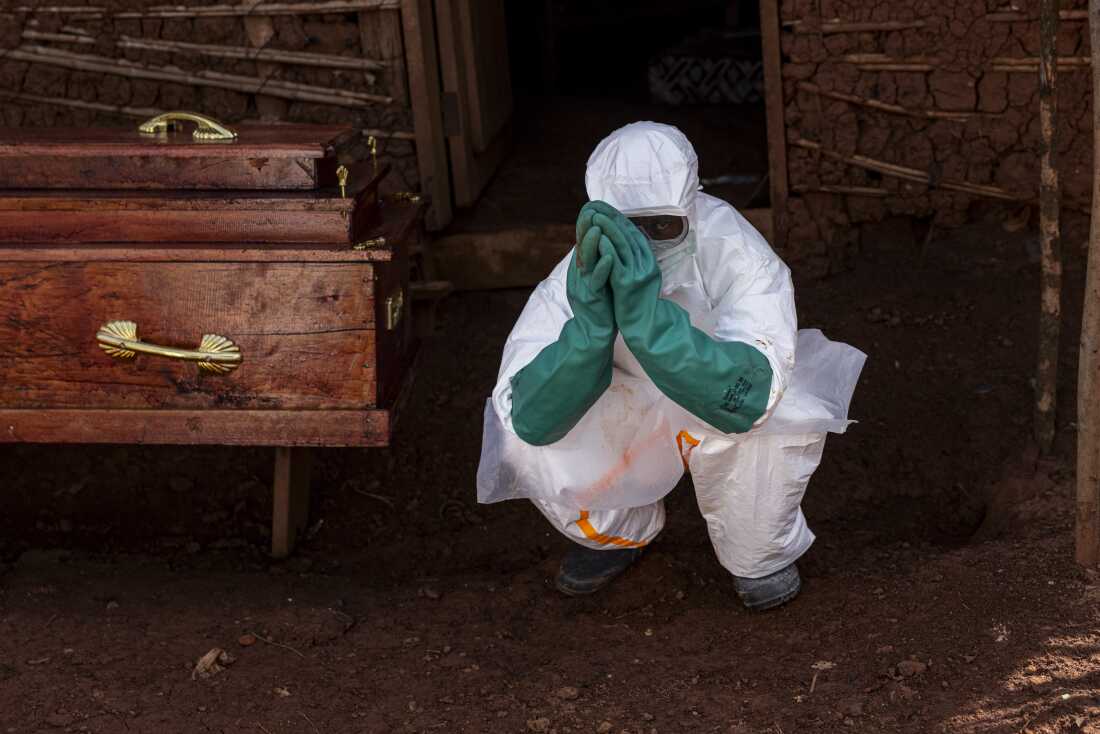
Patients need safe treatment settings, and health workers need protective equipment and training. Hospitals and clinics can become amplification points if infection prevention protocols break down. That means supplies, staffing, and procedures are not secondary concerns. They are the front line.
The trust problem at the center of every Ebola response
One of the hardest truths in outbreak response is that science alone does not win. Communities do. In parts of the DRC, years of conflict, political instability, and uneven public services have left many people deeply skeptical of official interventions. That context matters as much as any epidemiological model.
If families fear that treatment centers are places people enter but do not return from, they may avoid reporting illness. If burial practices are restricted without cultural sensitivity, communities may resist. If rumors spread that responders are exploiting the crisis, the response can stall. These are not side issues. They are core outbreak variables.
The fastest way to lose an outbreak is to treat public trust like a communications problem instead of a strategic one.
The best health responses now integrate community leaders, local clinicians, religious authorities, and survivor networks into the response architecture. That approach is slower at first, but stronger over time. It creates legitimacy where outside messaging often fails.
What the WHO warning signals to governments
When WHO leadership publicly elevates concern, it is often because the combination of epidemiology and operating conditions looks dangerous. That does not automatically mean a worst-case scenario is inevitable. It means the margin for complacency is gone.
Governments in the region need to move on several tracks at once: strengthen border screening, expand lab capacity, equip frontline facilities, and coordinate public messaging so panic does not outrun facts. International partners, meanwhile, need to avoid the familiar cycle of underfunding early response and overspending after escalation.
There is also a political message embedded in every outbreak warning: health security is inseparable from state capacity. Under-resourced systems can hold until they cannot. Once they break, the repair bill is much larger than the prevention bill would have been.
Why the DRC Ebola outbreak is a test of global memory
The world says it learns from every epidemic. The record is mixed. After major outbreaks, there is a burst of urgency, new pledges, and renewed interest in surveillance, vaccines, and emergency coordination. Then attention fragments. Budgets tighten. Preparedness becomes abstract again.
The DRC Ebola outbreak should force a different response because the lessons are already known. The playbook is not mysterious:
- Fund early response before case counts spike.
- Support local health workers who understand community dynamics.
- Build lab and reporting capacity close to affected areas.
- Coordinate risk communication to counter misinformation quickly.
- Protect supply chains for vaccines, protective equipment, and treatment materials.
None of this is glamorous. That is exactly why it so often gets neglected. Pandemic preparedness attracts headlines when tied to futuristic platforms and big geopolitical language. Outbreak control, by contrast, is repetitive, local, and operational. But this is where epidemics are either stopped or allowed to grow.
Economic fallout starts earlier than most people think
Even a contained outbreak can carry heavy economic consequences. Trade routes slow. Local markets lose foot traffic. Healthcare spending shifts toward emergency response. Families absorb income shocks when illness or fear disrupts work. Regional governments may face pressure on border controls and transport systems that ripple far beyond the outbreak zone.
For investors, businesses, and policy planners, that matters. Public health failures do not stay in the health column. They surface in logistics, labor availability, insurance costs, commodity flows, and political risk calculations. Outbreak resilience is economic resilience.
What should happen next
For health authorities
They need to scale surveillance, accelerate testing, and keep treatment capacity ahead of transmission. The goal is simple even if execution is hard: detect early, isolate fast, vaccinate strategically, and maintain transparent communication.
For international partners
They should provide flexible funding, technical support, and deployment capacity without overshadowing local leadership. A response imposed from the outside may look efficient on paper and fail in practice.
For the public
The key is disciplined attention. Panic is unhelpful, but indifference is worse. Global audiences tend to notice Ebola only when headlines turn dramatic. By then, conditions are usually harder. The smarter posture is to take warnings seriously while there is still time for containment to work.
The bigger lesson
Ebola remains one of the clearest examples of a modern truth: preparedness is judged in quiet moments, but exposed in crises. The DRC does not need symbolic concern. It needs speed, trust, medical capacity, and sustained backing before the outbreak becomes larger, deadlier, and more expensive to stop.
If there is a reason to be cautiously optimistic, it is that health authorities know more today than they did in earlier Ebola emergencies. Tools are better. Response models are sharper. Vaccines have changed the equation. But none of those advantages matter if the world slips back into its oldest failure mode: recognizing danger, then responding one step too late.
Why this matters: every contained outbreak is proof that preparedness works. Every delayed response is proof that memory does not. The DRC Ebola outbreak now sits at that crossroads.
The information provided in this article is for general informational purposes only. While we strive for accuracy, we make no guarantees about the completeness or reliability of the content. Always verify important information through official or multiple sources before making decisions.