Ebola, Hantavirus, and the Cost of Weakening Public Health
Ebola, Hantavirus, and the Cost of Weakening Public Health
The next outbreak does not wait for a funding cycle, a press briefing, or a political reset. That is the hard lesson buried inside the latest warnings around Ebola, hantavirus, and Trump-era health agency cuts. When surveillance gets thinner, labs get slower, and field teams lose capacity, the gap between the first strange illness and a full-blown crisis gets dangerous fast. Public health only looks invisible when it works. Strip away enough staff, testing, and coordination, and the system stops being a shield – it becomes a delay. For readers, patients, and policymakers alike, the real question is not whether another outbreak will happen. It is whether the institutions meant to catch it early still have the muscle to do so.
- Health agency cuts can reduce outbreak detection speed, especially for rare but high-risk infections.
- Ebola and hantavirus are different diseases, but both expose weaknesses in surveillance and rapid response.
- Public health infrastructure is not just a budget line – it is an early-warning system.
- When trust, staffing, and laboratory capacity erode together, the risk multiplies.
- Preparedness is cheaper than crisis response, but only if governments invest before the alarm.
Why Ebola and hantavirus keep showing up in the same conversation
Ebola and hantavirus are not the same threat, and that is exactly why they matter together. Ebola is a high-fatality viral disease that demands aggressive isolation, tracing, and clinical coordination. Hantavirus is rarer, often linked to rodent exposure, and can be difficult to spot early because its symptoms may resemble the flu before escalating into a medical emergency. Both force the same system test: can public health detect a danger fast enough to contain it?
That is where the concern around health agency cuts becomes more than a budget debate. Outbreak response depends on a chain of actions: someone notices an unusual cluster, local officials report it, laboratories confirm the pathogen, epidemiologists trace exposure, and public messaging limits panic while giving people actionable guidance. If any of those links are weakened, the whole chain starts to fail.
Public health is not built for headlines. It is built for the boring, relentless work that keeps headlines from happening.
What health agency cuts do to outbreak readiness
The danger of cutting health agencies is not usually visible on day one. The immediate effect may look like administrative streamlining or reduced overhead. The real damage shows up later, when a disease emerges and the response takes longer than it should.
1. Slower detection
Surveillance systems rely on trained staff who can spot anomalies across clinics, hospitals, and labs. Fewer epidemiologists and fewer data analysts mean slower recognition of patterns that could indicate a local outbreak. That delay is costly because infectious diseases compound over time. A missed day can become a missed week.
2. Weaker lab capacity
Testing is not just about having a machine. It also requires skilled technicians, quality control, specimen transport, and coordination between local and federal systems. When agencies lose resources, turnaround time often slips. For diseases like Ebola, every hour matters for isolation and contact tracing. For hantavirus, timely confirmation can shape clinical decisions and public warnings.
3. Less field response
When a case is suspected, public health workers often move quickly into the field to interview contacts, identify exposures, and stop spread at the source. Budget cuts can shrink this surge capacity. That means fewer boots on the ground when speed matters most.
Why preparedness is really a systems problem
It is tempting to frame outbreak readiness as a matter of personal caution: wash hands, watch symptoms, avoid exposure. Those habits help, but they are not a substitute for functioning institutions. Modern outbreak control is a systems problem that spans local clinics, state health departments, federal agencies, and international monitoring networks.
When those systems are healthy, they do the work most people never see. They track trends, coordinate resources, and publish guidance that helps hospitals prepare before their emergency departments fill up. They also create the trust pipeline that keeps the public from ignoring warnings or flooding misinformation channels when the first rumors spread.
The truth is blunt: a weak public health system makes every outbreak more expensive. It raises the odds of hospital strain, school disruption, worker absenteeism, and fear-driven behavior that can ripple through the economy. That is why public health spending is often better understood as risk reduction, not overhead.
The Trump health agency cuts debate is about more than politics
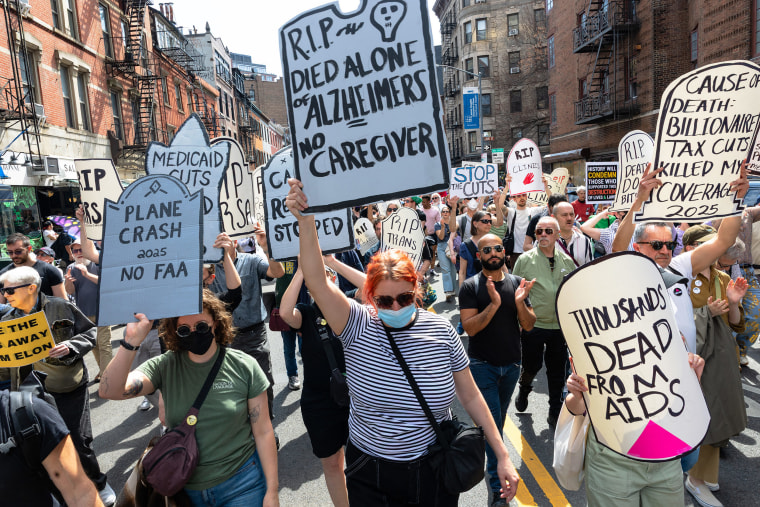
The phrase Trump health agency cuts triggers an immediate partisan reaction, but the operational question sits above politics. Did reduced staffing, shifting priorities, or lower institutional morale make it harder for agencies to do the work of surveillance and response? That is the question that should worry anyone who cares about resilience.
Public health agencies do not need perfect conditions to function, but they do need continuity. Repeated cuts can lead to a talent drain, where experienced professionals leave and institutional knowledge walks out the door with them. Once that happens, rebuilding capacity is slow and expensive. You cannot simply turn a knob and restore expertise that took years to develop.
When public health agencies are treated like disposable bureaucracy, the system learns to fail quietly before it fails loudly.
What readers should watch for next
If you want to understand whether a health system is holding up, look beyond the latest press release. The real indicators are operational:
- Testing turnaround time: Are labs confirming suspicious cases quickly?
- Contact tracing depth: Are investigators able to follow exposure chains without delay?
- Local reporting speed: Do hospitals and clinics have a clear path to escalate concerns?
- Staff retention: Are experienced public health workers staying in the system?
- Risk communication quality: Are officials giving clear, calm, actionable guidance?
Those signs tell you whether the system is prepared or merely hoping for luck. And luck is a terrible strategy when a pathogen is involved.
What this means for hospitals, employers, and families
For hospitals, the lesson is to assume that the first warning may arrive with incomplete information. Isolation protocols, PPE stock, and escalation procedures need to be ready before confirmation, not after. For employers, especially those with travel-heavy workforces or facilities in rural regions, outbreak readiness means clear sick leave policies and communication channels that do not punish caution. For families, it means paying attention to official guidance and resisting the urge to crowdsource medical truth from social media noise.
The broader message is even more important. People often notice public health only when it is missing. But the system is not designed to be dramatic. It is designed to be dependable. The second that dependability slips, the cost shows up not just in hospitals, but in household routines, local economies, and public confidence.
How governments should respond now
There is a straightforward playbook for avoiding the worst-case scenario, and none of it is glamorous. Governments should stabilize funding, protect outbreak-response staffing, strengthen lab networks, and preserve data-sharing pipelines across agencies and jurisdictions. They should also invest in the less visible work: training, logistics, and communication.
Here is the strategic logic:
- Protect surge staffing so agencies can scale up immediately during a scare.
- Modernize reporting systems so suspicious cases move faster from clinics to analysts.
- Maintain laboratory redundancy so one bottleneck does not stall the response.
- Support local health departments because national response starts at the community level.
- Build public trust early so guidance is believed when it matters most.
Those are not abstract ideals. They are the practical defenses between a contained event and a national headache.
The bottom line
Ebola and hantavirus are reminders that outbreak risk never disappears. It only changes shape. The real story behind the latest warnings is not that a single disease is suddenly more terrifying. It is that health systems are only as strong as the capacity they keep in reserve. Cut too deeply, and you do not just save money. You borrow trouble from the future.
If public health agencies are underpowered, the next outbreak will not merely spread faster. It will be harder to understand, harder to contain, and harder to trust. That is a price no country should be willing to pay.
The information provided in this article is for general informational purposes only. While we strive for accuracy, we make no guarantees about the completeness or reliability of the content. Always verify important information through official or multiple sources before making decisions.