Ebola Outbreak Demands Faster Global Response
Ebola Outbreak Demands Faster Global Response
The latest Ebola outbreak in Africa is a brutal reminder that deadly viruses do not wait for politics, donor fatigue, or slow logistics. When a hemorrhagic fever resurfaces, the first days matter more than the press conference that follows. Health systems are forced into a race against transmission chains, misinformation, and fragile infrastructure. For governments, aid groups, and communities already stretched thin, the question is not just whether this outbreak can be contained. It is whether the global playbook for emergency response has actually improved since the last major Ebola crisis. That is why this moment matters far beyond the affected region. Every new cluster is a stress test for surveillance, vaccines, border coordination, and public trust. And if those systems fail, the consequences move fast.
- Ebola outbreak containment depends on speed: early testing, isolation, contact tracing, and trusted local communication.
- Weak health infrastructure and conflict can turn a local cluster into a regional emergency.
- Vaccines and diagnostics have improved, but deployment gaps still threaten response efforts.
- What happens next will shape confidence in global outbreak preparedness, not just African public health systems.
Why This Ebola Outbreak Feels Bigger Than the Headline
Ebola is not a new threat, but each outbreak arrives with a different operational reality. Some emerge in remote rural areas, where distance slows detection. Others hit dense population corridors, where mobility raises the stakes immediately. The current concern is not simply the virus itself. It is the ecosystem around it: underfunded clinics, delayed reporting, cross-border movement, and populations that may distrust official guidance after years of crisis.
That is what makes an Ebola outbreak so dangerous even when case numbers initially look limited. Ebola is not as easily transmissible as airborne viruses, but it is lethal, highly feared, and capable of overwhelming local health networks quickly. Once hospitals begin to lose staff, supplies, or public confidence, the outbreak becomes harder to track and harder to stop.
Key reality: Ebola response is never just about medicine. It is about logistics, trust, and how fast institutions can move before the virus gets a head start.
How Ebola Outbreak Response Actually Works
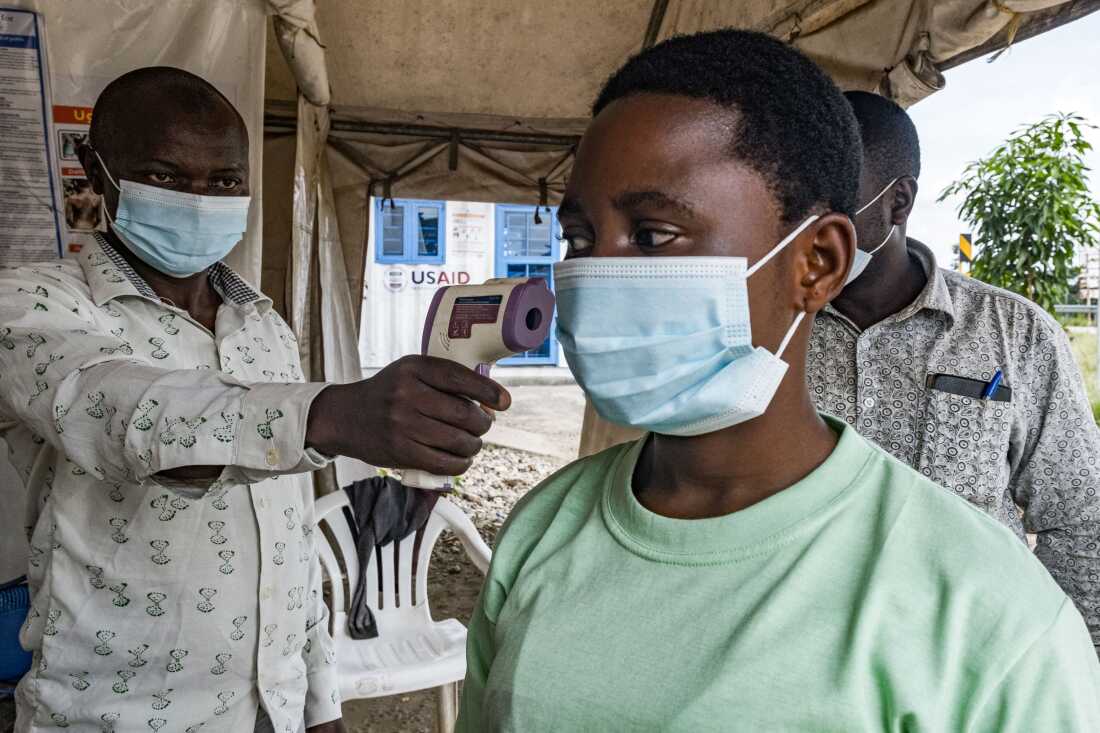
The public usually sees the headlines after officials confirm infections. On the ground, the response is much more granular. Teams need to identify suspected cases, run laboratory confirmation, isolate patients safely, and trace every recent close contact. If one link in that chain breaks, transmission can continue quietly.
Detection and laboratory confirmation
Rapid testing is the first hard checkpoint. Clinicians need to distinguish Ebola symptoms from other diseases that present similarly, including malaria, typhoid, and other viral fevers. That means trained staff, protective gear, specimen transport, and functioning laboratories. In practical terms, public health teams rely on systems like PCR testing, field reporting dashboards, and case definition protocols.
If those systems are slow, officials lose the one asset they cannot replace: time.
Isolation and infection control
Once a case is suspected or confirmed, isolation becomes critical. Hospitals and treatment centers must use strict infection prevention protocols, including personal protective equipment, decontamination routines, and controlled patient movement. Technical guidance may sound straightforward on paper, but implementation is hard when facilities lack reliable electricity, water, staffing, or secure waste disposal.
Even basic operational failures can create secondary transmission. A shortage of gloves, delayed triage, or poor separation between suspected and confirmed patients can magnify the risk.
Contact tracing and ring vaccination
Contact tracing is the muscle of Ebola containment. Teams build lists of everyone who interacted with an infected person and monitor them for symptoms. In some outbreaks, authorities also use ring vaccination, targeting close contacts and contacts of contacts to create a protective buffer around cases.
This is one of the biggest areas where modern Ebola preparedness is stronger than it used to be. Vaccines and therapeutic tools have changed the equation. But access is still uneven, and execution still depends on roads, storage, staffing, security, and community buy-in.
What Makes This Outbreak So Hard to Contain
Outbreaks are rarely lost because science is unclear. They are lost because systems are slow, under-resourced, or disconnected from the communities they serve. In an Ebola emergency, several failure points tend to recur.
Fragile local health systems
Many affected regions are working with limited ICU capacity, thin laboratory networks, and small public health workforces. A surge in suspected cases can strain the system almost instantly. That pressure can reduce routine care for childbirth, malaria, or chronic illness, turning an infectious disease emergency into a broader health crisis.
Cross-border mobility
People move for work, trade, family, and safety. Viruses exploit that mobility. Borders on a map do not stop transmission if screening is inconsistent or if communities regularly cross unofficial routes. Regional coordination becomes essential, especially for data sharing, synchronized advisories, and patient referral systems.
Misinformation and distrust
One of the most underestimated threats in any Ebola outbreak is broken trust. If residents believe treatment centers are unsafe, or that officials are hiding information, they may avoid testing or move sick relatives in secret. Funeral practices, home care, and rumors can all accelerate spread when communication is weak or culturally tone-deaf.
The lesson from past outbreaks: community trust is not a side issue. It is a frontline intervention.
Why the Technology Story Matters in an Ebola Outbreak
Even though this is a public health story first, there is a significant technology layer underneath it. Outbreak management now depends on digital reporting systems, genomic surveillance, logistics platforms, vaccine cold-chain tracking, and mobile communication tools. The difference between a contained cluster and a wider emergency can come down to whether information moves as fast as the pathogen.
Data systems and real-time visibility
Health authorities increasingly use digital case management tools to monitor suspected cases, lab results, and exposure chains. A well-designed dashboard can help officials identify hotspots, allocate staff, and spot response bottlenecks early. A poor one can create reporting lag, duplicate records, or blind spots.
At the operational level, outbreak teams may depend on systems that resemble this workflow:
case_report -> lab_confirmation -> contact_list -> follow_up_monitoring -> vaccination_status
That looks simple. In practice, each step involves field workers, devices, transport, connectivity, and verification.
Genomic surveillance
Sequencing can help experts understand whether cases are linked, whether the outbreak reflects a single spillover event or multiple chains, and how the virus is evolving. That information can improve response strategy, though only if samples are collected quickly and analyzed within a functioning network.
Operational tech is only as good as the last mile
The glamorous part of outbreak technology is often overstated. Apps and dashboards do not replace trained responders, fuel, refrigeration, protective gear, or trusted local leaders. The best systems amplify human response capacity. They do not substitute for it.
What Governments and Global Agencies Need to Do Now
The strategic priority is speed without panic. Governments need to communicate clearly, scale treatment capacity, protect frontline workers, and coordinate with neighboring states. International agencies and donors need to support the response early, before case growth forces a costlier intervention.
- Fund fast: Emergency financing is most valuable at the start, not after transmission expands.
- Protect health workers: PPE, training, hazard support, and psychosocial care are essential.
- Share data quickly: Delayed reporting undermines regional preparedness.
- Work with communities: Messaging must be local, practical, and credible.
- Maintain routine care: Ebola control cannot come at the expense of every other health service.
A disciplined response also means resisting political theater. Travel bans that sound decisive may contribute less than targeted screening, local treatment support, and transparent cross-border coordination. Public messaging should inform behavior, not merely signal control.
Why This Matters Beyond Africa
It is easy for distant audiences to treat Ebola as a recurring regional tragedy rather than a global readiness challenge. That view is shortsighted. Every outbreak reveals whether the international system has learned anything about preparedness, emergency procurement, pathogen surveillance, and equitable medical access.
The broader issue is resilience. If a known high-fatality virus can still outrun response systems in 2026, that should unsettle policymakers everywhere. The same weaknesses that hamper Ebola response – slow diagnostics, uneven trust, underbuilt local capacity, and fragmented coordination – also undermine readiness for future zoonotic threats.
This is why the current outbreak deserves sustained attention. Not because fear should be exported, but because accountability should be. A virus does not need global spread to expose global failure.
The Next Few Weeks Will Define the Story
The trajectory of this Ebola outbreak will depend on whether response teams can get ahead of the virus now. The metrics to watch are simple even if the field conditions are not: time to diagnosis, speed of isolation, number of contacts traced, protection of health workers, and whether new clusters appear across borders or in urban centers.
If those indicators improve, this outbreak may become a case study in faster containment. If they slip, the crisis could broaden into another painful lesson about delayed action. Either way, the stakes are not abstract. They are measured in hospital capacity, family loss, economic disruption, and public trust.
The bottom line: Ebola is no longer an unknown enemy. When outbreaks still escalate, the problem is not lack of knowledge. It is whether governments and global institutions can act on that knowledge fast enough.
The information provided in this article is for general informational purposes only. While we strive for accuracy, we make no guarantees about the completeness or reliability of the content. Always verify important information through official or multiple sources before making decisions.