Ebola Outbreak in DRC Demands Fast Action
Ebola Outbreak in DRC Demands Fast Action
The latest Ebola outbreak in DRC is not just another regional health alert. It is a stress test for epidemic surveillance, emergency response, and the international community’s ability to act before a crisis spirals. When the World Health Organization says it is deeply concerned, that is not diplomatic filler. It is a warning that every missed contact, every delayed lab result, and every gap in local care can widen the outbreak window. For health officials, aid groups, and governments, the problem is brutally familiar: Ebola moves fast where trust is weak and infrastructure is thin. The stakes are measured not only in case counts, but in whether containment systems built after previous outbreaks are actually strong enough to hold.
- The Ebola outbreak in DRC has triggered high-level alarm because early containment is everything.
- Weak health infrastructure, mobility, and public mistrust can turn a localized event into a broader emergency.
- Rapid testing, contact tracing, isolation, and community engagement remain the core tools that matter most.
- The response will reveal whether lessons from past Ebola waves have translated into durable preparedness.
- What happens next matters far beyond Congo: it is a preview of global outbreak readiness.
Why the Ebola outbreak in DRC is setting off alarms
Ebola is one of those diseases that immediately changes the tone of any public health conversation. It has a reputation for good reason: severe symptoms, high fatality risk, and an ability to spread through close contact if detection lags. In the Democratic Republic of the Congo, that danger is amplified by a difficult operating environment. Parts of the country face long-standing healthcare shortages, logistical barriers, insecurity, and competing disease burdens. Those factors make even a small outbreak dangerous.
The WHO’s concern signals that authorities are watching for the variables that typically determine whether Ebola is quickly contained or allowed to expand: time-to-diagnosis, contact-tracing coverage, treatment access, safe burials, and public cooperation. Ebola response is never just a medical exercise. It is also an operational and social challenge. If local populations do not trust health workers, if rumors spread faster than accurate guidance, or if patients avoid clinics, the response weakens at exactly the wrong moment.
Key reality: With Ebola, the first days matter disproportionately. A slow start can create weeks of consequences.
What makes Ebola containment so difficult
There is a persistent myth that outbreak control is mainly about having the right medicine. Medicine matters, of course, but containment is really a systems problem. A suspected case must be identified quickly, tested accurately, isolated safely, and connected to care. Then every recent contact must be found, monitored, and, where appropriate, vaccinated. That chain only works if each link holds.
1. Detection still depends on local capacity
In many outbreak zones, the first signal is not a sophisticated surveillance dashboard. It is a clinician noticing unusual symptoms, a cluster of unexplained deaths, or a health worker raising the alarm. That means training at the community and district level remains critical. If patients are misclassified or samples move slowly, the outbreak gets a head start.
In practical terms, response teams need functioning labs, transport for samples, protective equipment, and clear reporting channels. Without that, even the best national strategy can stall in the field.
2. Contact tracing is labor-intensive and fragile
Contact tracing sounds straightforward on paper. In reality, it is one of the hardest jobs in outbreak control. Teams must identify everyone who interacted with an infected person, monitor them, and act fast if symptoms emerge. In areas with displacement, poor records, or limited road access, that work becomes slower and less precise.
A single missed contact can create a new transmission branch. That is why outbreak managers obsess over tracing completeness. The virus exploits uncertainty.
3. Community trust can make or break the response
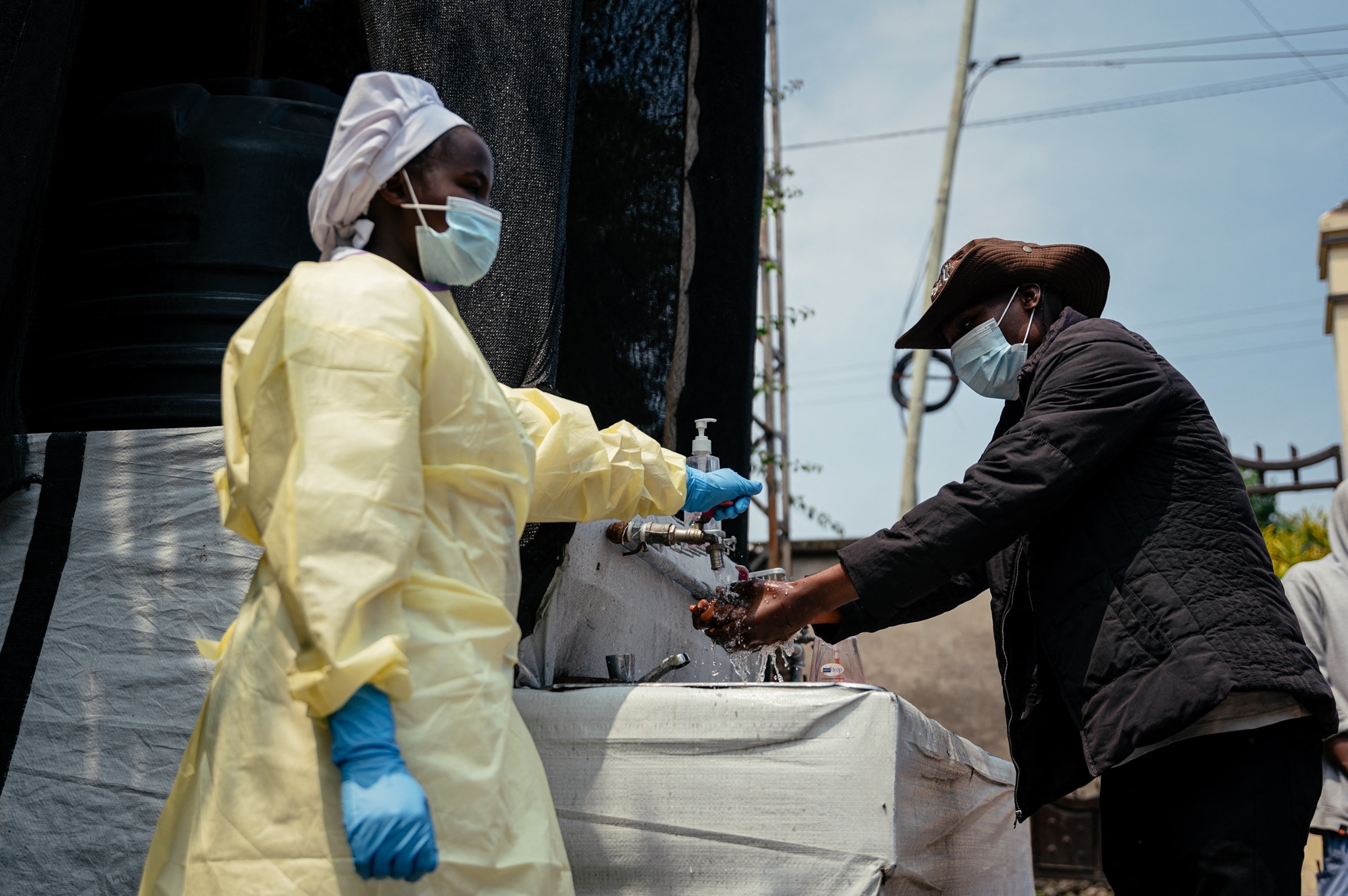
Ebola response has repeatedly shown that public trust is not a soft variable. It is core infrastructure. Communities need to understand what symptoms mean, why isolation matters, and how vaccination and safe burial protocols protect families. If messaging is inconsistent or delivered without local credibility, people may hide cases or avoid treatment centers.
Why this matters: a technically strong response can still fail if social acceptance is weak. Trust is not a communications afterthought. It is a front-line containment tool.
What officials are likely prioritizing right now
Although outbreak details can evolve quickly, the standard playbook is well established. Health authorities and partners generally move along several tracks at once, because Ebola punishes sequential thinking.
- Case confirmation: speeding up testing and validating suspected infections.
- Isolation and treatment: separating confirmed or probable cases and improving survival odds through supportive care.
- Ring vaccination: targeting contacts and contacts of contacts where vaccines are available and deployment is feasible.
- Contact monitoring: building a live map of exposure chains and watching for new symptoms.
- Infection prevention: protecting healthcare workers with
PPE, protocols, and training. - Community engagement: countering misinformation and building confidence in local response teams.
That multi-layered response is necessary because Ebola is not controlled by any single intervention. The winning strategy is redundancy. If one layer underperforms, others must compensate.
The strategic lesson from every Ebola outbreak in DRC
The DRC has painful experience with Ebola, and that experience has produced expertise. The country has handled previous outbreaks under some of the most difficult conditions imaginable. That matters because institutional memory can save time. Teams know the pathogen, understand the importance of rapid mobilization, and have a clearer sense of which bottlenecks tend to appear first.
But experience cuts both ways. Recurrent outbreaks also underline a harder truth: emergency systems are still too vulnerable to local shocks. If preparedness depends on crisis-mode mobilization every time, the system remains reactive. The real benchmark is whether outbreak prevention and rapid response have become routine enough to work before headlines and global alarm kick in.
The bigger test is not whether experts know what to do. It is whether the system can do it at speed, at scale, and with public trust.
Why this matters beyond central Africa
It is tempting for audiences outside the region to treat the Ebola outbreak in DRC as a distant problem. That is the wrong frame. Infectious disease threats are local at first, but preparedness failures are globally relevant. Every outbreak offers a live audit of surveillance networks, international coordination, vaccine logistics, and risk communication. In a connected world, the lesson is never just about one country.
There is also a political dimension. Global health attention tends to spike during emergency moments and fade once immediate danger recedes. That cycle produces chronic underinvestment in clinics, labs, workforce training, and community health systems. Then the next outbreak arrives, and the same structural weaknesses reappear.
Pro tip for policymakers: Do not measure preparedness only by stockpiles or emergency declarations. Measure it by the boring but essential metrics: lab turnaround time, rural clinic staffing, cold-chain reliability, transport access, and whether local leaders trust public health agencies enough to partner with them early.
How the next phase could unfold
The trajectory from here will likely depend on a few crucial indicators. If new cases remain tightly linked to known transmission chains, that is a better sign. If unexplained infections appear in new locations, concern rises quickly. Similarly, if response teams can vaccinate contacts rapidly and maintain monitoring discipline, the odds of containment improve.
What observers should watch:
- Whether confirmed cases stay geographically concentrated.
- How quickly suspected cases are tested and isolated.
- Whether healthcare workers are becoming infected.
- How effectively contact networks are being identified.
- Whether public messaging remains clear, local, and trusted.
These are not abstract metrics. They are the difference between a manageable emergency and a prolonged crisis.
The cost of delay is always higher than the cost of urgency
One of the enduring lessons of epidemic response is that early action can look excessive right up until it proves necessary. Mobilizing personnel, supplies, and communication campaigns in the first phase may seem expensive or alarmist to outsiders. It is still far cheaper than chasing a wider outbreak later.
That is why WHO language matters. “Deeply concerned” is more than a headline phrase. It is a signal that the window for low-cost containment may be narrow. Once an outbreak expands into multiple communities, response becomes more complex, more expensive, and more politically difficult.
For governments and donors, the strategic choice is simple: invest while the outbreak is still containable, or pay much more after it grows.
What a credible response looks like now
A credible response to the Ebola outbreak in DRC will not be judged by rhetoric. It will be judged by execution. Are local clinics equipped? Are frontline workers protected? Are contacts being traced in real time? Are communities hearing from leaders they trust? Is data moving fast enough to support field decisions?
The best outbreak responses are disciplined, boring, and relentless. They do not rely on a single heroic intervention. They rely on repeatable systems that function under pressure. That is the standard this moment demands.
If there is one clear takeaway, it is this: Ebola remains beatable, but only when speed, coordination, and trust show up together. The Democratic Republic of the Congo has seen this fight before. The hope now is that the response infrastructure built from those earlier battles can move fast enough to stop this one before it gets bigger.
The information provided in this article is for general informational purposes only. While we strive for accuracy, we make no guarantees about the completeness or reliability of the content. Always verify important information through official or multiple sources before making decisions.