EU Targets China Car Imports
EU Targets China Car Imports
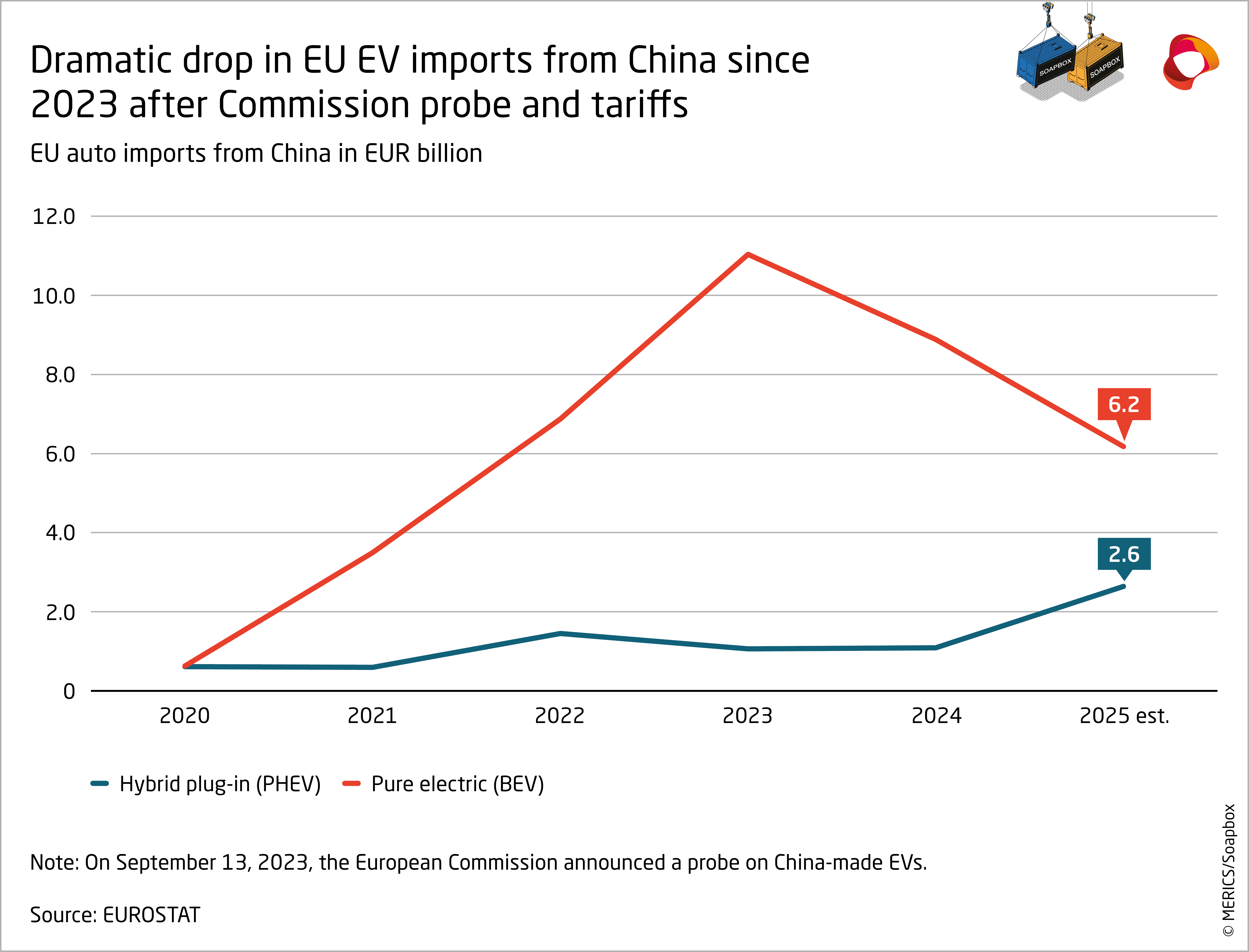
Europe’s car industry is staring at a pressure point it can no longer manage with slogans about innovation and industrial pride. EU China car imports have become a defining test of whether Brussels can defend one of its most important manufacturing sectors without triggering a wider trade confrontation with Beijing. The immediate flashpoint is cheap hybrid and electric vehicles arriving from China at prices European brands struggle to match. But the deeper issue is strategic: who controls the next decade of mobility, batteries, supply chains, and high-value manufacturing jobs. Negotiators heading to China are not just haggling over tariffs. They are trying to redraw the rules before Europe’s auto transition becomes a market-share surrender.
- EU negotiators are seeking limits on low-cost Chinese hybrid and electric vehicle exports.
- The talks reflect Europe’s fear that its automakers are being undercut during the shift to electrification.
- Brussels wants a solution that avoids a full-scale trade war while still showing industrial muscle.
- China’s cost advantage comes from scale, battery dominance, state support, and faster product cycles.
Why EU China car imports have become a political emergency
The European Union’s concern is simple: Chinese automakers are moving faster, pricing lower, and arriving in Europe at the exact moment legacy manufacturers are under maximum strain. Brands such as Volkswagen, Stellantis, Renault, and Mercedes-Benz are investing heavily in EV platforms, battery partnerships, software stacks, and factory conversions. That transition is expensive. It is also happening while consumer demand is uneven, charging infrastructure remains patchy, and interest rates have made car financing harder for households.
Chinese manufacturers enter that environment with a different cost structure. Many have vertically integrated battery supply, strong domestic scale, newer factories, and aggressive pricing strategies. Some also benefit from an industrial ecosystem shaped by years of state-directed support for electric vehicles, plug-in hybrids, battery materials, and clean transport technologies.
The real anxiety in Brussels is not that Chinese cars are cheap. It is that they are increasingly good, increasingly available, and increasingly hard to dismiss as budget alternatives.
That changes the politics. If Chinese vehicles were merely low-cost niche products, Europe could treat the issue as a consumer choice story. Instead, the EU sees a structural risk to manufacturing capacity, employment, technology leadership, and strategic autonomy.
The EU China car imports dispute is about hybrids as much as EVs
The headline battle is often framed around battery electric vehicles, but the negotiations also focus on hybrid models. That matters because hybrids occupy a commercially powerful middle ground. Many consumers remain hesitant about fully electric cars because of range anxiety, charging access, resale values, and upfront cost. Hybrids and plug-in hybrid electric vehicles offer a more familiar bridge.
If Chinese manufacturers can flood that bridge segment with attractively priced cars, European automakers face pressure not only on the future EV market but also on the transitional products funding their shift. That is a brutal squeeze. Legacy car companies need profits from petrol, hybrid, and premium models to finance electric platforms. If those profit pools erode too quickly, the transition becomes harder, not easier.
Why hybrids are strategically sensitive
Hybrids are not just a compromise technology. They are a sales weapon. They let manufacturers appeal to cautious buyers, fleet managers, and markets where charging networks are still developing. For Europe, losing ground in hybrids could mean losing the customer relationship before the customer is ready to go fully electric.
That is why Brussels is looking beyond a narrow tariff fight. It wants to address the mechanics of how vehicles are priced, subsidized, exported, and positioned in the European market.
What Brussels wants from Beijing
The EU’s preferred outcome is likely a managed settlement rather than a spectacular rupture. Negotiators will want China to moderate export pressure, accept pricing disciplines, or create a framework that reduces the appearance of dumping. Beijing, meanwhile, will want to protect its automakers’ access to Europe, one of the world’s richest car markets.
Possible outcomes could include minimum pricing arrangements, export monitoring, quota-style understandings, or commitments around investment and local production. None of these would be simple. Any mechanism would need to satisfy EU member states, comply with trade rules, and avoid looking like Brussels is quietly abandoning consumers who want cheaper low-emission cars.
- For Brussels: the priority is protecting industrial capacity without appearing protectionist.
- For Beijing: the priority is preserving market access and defending national champions.
- For automakers: the priority is buying time to cut costs and accelerate product development.
- For consumers: the priority is affordability, reliability, and choice.
This is where the politics get messy. Cheap imports are good for consumers in the short term, especially if they accelerate the move away from combustion engines. But if those imports hollow out domestic manufacturing, the long-term cost could be factory closures, job losses, and weakened innovation capacity.
The hidden weakness in Europe’s auto strategy
Europe has world-class brands, engineering depth, and premium-market credibility. What it does not always have is speed. Chinese carmakers have shortened development cycles and embraced software-led product refreshes in ways that make some European launches look slow and expensive. In the EV era, competitiveness is not just about panel gaps and ride quality. It is about batteries, infotainment, over-the-air updates, driver assistance, supply chain resilience, and price discipline.
European firms also face a fragmented home market. Incentives vary by country. Charging infrastructure varies by region. Energy prices are volatile. Regulation is ambitious but often uneven in implementation. Chinese manufacturers, by contrast, emerged from a vast domestic market that rewarded scale and fast iteration.
Pro Tip for industry watchers
Do not track only tariffs. Watch factory announcements, battery sourcing deals, software partnerships, and price cuts. Those signals reveal whether Europe is building durable competitiveness or simply negotiating breathing room.
If Brussels secures concessions but European automakers fail to accelerate, the same problem will return in another form. Tariffs can slow a wave. They cannot build a better product roadmap.
Why a trade war would hurt both sides
A hard escalation carries real risk. China is a major market for European luxury automakers, and many European companies have deep operations there. Beijing also has leverage across battery materials, solar technology, electronics, and consumer goods. A tit-for-tat cycle could spread quickly beyond cars.
For the EU, the challenge is credibility. If it does nothing, it risks looking passive while a cornerstone industry is battered. If it overreaches, it risks higher consumer prices, retaliation, and accusations of climate hypocrisy. The bloc wants cleaner transport, but it also wants the factories producing that transport to remain politically and economically anchored in Europe.
The EU is trying to thread a needle: defend jobs, keep cars affordable, preserve climate goals, and avoid turning the green transition into a geopolitical subsidy race.
China also has reasons to negotiate. Its carmakers need export markets as domestic competition intensifies. Europe offers prestige, margins, and global credibility. A chaotic trade fight could slow that expansion and push Chinese firms toward more expensive localization strategies sooner than planned.
What this means for drivers
For European consumers, the immediate question is whether this leads to higher prices. If Brussels imposes tougher barriers or negotiates minimum pricing, some low-cost models may become less competitive. That could reduce affordability at the lower end of the EV and hybrid market.
But the consumer story is not one-dimensional. If European manufacturers are forced to respond with better pricing, improved warranties, faster software updates, and more efficient vehicles, buyers could still benefit. Competition is painful for incumbents but useful when it pushes genuine improvement.
The danger is that policy becomes a shield for underperformance. Protection can be justified when markets are distorted. It becomes harder to defend if it merely preserves high prices and slow innovation.
The future of EU China car imports
The next phase of EU China car imports will likely move from pure export competition to localization. Chinese manufacturers may increase European assembly, form partnerships, or invest in regional supply chains to reduce trade friction. That could blunt some political criticism while still challenging European incumbents on price and technology.
At the same time, European automakers will have to prove they can compete in mass-market electrification. Premium badges remain powerful, but the volume market decides industrial scale. If Europe cannot produce desirable, affordable electric and hybrid cars at speed, negotiations in Beijing will only delay the reckoning.
The strategic takeaway
This dispute is not just about cheap cars. It is about whether the green transition becomes a new foundation for European industry or a channel through which manufacturing power shifts east. Brussels is right to scrutinize market distortions. But the strongest answer to China’s rise will not be found only in negotiating rooms. It will come from faster factories, smarter platforms, resilient battery supply, and cars people actually want to buy.
The EU can buy time in China. It cannot buy competitiveness forever.
The information provided in this article is for general informational purposes only. While we strive for accuracy, we make no guarantees about the completeness or reliability of the content. Always verify important information through official or multiple sources before making decisions.