Fix California Slow Vote Counts
Fix California Slow Vote Counts
California slow vote counts have become more than an administrative headache – they are now a political vulnerability. Every election cycle, the same post-Election Day fog rolls in: outstanding ballots, shifting margins, conspiracy-laced hot takes, and exhausted election officials trying to explain why the biggest state in the country still takes days or weeks to finish counting. The problem is not usually fraud. It is process, scale, law, and infrastructure colliding in public. That distinction matters. In an era when confidence can collapse faster than any ballot tally updates, slow reporting is not just a optics issue. It shapes legitimacy, campaign strategy, media narratives, and voter trust. California is not uniquely broken, but it is uniquely exposed because its system prioritizes access and accuracy while the public increasingly expects instant results.
- California slow vote counts are largely driven by ballot verification, late-arriving mail ballots, and the scale of the state.
- The delay is usually a feature of an access-heavy system, not evidence of manipulation.
- Public trust erodes when transparency and expectations do not match election procedures.
- Fixes exist: faster preprocessing, better voter education, upgraded systems, and clearer reporting standards.
- The real challenge is balancing speed, security, and inclusiveness without sacrificing any one of them.
Why California slow vote counts keep happening
California runs elections at a scale that would stress any system. Tens of millions of residents, heavy mail voting, multiple languages, county-level administration, and a legal framework built to maximize participation all add friction after polls close. That friction is not glamorous, but it is important.
Mail ballots are a major reason results lag. Ballots postmarked by Election Day can arrive after the election and still count under state rules. That means election offices are still receiving valid votes when much of the public assumes the race should already be over. On top of that, officials must verify signatures, resolve mismatches, process provisional ballots, and tabulate large batches in sequence. None of this is instant, and none of it should be.
The public often sees delay and assumes dysfunction. Sometimes that is fair. But more often, what looks like slowness is the administrative cost of a system designed to avoid disenfranchising legitimate voters.
The scale problem is real
A small state can process elections with fewer moving parts. California cannot. Each county has its own staffing levels, equipment, ballot design complexity, and workflow maturity. The result is a patchwork of performance. Some counties report quickly and update regularly. Others become black boxes for days.
That inconsistency is part of the trust problem. Voters do not experience the election system as a legal architecture. They experience it as a dashboard. If one county updates every few hours and another goes dark, the silence invites suspicion.
Verification takes time for a reason
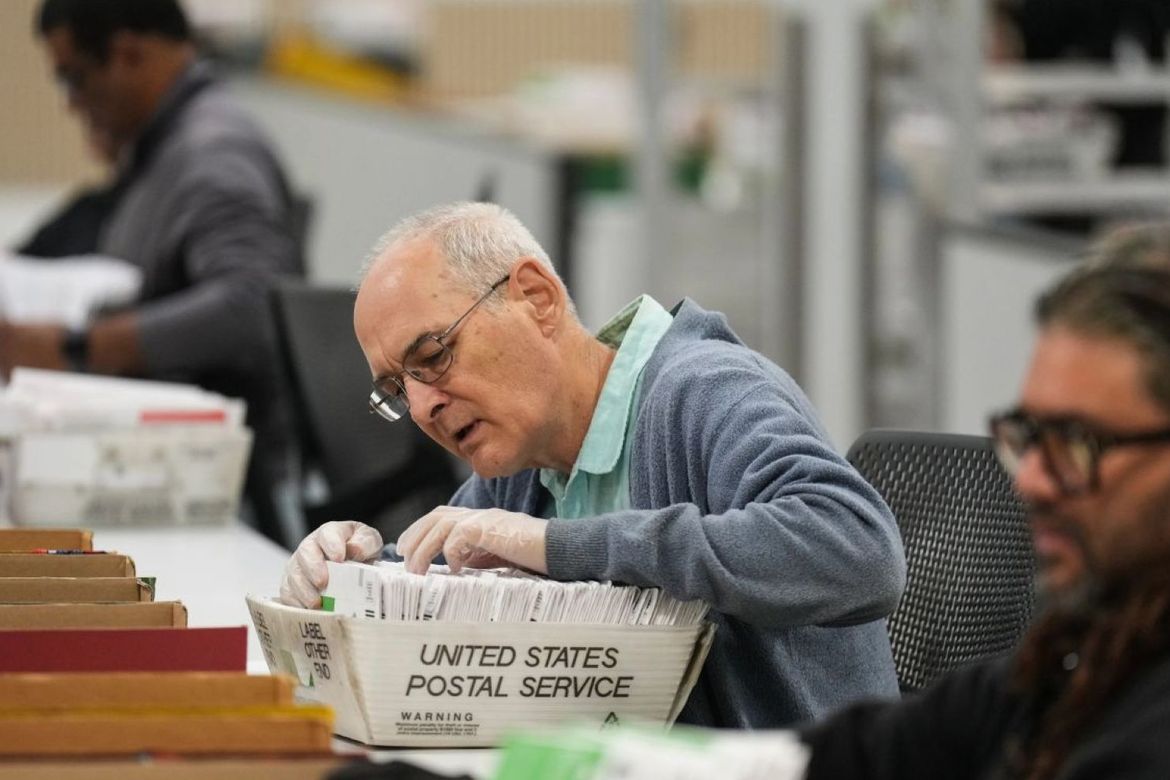
Election administrators are not simply feeding paper into scanners. They are checking whether signatures match voter records, determining whether provisional voters cast valid ballots, separating damaged ballots for duplication, and ensuring chain-of-custody procedures are followed. These are not optional steps. They are the exact steps critics would demand if errors appeared later.
In practical terms, a ballot can move through a process something like this:
receive ballotcheck postmark or delivery statusverify voter registration recordreview signature matchflag mismatch for curing if neededseparate secrecy envelope and ballotscan and tabulateaudit batch totals
None of that makes for exciting television. It does make for a more defensible result.
What the debate gets wrong
The loudest criticism usually frames slow counts as proof of incompetence or something darker. That framing is politically potent because it exploits a modern expectation: if your phone can process a payment in seconds, why can a state not count ballots overnight?
Election speed is not the same thing as election quality. A fast answer that excludes valid votes is worse than a slower answer people can trust.
Still, defenders of the status quo can be too complacent. It is not enough to say the process is working if the public does not understand it and confidence keeps bleeding out. Elections are both administrative systems and public legitimacy rituals. If the ritual feels chaotic, the system pays the price.
That is where California has work to do. The state has built a process optimized for access, but it has not been nearly as effective at explaining the timeline or standardizing the user experience across counties.
How California slow vote counts distort politics
Delayed outcomes do more than annoy cable news producers. They reshape campaigns, narratives, and governance.
Candidates fill the vacuum
When official information moves slowly, candidates and partisan influencers step in. They frame routine counting as suspicious, claim momentum from incomplete returns, or preemptively cast doubt on outcomes that may shift as later-counted ballots come in. California is especially vulnerable to this because its vote patterns often change over time as different ballot types are processed.
That means the same race can look one way on election night and another several days later without anything improper happening. But to many voters, a moving margin feels like a moving target.
Media incentives make it worse
Newsrooms are under pressure to deliver certainty fast, yet election administration is built around precision under legal constraints. That mismatch creates room for simplistic stories: why is counting so slow, who is to blame, what changed overnight? Some of that scrutiny is healthy. Some of it turns a predictable counting process into a spectacle.
The result is a repeated credibility tax. Election workers shoulder it. Voters absorb it. Political actors weaponize it.
What should actually change
The good news is that California does not need a democratic reboot. It needs operational modernization and better communication. The state can preserve voter access while reducing unnecessary delay and confusion.
1. Expand preprocessing before Election Day
One of the most effective fixes is allowing more ballot preprocessing earlier. That can include verifying signatures, sorting envelopes, and preparing batches for scanning before polls close while preserving tabulation safeguards. If counties can do more of the labor-intensive work upfront, post-election backlogs shrink.
Pro Tip: The public often hears “counting early” and assumes ballots are being totaled before voting ends. Election officials should repeatedly clarify the difference between preprocess and tabulate.
2. Standardize county reporting windows
California should push counties toward more predictable public update schedules. Even if counting still takes time, consistent reporting reduces speculation. A county that posts status updates at set intervals with clear categories – mail ballots received, provisional ballots pending, cured signatures outstanding – creates visibility where rumor would otherwise flourish.
A clearer reporting model might look like this:
ballots_received_totalballots_counted_totalmail_ballots_pendingprovisional_ballots_pendingsignature_cure_cases_opennext_update_time
That is not flashy. It is extremely useful.
3. Upgrade staffing and ballot-processing tech
Election administration is often treated like a temporary civic function when it should be viewed as critical public infrastructure. Counties need trained permanent staff, scalable temporary staffing plans, modern signature-verification support tools, and resilient tabulation systems. Underinvesting here is penny-wise and legitimacy-foolish.
This is one of those areas where boring government capacity matters more than rhetorical reform. Faster scanners, better workflow software, and cleaner voter record integration do not trend online, but they can shave days off the process.
4. Improve voter education before ballots are cast
A surprising amount of delay starts with preventable voter errors: missing signatures, mismatched signatures, damaged envelopes, and last-minute ballot returns that flood local offices. California should treat voter instruction as a first-order election function, not an afterthought.
If voters understand how to return ballots correctly and when results are realistically expected, the post-election panic cycle loses a lot of its fuel.
Simple messaging can help: sign here, return early, track your ballot, and understand that close races may take time.
Why faster is not always better
There is a tempting political argument that every election should conclude at near-digital speed. But elections are not ecommerce checkouts. They are legal, auditable, human systems with constitutional stakes. The pressure to accelerate can backfire if it leads to more rejected ballots, weaker review, or less time for eligible voters to cure problems.
That is the balancing act. California should absolutely aim to reduce needless delay. It should not sacrifice inclusion or confidence to satisfy a cultural obsession with instant results.
The smartest reforms distinguish between productive speed and reckless speed. Productive speed comes from preprocessing, transparency, staffing, and system design. Reckless speed comes from cutting safeguards that exist for a reason.
Why California slow vote counts matter beyond California
What happens in California rarely stays in California, especially in election politics. The state is a testing ground for vote-by-mail scale, multilingual ballot administration, and turnout-maximizing policy. If it can improve counting timelines without reducing access, other states will notice. If it keeps stumbling through the same trust-eroding post-election delays, critics elsewhere will use it as a cautionary tale.
There is also a broader lesson here for democracy in the platform era. Citizens now consume elections through live dashboards, push alerts, and social feeds built for constant updates and instant interpretation. Election systems were not built for that attention model. They were built to produce lawful outcomes. Bridging that gap is now part of the job.
The real test is confidence
The hardest part of the California challenge is that success is not just a final certified tally. Success is whether voters believe the process made sense while it was unfolding. That is why California slow vote counts are not merely a technical issue. They are a confidence issue.
Fixing them will require political discipline, administrative investment, and a more honest public conversation about what democratic accuracy actually looks like. Results do not need to be instantaneous to be legitimate. But they do need to be intelligible. Right now, California often delivers the first truth without the second.
That is the opening for reform. Not panic. Not denial. Reform.
The information provided in this article is for general informational purposes only. While we strive for accuracy, we make no guarantees about the completeness or reliability of the content. Always verify important information through official or multiple sources before making decisions.