Flash Flood Alerts Expose the Northeast’s Weather Blind Spot
Flash Flood Alerts Expose the Northeast’s Weather Blind Spot
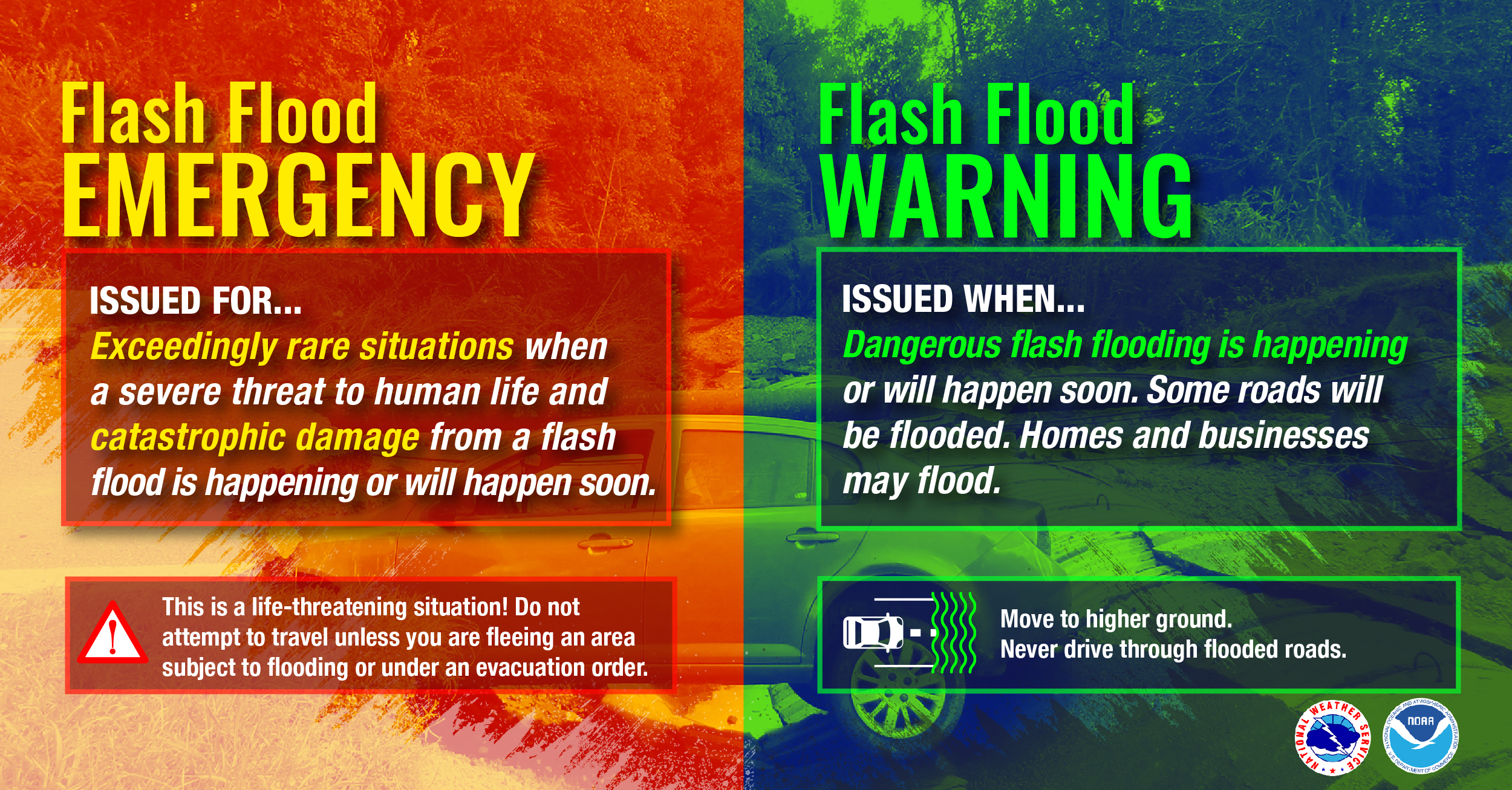
Flash flood alerts are no longer a rare summer annoyance for the Northeast. They are becoming a stress test for how cities, transit systems, and emergency managers handle extreme weather in real time. When water rises fast enough to trap commuters, shut down roadways, and overwhelm drainage systems, the problem is bigger than a bad forecast. It is a warning that the region’s aging infrastructure and patchwork alerting systems are not built for the pace of today’s climate volatility. That matters now because the next major storm will not wait for the next budget cycle. If the Northeast cannot turn flash flood alerts into faster action, the cost will keep landing on residents first.
- Flash flood alerts are revealing a growing gap between weather forecasting and on-the-ground response.
- The Northeast’s drainage, transit, and emergency systems are being pushed beyond assumptions built for a different climate era.
- Better alerting is only useful if people trust it, understand it, and can act quickly.
- The real challenge is not prediction alone, but coordination across agencies, cities, and neighborhoods.
- Future resilience will depend on infrastructure upgrades, smarter communication, and more localized risk models.
Why flash flood alerts are hitting harder now
The Northeast has always had its share of heavy rain, but the pattern is changing. Storms are dropping more water in shorter windows, which turns streets into runoff channels and low-lying corridors into traps. That makes flash flood alerts less like a weather update and more like an operational warning for the entire region.
What is different today is speed. A forecast that once gave cities hours to prepare now sometimes gives them minutes. That compresses every response layer: transit operators have less time to reroute service, municipal crews have less time to clear drains, and residents have less time to move cars, close storefronts, or avoid underpasses. Even when alerts are accurate, they can still arrive into a system that is too slow to react.
What the Northeast keeps getting wrong
The core failure is not a lack of data. It is the gap between data and execution. Weather services can detect a dangerous storm. Cellphones can push warnings. Social feeds can amplify the message instantly. But none of that matters if local systems do not translate alerts into visible, practical changes on the ground.
This is where the Northeast’s vulnerabilities stack up:
- Aging drainage systems often cannot absorb the intensity of modern downpours.
- Dense development leaves fewer places for water to go once pavement fills the landscape.
- Transit networks are vulnerable to flooded tracks, signal failures, and station closures.
- Mixed messaging from agencies can leave the public unsure how serious an alert really is.
The result is predictable: people become numb to warnings until the water is already at the curb. That is a dangerous threshold. Once trust erodes, even a well-timed alert loses power.
Flash flood alerts are only as effective as the systems that act on them. A warning without rapid local response is just weather theater.
Flash flood alerts and the infrastructure reality
The Northeast has spent decades building around assumptions that no longer hold. Streets, subways, storm drains, and culverts were not designed for an era of repeatedly concentrated rainfall. As climate patterns intensify, the weakest links show up first in places people interact with every day: road underpasses, basement apartments, station entrances, parking garages, and ground-level retail.
This is why flash floods are so disruptive. They do not merely inconvenience a region. They expose how much of urban life depends on systems that work only when rainfall stays within historical norms. Once those norms break, the damage cascades quickly. A flooded street becomes a closed bus route. A closed bus route means stranded workers. Stranded workers create more traffic. More traffic slows emergency vehicles. The failure compounds.
For policymakers, the lesson is uncomfortable but clear: resilience is not a slogan. It is a maintenance problem, a zoning problem, and a capital planning problem.
The hidden cost of underinvestment
Drainage upgrades are easy to defer because the benefits are invisible when things are working. That creates a political trap. No ribbon cutting follows a cleared culvert, and no one notices a pump that prevents a crisis. But when the storm hits, the absence of that invisible work becomes painfully obvious.
In practical terms, underinvestment means more than flooded streets. It means emergency overtime, business interruption, property damage, insurer retreat, and longer recovery times for households that already live near the margin.
Why flash flood alerts need to be more local
One of the most important shifts in emergency communication is specificity. Broad regional alerts are useful, but they are not enough. The public needs warnings that map to actual risk at the block or neighborhood level. A commuter in a subway-connected business district needs different guidance than a homeowner near a creek that overtops in 20 minutes.
That is where modern alerting systems can evolve. Better radar, hyperlocal rainfall modeling, and real-time flood sensors can help distinguish between nuisance water and life-threatening conditions. But technology only works if it is paired with actionable messaging. People need to know not just that flooding is possible, but what to do right now.
- Move vehicles out of known flood zones before rainfall intensifies.
- Avoid underpasses and low-lying roads, even if they look passable.
- Assume basement-level spaces can become dangerous quickly.
- Follow transit updates closely, especially for tunnels and surface routes.
- Do not wait for visible flooding if an alert is already urgent.
How agencies can make alerts matter
The best alert systems are integrated systems. That means weather services, transportation departments, city dispatch, and utility providers need shared triggers and coordinated playbooks. If one agency sends a warning while another keeps operations normal, the public gets mixed signals and responds less effectively.
A better model would pair flash flood alerts with automatic operational changes: more aggressive road closures, transit service reductions on vulnerable routes, parking restrictions in known flood corridors, and clearer evacuation guidance for lower-elevation neighborhoods. In other words, alerts should do something, not just say something.
Strong warning systems do not simply predict danger. They force institutions to move faster than the storm.
What this means for residents and businesses
For households, flash flood risk is now part of routine planning, not an edge case. That means thinking about where water enters a property, how quickly utilities can be shut off, and whether important documents and electronics are stored above ground level. For renters, especially in basement or garden-level units, the stakes are even higher because exit routes can be cut off in minutes.
Businesses face a different kind of exposure. Retail stores, warehouses, restaurants, and offices all depend on predictable access. A sudden flood can destroy inventory, force closures, and disrupt payroll. Small businesses are especially vulnerable because they often lack the cash reserves to absorb repeated losses. For them, a flash flood alert is not just a weather concern. It is an operational continuity issue.
Here are a few practical priorities:
- Pre-stage supplies like sandbags, battery packs, and backup lighting.
- Review insurance coverage before storm season, not after a loss.
- Map exit routes for employees and residents that avoid known flood-prone streets.
- Protect equipment by moving it above likely flood lines.
The bigger strategic lesson
Flash flood alerts are becoming a measure of public-sector readiness. If a region can warn people but cannot protect them, it has a coordination problem. If it can protect some neighborhoods but not others, it has an equity problem. If it keeps rebuilding the same way after each flood, it has a planning problem.
That is why this issue matters beyond the Northeast. Every metro area watching these storms should see the same message: climate adaptation is no longer about rare disasters. It is about designing systems that assume disruption is normal. The places that adapt fastest will not be the ones with the most dramatic forecasts. They will be the ones that treat every alert as a trigger for immediate action.
The future will likely bring more localized flood modeling, smarter municipal sensor networks, and better real-time mapping. But none of that replaces the need for physical upgrades: bigger drains, restored wetlands, floodable parks, hardened transit corridors, and smarter land-use policy. Software can improve the warning. It cannot replace the concrete.
Why this matters now
The Northeast is being forced to confront a hard truth: weather has outpaced the systems built to contain it. Flash flood alerts are the messenger, not the problem. The problem is a region that still behaves as if extreme water is an exception rather than a recurring condition.
That shift has consequences for everyone – from commuters and tenants to mayors and utility operators. The next big storm will not be judged by how many alerts were sent. It will be judged by how many people were protected before the roads filled, the tunnels backed up, and the water rose too fast to ignore.
If the region wants to stay ahead of the next flood, it has to stop treating warnings as the finish line. They are the starting gun.
The information provided in this article is for general informational purposes only. While we strive for accuracy, we make no guarantees about the completeness or reliability of the content. Always verify important information through official or multiple sources before making decisions.