Flávio Bolsonaro Targets Brazil
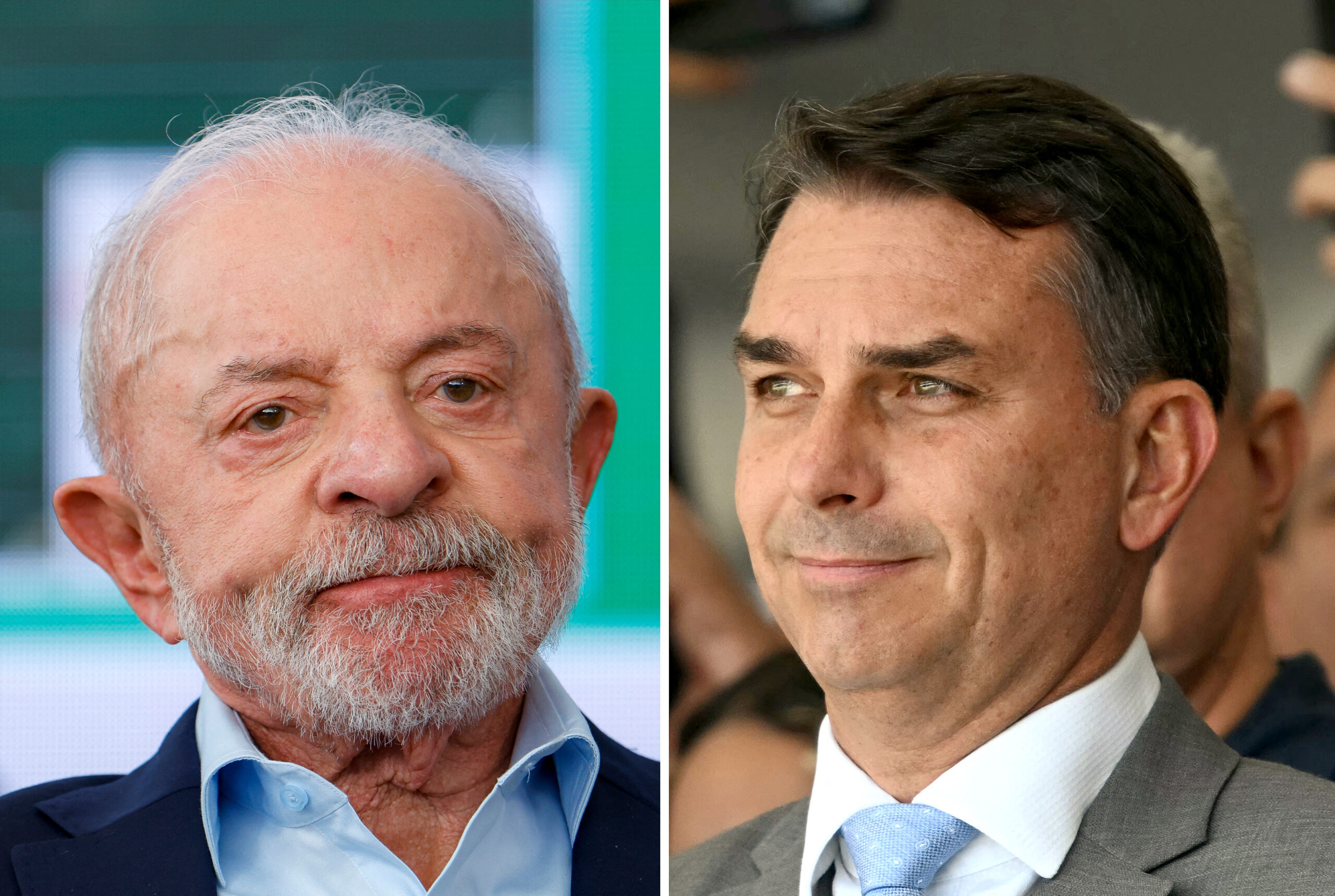
Flávio Bolsonaro Targets Brazil
Brazil’s next presidential race is no ordinary contest over taxes, crime or inflation. It is becoming a referendum on institutions, memory and the political force that still orbits Jair Bolsonaro. Flávio Bolsonaro, the former president’s son, has vowed to “re-democratise” Brazil, a phrase that lands like a warning flare in a country still processing the aftermath of a defeated leader, a storming of government buildings and a bitter battle with the courts. For voters, investors and regional allies, the question is not just whether another Bolsonaro can win. It is whether Brazil’s democracy is stabilising after years of pressure, or preparing for a sequel with higher stakes and sharper edges.
- Flávio Bolsonaro is positioning himself as the heir to Brazil’s hard-right movement.
- His promise to “re-democratise” Brazil targets courts, election authorities and the political establishment.
- The campaign could reshape Brazil’s 2026 election around institutional legitimacy rather than policy alone.
- Brazil’s global role on trade, climate and regional diplomacy may hinge on the race.
Flávio Bolsonaro and the Politics of Restoration
Flávio Bolsonaro’s pitch is built around restoration. Not merely restoring a party to power, but restoring a worldview that sees Brazil’s current institutions as hostile to conservatives, evangelical voters, security forces and the broader nationalist right. The word “re-democratise” is doing heavy political work here. To supporters, it suggests liberation from judges, bureaucrats and elite media. To critics, it sounds like a euphemism for weakening the very guardrails that constrained Jair Bolsonaro’s presidency.
That ambiguity is the point. It gives the campaign emotional range: grievance for the base, plausible deniability for moderates and a populist frame for every legal or political setback. If a court intervenes, it becomes proof of persecution. If journalists scrutinise him, it becomes proof of bias. If opponents warn about authoritarianism, the campaign can call them anti-democratic for trying to exclude a major political family from power.
Key insight: Flávio Bolsonaro is not simply campaigning as a candidate. He is campaigning as the custodian of a political brand that treats institutional conflict as evidence of authenticity.
Why Flávio Bolsonaro Matters in Brazil’s 2026 Election
The Bolsonaro name remains one of the most powerful assets in Brazilian politics. Jair Bolsonaro may be legally constrained and politically damaged, but his movement did not disappear. It hardened. It built networks across Congress, state governments, social media channels, churches, agribusiness circles and security-minded voters who see the left as an existential threat.
Flávio, a senator from Rio de Janeiro, brings a different profile from his father. He is less chaotic in presentation, more legislative in tone and more fluent in institutional language. That does not necessarily make him moderate. It may make him more strategically effective. The modern populist playbook has evolved: the sharpest candidates no longer need to shout all the time. They can speak the language of process while promising to remake the process itself.
The family brand is still the machine
The Bolsonaro movement is intensely personal. Its identity is tied not to a conventional party platform, but to loyalty, cultural confrontation and a sense of betrayal by elites. Flávio’s candidacy would likely rely on that inherited emotional infrastructure. The campaign’s challenge is to convert nostalgia for Jair Bolsonaro into trust in Flávio Bolsonaro as an autonomous national leader.
That is harder than it looks. Political dynasties can inherit attention, but not automatically authority. Flávio must convince voters he is not just a stand-in for his father, while also reassuring the base that he will not dilute the original project. That balancing act will define his campaign.
The “Re-Democratise” Message Is the Campaign
Most presidential slogans are designed to be forgettable enough to unite a coalition. This one is designed to polarise. “Re-democratise” implies that Brazil, under its current political and judicial order, is not fully democratic. It invites voters to see the election as a rescue mission rather than a routine contest.
That is a potent argument in a country where trust in institutions is uneven and where many voters believe corruption, crime and elite privilege have survived every major reform. But it also raises a serious question: what exactly would “re-democratisation” mean in practice?
- Pressure on courts: A Bolsonaro-aligned government could seek to curb judicial authority or reshape appointments.
- Election system attacks: Brazil’s electronic voting system could again become a target of suspicion and disinformation.
- Security-first governance: Policing, gun policy and military symbolism could return to the center of federal politics.
- Cultural mobilisation: Schools, media, gender policy and religion may become core campaign battlegrounds.
- Foreign policy reversal: Brazil could pivot away from multilateral climate diplomacy and toward nationalist alliances.
None of these outcomes is guaranteed. But the campaign language points toward a broader clash over who gets to define democracy: courts and constitutional procedure, or the claimed will of “the people” as expressed through a leader and his movement.
Brazil’s Institutions Face a Familiar Stress Test
Brazil has already lived through a dangerous cycle of democratic stress. Jair Bolsonaro repeatedly questioned the electoral system, clashed with the Supreme Court and refused to fully normalise defeat in the way stable democracies require. The attacks on government buildings in Brasília after the 2022 election made clear that anti-institutional rhetoric can travel from screens and rallies into physical confrontation.
That history gives Flávio Bolsonaro’s words extra weight. A phrase that might sound abstract elsewhere lands in Brazil against a backdrop of investigations, bans, prosecutions and unresolved anger on the right. The campaign will likely argue that conservative voters were unfairly criminalised. Opponents will argue that accountability is not persecution.
Why this matters: The danger is not only whether a candidate accepts democracy in the abstract. It is whether his movement accepts defeat, judicial oversight and independent election administration when those institutions produce inconvenient outcomes.
The courts are now campaign actors whether they want it or not
Brazil’s judiciary, especially its top electoral and constitutional authorities, has become a central character in national politics. That is not ideal for any democracy. Courts gain legitimacy from distance, restraint and procedural clarity. But when political leaders challenge the basic rules of the system, judges inevitably move into the spotlight.
Flávio Bolsonaro can exploit that visibility. Every judicial decision involving the Bolsonaro camp can be framed as interference. Every investigation can be cast as selective enforcement. Yet courts also have a constitutional duty to defend the electoral system. The result is a feedback loop: populist attacks force judicial responses, and judicial responses fuel populist attacks.
Flávio Bolsonaro and Brazil’s Right-Wing Future
The Brazilian right is not monolithic. It includes market liberals, military nostalgists, evangelical conservatives, anti-crime voters, agribusiness leaders, libertarians and social media influencers. Jair Bolsonaro unified these groups through charisma, confrontation and a shared enemy in the Workers’ party. Flávio’s task is to keep that coalition intact without his father’s instinctive connection to the base.
That will require discipline. Economic elites may want fiscal credibility and regulatory predictability. Grassroots activists may want revenge against judges and leftists. Evangelical leaders may want cultural guarantees. Security voters may want a hard line on crime. Agribusiness may want infrastructure, land-use flexibility and protection from foreign environmental pressure.
The campaign’s promise to “re-democratise” can serve as a container for all of these demands. It is broad enough to mean deregulation to business, institutional revenge to activists and moral renewal to religious conservatives.
Pro tip for readers watching the campaign
Do not only track speeches. Watch appointments, alliances and legal proposals. In high-stakes democratic contests, the real agenda often appears first in who gets empowered: campaign lawyers, retired generals, evangelical brokers, agribusiness lobbyists, digital strategists and congressional power players.
Economic Stakes Behind the Democratic Drama
Brazil is too large for its politics to stay domestic. It is Latin America’s biggest economy, a top agricultural exporter, a critical climate actor and a major player in debates over China, the United States and the future of the Global South. A Bolsonaro family return would be read globally as part of a broader right-wing resurgence, especially if paired with attacks on courts, media and election bodies.
Markets may initially focus on familiar questions: spending, taxes, state companies, privatisation and central bank independence. But institutional risk is economic risk. If investors believe a government will trigger constitutional crises, provoke mass protests or weaken regulatory predictability, the cost can show up in currency pressure, borrowing costs and delayed investment.
There is also the climate dimension. Brazil’s Amazon policy affects trade negotiations, European relations, commodity supply chains and global climate commitments. A hard-right administration sceptical of environmental enforcement could energise domestic producers while alarming foreign governments and companies exposed to deforestation rules.
The Digital Campaign Will Be Brutal
No Bolsonaro campaign can be understood without the internet. The family’s political rise was inseparable from social media ecosystems that bypassed traditional gatekeepers and turned supporters into distributors. The next version will likely be more sophisticated, more encrypted and more difficult to police.
Expect short-form video, influencer networks, religious messaging, anti-court narratives and claims of censorship to shape the information war. The phrase “re-democratise” is especially suited for digital politics because it compresses outrage into a shareable moral claim.
- Watch for narrative testing: Campaigns often float extreme claims through allies before candidates adopt softer versions.
- Watch for platform migration: Supporters may move between mainstream networks and private channels depending on moderation pressure.
- Watch for legal framing: Claims about free speech and censorship may become central to the campaign’s legitimacy strategy.
Brazilian authorities know this terrain, but enforcement is difficult. Move too slowly and disinformation spreads. Move too aggressively and officials risk validating claims of censorship. That is the core dilemma of platform-era democracy.
Can Flávio Bolsonaro Win the Center?
The decisive question is whether Flávio Bolsonaro can expand beyond the faithful. Brazil’s elections are won by coalitions, not fan clubs. A candidate can dominate the right-wing conversation and still lose if centrist voters fear instability.
His route to the center may involve a more polished tone, economic reassurance and a promise that “re-democratisation” means institutional balance rather than revenge. But his route to energising the base may require the opposite: confrontation, outrage and loyalty to Jair Bolsonaro’s unfinished battle.
The strategic tension: Flávio Bolsonaro must look safe enough for swing voters while sounding dangerous enough to satisfy a movement built on rupture.
That tension is not unique to Brazil. It is the defining problem for populist heirs around the world. Once a movement has taught supporters that compromise is betrayal, governing becomes harder and moderation becomes suspect.
What Comes Next for Brazil
The 2026 election is likely to become a test of democratic muscle memory. Have voters grown tired of permanent crisis, or do they still see confrontation as the only path to change? Can institutions enforce rules without appearing partisan? Can the right build a post-Jair future without relitigating every battle of the past?
Flávio Bolsonaro’s vow to “re-democratise” Brazil is powerful because it is both slogan and threat, diagnosis and campaign weapon. It captures the grievance of millions who feel excluded from power. It also alarms those who believe Brazil’s democracy survived a stress test and should not be pushed back to the brink.
The country has been here before, but not exactly like this. This time, the Bolsonaro project may return with lessons learned, sharper legal strategy and a candidate who understands the institutions he wants to challenge. That makes the race more than a family comeback story. It makes it one of the most consequential democratic contests in the world.
The information provided in this article is for general informational purposes only. While we strive for accuracy, we make no guarantees about the completeness or reliability of the content. Always verify important information through official or multiple sources before making decisions.