Google AI Mode Is Rewriting Search
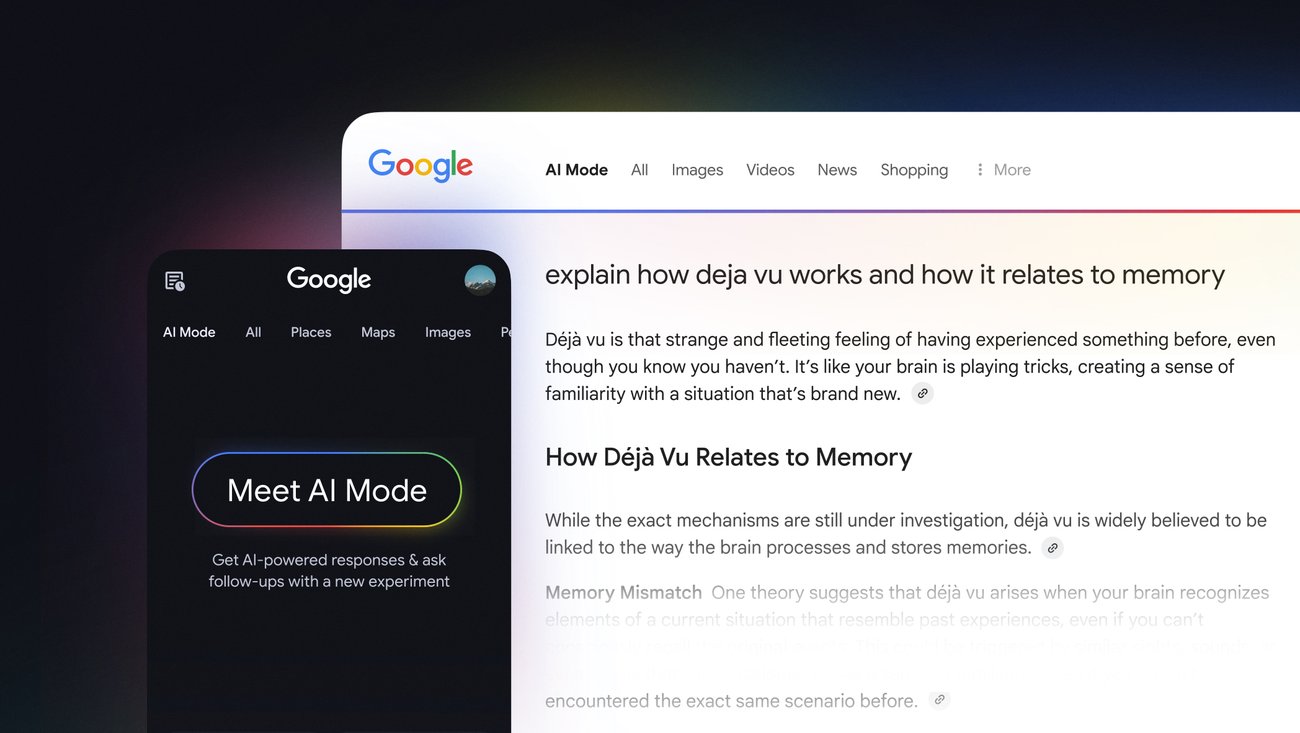
Search is no longer a simple box and a list of blue links. Google AI Mode is turning the entire discovery stack into something more conversational, more opinionated, and potentially far less predictable for everyone who depends on search traffic. For users, that can mean faster answers and fewer dead ends. For publishers, brands, and marketers, it means a brutal question: if Google answers first, who gets the click?
This shift is bigger than a product tweak. Google AI Mode sits at the intersection of search quality, generative AI, and user behavior, and it could redraw how people find products, news, services, and facts online. That matters because search is still the front door to the web for billions of queries. If the front door changes shape, the entire house has to adapt.
- Google AI Mode pushes search toward direct answers instead of traditional results pages.
- Publishers and businesses may lose traffic unless they adapt to answer-first discovery.
- SEO is becoming less about ranking alone and more about being quoted, trusted, and structured.
- The winners will likely be brands that pair authority with machine-readable content.
- This is not just a product rollout – it is a shift in how attention gets allocated online.
Google AI Mode is changing the search contract
For years, the search deal was straightforward: users typed a query, Google returned a ranked set of links, and the best pages earned the traffic. Google AI Mode breaks that contract by moving the answer layer higher, often before a user ever reaches a website. That sounds convenient, and often it is. But convenience is not neutral. Every time Google summarizes, synthesizes, or recommends, it becomes more than an index. It becomes an editor.
That editorial role is exactly why Google AI Mode is such a consequential shift. The company is not just improving search quality. It is redefining what search is supposed to do. Instead of forcing users to search, click, compare, and sift, the system increasingly tries to resolve intent up front. For simple informational queries, that can be a win. For commercial and news-heavy queries, it can compress the number of opportunities sites have to earn attention.
Google AI Mode is not merely a feature. It is a reordering of who controls discovery, and control over discovery is control over the modern internet economy.
Why Google AI Mode matters for users and businesses
From a user perspective, the appeal is obvious. People want answers that feel immediate, relevant, and contextual. They do not want to chase ten tabs to compare a phone plan or decode a technical issue. Google AI Mode promises to reduce friction by stitching together the most useful bits of the web into something more usable.
But the same feature that saves time can also flatten nuance. When an AI layer summarizes multiple sources into a single response, some context inevitably gets lost. That is a problem in categories where precision matters: health, finance, politics, science, and breaking news. A search experience optimized for speed can still produce confidence without completeness, and that is where risk creeps in.
For businesses, the implications are more immediate. If fewer users click through to sites, then organic acquisition becomes harder to measure and harder to monetize. That can affect ad revenue, lead generation, and the entire content strategy behind a site. The company that used to win the first click may now need to win the first mention.
The traffic math is changing
Classic SEO rewarded pages that matched intent and secured a top position. Google AI Mode introduces a new layer of competition: being selected, cited, or summarized by the system itself. That means a page can rank well and still see reduced traffic if the answer is fully resolved on the results page. This is a subtle but massive shift.
Pro tip: stop thinking only in terms of rank positions. Start thinking in terms of answer visibility, entity authority, and citation potential. The pages most likely to survive are the ones that are useful to both humans and machines.
How Google AI Mode changes SEO strategy
SEO is not dead, but it is getting less linear. The old playbook – keyword targeting, backlink building, and title optimization – still matters. What changes is the emphasis. Google AI Mode rewards content that is structured, trustworthy, and easy for systems to parse. That means strong headings, clear definitions, updated facts, and content that demonstrates actual expertise instead of generic rewrite energy.
Brands that want to remain visible need to answer questions with enough depth that an AI system can extract value, but not so much fluff that the core point gets buried. That is a tough balance, and it separates serious publishers from content mills almost instantly.
- Use structured headings: break complex topics into clear sections.
- Write for intent: explain what users are trying to accomplish, not just what they typed.
- Prioritize originality: include analysis, examples, and expert context that AI summaries cannot easily invent.
- Keep content current: stale pages are easier for AI systems to overlook.
- Strengthen trust signals: show real experience, clear authorship, and domain expertise.
The deeper point is that Google AI Mode rewards content quality in a more literal sense than traditional search ever did. If your content is vague, derivative, or padded, it is not just less appealing to readers. It is less legible to the systems that increasingly mediate discovery.
Machine readability is now a competitive advantage
Search engines have always needed structure, but generative search raises the bar. Pages that use clear topic framing, concise definitions, and well-organized sections are easier for models to interpret and surface. A messy page might still rank, but it is less likely to become part of the answer layer.
Example: a product comparison page that explicitly separates features, pricing, use cases, and caveats is far more useful than one long sales pitch. The same is true for service pages, tutorials, and news explainers. Structure is no longer just good UX. It is search infrastructure.
What publishers should do next
Publishers cannot control whether Google AI Mode expands, but they can control how prepared they are. The first step is to audit which pages currently drive discovery and which of those pages are vulnerable to answer replacement. Informational content is usually the first to feel pressure. Transactional and niche expertise content may hold up longer, especially when it offers specificity that an AI summary cannot fully compress.
From there, the strategy becomes sharper: create content that is both citation-worthy and hard to oversimplify. That means original reporting, firsthand testing, strong comparisons, and domain-specific insight. If you are publishing the same generic advice that everyone else is, you are competing in the weakest possible lane.
The best defense against answer-layer disruption is not volume. It is distinctiveness.
That distinction can take many forms: a proprietary dataset, a recurring expert column, a localized angle, or a piece of analysis that makes the story richer than a summary. Google AI Mode may reduce the value of generic pages, but it increases the value of pages that cannot be easily substituted.
How to future-proof content
There is no magic switch, but there is a practical roadmap:
- Update evergreen pages: refresh outdated examples, statistics, and recommendations.
- Add real-world proof: screenshots, test results, and direct observations beat recycled advice.
- Segment content clearly: separate definitions, how-tos, tradeoffs, and recommendations.
- Build topic authority: publish clusters around a subject instead of isolated one-off posts.
- Monitor search behavior: watch for shifts in impressions, clicks, and query types as AI features expand.
The risks Google cannot ignore
There is a strategic tension at the heart of Google AI Mode. If the company answers too much, it risks undermining the ecosystem that feeds its results. Publishers create the content that makes search useful. If traffic dries up too aggressively, the broader web has less incentive to publish original material. That would eventually weaken the quality of the search index itself.
This is the classic platform dilemma: optimize for user satisfaction now, or preserve ecosystem health over time. Google has to balance both, and history suggests that balance is hard to maintain. The company can promise helpfulness, but it also has to keep the open web economically viable enough to keep producing the information people search for in the first place.
Why this matters: if AI search makes the web less rewarding for creators, the quality of the source material could deteriorate. That would create a feedback loop where summaries get better only until the underlying web gets worse.
Google AI Mode is the start, not the finish line
What makes Google AI Mode so important is not just what it does today, but what it signals about tomorrow. Search is moving from retrieval to interpretation, from list-making to decision support. That opens the door to more personalized results, more contextual answers, and likely more commerce woven directly into the experience.
Expect the next phase to be messier, not cleaner. Some categories will improve dramatically. Others will become more opaque. Users will adapt quickly because convenience is powerful. Businesses will adapt more slowly because they have revenue tied to the old model. That gap between user adoption and business readiness is where the biggest disruption usually lives.
The companies that thrive in this environment will not be the loudest. They will be the clearest. They will make content that is easy to trust, easy to parse, and hard to replace. In a search landscape increasingly shaped by AI, that may be the only durable advantage left.
Google AI Mode is not just changing how people search. It is changing what it means to be found.
The information provided in this article is for general informational purposes only. While we strive for accuracy, we make no guarantees about the completeness or reliability of the content. Always verify important information through official or multiple sources before making decisions.