Greenpeace Faces a Chilling Legal Threat
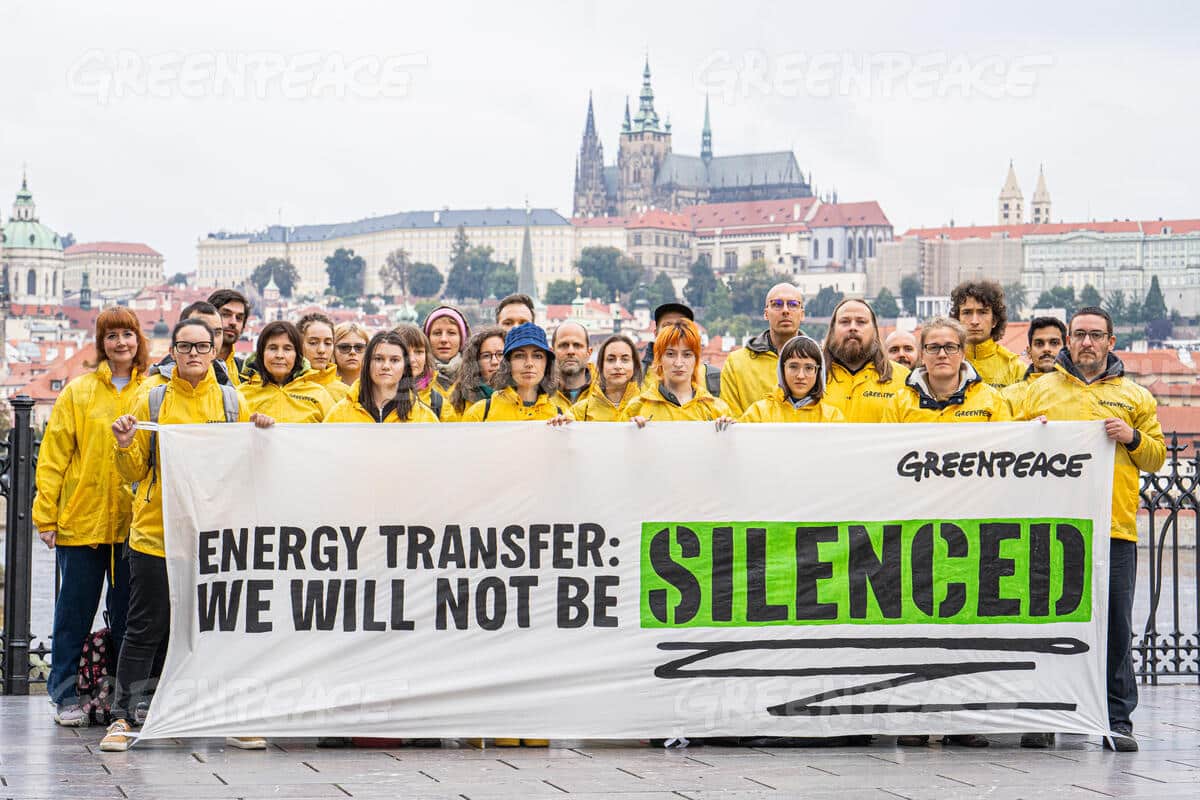
Greenpeace Faces a Chilling Legal Threat
The Greenpeace Energy Transfer injunction story lands at a moment when climate activism is already under pressure from courts, legislatures, and increasingly aggressive corporate tactics. What makes this fight so consequential is not just the immediate legal risk for one high-profile environmental group. It is the possibility that a single case in North Dakota could redefine how protest, advocacy, and corporate accountability interact across the United States. For organizers, nonprofits, and even ordinary citizens who show up at demonstrations, the question is suddenly larger than one pipeline dispute. It is whether powerful companies can use the legal system not only to seek damages, but to raise the cost of dissent so dramatically that future opposition becomes harder to imagine.
- The Greenpeace Energy Transfer injunction could become a major test of how far corporations can go in targeting protest groups.
- The legal clash reaches beyond one pipeline and speaks directly to free speech, organizing risk, and climate politics.
- North Dakota is once again a flashpoint where energy infrastructure and public resistance collide.
- If this strategy succeeds, other companies may adopt similar litigation tactics against activists and nonprofits.
Why the Greenpeace Energy Transfer injunction matters now
Energy fights in America rarely stay local anymore. A pipeline route, a permitting battle, or a confrontation at a work site can quickly become a national proxy war over climate policy, Indigenous rights, corporate governance, and the boundaries of lawful protest. The Greenpeace Energy Transfer injunction belongs squarely in that category.
At a surface level, this is a dispute tied to the long-running fallout from the Dakota Access Pipeline era, one of the most visible environmental conflicts of the past decade. But the legal mechanics matter as much as the politics. Injunctions are not just procedural tools. In a high-stakes conflict, they can function as force multipliers. They can restrict conduct, shape strategy, and signal how sympathetic a court may be to broader claims.
Key insight: When litigation moves from recovering losses to deterring opposition, the courtroom becomes part of the political battlefield.
That is why the case deserves attention beyond environmental circles. If large companies can frame activism as a source of business disruption deserving expansive judicial relief, the chilling effect could extend far beyond climate campaigns.
The bigger corporate strategy behind these lawsuits
There is a familiar logic to modern corporate litigation against advocacy groups. Public protest can delay projects, raise financing costs, damage brand reputation, and invite regulatory scrutiny. From a boardroom perspective, activism is not just speech. It can be modeled as an operational risk.
That framing changes everything. Once protest is translated into the language of balance sheets, legal strategy starts to look more aggressive. Companies may seek injunctions, damages, discovery, and reputational leverage all at once. The goal is not necessarily to win a sweeping moral argument in public. It is to raise friction for the opposition.
How pressure campaigns evolve into legal campaigns
The playbook is straightforward:
- First, characterize activist activity as coordinated interference rather than protected expression.
- Second, emphasize economic harm, security costs, delays, and alleged reputational damage.
- Third, ask courts for remedies that constrain future conduct or expand liability exposure.
- Finally, create a deterrent signal for other groups watching from the sidelines.
This matters because even unsuccessful claims can impose real costs. Discovery burdens, legal fees, insurance questions, donor anxiety, and staff distraction are all part of the pressure stack. For nonprofits, that can be existential.
Why environmental groups are especially vulnerable
Climate and environmental organizations often rely on broad coalition work. That means they engage with grassroots organizers, Indigenous leaders, volunteer networks, local communities, and digital supporters at once. In a courtroom, that distributed model can be portrayed as influence, coordination, or inducement depending on the facts and the framing.
The vulnerability is structural. A decentralized movement is effective for public mobilization, but it can become legally messy when a company argues that organizational support and public messaging helped trigger disruptive action.
North Dakota remains the fault line
North Dakota has occupied a special place in the pipeline debate ever since the Dakota Access protests turned the state into a global symbol of resistance and state response. The legal aftershocks never really ended. They matured.
What we are seeing now is less about encampments and viral confrontation footage, and more about institutional memory. Companies remember the cost of prolonged resistance. Activists remember the surveillance, arrests, and public backlash. Courts are now where those memories are being translated into precedent.
The state is also politically and economically tied to energy production in ways that make these conflicts especially charged. Infrastructure projects are framed not just as private ventures but as jobs, tax base, and regional stability. Opponents, meanwhile, frame them as environmental risk, treaty conflict, and a climate lock-in mechanism. Those narratives do not simply coexist. They collide.
What makes this different: The courtroom is no longer cleaning up after protest. It is increasingly being used to shape the future of protest itself.
The free speech question no one can ignore
The hardest question in the Greenpeace Energy Transfer injunction dispute is where protected advocacy ends and actionable conduct begins. That line has always been contested, but today it is under unusual strain.
Most democratic societies accept a basic principle: people and organizations have wide latitude to criticize powerful interests, organize opposition, and participate in protest. But courts also recognize limits when speech is linked to unlawful conduct, property damage, trespass, or direct interference with business operations.
The legal tension is obvious. Corporations argue they should not have to absorb unlimited damage under the banner of activism. Civil liberties advocates argue that if liability standards expand too far, lawful advocacy becomes too risky to practice.
The chilling effect is the real story
Even if courts attempt to draw careful distinctions, the practical impact can be broader than the legal holding. Small organizations do not need a final judgment against them to change behavior. Often the threat alone is enough.
That chilling effect tends to show up in subtle ways:
- Organizations avoid amplifying grassroots actions they did not directly control.
- Legal review slows down campaign messaging.
- Donors become more cautious.
- Coalition partners create distance to reduce exposure.
- Volunteer energy drops when participation feels riskier.
From a civil society perspective, that may be the most important outcome to watch. Not whether one party declares victory, but whether future campaigns become narrower, quieter, and easier for powerful institutions to manage.
What this means for climate activism and business
The broader implications run in two directions.
For activists, the lesson is that modern movement work increasingly requires legal architecture, not just moral clarity. Campaigns need tighter governance, clearer role definitions, documented decision-making, and protocols around messaging, event coordination, and partner relationships. In operational terms, advocacy is becoming more like risk-managed infrastructure.
For business, there is a more complicated calculation. Aggressive litigation may deter opponents in the short term, but it can also deepen reputational polarization. A company that appears to be using the courts to suppress dissent may strengthen activist narratives about unaccountable corporate power.
Pro tip for nonprofits
Groups operating in high-conflict issue areas should treat legal exposure as a core strategic function. That means building internal controls around communications, event approvals, partner outreach, and record retention. It also means training staff to understand that public rhetoric, internal messages, and external coordination can all become relevant in litigation.
Pro tip for companies
Corporate leaders should understand the difference between defending operations and appearing to criminalize dissent. A narrow, evidence-based legal strategy may be easier to justify publicly than broad claims that risk looking like retaliation against speech.
Why this case could set the tone for future conflicts
Every major energy transition battle creates a legal template. If one side finds an approach that works, others imitate it. That is why this case matters beyond its immediate facts.
If Energy Transfer or similarly situated companies gain meaningful judicial support for expansive anti-activist claims, expect more firms to test comparable strategies in disputes over pipelines, transmission lines, mining projects, carbon capture facilities, and even data-center energy infrastructure. The sectors may vary, but the legal logic could travel.
On the other hand, if courts push back sharply and reaffirm robust protections for advocacy, environmental groups may gain a measure of confidence that organizing can remain forceful without inviting catastrophic liability simply for participating in public opposition.
Where technology quietly enters the picture
This is not just a politics story. It is a technology and information story too. Modern activism is coordinated through digital platforms, encrypted chats, livestreams, and social amplification tools. Modern corporate response is shaped by surveillance systems, data analysis, legal discovery, and reputational intelligence.
That means future injunction fights may increasingly hinge on digital evidence: messages, shared documents, event logistics, video archives, and platform activity patterns. The protest site may be physical, but the legal record is often computational.
For both sides, the operational takeaway is clear: governance around digital communication is no longer optional.
The strategic guide to reading the case correctly
It is easy to flatten a dispute like this into a culture war slogan. That would miss the real stakes. The smarter way to read the Greenpeace Energy Transfer injunction is through three lenses:
- Legal: Does the court distinguish carefully between advocacy and actionable misconduct?
- Institutional: Will the case encourage more corporations to use litigation as a protest-management tool?
- Democratic: Does the outcome preserve meaningful space for organized opposition to powerful private actors?
If you care about climate, civil liberties, or even the basic health of public debate, all three questions matter.
There is also a lesson here about asymmetry. Large companies usually have more money, more staying power, and more procedural leverage than activist groups. Courts do not erase that imbalance. In some cases, they may intensify it. That is why legal restraint and narrow tailoring are so important when disputes involve speech and assembly.
What happens next
The immediate procedural path will matter, but the broader narrative is already set. This case is part of a national struggle over whether opposition to major infrastructure can remain disruptive enough to matter without becoming so risky that only the best-funded organizations can participate.
That is the paradox at the heart of modern protest politics. Democracies often celebrate dissent in theory, then regulate it, litigate it, and financially exhaust it in practice. The Greenpeace Energy Transfer injunction fight puts that contradiction under bright light.
Why this matters: If courts allow expansive theories that tie advocacy organizations to broad downstream liability, the effect will not stop with one environmental group. It will ripple across labor campaigns, racial justice coalitions, public health activism, and local community opposition to development projects.
The stakes, then, are not just about Greenpeace. They are about whether the right to organize against powerful interests remains a living principle or becomes a luxury item with a prohibitive legal price tag.
The information provided in this article is for general informational purposes only. While we strive for accuracy, we make no guarantees about the completeness or reliability of the content. Always verify important information through official or multiple sources before making decisions.