Guardiola Exit Shakes Manchester City
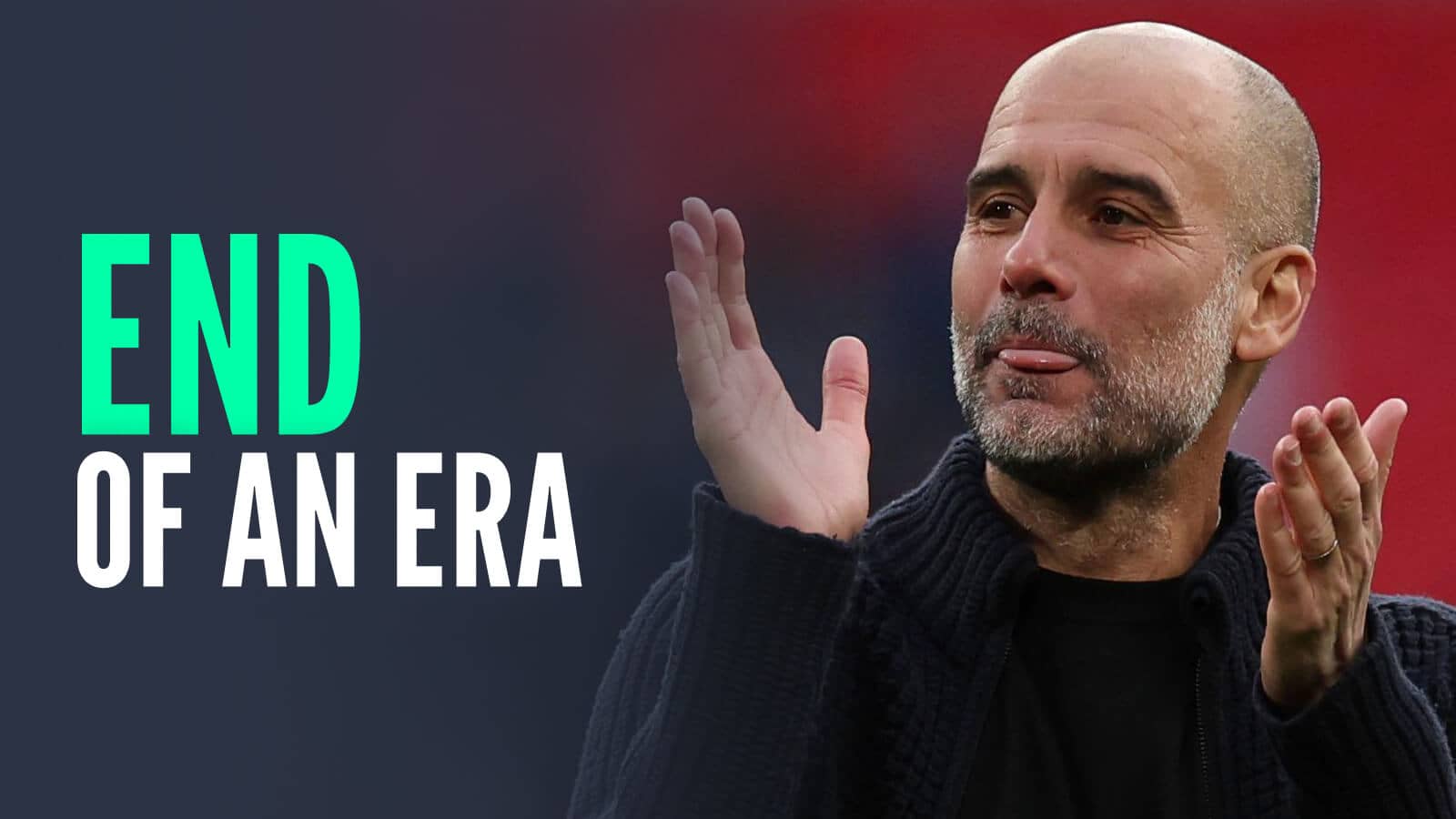
Guardiola Exit Shakes Manchester City
Pep Guardiola leaving Manchester City is not just a football story – it is a power shift. For nearly two decades, Guardiola has represented the modern ideal of elite club management: relentless control, tactical reinvention, and silverware delivered with ruthless consistency. His confirmed departure lands like a shockwave because it forces a question City have managed to postpone for years: what does this club look like when the architect walks away?
That uncertainty is exactly why the Guardiola exit matters beyond the Etihad. It hits recruitment, dressing-room hierarchy, boardroom planning, and the Premier League balance of power all at once. Clubs spend fortunes trying to buy certainty. Guardiola gave City something even rarer: an identity. Replacing trophies is hard. Replacing a system, a culture, and a competitive aura is much harder.
- Pep Guardiola’s departure ends one of football’s most dominant managerial reigns.
- Manchester City now face a succession challenge that goes far beyond picking a new coach.
- The Guardiola exit could reshape transfer strategy, player futures, and the Premier League title race.
- City’s next move will reveal whether the club built a dynasty or simply maximized a singular genius.
Why the Guardiola exit feels bigger than a manager leaving
Great managers leave all the time. But few exits feel this structural. Guardiola was never merely the person picking the starting eleven. He was the operating system. At Manchester City, his influence ran across training methodologies, recruitment profiles, positional principles, squad building, and the psychological standard expected of serial winners.
That is why the Guardiola exit creates such a deep sense of risk. Elite teams often convince themselves continuity is easy because the machine appears polished from the outside. It is not. Sustained dominance usually depends on a few central figures who make impossible things look routine. Once they go, every hidden dependency gets exposed.
Manchester City are not just losing a coach. They are losing the central reference point of their modern era.
For years, Guardiola made complexity feel inevitable. Tactical tweaks became habits. Squad rotations became accepted. High standards became non-negotiable. The danger for City is assuming that culture will simply auto-renew after his departure. Football history says otherwise.
How Guardiola built the Manchester City era
To understand the stakes, you have to understand the scale. Guardiola did not inherit a blank slate, but he transformed a wealthy contender into a football institution with a globally recognizable style. His City sides blended technical control with physical intensity, creating a version of possession football that could suffocate opponents and still overwhelm them in transition.
The tactical engine
Guardiola’s teams evolved constantly. Full-backs moved inside. Center-backs stepped into midfield. Wingers held width until the exact second they did not. Defensive midfielders became metronomes and emergency center-backs. Strikers were used, discarded, and reinvented based on system needs.
This was not tactical experimentation for its own sake. It was optimization. Guardiola’s edge came from finding superior spatial solutions before rivals could adapt. That repeated innovation is one reason his reign endured for so long.
The recruitment filter
Manchester City did not merely sign talented players. Under Guardiola, they increasingly targeted players capable of processing dense tactical information quickly. Technical security under pressure, positional discipline, and decision-making often mattered as much as raw athleticism.
That matters now because a post-Guardiola squad can become awkward if the next manager wants a different shape, different tempo, or different risk profile. A team built for one football ideology does not always pivot cleanly to another.
The mentality of accumulation
Winning once is emotional. Winning repeatedly is administrative. Guardiola turned excellence into routine. That sounds simple, but it is one of the hardest achievements in sport. He normalized title races, deep cup runs, and expectations that would crush less stable clubs.
The Guardiola exit removes the figure who made sustained pressure feel manageable. That alone changes the emotional landscape inside the club.
What Manchester City lose after the Guardiola exit
The obvious answer is trophies. The more interesting answer is certainty.
Under Guardiola, Manchester City had a rare luxury: they entered almost every season with a credible belief that their football model would hold up against any opponent over time. Even when rivals surged, City felt built to absorb turbulence because Guardiola could rewire the machine midseason.
Without him, several questions become urgent:
- Can the next manager command immediate authority in a dressing room full of elite winners?
- Will core players stay fully committed through a philosophical transition?
- Can the club maintain the same recruitment precision without Guardiola’s tactical blueprint guiding decisions?
- Will City remain the Premier League’s default standard-setter, or become one superclub among several?
Those are not abstract concerns. They affect contract negotiations, transfer windows, succession planning, and how rivals prepare for the next era.
The succession dilemma is the real story
Most clubs treat managerial hiring as a personality decision. At this level, it is an ecosystem decision. Manchester City are not replacing a voice on the touchline. They are choosing what version of themselves comes next.
Option one: preserve the model
City could appoint a coach philosophically aligned with Guardiola’s principles. That would reduce tactical shock and help preserve continuity for players developed inside this structure. It is the safer path on paper.
But imitation comes with its own trap. A successor who looks like a Guardiola derivative may invite constant comparison while lacking Guardiola’s authority, charisma, and adaptive genius. Continuity is attractive until it becomes cosplay.
Option two: reset the identity
The other route is bolder: appoint someone with elite pedigree but a distinct football identity. That could refresh a squad that may need emotional and tactical renewal after such a long cycle.
The risk is obvious. Reset too aggressively and you lose the very advantages Guardiola built. A new system may require different profiles, making parts of the current squad less optimal. Transitions at the top are rarely neat.
Manchester City’s next manager will inherit enormous advantages and a brutal standard: success will be expected immediately, but measured against an almost impossible benchmark.
Why this matters for the Premier League
The Guardiola exit is not just a City problem. It is a league-wide event. For years, Manchester City have functioned as the tactical and competitive ceiling in English football. Rivals were forced to improve simply to stay relevant. Recruitment departments, analytics teams, and coaching staffs across the league adjusted to a standard City helped define.
If that standard softens, even slightly, the title race changes. Clubs that previously needed near-perfect seasons to finish above City may suddenly see a more open path. The psychological effect matters as much as the tactical one. Dominant teams win partly because opponents believe they are dominant.
A post-Guardiola league could become more volatile, more open, and more interesting. That does not mean City collapse. It means the aura of inevitability is gone.
What happens to the squad now
Managerial exits often trigger a second wave of decisions. Some players thrive under a singular coach because the relationship, trust, and tactical context are perfect. Once that coach leaves, futures become less certain.
Expect renewed scrutiny around three groups:
The veterans
Long-serving players may see Guardiola’s departure as the natural endpoint of an era. Some will be motivated by proving the club is bigger than one manager. Others may quietly judge this as the right time to move on.
The system specialists
Players who excel because of Guardiola’s structure may face the hardest recalibration. Different coaches reward different habits. A player elite in a positional-play environment may look merely very good in a more direct or less choreographed system.
The stars entering their prime
This group becomes foundational. Their reaction will shape whether City experience a dip or a fast re-acceleration. If they buy into the next project early, the transition can stay controlled. If uncertainty spreads, even a stacked squad can start to look fragile.
The business of a football farewell
There is also a boardroom angle here that deserves attention. Guardiola’s presence delivered more than results. He amplified brand value, global relevance, commercial confidence, and the club’s prestige in the transfer market. Players want to work with great managers. Sponsors like stable winners. Executives like predictable excellence.
That does not vanish overnight, but the Guardiola exit changes the pitch. City will still have resources, infrastructure, and elite talent. What they lose is the easiest possible selling point: come here, and be coached by one of the best to ever do it.
For a club operating at the highest level, even small reductions in pull can matter. The margins are too fine for complacency.
What Guardiola leaves behind
Legacies in football are usually flattened into trophy counts. Guardiola’s at Manchester City is richer than that. He changed how the club is seen and, more importantly, how it sees itself. He made technical sophistication and relentless ambition feel like baseline expectations, not luxuries.
He also helped redefine the modern superclub manager: not just a tactician, but a systems thinker capable of shaping every layer of performance. That influence will linger long after he leaves.
The final judgment on this era will not depend only on how much City won under Guardiola. It will depend on what survives him. If the club remains elite, adaptive, and culturally demanding, then this was dynasty-building. If standards slip and identity blurs, then perhaps the entire structure was more Guardiola-dependent than anyone wanted to admit.
Why the Guardiola exit will define Manchester City’s next decade
This is the uncomfortable truth beneath the headlines: some departures reveal whether an institution is truly strong or simply well-led by a once-in-a-generation figure. Manchester City now enter that test.
The squad is still formidable. The resources are still enormous. The infrastructure remains among the best in football. But succession is where great organizations either prove their depth or expose their dependence.
The Guardiola exit is the start of Manchester City’s most important chapter, not the end of the last one. It will determine whether the club can convert a historic managerial reign into a lasting model of dominance. For everyone else in football, that uncertainty is exactly what makes this moment so compelling.
The information provided in this article is for general informational purposes only. While we strive for accuracy, we make no guarantees about the completeness or reliability of the content. Always verify important information through official or multiple sources before making decisions.


