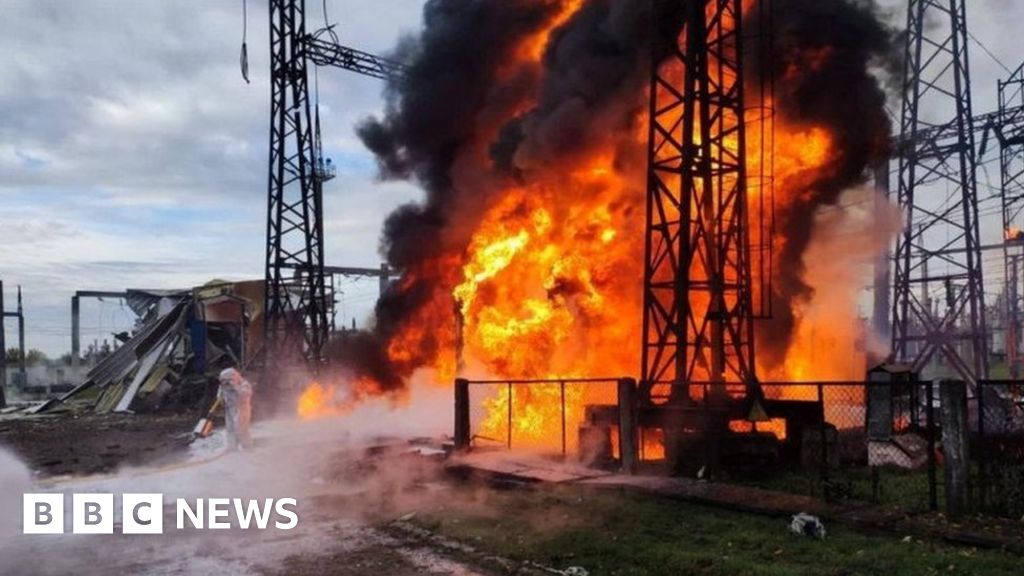
Gulf Leaders Confront Iran War Fallout
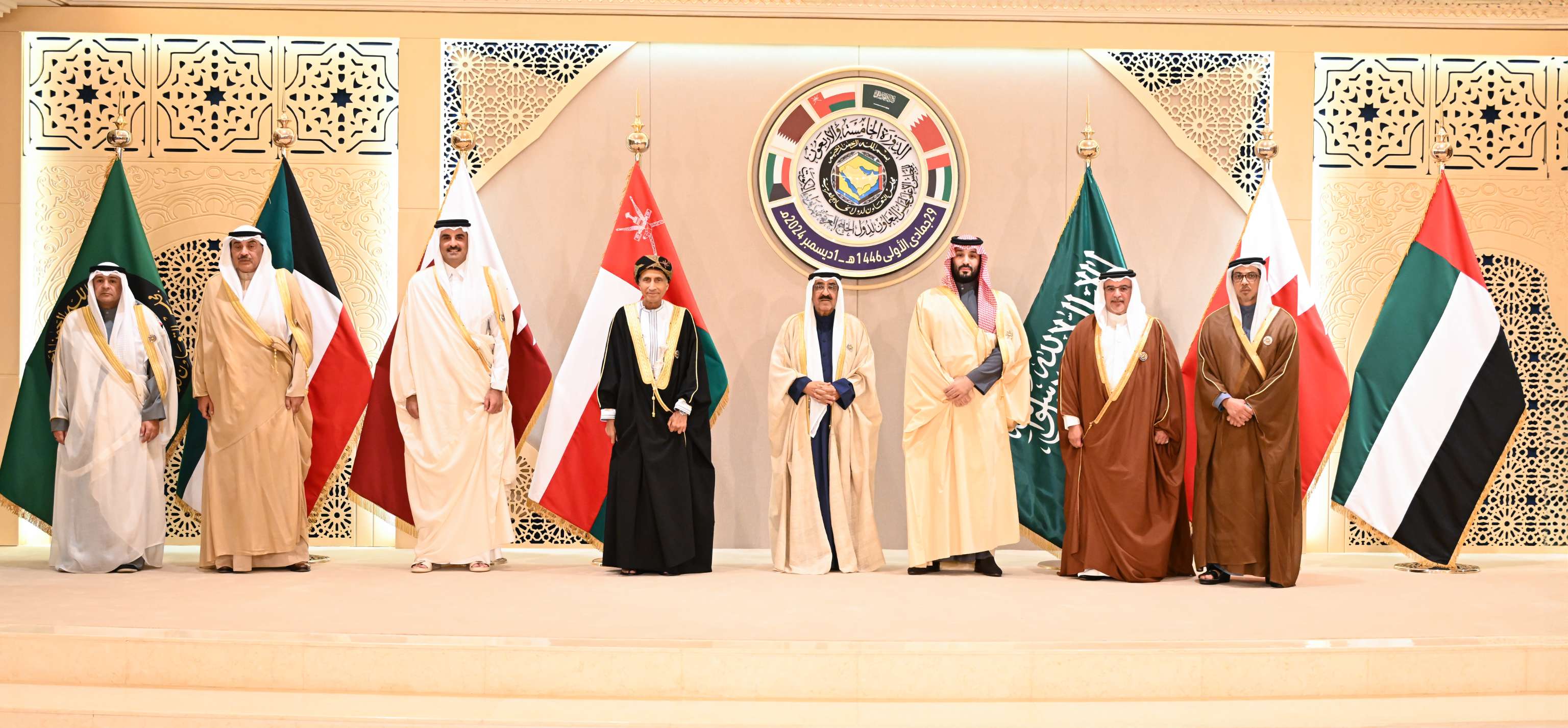
Gulf Leaders Confront Iran War Fallout
The Gulf leaders summit in Saudi Arabia is not just another round of ceremonial diplomacy. It lands at a moment when the war on Iran has torn through the region’s security assumptions, rattled energy markets, and forced every capital in the Gulf to recalculate risk in real time. For governments that built prosperity on stability, the threat is no longer abstract. Shipping lanes, missile defense, oil pricing, investor confidence, and domestic political legitimacy are now tied to whether regional leaders can produce something more meaningful than carefully worded communiques. That is why this meeting matters beyond palace protocol. The Gulf leaders summit is a stress test for the region’s crisis management model: can states with overlapping interests, different threat perceptions, and complicated ties to Washington actually align when the stakes are this high?
- The Gulf leaders summit is a pivotal test of regional unity after the start of the war on Iran.
- Security coordination, oil market stability, and diplomatic signaling are likely higher priorities than public theatrics.
- Saudi Arabia’s role as host underscores its ambition to shape the region’s response rather than merely react to events.
- The summit’s real value will be measured by follow-through on defense, de-escalation, and economic resilience.
Why the Gulf leaders summit matters now
Timing is everything in regional politics, and this summit arrives at a deeply unstable moment. The war on Iran has amplified a long-standing Gulf dilemma: how to deter escalation without becoming the battlefield for someone else’s conflict. Gulf monarchies have spent years trying to diversify their economies, attract foreign capital, and market themselves as hubs of logistics, finance, tourism, and technology. War threatens all of that.
For Saudi Arabia, the United Arab Emirates, Qatar, Kuwait, Bahrain, and Oman, the core issue is simple: regional instability carries an immediate economic price tag. If insurers reassess maritime risk, shipping costs rise. If missile threats increase, infrastructure becomes more expensive to protect. If oil facilities are perceived as exposed, global markets react long before any formal supply disruption happens.
This is why the Gulf leaders summit matters beyond symbolism. It is an attempt to show that the region’s wealthiest and most strategically exposed states can coordinate under pressure. Even if public statements stay cautious, private discussions likely revolve around air defense integration, maritime security, energy continuity planning, and backchannel diplomacy.
Saudi Arabia’s balancing act gets harder
Saudi Arabia enters the summit with the most to gain from regional calm and the most to lose from prolonged escalation. Crown Prince Mohammed bin Salman has spent years recasting the kingdom as both a geopolitical heavyweight and a magnet for investment. Mega-projects, tourism campaigns, and industrial expansion all depend on one underlying condition: predictability.
The war on Iran undermines that sales pitch. Investors can tolerate political risk up to a point, but they punish uncertainty when it begins to touch supply chains, critical infrastructure, or transportation corridors. Riyadh therefore has a dual objective. First, it needs to reassure partners that the kingdom remains capable of protecting its territory and maintaining continuity. Second, it needs to demonstrate diplomatic maturity by positioning itself as a platform for coordination rather than escalation.
The summit is as much about optics as outcomes: Gulf states need to project control even as the region enters one of its most volatile phases in years.
That balancing act is delicate. Too much hawkish rhetoric risks fueling wider confrontation. Too much restraint can look like passivity. Saudi diplomacy increasingly tries to occupy the middle ground: firm on security, pragmatic on de-escalation, and conscious that every public gesture is read by markets, allies, and adversaries alike.
What Gulf states actually want from this meeting
Publicly, Gulf summits tend to speak the language of unity, solidarity, and shared purpose. Privately, each state comes with its own threat model and strategic priorities. That does not make coordination impossible, but it does make it harder than official photos suggest.
1. Stronger collective security
The first priority is obvious. Gulf states want better coordination on missile defense, early warning systems, and maritime monitoring. A fragmented response leaves openings. A more integrated posture improves deterrence and crisis response, even if full military unification remains politically unrealistic.
The challenge is that collective defense architecture in the Gulf has historically lagged behind the scale of the threats it faces. Different procurement pipelines, different doctrines, and different external partnerships have made true interoperability difficult. This summit may not solve that, but it can move the conversation from principle to execution.
2. Protection for oil and trade flows
The Gulf is not just a regional actor. It is a central artery in global energy and maritime commerce. Any disruption around key routes or energy facilities quickly becomes an international issue. Leaders therefore need to reassure global buyers and investors that production, export, and shipping systems remain resilient.
That is especially important because markets do not wait for confirmed damage. They price in fear quickly. A summit that signals contingency planning, coordination, and readiness can reduce some of the panic premium that conflict injects into oil and freight markets.
3. Space for diplomacy
Not every Gulf capital wants to be dragged deeper into a maximalist regional confrontation. Some states have invested heavily in mediation, dialogue, and multi-aligned foreign policy. Even those that view Iran as a serious threat may still prefer a controlled diplomatic lane over open-ended war.
This makes the summit strategically important. It can serve as a venue to define common red lines while also preserving channels for communication. In crisis diplomacy, ambiguity is sometimes useful, but complete silence can be dangerous.
The Gulf leaders summit and the energy equation
It is impossible to separate the Gulf leaders summit from energy politics. Oil remains the region’s global leverage point, and war always forces a reassessment of supply security. Even if physical output remains steady, the perception of vulnerability can send prices upward and reshape global expectations.
For producers, that can look like a short-term advantage. Higher prices boost revenue. But Gulf governments know that prolonged instability is not a sustainable business model. Extreme volatility can weaken demand, trigger strategic stock responses from major economies, and accelerate the policy push toward diversification away from hydrocarbon dependence.
There is also a reputational dimension. Gulf states want to be seen as reliable suppliers, not as hostages to geopolitical turbulence. This is one reason summit messaging matters. Leaders are not just talking to each other. They are talking to traders, insurers, sovereign funds, and multinational firms trying to calculate the region’s risk profile.
Oil income may cushion shocks, but it does not erase strategic vulnerability. Stability is still the Gulf’s most valuable export.
Why regional unity is harder than it sounds
The language of Gulf unity is familiar. The reality is more complicated. Gulf states share geography, economic interests, and broad security concerns, but they do not always agree on tactics. Some prefer harder deterrence. Others place more weight on mediation. Some align more tightly with Western security frameworks, while others pursue wider diplomatic flexibility.
This does not mean the summit is performative. It means its success should be judged realistically. A breakthrough is less likely to look like a dramatic announcement and more likely to appear as incremental alignment: shared messaging, coordinated contingency planning, and quiet commitments on defense and economic resilience.
That matters because regional institutions are often criticized for underdelivering during moments of crisis. If this summit can produce even modest operational coherence, it will count as a meaningful step. If it produces only broad statements with no evidence of implementation, skepticism will deepen.
What to watch after the summit
The most important signals may emerge after the cameras leave. Analysts should pay attention to what Gulf governments do next, not just what they say in the final statement.
- Security posture: Watch for announcements related to
joint exercises,air defense coordination, ormaritime patrols. - Diplomatic activity: Increased shuttle diplomacy or coordinated regional outreach could indicate a serious push to contain escalation.
- Energy messaging: Statements from energy ministries or state producers can reveal how worried governments are about market nerves.
- Investor reassurance: Expect renewed emphasis on infrastructure resilience, continuity planning, and sovereign confidence.
Pro Tip: In Gulf diplomacy, the strongest message is often embedded in sequencing. If defense coordination is followed quickly by diplomatic engagement, leaders are signaling a dual-track strategy: prepare for risk while trying to cap it.
Why this matters beyond the Middle East
It is tempting to treat the Gulf leaders summit as a regional story for regional audiences. That would be a mistake. What happens in the Gulf affects energy prices, shipping reliability, inflation expectations, military postures, and investor sentiment well beyond the Middle East.
Europe watches because energy diversification remains unfinished. Asia watches because major economies there depend heavily on Gulf exports and trade routes. The United States watches because its security architecture, even if evolving, is still deeply tied to the region’s stability. Emerging markets watch because spikes in energy and freight costs can quickly feed domestic inflation and political pressure.
That global relevance raises the stakes for Gulf leaders. They are no longer managing a contained geopolitical flare-up. They are operating in a system where regional conflict can trigger worldwide economic and strategic consequences almost instantly.
The strategic verdict on the Gulf leaders summit
The Gulf leaders summit is best understood as a high-pressure coordination exercise, not a grand peace conference. Its value lies in whether it helps the region absorb shock, align priorities, and preserve room for de-escalation. Saudi Arabia, as host, wants to prove that Gulf leadership can be proactive rather than reactive. Its neighbors want reassurance that they will not face the fallout of the Iran war alone.
Still, realism is essential. Summits do not erase rivalries, and communiques do not neutralize missiles. The region’s structural problem remains intact: every Gulf state wants security, but no state wants to be the primary target or the unintended theater of a wider war. That tension will shape every decision that follows.
If the summit delivers tighter coordination, steadier messaging, and a credible plan for resilience, it will have done important work. If not, it will stand as another reminder that regional diplomacy often moves slower than the crises testing it. Either way, the Gulf leaders summit has become a defining checkpoint in how the Middle East responds to a war that is already redrawing its strategic map.
The information provided in this article is for general informational purposes only. While we strive for accuracy, we make no guarantees about the completeness or reliability of the content. Always verify important information through official or multiple sources before making decisions.