H5N1 Threatens Antarctic Birds
H5N1 Threatens Antarctic Birds
H5N1 bird flu is no longer a distant animal-health story. It is moving through wildlife with the kind of speed that forces governments, researchers, and conservation teams to rethink what containment even means. The latest warning from Western Australia, where brown skuas and giant petrels have been affected, is especially troubling because these are not backyard poultry cases. These are mobile, ocean-ranging seabirds tied to fragile ecosystems and remote monitoring networks that are already stretched thin. When H5N1 bird flu reaches species like these, the risk is bigger than a local die-off. It signals a pathogen adapting to wildlife corridors, exposing gaps in surveillance, and potentially setting up new routes for spread across the Southern Hemisphere.
- H5N1 bird flu is now affecting wild seabirds, not just farmed birds.
- Brown skuas and giant petrels are high-value warning species for ecosystem health.
- Remote regions face major surveillance gaps, making early detection harder.
- The spillover risk matters for wildlife, agriculture, and public health planning.
- This outbreak could reshape how authorities monitor marine and polar bird populations.
Why H5N1 bird flu in seabirds is a bigger deal than it looks
It is easy to treat a wildlife outbreak as a conservation issue and move on. That would be a mistake. H5N1 bird flu in brown skuas and giant petrels matters because these birds sit high in the food web and travel widely across marine environments. When top scavengers and predators are affected, it often means the virus has found a way to persist in places where humans rarely look closely enough.
Western Australia is not a random endpoint here. Remote coastlines and island ecosystems can become blind spots in animal-health systems. If a virus is circulating among seabirds, the usual tools used for domestic outbreaks – farm reporting, culling protocols, and fenced biosecurity – do not map neatly onto the problem. That mismatch is exactly what makes this outbreak so serious.
The real alarm is not just infection in birds. It is the evidence that H5N1 is exploiting the weakest points in global wildlife surveillance.
What brown skuas and giant petrels tell us about H5N1 bird flu
Brown skuas and giant petrels are not decorative species. They are efficient scavengers and predators that move through large marine territories, feed opportunistically, and often come into contact with carcasses, nesting sites, and mixed-species colonies. That makes them valuable sentinels for H5N1 bird flu activity.
Brown skuas as ecosystem alarms
Brown skuas are aggressive, adaptable seabirds with broad foraging ranges. When they are affected, it suggests infected prey or carcasses are entering the food chain. Because skuas often interact with other bird species at nesting and feeding sites, they can help reveal how fast a virus is moving through a colony system.
Giant petrels and the spread problem
Giant petrels are equally important. They scavenge over long distances and can encounter infected material far from the place where the virus first appears. That makes them a difficult species to protect and an equally important species to monitor. If giant petrels are getting sick, it implies the outbreak may be wider than a single nesting island or one coastline.
In practical terms, this means conservation and veterinary teams are no longer chasing a confined outbreak. They are dealing with a mobile ecological network where infected birds can carry the signal across large stretches of ocean.
H5N1 bird flu and the surveillance gap in remote regions
The biggest operational challenge is visibility. Remote bird colonies are hard to reach, expensive to monitor, and often affected by weather windows that shrink quickly. By the time field teams confirm mortality, the virus may already have moved through several species.
This is where H5N1 bird flu becomes a policy problem, not just a biological one. Authorities need faster reporting channels, more targeted sampling, and better coordination between wildlife agencies, agricultural departments, and public health teams. Without that, the response stays reactive. And reactive is too slow for a virus that can travel with migratory species.
- Prioritize routine testing in high-risk seabird colonies.
- Increase carcass monitoring after unusual mortality events.
- Share wildlife surveillance data across state and federal systems faster.
- Use sentinel species to flag changes before mass die-offs occur.
Pro tip: the best outbreak response in wildlife is often boring, repetitive surveillance. The headlines come from crisis, but the control comes from data.
Why H5N1 bird flu matters for agriculture and public health
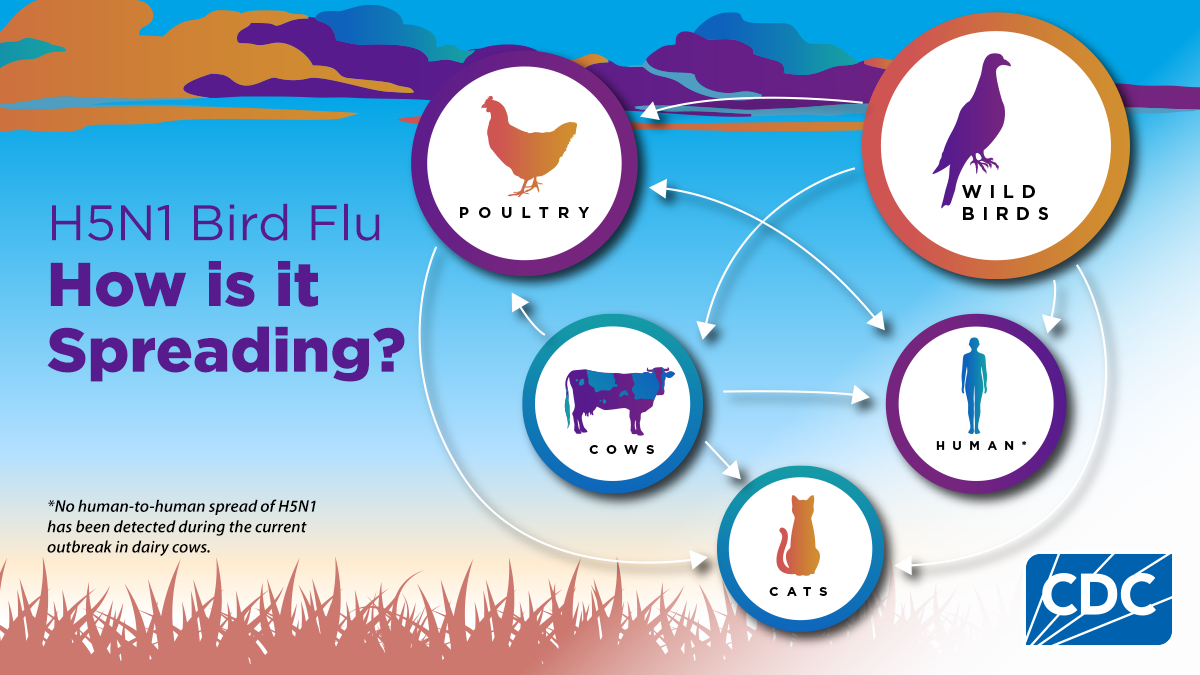
Wild birds and domestic birds are not separate universes. They overlap at waterways, feed sources, coasts, and human-managed environments. That means a seabird outbreak is never purely a seabird outbreak. Once H5N1 bird flu is moving through wild populations, every poultry producer, veterinarian, and biosecurity planner has reason to pay attention.
The current risk is not that every wildlife case will become a human case. The risk is that persistent circulation increases the odds of more contact points, more mutation opportunities, and more unpredictable spillover behavior. Even if human infection remains rare, the cost of complacency is enormous. A virus with this much ecological reach forces governments to think in systems, not silos.
Biosecurity is no longer just a farm gate issue. It is a landscape issue, a migration issue, and a wildlife health issue.
What the next phase could look like
If the outbreak continues spreading among seabirds, expect more pressure on wildlife rescue operations, tighter monitoring around colonies, and more scrutiny of carcass disposal and field safety protocols. Researchers may also push for expanded genomic tracking to see whether the virus is changing as it moves through new hosts.
That genomic angle matters. A virus that repeatedly crosses species boundaries is telling us something about its fitness. The question is not only where H5N1 is now, but what it may become after enough chances to adapt.
The policy response needs to catch up fast
Officials should treat this as a long-duration wildlife-health threat, not a one-off event. The right response is multi-layered: stronger field surveillance, rapid lab confirmation, public communication that is precise rather than alarmist, and tighter links between environmental agencies and agriculture departments.
There is also a communication challenge. People tend to tune out bird flu coverage unless there is a direct human case or a poultry market shock. But waiting for visible economic pain is a poor strategy. By then, the virus has already exploited the delay. A smarter response would explain why seabird mortality is an early warning, not a side story.
H5N1 bird flu could redefine wildlife monitoring in the region
There is a bigger lesson buried in this outbreak: remote ecosystems are not insulated from global disease dynamics. Climate shifts, migration changes, and dense interspecies contact at breeding and feeding sites all make wildlife outbreaks harder to contain than they used to be.
If H5N1 bird flu continues to move through seabird populations in Western Australia, it could force a rewrite of how agencies think about marine biosecurity. That would mean more investment in field teams, better cross-border data sharing, and surveillance systems built for speed instead of hindsight.
The uncomfortable truth is that the birds are warning us before the models do. Brown skuas and giant petrels are giving researchers a live signal from the edge of the map. The question is whether decision-makers will treat that signal as a one-time alert or the start of a much larger operating shift.
For now, the outbreak is a reminder that the next major biosecurity story may not begin in a factory farm or a city clinic. It may begin on a windswept coastline, with a dead seabird, a delayed sample, and a virus already one step ahead.
The information provided in this article is for general informational purposes only. While we strive for accuracy, we make no guarantees about the completeness or reliability of the content. Always verify important information through official or multiple sources before making decisions.