Harry and Meghan Set Off a Royal Reset
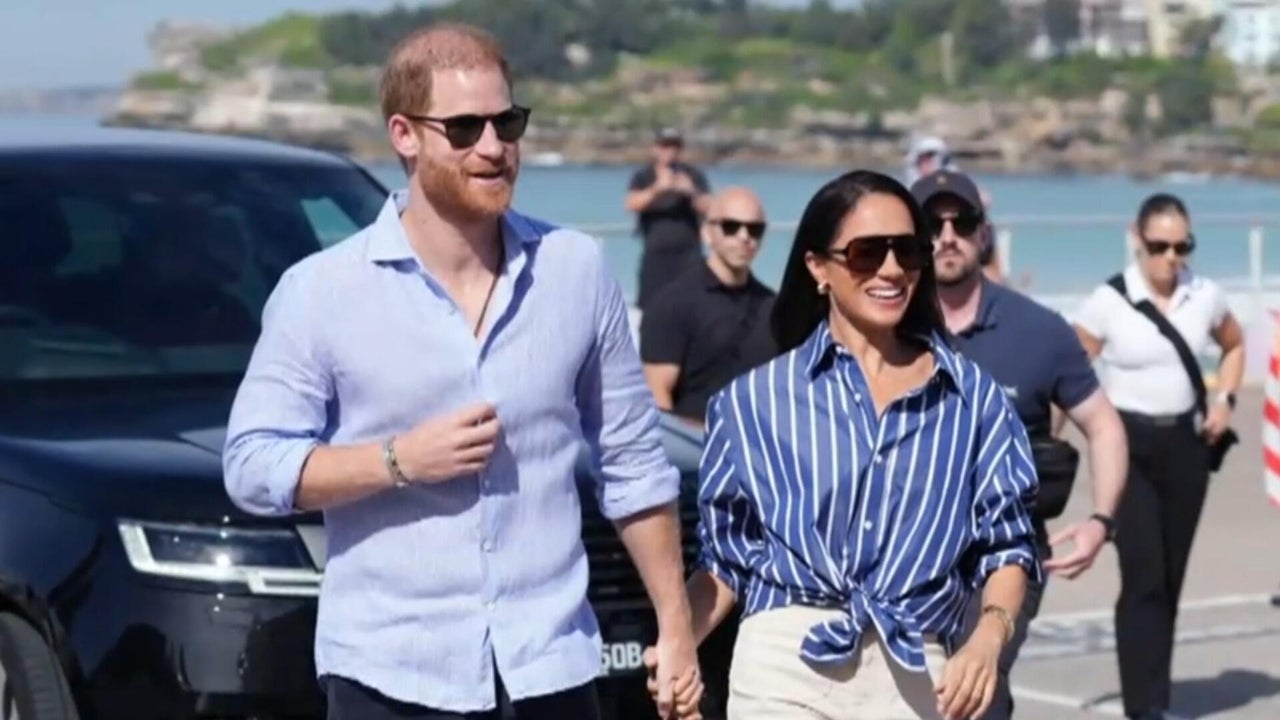
Harry and Meghan Set Off a Royal Reset
Prince Harry and Meghan Markle reportedly moving back to the United Kingdom would be more than a family decision – it would be a full-blown recalibration of the royal brand, the media circus around it, and the couple’s own post-royal identity. For years, the pair have lived as a kind of transatlantic stress test for tradition: one foot in the monarchy’s orbit, the other in a modern, highly monetized media ecosystem. A return to the U.K. would land squarely in that collision zone. It raises the obvious questions: What does “return” actually mean, how permanent is it, and can a family that walked away from the institution ever really step back into its gravitational pull without reigniting old tensions?
- The reported move back to the U.K. could reshape royal family dynamics and public expectations.
- Any return would likely be partial, strategic, and tightly managed rather than a clean reversal.
- The media pressure surrounding Harry and Meghan remains one of the biggest variables.
- The couple’s next move could influence their brand, security needs, and long-term public role.
Why the reported U.K. return matters
At face value, this is a celebrity relocation story. But that undersells it. A potential Harry and Meghan move back to the U.K. carries symbolic weight because the couple’s departure was never just about geography. It was about autonomy, privacy, and a rejection of the royal machine’s most punishing expectations. If they are now heading back, even part-time, it suggests a strategic reconsideration of what distance can and cannot solve.
The real issue is not whether they can physically live in Britain again. It is whether the conditions that pushed them out have changed enough to make that sustainable. The palace ecosystem still runs on access, hierarchy, and relentless public scrutiny. The couple still represents a rare mix of celebrity, constitutional relevance, and tabloid magnetism. That combination makes any return instantly newsworthy and politically sensitive inside the royal household.
“A move like this is never just about where people sleep at night. It is about power, perception, and who gets to define the narrative.”
Harry and Meghan and the business of visibility
Harry and Meghan have spent the past several years turning visibility into leverage. That has meant producing content, building partnerships, and controlling their message in ways that would have been impossible inside senior royal life. If the couple is preparing to spend more time in the U.K., that strategy does not disappear. It becomes more complicated.
The key tension is obvious: the more public they are in Britain, the more they are pulled back into the institution they tried to outgrow. Yet the more distant they remain, the harder it is to maintain a credible connection to royal life, family events, and the U.K. audience that still tracks every move. For media strategists, this is a classic brand architecture problem: how do you maintain distinction without severing relevance?
That is especially difficult for a pair whose identities are now split across multiple audiences. One audience wants reconciliation. Another wants consequences. Another just wants the next chapter to be dramatic. That fragmented attention is valuable, but it is also volatile.
What a return could actually look like
Do not assume a full-time return to palace-adjacent life. The more plausible scenario is a hybrid model: extended visits, selective appearances, and a carefully managed presence that allows them to be near family without fully re-entering the royal hierarchy. That would give them flexibility while preserving the option to maintain commercial and philanthropic work outside the institution.
If that is the plan, then the logistics matter as much as the optics. Housing, security, schooling, travel, and media shielding all become part of the story. For high-profile figures, relocation is never just moving boxes. It is a security protocol, a communications plan, and a reputational gambit all at once.
The royal family angle
Any Harry and Meghan move back to the U.K. lands in an already fragile family ecosystem. The monarchy depends on the appearance of continuity, but modern royal coverage thrives on conflict. Those two things often work against each other. The Sussexes have become the clearest example of that friction.
For King Charles and the rest of the family, a return could be presented as a hopeful sign of healing. But there is a difference between proximity and reconciliation. Families can share the same country and still remain miles apart emotionally. In royal terms, that gap is often magnified by protocol, press leaks, and public interpretation.
There is also the question of precedent. If Harry and Meghan are welcomed back in any meaningful way, even informally, what does that say about the institution’s handling of future departures? The monarchy is built on symbolic discipline. Allowing a high-profile exit and re-entry without a clear framework risks blurring the rules for everyone else.
“The monarchy does not just manage people. It manages symbolism. And symbolism gets messy very quickly when former insiders come back into view.”
Harry and Meghan move back to the U.K. and the media machine
Few public figures have been more thoroughly shaped by the modern attention economy than Harry and Meghan. Their story has generated headlines, documentaries, commentary, backlash, and obsession in equal measure. A move back to the U.K. would supercharge that machine again.
That matters because the couple’s biggest challenge has never been attention itself. It has been asymmetrical attention: every action is interpreted through existing narratives. A school run can become a constitutional talking point. A family visit can be framed as a reconciliation. A quiet home life can be spun into an elaborate strategic move.
For editors, this is a familiar pattern. The public does not just consume the story. It consumes the theory around the story. That means the couple will need more than good intentions. They will need disciplined messaging, airtight boundaries, and an unusually patient response to rumor cycles that can escalate in hours.
Why the press environment is harder now
The media environment is more fragmented than when Harry and Meghan left the U.K. That makes the situation both easier and harder. Easier because they can reach audiences directly. Harder because misinformation, commentary, and reaction travel faster than any official clarification. A single sighting can trigger competing narratives across platforms within minutes.
That is why any return will likely be accompanied by a communications strategy that is unusually conservative. Expect fewer spontaneous moments, more controlled visibility, and a premium on choosing when to be seen. That is not just image management. It is survival in a high-noise environment.
Harry and Meghan, privacy, and the price of going home
The irony at the heart of this story is brutal. The couple left the U.K. partly to gain privacy, yet the more they build lives outside the royal fold, the more public their every move becomes. A return does not solve that paradox. It may intensify it.
Privacy is not merely about fences and security teams. It is about predictable routines, reduced exposure, and a public willing to mind its business. That last part is the hardest to engineer. Harry and Meghan remain cultural objects as much as private citizens. The public feels entitled to analyze their choices because the monarchy trained it to do exactly that.
If they do relocate, the price of going home may be that they are even less able to live like ordinary residents than they were before leaving. That is the cruel calculus of royal life: the more visible you are, the less normal any “normal” becomes.
What to watch next
The important details will be less about the headline and more about the mechanics. Watch for clues in how often they appear in the U.K., whether they take on more family-facing roles, and whether their public language shifts from independence toward reintegration. Those signals will tell you more than any rumor mill ever could.
- Watch for changes in housing, security, or travel arrangements that indicate a longer stay.
- Pay attention to how often they appear at family events or official gatherings.
- Look for subtle shifts in tone from independence toward reconciliation.
- Notice whether their media strategy becomes more restrained and localized.
There is also a broader cultural angle here. Harry and Meghan have become a test case for whether public figures can leave a legacy institution, build independent power, and still maintain a functional relationship with the system they rejected. If they return, even partially, that experiment enters a new phase. If they do not, the rumors alone will still have reminded everyone how much unresolved tension remains.
The bigger picture
Strip away the palace gloss, and this is a story about institutional gravity. The royal family remains powerful not because it controls the modern media environment, but because it can still command it. Harry and Meghan know that better than most. Their reported return to the U.K. suggests that the gravitational pull of family, history, and public identity may be stronger than the distance they created.
That does not mean the old rules are back. It means the rules are still being negotiated. And that is what makes this so compelling. The Sussex story has never been a simple split. It has been an ongoing negotiation over autonomy, belonging, and who gets the final word on a life lived in public. If they are moving back, the next chapter will not be a reset. It will be a reckoning.
The information provided in this article is for general informational purposes only. While we strive for accuracy, we make no guarantees about the completeness or reliability of the content. Always verify important information through official or multiple sources before making decisions.


