Hong Kong Heat Record Signals a City Under Pressure
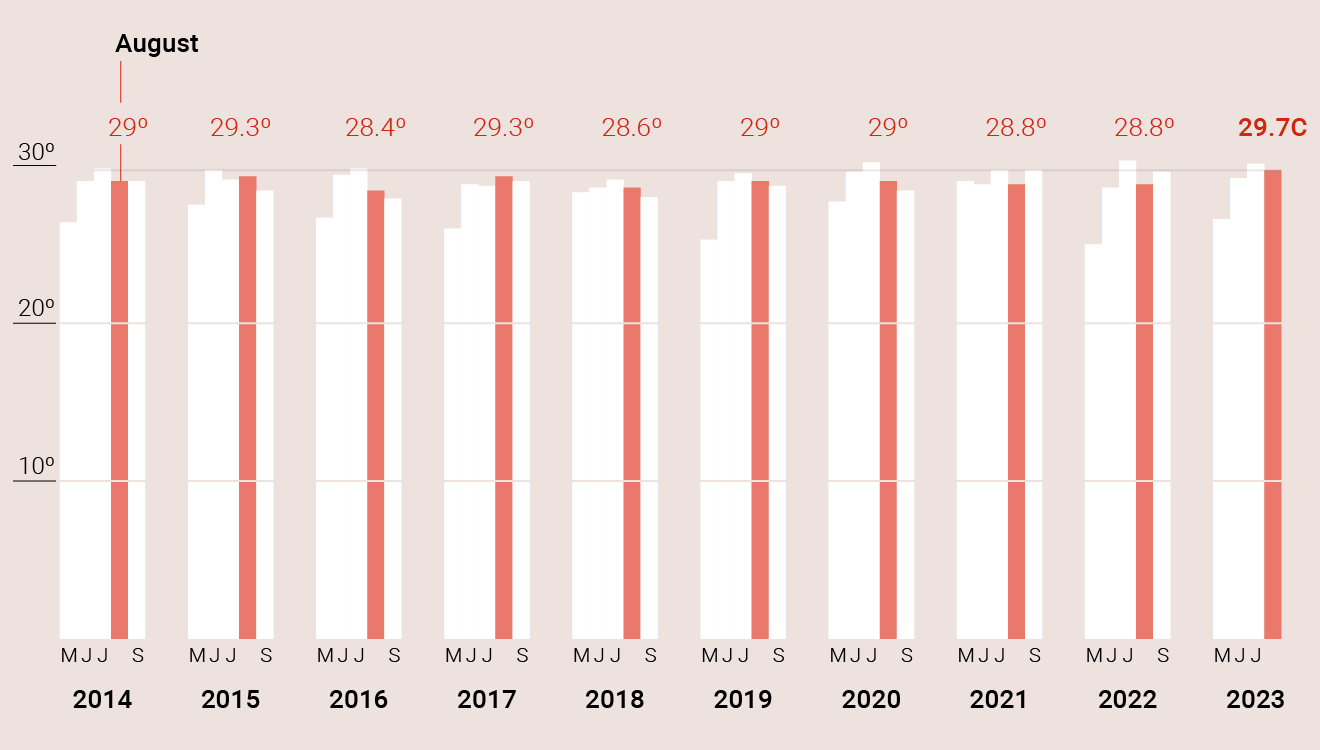
Hong Kong Heat Record Signals a City Under Pressure
Hong Kong’s record-breaking heat is no longer just a weather story – it is a systems story. When a city built on density, speed, and energy demand suddenly lands in the crosshairs of a blistering heatwave while a typhoon edges closer, every weak point gets exposed. Power grids strain. Transit systems slow. Outdoor workers absorb the worst of it. Public health agencies scramble. And for millions of residents, the question is no longer whether summers are getting worse, but how much worse a city can take before daily life starts to bend.
The new benchmark for the Hong Kong heat record is more than a temperature reading. It is a warning that the old playbook for hot-weather resilience is losing credibility fast. In a place where humidity can make already dangerous temperatures feel punishing, and where storms arrive with increasing unpredictability, the margin for error is shrinking. The bigger issue is not just the heat itself. It is the collision of heat, infrastructure, labor pressure, and climate volatility all at once.
- Hong Kong heat record underscores how extreme weather is becoming a structural urban risk.
- Heat and typhoon threats can overlap, creating a compound emergency for cities and utilities.
- Public health, transport, and labor policy now need to be designed for hotter baseline conditions.
- Adaptation is no longer optional: shaded streets, cooling access, and grid resilience are becoming core infrastructure.
The Hong Kong heat record is a stress test, not a one-off event
It is tempting to treat a single record temperature as a headline spike, something shocking but isolated. That framing is outdated. The Hong Kong heat record should be read as a stress test for one of the world’s most densely packed urban environments. Hong Kong has long been used to humidity, seasonal storms, and punishing summer conditions. But climate change is loading the dice, pushing average conditions upward and making extremes more frequent, more intense, and more dangerous.
That matters because cities are designed around historical norms. Roads, rail lines, hospitals, office towers, and drainage systems are often optimized for the weather of the past, not the weather of the next decade. Once those assumptions break, so do the systems built on them. The consequences show up everywhere: more heat-related illness, more energy consumption from air conditioning, more strain on outdoor labor, and more public disruption when people simply cannot move comfortably or safely through the city.
Extreme heat is not just an environmental problem. It is an infrastructure problem, a labor problem, and a public health problem all at once.
Why the city feels hotter than the thermometer says
For anyone living in a high-rise, high-density city, the number on a weather app barely tells the full story. Urban heat islands make cities feel hotter than surrounding areas because concrete, asphalt, glass, and steel absorb and re-radiate heat long after the sun drops. In Hong Kong, where towers create narrow canyons of trapped air and limited shade at street level, the effect can become brutal.
Humidity makes the danger worse
Heat is dangerous on its own, but humidity is what turns discomfort into a medical risk. When the air is saturated with moisture, sweat evaporates less effectively, and the body loses one of its main cooling mechanisms. That means the same temperature can be far more dangerous in Hong Kong than it would be in a drier climate. The result is a city where residents may underestimate the risk until dehydration, heat exhaustion, or heat stroke sets in.
Outdoor workers take the first hit
Construction crews, delivery workers, sanitation staff, port laborers, and street-level service employees face the sharpest exposure. They do not have the luxury of retreating indoors every time conditions spike. For employers and policymakers, the Hong Kong heat record should trigger a hard review of shift timing, hydration access, rest breaks, and protective gear. If those measures sound basic, that is because they are. Yet basic protections remain unevenly implemented in many cities, even as heat becomes a routine hazard.
Typhoon Dolphin shows the new climate reality is compound risk
The mention of Typhoon Dolphin alongside a heat record is not a coincidence worth glossing over. It is the new normal: climate hazards increasingly arrive in clusters. A heatwave followed or accompanied by a typhoon is not just double trouble. It is a compound shock that complicates every response. Emergency managers cannot simply prepare for one scenario at a time anymore.
Heat can accelerate power demand, drying out infrastructure and pushing cooling systems to their limits. A typhoon can then bring flooding, wind damage, transport disruption, and service outages. Put together, the two create a vicious loop. People need power more than ever for cooling, but storms threaten that power. They need transit to move safely, but rail and ferry services become unreliable. They need clean, open public spaces, but flooding or debris can make them inaccessible.
When heat and storms overlap, resilience is no longer about surviving a single event. It is about keeping the city functional through a sequence of failures.
What the Hong Kong heat record means for public health
Public health agencies tend to get judged by the number of hospital admissions, but heat damage begins much earlier. It starts with fatigue, dizziness, poor sleep, reduced concentration, and dehydration. Then it escalates. Older adults, children, people with cardiovascular conditions, and those without reliable access to cooling are all at higher risk. The danger is especially severe in neighborhoods where residents live in smaller units with limited airflow and high indoor temperatures.
Hong Kong’s extreme heat also exposes an uncomfortable reality: not everyone can simply go somewhere cooler. Cooling is not equally distributed. Air-conditioned shopping centers, transport hubs, and office towers exist, but access depends on time, mobility, income, and social context. That means heat preparedness is not just about issuing alerts. It is about ensuring that the people most at risk can actually reach safe spaces and stay there long enough to matter.
What cities should be doing now
- Expand cooling center availability and keep them open during evenings and weekends.
- Use heat alerts that are tied to concrete action, not just public awareness campaigns.
- Prioritize elderly residents and outdoor workers for targeted outreach.
- Map indoor and outdoor heat vulnerability by district to focus resources where the risk is highest.
Why the Hong Kong heat record matters for business and infrastructure
Business leaders often think of heat as an operational nuisance. That is a mistake. Heat affects productivity, logistics, insurance exposure, utility planning, and consumer behavior. When temperatures spike, absenteeism rises, workers slow down, and electricity demand climbs. If a typhoon follows, inventory movement and supply chains can be disrupted within hours. That is a direct hit to revenue and continuity.
Infrastructure planners face an even bigger challenge. Buildings may be energy-efficient on paper, but cooling demand during extreme heat can overwhelm expectations. Transport networks have their own vulnerabilities: overheated rails, reduced staff availability, and weather-related service interruptions. Ports and airports, vital to Hong Kong’s role as a global hub, are especially sensitive to weather volatility. The city cannot afford to treat climate adaptation as a branding exercise. It has to be an operational priority.
Pro tip: enterprises should stop planning around average summer conditions and instead model against worst-case heat days plus storm disruption. That means stress-testing backup power, remote work policies, on-site cooling, and supply chain handoffs under real emergency conditions.
How Hong Kong can adapt before hotter days become normal days
Adaptation will not be glamorous. It will be incremental, expensive, and politically awkward. But it is necessary. The cities that get ahead of heat will not be the ones with the fanciest climate slogans. They will be the ones that invest in the unsexy stuff: shade, ventilation, reflective materials, stronger building standards, better emergency communication, and accessible cooling.
Practical moves that make a difference
- Plant more street trees and redesign sidewalks to create continuous shade.
- Use cool roofs and heat-reflective materials in public and private construction.
- Retrofit older buildings for passive cooling and better airflow.
- Build district-level resilience plans that combine heat, flood, and storm scenarios.
- Improve alerts so residents know exactly what action to take, not just that conditions are dangerous.
These are not futuristic fixes. They are available now. The obstacle is often coordination, not technology. Hong Kong has the expertise, density, and economic capacity to move quickly, but the urgency has to be political as well as technical.
The bigger lesson behind the Hong Kong heat record
The Hong Kong heat record is a preview of the urban climate future many cities are already entering. The old assumption was that extreme weather would arrive occasionally, in recognizable seasons, and with enough warning to prepare. That assumption is collapsing. Cities are now dealing with overlapping risks, higher baseline temperatures, and longer periods of stress that test everything from public transit to mental health.
The real challenge is not deciding whether the temperature record matters. It clearly does. The challenge is deciding whether city leaders, employers, and residents will treat it as a headline to remember or a blueprint for action. If Hong Kong can turn this moment into faster adaptation, smarter design, and more serious protection for vulnerable people, it can become a model for other dense coastal cities facing the same future.
If it cannot, the next record will not feel like a surprise. It will feel like confirmation.
The information provided in this article is for general informational purposes only. While we strive for accuracy, we make no guarantees about the completeness or reliability of the content. Always verify important information through official or multiple sources before making decisions.