Houthi Strike Shakes Riyadh Airport
Houthi Strike Shakes Riyadh Airport
A suspected Houthi strike on Riyadh airport is exactly the kind of flashpoint that turns a regional conflict into a global systems problem. Airports are not just terminals and runways. They are economic arteries, diplomatic symbols, logistics hubs, and psychological targets. When CCTV footage appears to show an impact near Riyadh International Airport, the immediate question is not only what was hit, but what the strike was meant to signal. For Saudi Arabia, the incident tests air-defense credibility. For airlines, insurers, and passengers, it revives the uncomfortable reality that modern travel depends on fragile security assumptions. And for the wider Middle East, it suggests that the drone-and-missile era is still rewriting the rules of deterrence.
- The reported strike matters because Riyadh airport is a strategic civilian and economic node.
- Houthi tactics increasingly blend drones, missiles, media timing, and psychological pressure.
- Saudi air defenses face a cost and coverage challenge against cheaper aerial threats.
- The regional fallout could affect aviation, energy markets, diplomacy, and insurance risk.
Why the Houthi Strike on Riyadh Airport Hits a Nerve
Riyadh is not just another capital city. It is the political center of Saudi Arabia, the heart of the kingdom’s modernization push, and a major hub for international business travel. An incident near its airport carries symbolic weight far beyond the physical damage shown in a short video clip.
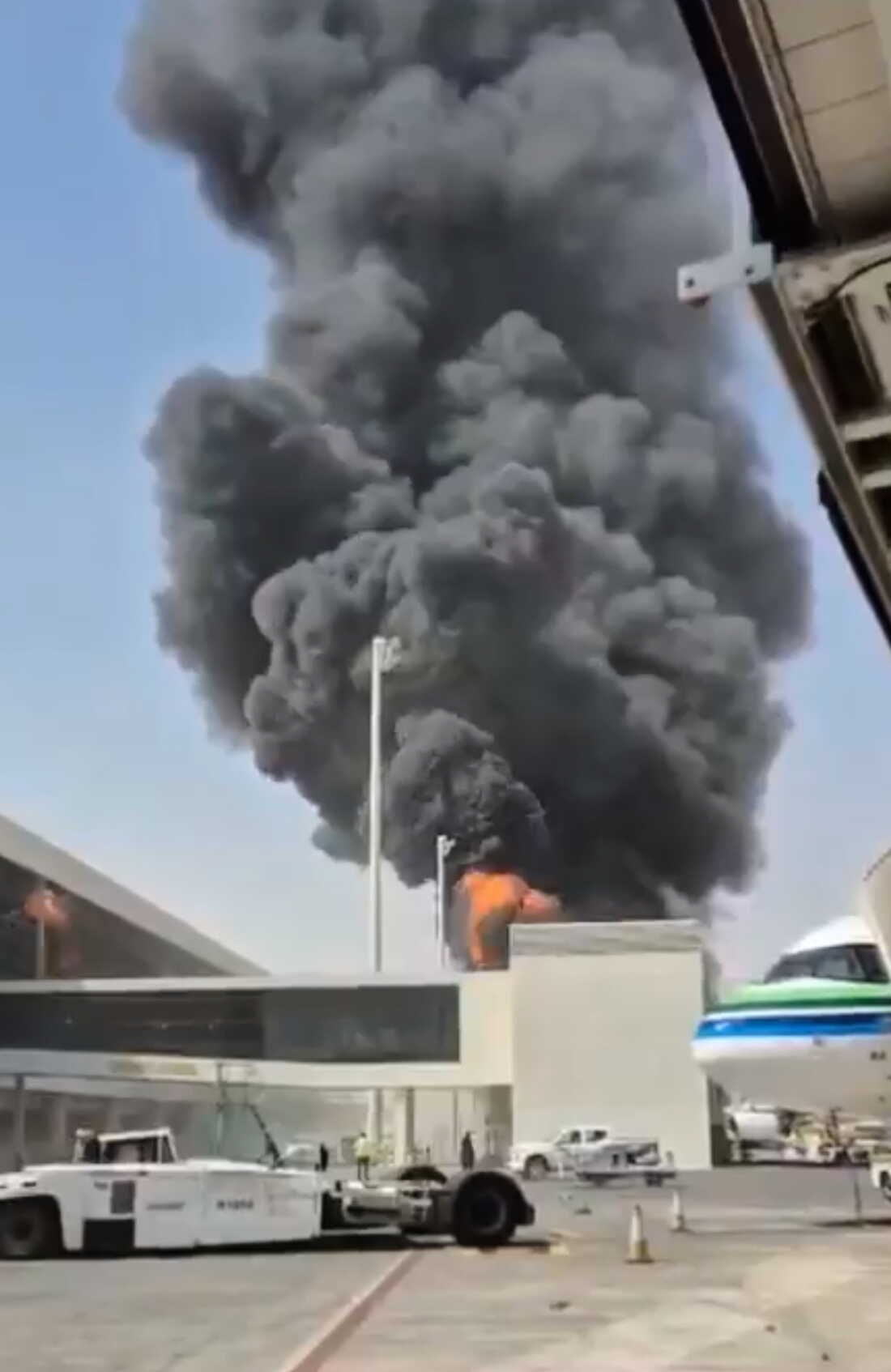
The reported CCTV footage appears to capture the kind of moment governments dread: a sudden flash, a blast, and the immediate collapse of normalcy. Even if operations resume quickly, the message travels faster than any official statement. The target audience is not only Saudi officials. It is investors, airlines, regional rivals, and domestic audiences across the Middle East.
Key insight: In modern conflict, the video of a strike can be almost as important as the strike itself. The footage becomes evidence, propaganda, deterrence, and pressure campaign all at once.
That is why the CCTV element matters. Security footage is raw, compressed, and visceral. It does not explain context, but it creates an instant perception of vulnerability. In the attention economy of conflict, that perception is strategic currency.
The Houthi Strike on Riyadh Airport and the New Airport Threat Model
Airports used to prepare mainly for hijackings, insider threats, runway incursions, cyber disruption, and conventional terror attacks. The drone-and-missile age has expanded that threat model. Now, airport security also means defending large open spaces against fast, low-cost, hard-to-detect systems launched from hundreds or even more than a thousand kilometers away.
Airports are uniquely exposed
Airports are difficult to harden because they are built around openness. Runways must be long and exposed. Fuel storage, radar systems, cargo areas, aircraft stands, and passenger terminals are spread across large footprints. Even a near miss can trigger cascading disruption: diverted flights, delayed cargo, emergency inspections, insurance notifications, and public anxiety.
For a government, defending an airport is therefore not only a military task. It is a communications challenge, a commercial continuity problem, and a test of public trust.
Low-cost weapons create high-cost disruption
The asymmetric math is brutal. A drone or missile can be far cheaper than the interceptor used to stop it. Even unsuccessful attacks force defenders to activate expensive systems, scramble personnel, and maintain elevated alert levels. This cost imbalance has defined much of the Houthi campaign strategy in recent years.
Pro Tip for risk watchers: Do not judge these incidents only by crater size or casualty figures. Watch operational disruption, airspace closures, insurance reactions, and official messaging. Those often reveal the real strategic impact.
What the Footage Can and Cannot Tell Us
Short conflict videos are powerful, but they are also incomplete. A clip may show an explosion without proving the weapon type, launch location, interception status, or intended target. That distinction matters.
When analyzing footage like this, experts typically look for signs such as blast pattern, secondary explosions, sound delay, visible trajectory, debris fields, and the presence of air-defense activity. But open-source video rarely provides enough information on its own. It must be matched with radar data, official statements, satellite imagery, airport operations records, and local witness accounts.
- Confirmed visual evidence: A visible incident or explosion captured on camera.
- Unconfirmed technical details: The exact munition, trajectory, and interception status.
- Strategic interpretation: The likely message sent by targeting or approaching a high-profile airport.
- Operational consequence: Flight disruption, damage reports, or emergency response activity.
This is where skepticism is essential. Wartime information moves fast, but accuracy often arrives late. The responsible reading is to separate what the video appears to show from what political actors claim it proves.
Saudi Air Defense Faces the Swarm Era
Saudi Arabia has invested heavily in air defense, including layered systems designed to detect and intercept ballistic missiles, cruise missiles, and drones. But no defense shield is perfect, especially against mixed salvos and low-flying threats.
The challenge is not simply whether a single missile can be intercepted. It is whether defenses can handle repeated attempts, decoys, varied flight paths, and attacks timed to maximize confusion. Drones can fly low. Cruise missiles can exploit terrain. Ballistic missiles compress decision time. When these tools are combined, they stress even advanced networks.
The economics of interception are changing
Defense planners increasingly face a marketplace mismatch. Attackers can use relatively cheap systems to force defenders into using high-end interceptors. That does not mean advanced air defense is obsolete. It means it must be paired with better sensors, electronic warfare, directed-energy research, rapid runway repair, hardened infrastructure, and resilient command systems.
Why this matters: The future of airport defense will not be one silver-bullet weapon. It will be layered resilience: detect earlier, intercept smarter, absorb limited damage, recover faster, and communicate clearly.
Regional Politics Behind the Strike
The Houthis have repeatedly used long-range attacks to project power beyond Yemen’s borders. Riyadh, Jeddah, energy facilities, ports, and airports have all carried symbolic value in the broader confrontation. These attacks are designed to show reach, undermine confidence, and remind regional powers that the Yemen war’s consequences do not remain neatly inside Yemen.
For Saudi Arabia, the stakes are high. The kingdom has spent years repositioning itself as a magnet for investment, tourism, sports, entertainment, and technology. That transformation depends on a baseline assumption of security. A strike near a major airport pushes directly against that narrative.
Editorial view: The most important battlefield may be confidence. If attackers can make investors and travelers question Saudi stability, they can create pressure without winning a conventional fight.
There is also a diplomatic layer. Any attack near civilian aviation infrastructure can intensify international scrutiny and raise pressure for de-escalation. But it can also harden positions, especially if leaders feel compelled to respond publicly to avoid appearing vulnerable.
Aviation, Insurance, and Business Fallout
For airlines, the risk calculation is immediate and practical. Carriers must assess whether flight paths remain safe, whether crews need updated guidance, and whether contingency routing is required. Even a temporary advisory can ripple through schedules.
Insurers will also watch closely. Aviation war-risk premiums are sensitive to perceived instability. If incidents become more frequent, the cost of operating in or near affected airspace can rise. Cargo operators, which often run tight margins and fixed delivery windows, may be especially exposed.
Business travelers and multinational firms may not cancel plans after one incident, but security teams will revise risk briefs. That matters in a country working aggressively to host global conferences, attract headquarters, and expand non-oil sectors.
The airport is the message
Targeting or approaching an airport is not random. It touches almost every nerve of a modern economy: mobility, trade, tourism, investor confidence, and national prestige. That is why even limited physical damage can produce outsized geopolitical noise.
What to Watch Next
The next phase will determine whether this remains a dramatic but contained incident or becomes part of a wider escalation cycle. Watch for the speed and tone of Saudi statements, claims of responsibility, airport operations updates, and any retaliatory signals.
- Operational status: Are flights delayed, diverted, or restored quickly?
- Damage assessment: Was infrastructure hit, or did the blast occur outside critical airport systems?
- Weapon identification: Do officials describe a
drone,ballistic missile, orcruise missile? - Regional response: Do Gulf states, the United States, or other actors issue coordinated statements?
- Follow-on attacks: A single strike sends a message. A sequence changes the security environment.
There is a temptation to treat every viral strike clip as a standalone shock. That misses the bigger pattern. The Middle East is being shaped by a new class of precision disruption, where non-state or quasi-state actors can threaten strategic infrastructure at range and then amplify the effect through media.
The Bottom Line on the Houthi Strike on Riyadh Airport
The reported Houthi strike near Riyadh International Airport is more than a security incident caught on camera. It is a stress test for Saudi defenses, a signal in a regional power contest, and a reminder that civilian infrastructure now sits at the center of modern deterrence.
The physical impact may prove limited. The strategic impact could last longer. Airports thrive on predictability, and conflict thrives on breaking it. If Riyadh can demonstrate rapid recovery, credible defense, and calm transparency, the incident may fade into the broader archive of regional escalation. If attacks continue, the calculation changes for airlines, investors, and governments alike.
For now, the message is stark: the skies over the Gulf remain contested not only by aircraft, but by narratives, economics, and the accelerating technology of asymmetric war.
The information provided in this article is for general informational purposes only. While we strive for accuracy, we make no guarantees about the completeness or reliability of the content. Always verify important information through official or multiple sources before making decisions.