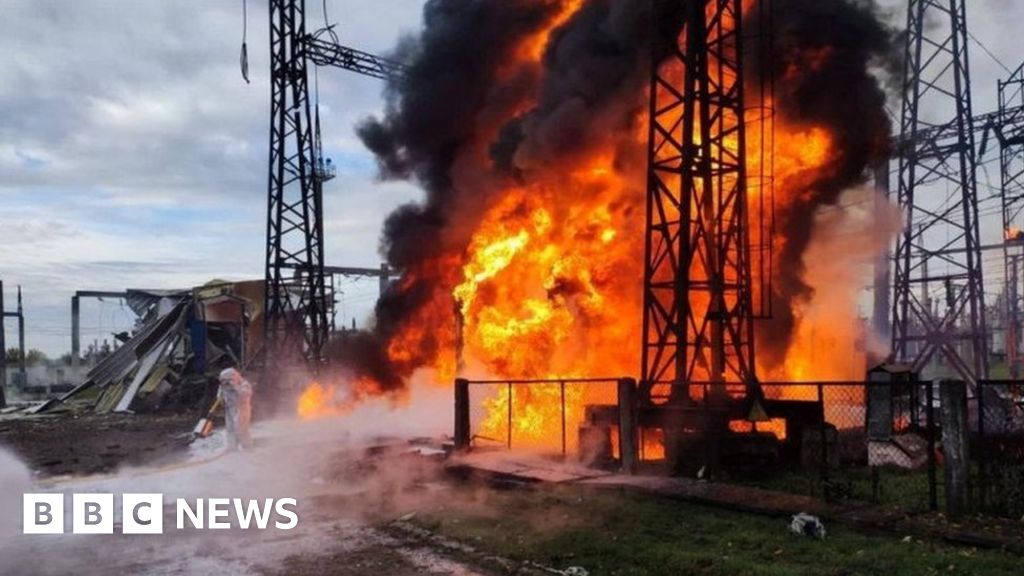
Houthis Strike Saudi Tanker and Raise the Stakes

Houthis Strike Saudi Tanker and Raise the Stakes
The latest Houthis strike Saudi tanker episode is not just another flashpoint in an already volatile region. It is a reminder that maritime security in the Red Sea can shift from fragile to dangerous with one attack, and that energy markets still react fast when shipping lanes come under pressure. For Saudi Arabia, the message is blunt: even hardened infrastructure and armored logistics do not fully insulate commercial shipping from asymmetric threats. For traders, insurers, and governments, the cost of complacency is rising. Every attack tightens the risk premium on fuel, freight, and regional stability, while also testing how far the Iran-aligned group can push before deterrence turns into escalation.
- The strike underscores how vulnerable commercial shipping remains in the Red Sea corridor.
- Energy markets can absorb disruption, but they price in fear quickly.
- The attack reflects a broader strategy of pressure, signaling, and leverage.
- Maritime security now depends as much on intelligence as on naval presence.
- Regional actors face a narrower set of options: contain, retaliate, or negotiate under stress.
Why the Houthis strike Saudi tanker matters now
This is bigger than a single vessel. The Red Sea is a strategic chokepoint linking Asian energy producers to European and global consumers, and attacks there ripple outward with unusual speed. When a tanker is hit, the consequences are not limited to the immediate damage report. Insurance rates climb, shipping schedules shift, and companies reroute vessels around longer, costlier paths. That means delays, higher freight costs, and more pressure on supply chains that were already stretched by geopolitical friction.
The Houthis have long understood this leverage. Their maritime campaign is less about sinking every target and more about demonstrating that they can impose costs on adversaries far from the battlefield. Saudi-linked shipping is a particularly potent target because it sits at the intersection of energy politics, regional rivalry, and global commerce. The attack sends a signal that the group still has operational reach and strategic patience.
What looks like a tactical strike is often a strategic message: if you cannot guarantee safe passage, you cannot claim control of the route.
How the Red Sea risk economy works
Maritime disruptions follow a predictable but brutal pattern. First comes uncertainty. Then comes the repricing. Finally, everyone from shipowners to refiners starts hedging against the next incident.
1. Shipping costs rise before supply actually breaks
Markets do not wait for shortages. They react to risk. A successful attack on a tanker can push carriers to demand higher premiums, particularly for vessels transiting the Bab el-Mandeb and surrounding waters. That may not immediately empty fuel tanks, but it does make every barrel more expensive by the time it reaches its destination.
2. Detours create hidden economic drag
When companies reroute away from the Red Sea, the costs compound. Longer voyages mean more fuel burned, slower delivery cycles, and tighter fleet availability. Even a short disruption can ripple through logistics networks, especially for time-sensitive cargo and refined petroleum products.
3. Security becomes a competitive issue
After repeated attacks, firms with stronger naval escorts, better tracking systems, or more flexible routing options gain an edge. Others are forced to absorb higher operating costs. In that sense, the conflict is not only military – it is also an economic sorting mechanism.
What the Houthis strike Saudi tanker says about the group’s strategy
The Houthis are not improvising. Their attacks fit a long-standing playbook: combine missile, drone, and maritime pressure to create uncertainty well beyond Yemen’s borders. The aim is to project power, complicate adversary planning, and remind regional players that escalation can be asymmetric and cheap on the attacker’s side.
That strategy has three advantages. First, it is difficult to fully suppress without broad surveillance and constant interdiction. Second, it creates headlines even when the physical damage is limited. Third, it forces opponents into a dilemma: retaliate too hard and risk broader war, or respond too softly and encourage more attacks.
The strike against a Saudi tanker also carries symbolic weight. Saudi Arabia is one of the region’s most important oil exporters, and any attack on its shipping touches a nerve in markets already sensitive to energy shocks. Even if the vessel survives or the damage is contained, the political effect is still real.
Saudi Arabia’s response options are narrowing
Riyadh has spent years trying to balance deterrence with de-escalation. That balance is getting harder to maintain. On one hand, Saudi leaders want to avoid becoming locked into a wider confrontation that could threaten economic reform and investor confidence. On the other hand, repeated attacks on shipping cannot be ignored without inviting more of the same.
The likely response mix includes tighter maritime coordination, stronger intelligence sharing, and more public pressure on allies to help secure shipping lanes. But each option has tradeoffs.
- Military escort: effective in some cases, but resource-intensive and not foolproof.
- Diplomatic pressure: useful for coalition-building, but slow and often too abstract to deter imminent attacks.
- Targeted retaliation: can signal resolve, but risks widening the conflict.
- Defensive hardening: helps protect assets, but does little to change the attacker’s calculus.
Saudi Arabia’s challenge is that resilience alone does not stop a campaign designed to create uncertainty. The kingdom can harden targets, but it cannot armor an entire shipping lane.
Why global markets should care beyond the headlines
It is tempting to treat Red Sea attacks as regional drama with limited spillover. That view is too narrow. Maritime insecurity has a way of traveling through the economy faster than policymakers expect. Higher insurance premiums feed into transportation costs, which feed into product pricing, which then feeds into inflation pressure. Energy markets are especially sensitive because they are deeply interconnected and psychologically reactive.
There is also a broader strategic issue. If non-state actors can repeatedly threaten critical sea lanes with relatively modest force, then the global trading system becomes more brittle. That does not mean global shipping is collapsing. It means the system now has to price in a level of instability that used to be episodic and is increasingly becoming routine.
When shipping lanes become bargaining chips, the cost is never confined to the nearest shoreline. It is paid by importers, exporters, consumers, and governments everywhere.
The technology behind modern maritime disruption
What makes these attacks harder to manage is that modern maritime warfare is increasingly a contest of sensors, software, and signal discipline. Drones, anti-ship missiles, spoofing, and tracking evasion all fit into a broader ecosystem where low-cost systems can challenge expensive platforms. That asymmetry matters.
Commercial vessels rely on predictable navigation and visible routing. Attacks exploit that predictability. Even when ships are not directly hit, the threat environment forces operators to alter behavior, switch communications patterns, and invest in more robust monitoring. In practical terms, that means the modern tanker is no longer just a vessel. It is a node in a contested data and surveillance environment.
For shipping firms, the operational lesson is clear: resilience is now part of the product. Fleet managers need layered tracking, route risk modeling, and rapid incident response protocols. Those are no longer luxury upgrades. They are baseline survival tools.
What happens next
The immediate aftermath of the strike will likely be measured in claims, statements, and dispatches from naval authorities. The more important test is whether this becomes a one-off event or part of a renewed pattern of pressure. If the attacks continue, companies may quietly shift routes and insurers may harden pricing assumptions for months, not days.
There is also a diplomatic clock ticking. The longer maritime attacks persist, the more likely outside powers are to intensify patrols, arm regional partners, or pursue backchannel negotiations aimed at restoring some degree of shipping normalcy. But any stabilization will be fragile. The underlying conflict dynamics in Yemen and the wider rivalry involving Iran, Saudi Arabia, and allied networks remain unresolved.
For now, the most realistic forecast is not peace or all-out war. It is managed instability, with periodic spikes that remind the market how little margin for error remains.
Bottom line
The Houthis strike Saudi tanker incident is a warning shot aimed at more than one audience. It tells Saudi Arabia that its shipping interests remain exposed. It tells insurers and shippers to keep pricing risk aggressively. And it tells governments that the Red Sea is still a live theater where economic pressure can be applied without crossing into conventional war.
That is what makes this episode so consequential. The damage is not just in what was hit. It is in what everyone now has to plan for next.
The information provided in this article is for general informational purposes only. While we strive for accuracy, we make no guarantees about the completeness or reliability of the content. Always verify important information through official or multiple sources before making decisions.