ICE Body Cams Face New Scrutiny
ICE Body Cams Face New Scrutiny
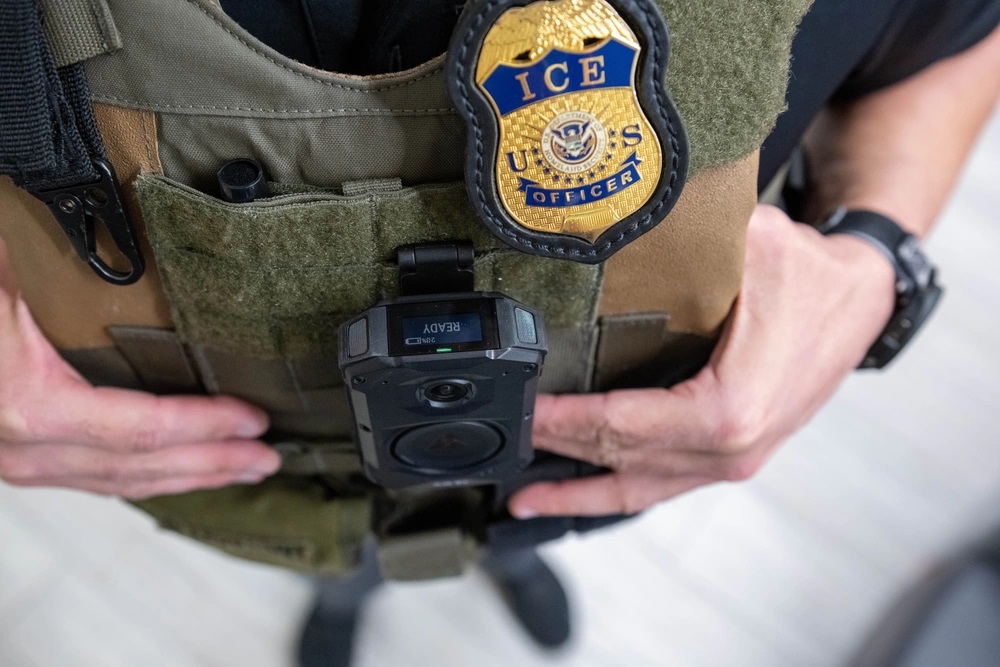
The promise of body cameras was supposed to be simple: more visibility, more accountability, fewer unanswered questions. But when shootings involving ICE agents enter the frame, the technology stops looking like a tidy fix and starts looking like a stress test for public trust. ICE body cameras are now part of a much bigger argument about who gets recorded, who gets protected, and who controls the evidence when force is used by federal officers. That matters far beyond immigration enforcement. It cuts into how modern policing is documented, reviewed, and defended in a country where video has become both a shield and a weapon.
- ICE body cameras are being judged not just on deployment, but on whether they actually change outcomes.
- Video can improve transparency, but it does not automatically deliver accountability.
- The real issue is policy: retention, access, redaction, and when footage is released.
- As scrutiny rises, the gap between surveillance theater and real oversight is getting harder to ignore.
Why ICE body cameras matter now
Body cams have long been sold as the technological answer to public outrage after violent encounters. The logic is seductive: record everything, preserve the evidence, and let the facts speak. But federal agencies, especially those operating in politically charged environments, rarely get to enjoy that neat narrative. In the case of ICE, the question is not whether body-worn video exists. It is whether the footage is accessible, timely, complete, and meaningful when deaths or serious injuries occur.
This is where ICE body cameras become more than hardware. They become a policy instrument. They can deter misconduct, strengthen investigations, and support training. They can also be selectively used, inconsistently reviewed, or kept out of public view long enough to blunt their value. For communities already skeptical of immigration enforcement, the stakes are obvious: if the cameras do not produce credible transparency after shootings, they risk becoming props in a legitimacy crisis.
The surveillance promise and its limits
There is a temptation to treat body cams as a software update for democracy. That is a mistake. Cameras do not interpret context, correct bias, or force institutions to act on what they see. They simply record. The rest depends on rules, leadership, and enforcement. In federal law enforcement, that means chain-of-custody policies, incident review processes, and disclosure standards that are often more important than the camera itself.
Video evidence is only as accountable as the system around it. A camera can document an event, but it cannot guarantee that the public will ever see the full story.
For ICE, that gap can be especially consequential. Immigration enforcement often unfolds in tense, fast-moving situations where bystanders, families, and advocates may have a different version of events than officers do. If footage is released late, clipped aggressively, or withheld on procedural grounds, the camera loses the very credibility it was meant to create.
What body cams can do well
When deployed seriously, body-worn cameras can:
- Preserve a contemporaneous record of force incidents.
- Support administrative and criminal investigations.
- Provide training material for de-escalation and tactical review.
- Reduce disputes over basic timelines and officer behavior.
Where they fall short
Body cams struggle when agencies treat them as compliance theater instead of oversight infrastructure. Common failure points include poor audio quality, gaps in recording, unclear activation rules, delayed access for investigators, and public releases that omit critical context. A camera on the chest does not fix selective enforcement, and it does not remove the political pressure to shape the narrative after a high-profile shooting.
ICE body cameras and the accountability gap
The accountability debate is not about whether an incident was recorded. It is about whether the recording can be trusted to answer the hard questions. Did officers follow policy? Was deadly force justified? Were there de-escalation opportunities? Did supervisors review the event independently? Did the public receive enough information to evaluate the response?
Those questions matter because video often becomes the first battlefield in a credibility war. Federal agencies tend to control the tape, the timeline, and the language used to describe the incident. That makes transparency fragile. If a shooting is controversial, the release of body cam footage can either calm the situation or intensify it, depending on whether the footage appears complete and consistent with the agency’s public account.
For ICE, the pressure is amplified by the broader immigration debate. Supporters of stricter enforcement want proof that officers acted within the law. Critics want assurance that force is not being normalized in environments already defined by fear and imbalance. ICE body cameras sit in the middle of that collision, expected to serve both sides while satisfying neither unless the system around them is genuinely rigorous.
Why policy beats optics
The most important body cam decisions happen before any shooting occurs. Agencies need clear guidance on when cameras must be activated, how long footage is retained, who can access it, and what happens when officers fail to record. Without those rules, a camera is just a passive witness.
Pro tip: when evaluating any law enforcement camera program, ask three blunt questions:
- Who controls the footage?
- How quickly is it reviewed after serious force?
- What consequences exist for noncompliance?
If those answers are vague, the technology is not doing the real work of accountability.
What this means for federal law enforcement technology
The scrutiny around ICE body cameras reflects a broader shift in public expectations. Cameras are no longer sold as futuristic gadgets. They are infrastructure for legitimacy. That changes the standard. Agencies cannot simply say they have adopted the technology. They have to prove it improves behavior, supports oversight, and survives public scrutiny when things go wrong.
This is especially relevant for federal agencies, which often operate with less day-to-day public visibility than local police departments. The lack of routine transparency can make every major incident feel like a black-box event. Body cams are supposed to open that box. But if disclosure remains slow or selective, the promise collapses.
There is also a budget story here. Camera programs are not cheap once storage, maintenance, redaction, and staffing are included. The hidden cost is administration. A serious body cam program requires people to manage data at scale, review footage, and respond to records requests. That means accountability is not a side effect of the hardware. It is the main expense.
The future of ICE body cams will be judged on trust
Expect the debate to move beyond whether ICE officers wear cameras at all. The next fight will focus on data policy, public disclosure, and whether footage is used to change behavior or merely defend it after the fact. Artificial intelligence will likely enter the picture too, from automatic redaction to analytics that flag use-of-force incidents for review. That could help, but only if it improves oversight instead of accelerating the same opaque workflow.
There is a larger lesson for every agency betting on surveillance tech as a credibility tool: the public is no longer impressed by the existence of a camera. The public wants the receipts, the timeline, the context, and the consequences. If ICE body cameras are going to mean anything after shootings, they need to be embedded in a transparent process that makes misuse visible and review unavoidable.
The hard truth is that body cameras do not settle public controversy. They raise the standard for what agencies must explain.
Why this matters beyond one agency
This story is about ICE, but the implications stretch across government and business alike. Any organization using always-on recording, whether it is law enforcement, private security, or public transit, faces the same basic challenge: technology can document behavior, but it cannot create legitimacy by itself. Trust comes from rules that are visible, enforced, and credible under pressure.
That is why the ongoing debate over ICE body cameras matters so much. It is not just about a federal device policy. It is about whether American institutions still believe transparency should be designed into power, not promised after a crisis. If the answer is yes, then body cams need stronger oversight, faster disclosure, and real consequences when policy fails. If the answer is no, then the camera remains what skeptics have feared all along: a recording device with no guarantee of accountability.
Either way, the footage will not be the final word. It will be the starting point for the harder question: what does a government owe the public when it uses force, and what does it owe the people whose lives are captured on camera?
The information provided in this article is for general informational purposes only. While we strive for accuracy, we make no guarantees about the completeness or reliability of the content. Always verify important information through official or multiple sources before making decisions.

