India China Thaw Could Redraw BRICS Power
India China Thaw Could Redraw BRICS Power
The global order is not waiting for Washington, Brussels, or Moscow to decide what comes next. The India China thaw, however tentative, is now one of the most consequential variables in geopolitics because it sits at the intersection of trade, security, energy, technology, and the future of the Global South. A former Indian envoy’s assessment that BRICS is not irrelevant lands at a moment when many Western analysts still treat the grouping as either symbolic theatre or an anti-Western bloc. That reading is too lazy. BRICS is messy, contradictory, and increasingly crowded, but it reflects a hard truth: middle powers want leverage in a world where old institutions feel slow, selective, and overstretched.
BRICSremains relevant because it gives emerging powers a platform beyond Western-led institutions.- The
India China thawcould shift global alignments, especially across Asia, energy markets, and multilateral forums. - India is balancing, not bandwagoning, by engaging China while deepening ties with the United States and other partners.
- The biggest test is trust: border stability, trade asymmetry, and strategic competition still limit any reset.
Why The India China Thaw Matters Now
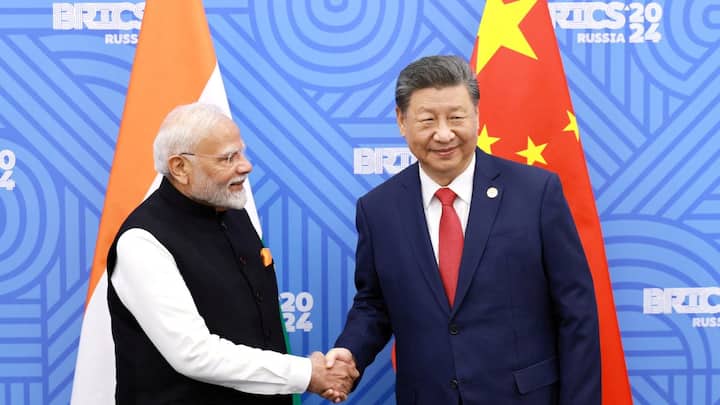
The phrase India China thaw should not be mistaken for friendship. It is better understood as risk management between two civilizational states that share a long border, a deep economic relationship, and an equally deep reservoir of suspicion. After years of military tension along the Line of Actual Control, even modest diplomatic easing can have outsized effects.
That is because India and China are not just neighbors. They are demographic giants, manufacturing and services powerhouses, energy importers, and central players in almost every debate about the future of globalization. If they reduce friction, even partially, it could free diplomatic bandwidth across Asia. If they fail, the entire region remains vulnerable to escalation, supply chain anxiety, and alliance hardening.
The key insight is not that India and China are suddenly aligned. It is that both may see value in preventing rivalry from becoming permanent crisis.
This is where the former envoy’s view becomes strategically important. By arguing that BRICS is not irrelevant, he is pointing to the forum’s real utility: not as a treaty alliance, but as a pressure valve and negotiating arena for countries that want options.
BRICS Is Not Dead, It Is Becoming Harder To Define
Critics often dismiss BRICS because it lacks the cohesion of NATO or the institutional discipline of the European Union. That critique is accurate but incomplete. BRICS was never designed to be a military pact or a single-market project. Its power comes from convening states that disagree on many things but share frustration with the distribution of influence in global governance.
The expansion of BRICS has made that paradox more visible. A larger grouping has more demographic weight, more commodity power, and more diplomatic reach. It also has more internal contradictions. India and China compete. Saudi Arabia and Iran have a complicated regional history. Russia is under heavy Western pressure. Brazil and South Africa have their own domestic constraints and regional priorities.
But irrelevance is the wrong diagnosis. A club does not need perfect unity to matter. The G20 is often divided, yet it remains consequential. The United Nations Security Council is frequently deadlocked, yet no serious state ignores it. BRICS matters because leaders show up, markets watch, and policy signals emerge.
The real function of BRICS
- Diplomatic leverage: It gives members a collective platform to push for reforms in global finance and governance.
- Economic signaling: It reflects demand for alternatives in trade settlement, development lending, and infrastructure finance.
- Strategic hedging: It lets countries engage China and Russia without abandoning relationships with the West.
- Global South branding: It channels frustration from states that feel underrepresented in legacy institutions.
That mix is exactly why India stays engaged. New Delhi does not need BRICS to become an anti-Western machine. In fact, India would resist that outcome. But it does benefit from being inside the room where China, Russia, and key emerging economies test narratives about the future order.
The India China Thaw And India’s Balancing Act
India’s foreign policy is often misread through an outdated binary: pro-West or anti-West, with China or against China. The reality is more sophisticated. India is building defense and technology ties with the United States, participating in the Quad, buying energy from Russia, engaging the Gulf, investing in Europe, and negotiating with China when necessary.
This is not confusion. It is strategic autonomy operating in a more transactional world. The India China thaw fits that pattern. India has no incentive to normalize ties without concrete border stability, but it also has no incentive to let every channel freeze indefinitely.
New Delhi’s calculus is pragmatic. A controlled relationship with Beijing can reduce military risk and support economic predictability. At the same time, India must avoid appearing to concede on sovereignty or ignore the structural challenge posed by China’s military and industrial rise.
Pro Tip for reading the signal
Watch actions, not atmospherics. Diplomatic smiles matter less than troop disengagement, border protocols, visa normalization, investment rules, and whether high-level military communication becomes routine. In geopolitics, process is often the product.
For India, the most valuable outcome is not a grand reset. It is a stable framework that prevents border incidents from hijacking every other aspect of the relationship. That would give India more room to focus on manufacturing, technology, infrastructure, and its role as a voice for the Global South.
China Also Has Reasons To Cool The Temperature
China’s incentive structure has changed. Its economy faces pressure from property sector weakness, demographic drag, youth employment concerns, and Western efforts to de-risk supply chains. Beijing does not need another front of instability along the Himalayas while managing tensions in the South China Sea, Taiwan Strait, and trade disputes with advanced economies.
A limited easing with India can help China reduce diplomatic isolation in Asia and complicate efforts to build a unified balancing coalition against it. It also allows Beijing to present itself as a responsible power capable of stabilizing relations with a major neighbor.
But Beijing’s challenge is credibility. India’s strategic community remains deeply skeptical, and for good reason. Trust was damaged by border clashes and by the perception that previous agreements did not prevent military confrontation. Any thaw that is not backed by verifiable stability will be seen as tactical, not transformative.
A thaw without trust is not a reset. It is a pause button, and both sides know it.
What This Means For The West
Western capitals should resist the temptation to panic if India and China talk. Dialogue between the two does not mean India is drifting into China’s orbit. It means India is doing what major powers do: managing adversaries while maximizing national space.
For the United States and Europe, the smarter response is to deepen cooperation with India on terms that respect its autonomy. That means technology partnerships, resilient supply chains, defense co-development, clean energy financing, and education links. Lecturing India for participating in BRICS misunderstands how influence works in a multipolar system.
The West should also recognize that BRICS expansion is partly a symptom of institutional frustration. When countries feel the global financial architecture is slow to reform, they look for alternative platforms. When sanctions and dollar exposure become strategic concerns, they discuss settlement alternatives. Not all of those efforts will succeed, but dismissing them as performance misses the political energy behind them.
Why this matters for businesses
Corporate leaders should watch the India China thaw because geopolitical temperature affects supply chains, investment screening, logistics, and market access. A calmer border environment could modestly improve business confidence, but companies should not assume a return to pre-crisis normalization.
- Manufacturers should continue diversifying supply chains while monitoring India-China trade rules.
- Technology firms should expect data, telecom, and platform scrutiny to remain sensitive.
- Investors should track whether policy changes follow diplomatic engagement.
- Energy companies should watch
BRICSdiscussions on payments, commodities, and infrastructure finance.
The Hard Limits Of A Reset
The biggest mistake would be to overstate the thaw. India and China remain competitors across influence zones, infrastructure corridors, digital standards, maritime access, and regional diplomacy. Their border dispute is not a technical glitch. It is a structural problem tied to nationalism, geography, and military posture.
Trade is another fault line. India runs a significant deficit with China and worries about dependence in critical sectors, including electronics, solar components, pharmaceuticals inputs, and industrial machinery. Even if diplomatic ties improve, India will likely continue pushing domestic manufacturing and selective restrictions in sensitive areas.
There is also the Pakistan factor. China’s strategic relationship with Pakistan remains a core Indian concern, especially when infrastructure and security interests overlap. Meanwhile, India’s growing relationships with the United States, Japan, Australia, and Europe will continue to shape Beijing’s threat perceptions.
So yes, the thaw matters. But no, it does not erase competition. The more realistic scenario is managed rivalry: fewer flashpoints, more communication, continued competition, and selective cooperation where interests overlap.
The Future Of BRICS After An India China Thaw
If India and China stabilize relations, BRICS could become more functional, at least on issues where both see benefit. Development finance, Global South representation, climate funding, food security, and reform of multilateral institutions are areas where cooperation is possible without requiring strategic intimacy.
However, India will likely resist any attempt to turn BRICS into a China-led ideological bloc. That is the central tension. China may see the forum as a way to amplify alternatives to Western power. India sees it as one platform among many, useful precisely because it is not exclusive.
This difference may actually keep BRICS relevant. Its internal diversity prevents it from becoming a simple instrument of one capital. The messiness is not a bug. It is part of the design, because it lets members extract value without surrendering flexibility.
The future of
BRICSwill not be decided by whether it becomes united. It will be decided by whether its members can use disagreement as leverage rather than paralysis.
Bottom Line
The former envoy’s argument deserves attention because it cuts through two bad assumptions: that BRICS is meaningless, and that an India China thaw would automatically rewrite alliances overnight. The truth is more nuanced and more important.
BRICS is a stage where emerging powers negotiate status, alternatives, and bargaining power. India and China are both too large to ignore and too suspicious of each other to fully align. If they can stabilize their relationship, even partially, the effects will ripple through diplomacy, trade, security, and the politics of the Global South.
The new geopolitics will not be defined by clean camps. It will be defined by overlapping partnerships, controlled rivalries, and countries powerful enough to say yes to multiple rooms at once. India understands that. China understands that. And BRICS, for all its contradictions, is one of the places where that future is being rehearsed.
The information provided in this article is for general informational purposes only. While we strive for accuracy, we make no guarantees about the completeness or reliability of the content. Always verify important information through official or multiple sources before making decisions.