India Solar Energy Problems Hit the Grid
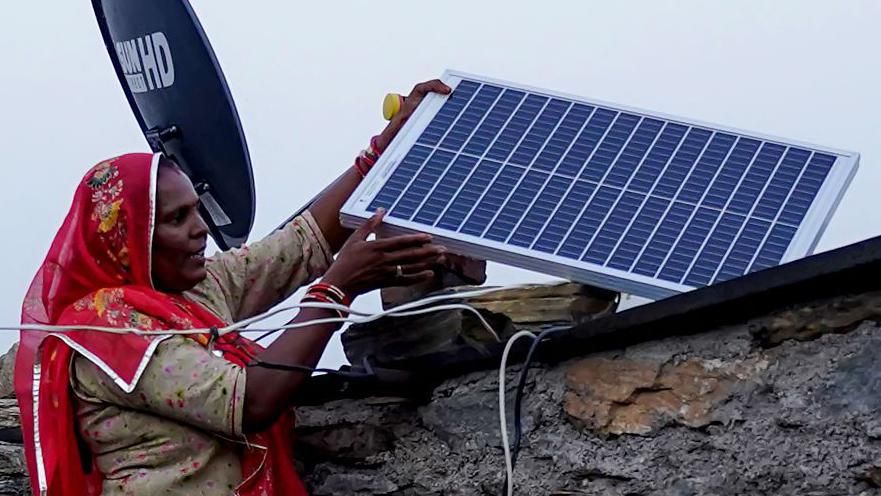
India solar energy problems are no longer a distant warning label. They are becoming the central test of whether the country can turn fast solar growth into reliable power. Panels are easy to ship, finance, and install. The hard part is building a system that can absorb noon-time surges, move electricity across crowded corridors, and keep projects bankable when payment delays and land disputes pile up. That is why the latest strain matters so much: solar is no longer a niche climate story. It is now a core economic story about manufacturing, jobs, industrial power prices, and the credibility of India’s energy transition.
- Solar additions are outrunning
transmissionupgrades and grid flexibility. - The biggest frictions are
curtailment, financing risk, land access, and supply chain dependence. Battery storage, hybrid projects, and better forecasting can improve reliability fast.- The winners will treat solar as a system, not just a module.
India solar energy problems are about infrastructure, not ideology
As solar costs fell, India did what ambitious markets are supposed to do: it moved quickly. Utilities, developers, and policymakers chased low-cost capacity at scale. But rapid growth exposes a harder truth. A solar boom is only as strong as the network around it. If the grid cannot carry the power, if utilities cannot pay on time, and if contracts are too weak to survive stress, the economics stop looking clean.
That is the real shift. The challenge is no longer whether solar works. It is whether the entire system can work well enough to make solar dependable at national scale. In that sense, India solar energy problems are not a failure of ambition. They are a test of execution.
The hard part of solar is no longer getting sunlight into a panel. It is turning that panel into reliable power through
transmission,storage, and disciplined contracts.
The grid is still built for a different century
Transmission delays create stranded capacity
Many solar projects are completed faster than the infrastructure needed to move their electricity. That means evacuation lines, substations, and balancing resources often arrive late. The result is a familiar but expensive pattern: generators are ready, yet the grid is not. When that happens, plants sit idle or produce less than expected, and the financial model starts to wobble.
This is where India solar energy problems become visible to everyone except maybe the public. The technology may be cheap, but the system cost is not. Every delayed corridor or congested node turns low-cost electricity into a more fragile asset. Developers can absorb some delay. Debt markets usually cannot.
Curtailment hides the real cost
Curtailment is one of the sector’s least glamorous words and one of its most important. It happens when the grid has more power than it can use or move, so operators are forced to cut output. On paper, the solar plant exists. In practice, the plant cannot fully sell what it produces. That weakens revenue, reduces confidence, and can undermine future investment.
Better forecasting and more flexible dispatch can reduce the damage, but they do not eliminate the root problem. A grid built for one-way coal generation needs a redesign to handle two-way variability, midday oversupply, and evening demand spikes. Until that redesign happens at scale, India solar energy problems will keep showing up as operational headaches rather than headline failures.
India solar energy problems are also a manufacturing story
Domestic assembly is not the same as supply chain control
India has made serious efforts to build local solar manufacturing. That matters. But assembly lines do not equal full independence. Upstream dependence on imported wafers, polysilicon, and specialist components still leaves the sector exposed to price swings and geopolitical risk. A nation can build more modules and still remain vulnerable if the key inputs stay concentrated elsewhere.
That is why the debate should go beyond factory counts. True resilience means controlling more of the chain, improving quality, and ensuring that domestic capacity is competitive enough to survive without permanent protection. If not, the country risks swapping one bottleneck for another.
Tariffs can buy time, not certainty
Import barriers and local-content policies can help domestic firms scale. They can also create room for learning. But they are not a substitute for execution. If factories cannot hit quality standards, if power supply is inconsistent, or if demand is too volatile, the sector can end up protected but not competitive.
For investors, the signal is clear: policy support helps, but it does not remove risk. In fact, it can raise the stakes. The best manufacturing strategy pairs predictable procurement with technical consistency and a pathway to export markets. Otherwise India solar energy problems become a story of missed industrial leverage, not just missed climate targets.
Financing is where good projects go to stall
The PPA question decides bankability
Solar projects are finance machines as much as they are power plants. A project lives or dies on the quality of its long-term revenue. If the PPA is uncertain, if payment delays drag on, or if the off-taker has weak credit, lenders respond immediately. Rates rise. Terms shorten. Some projects never get built at all.
That is why India solar energy problems cannot be solved by cheaper modules alone. Lower equipment costs are helpful, but the real capital question is whether the cash flow looks dependable for 15 or 20 years. Investors want predictability more than optimism.
Land and community acceptance matter more than press releases
Utility-scale solar still needs large tracts of land, local permission, and a development process that does not stretch forever. Communities are more likely to support projects that respect land use, share benefits fairly, and communicate clearly about jobs and compensation. When those pieces are missing, delay becomes the default.
There is also a strategic point here. Solar parks that are cheap on paper but difficult to permit are not actually cheap. The hidden cost is time, and time is deadly in infrastructure. A project pipeline that looks impressive in a briefing can still fail at the local level.
What smart operators should do next
The next generation of solar developers will not just buy land and panels. They will manage variability, contracts, and grid constraints as core business functions. In practice, that means building around flexibility instead of treating it as an afterthought.
- Pair solar with
battery storageor wind to createhybridprojects. - Use better forecasting to reduce
curtailmentand scheduling penalties. - Prioritize sites with strong
transmissionaccess instead of chasing the cheapest land. - Negotiate contracts with payment protection and clear escalation terms.
- Invest in operations and maintenance, not just project announcements.
Pro tip: The strongest solar businesses now look like a blend of utility operator, software company, and financier. If a developer cannot model volatility, it is not ready for the market India is building.
Why This Matters
This is bigger than the power sector. If India can solve its solar integration problem, it lowers industrial electricity costs, supports data centers and factories, and strengthens the case for electric mobility. If it cannot, then even a huge solar buildout will deliver uneven benefits. Cheap generation at noon is not the same as cheap, reliable power all day.
There is also a climate consequence. Solar only delivers its full environmental value when it displaces fossil generation consistently. If weak grids and poor planning force more backup coal or inefficient balancing, the transition slows down and credibility suffers. For policymakers, this is not a side issue. It is the main event.
The climate payoff depends on reliability
The public often talks about solar as if the panel itself is the finish line. It is not. The finish line is a system that can absorb that power, store some of it, move the rest, and pay for it without constant friction. Until that happens, India solar energy problems will keep showing up as a gap between ambition and delivery.
The next phase of India solar energy problems
The next phase is likely to shift from pure capacity growth to system sophistication. Expect more attention on grid-forming inverters, long-duration storage, flexible tariffs, and digital dispatch tools that make solar easier to manage at scale. The market is moving from a race to install to a race to integrate.
If India gets this right, it could build one of the world’s most important clean-power playbooks. If it gets it wrong, the country will still have plenty of solar panels but not enough usable power when the grid needs it most. That is the difference between a headline boom and a durable energy transition. And right now, that difference is everything.
The information provided in this article is for general informational purposes only. While we strive for accuracy, we make no guarantees about the completeness or reliability of the content. Always verify important information through official or multiple sources before making decisions.


