Iran Bets Pressure Will Break Trump
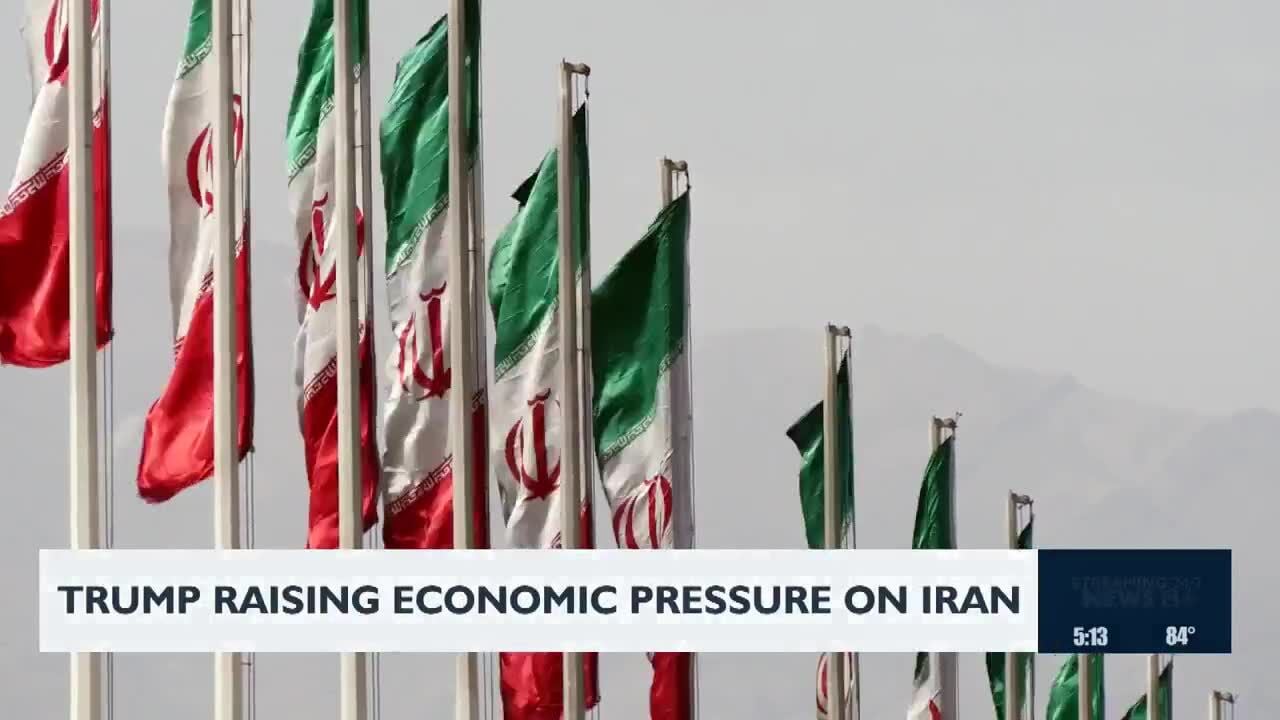
Iran Bets Pressure Will Break Trump
Iran is making a ruthless calculation: if the costs keep rising, Donald Trump will eventually blink. That bet sits at the center of a wider pressure campaign that mixes sanctions, regional escalation, and economic strain into one volatile political gamble. For Trump, the question is not just whether pressure works. It is whether pressure can be sustained long enough to force Tehran into concessions without triggering a larger crisis. For businesses, policymakers, and markets, Iran economic pressure Trump is more than a headline. It is a live test of how much pain both sides can absorb before the game changes shape. If this strategy fails, the fallout could reach energy prices, diplomatic channels, and the already fragile balance across the Middle East.
- Iran is wagering that economic strain will weaken Trump’s leverage.
- Pressure campaigns rarely end cleanly and often produce unintended escalation.
- Energy markets and regional security remain highly sensitive to this standoff.
- The real contest is endurance, not just rhetoric or sanctions.
Iran economic pressure Trump and the logic of endurance
At its core, this standoff is about endurance. Iran appears to believe that Trump, like many U.S. presidents before him, will eventually face a narrowing set of choices if economic pain, market volatility, and diplomatic friction build high enough. That is not a new theory. States under pressure often assume democracies have a shorter fuse than authoritarian systems because voters, investors, and business leaders all start demanding answers.
But that assumption cuts both ways. Trump has built much of his political identity around toughness, leverage, and deal-making through brinkmanship. That means economic pain alone may not be enough to force a retreat. It may instead harden the White House stance, especially if any concession can be framed as weakness. The result is a dangerous symmetry: each side believes time is on its side, while time is exactly what makes crises more unpredictable.
When pressure becomes the strategy, the real question is not who speaks loudest. It is who can survive the longest without changing the terms.
Why Iran is leaning on economic pain
Iran’s playbook is built around a familiar reality: sanctions and financial isolation can squeeze even resilient governments, but they also create political leverage if the other side depends on stability. Tehran seems to be betting that economic pain can ripple outward fast enough to make Trump reconsider his posture. That could mean pressure through oil markets, regional disruptions, or diplomatic signaling designed to raise the cost of continued confrontation.
There is also a psychological layer. Pressure campaigns work best when the target believes escalation will become politically expensive. If Trump sees the conflict as bleeding into inflation fears, shipping concerns, or broader instability, the incentive to seek a new bargain increases. Iran does not need to win outright. It only needs to make the status quo feel expensive enough that Washington starts shopping for an exit.
The sanctions trap
Sanctions are often treated as a clean policy tool, but they are more like a slow-moving systems failure. They constrain budgets, reduce foreign exchange access, and amplify domestic stress, yet they also create adaptation. Economies learn to route around restrictions. Networks harden. Smuggling rises. Informal markets expand. This is why pressure campaigns can look successful on paper while producing only partial compliance in reality.
For Iran, that dynamic matters because survival itself can become proof of resilience. For Trump, it means sanctions may preserve leverage without delivering the dramatic policy shift that pressure advocates promise. The gap between economic damage and political surrender is often much wider than Washington expects.
What Trump is actually up against
Trump’s challenge is not only Iran. It is the entire ecosystem around the conflict. Any sustained confrontation can push up risk premiums, unsettle energy markets, and create pressure from allies who want calm rather than escalation. In that sense, the struggle is not bilateral. It is networked. One move in Tehran can trigger reactions in Washington, Jerusalem, Gulf capitals, and trading desks that never intended to become part of the story.
That is why the phrase Iran economic pressure Trump matters beyond politics. It captures a broader test of whether U.S. pressure doctrine still works in a fragmented global economy. Sanctions once had more bite when financial channels were narrower and alternatives were scarce. Today, states have more room to maneuver, more partners willing to hedge, and more digital pathways to preserve continuity. Pressure still matters, but its effects are less linear than they once were.
Markets hate ambiguity
Energy markets are especially vulnerable to ambiguity. Traders do not need a full-blown conflict to react. They only need credible fear of disruption. A tense standoff can raise shipping costs, tighten supply expectations, and push up volatility even before a single barrel is blocked or a single route is closed. That is where geopolitical brinkmanship becomes economically contagious.
For companies exposed to the region, this means contingency planning is no longer optional. Inventory buffers, alternative supply routes, and scenario planning can soften the blow, but they cannot eliminate it. The longer the standoff drags on, the more likely it is that businesses start pricing in not just disruption, but chronic uncertainty.
How pressure campaigns usually go wrong
The biggest mistake governments make is assuming pressure has a single predictable endpoint. It rarely does. Instead, pressure campaigns tend to produce one of three outcomes: partial concessions, strategic defiance, or unintended escalation. That last outcome is the one everyone says they are avoiding, yet it is often the one their incentives make most likely.
- Partial concessions: one side offers enough to pause escalation without changing the underlying conflict.
- Strategic defiance: the target absorbs the blow and reframes survival as victory.
- Unintended escalation: a tactical move triggers a broader and less controllable response.
In the Iran-Trump dynamic, the risk is that both sides mistake tactical patience for strategic control. A short-term win can create a longer-term trap. Each round of pressure raises the political cost of backing down later. That is how temporary standoffs become durable confrontations.
Pressure campaigns are seductive because they look decisive. Their real weakness is that they often postpone the hard choice instead of solving it.
Why this matters beyond Washington and Tehran
This confrontation is bigger than a bilateral contest. It is a stress test for a world already running hot on conflict, inflation sensitivity, and geopolitical distrust. If Iran succeeds in making economic pain politically unbearable for Trump, other states will learn that endurance can outlast coercion. If Trump holds the line and Iran absorbs the cost, that will strengthen the case for hard pressure as a durable tool. Either outcome sends a signal.
For the Middle East, the implications are immediate. Regional actors watch these exchanges carefully because they shape deterrence, alliance behavior, and conflict probability. For global markets, the lesson is even simpler: any escalation involving Iran can rapidly become an energy story, a shipping story, and an inflation story at once.
For investors and operators, the practical takeaway is to stop treating geopolitical shock as an abstract tail risk. The region’s volatility now sits inside core business planning. If supply chains, fuel costs, or cross-border contracts touch the Gulf, the impact of pressure politics is already inside the balance sheet.
Iran economic pressure Trump could reshape the next phase
The next phase will likely be less about headline confrontation and more about signaling discipline. Watch for calibrated moves, backchannel messages, and attempts to control the temperature without appearing weak. That is where real diplomacy often happens: not in dramatic announcements, but in the quiet effort to redefine what counts as acceptable pressure.
There is also a deeper strategic question here. If Iran can demonstrate that economic pain buys bargaining space, it may encourage a more transactional approach to future crises. If Trump can show that pressure still extracts costs without forcing concessions, he reinforces the credibility of U.S. coercive power. Either way, the model being tested is larger than one presidency or one standoff.
For now, the most honest read is this: both sides are betting on fatigue, and both are betting that the other side will run out first. That is a dangerous game because fatigue is invisible until it suddenly becomes policy. When that happens, the shift can be abrupt, messy, and difficult to reverse.
The bottom line
Iran’s strategy rests on a blunt but plausible theory: sustained economic pain can bend political will. Trump’s counter-theory is just as blunt: pressure only works if the other side believes he will not yield. The conflict between those two beliefs is where the real action lies. If either side misreads the other’s threshold, the result may not be a breakthrough. It may be a sharper, more destabilizing phase of confrontation.
That is why Iran economic pressure Trump is more than a diplomatic headline. It is a preview of how power works in a world where sanctions, markets, and political identity are all colliding at once. And right now, nobody involved looks eager to be the first to blink.
The information provided in this article is for general informational purposes only. While we strive for accuracy, we make no guarantees about the completeness or reliability of the content. Always verify important information through official or multiple sources before making decisions.