Iran Strikes Expose a New Regional Faultline
Iran Strikes Expose a New Regional Faultline
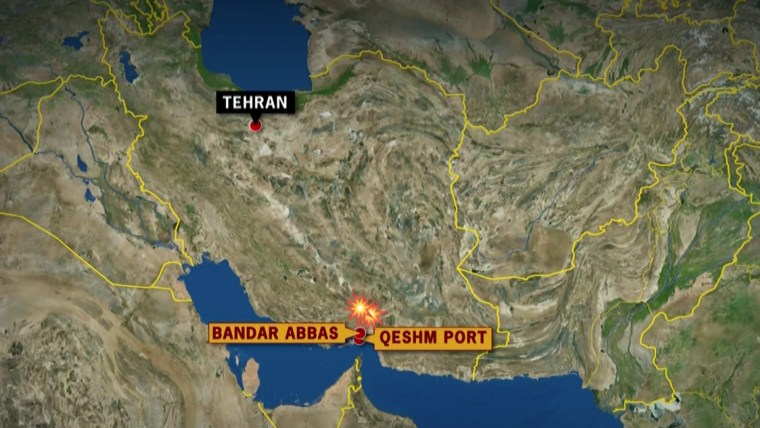
The latest Iran strikes are not just another burst of headline-grabbing violence. They are a stress test for the entire Middle East: for deterrence, for diplomacy, and for the fragile assumption that regional escalation can always be contained. When missiles fly and governments trade threats, markets shudder, shipping routes grow riskier, and every capital in the region starts recalculating its red lines. That is the real pain point here: not only what happened, but what it signals about the shrinking margin for error. A single operation can now ripple across energy prices, military postures, and alliance politics in a matter of hours. The story is no longer about one incident. It is about whether the region has entered a more dangerous phase where retaliation is faster, restraint is weaker, and miscalculation is far more expensive.
- Iran strikes have sharpened fears that localized attacks could trigger a broader regional confrontation.
- Military signaling now matters as much as battlefield impact, with each side trying to restore deterrence.
- Global consequences extend beyond security: energy markets, shipping lanes, and diplomatic alliances are all under pressure.
- The central question is no longer whether tensions exist, but whether escalation can still be controlled.
Why the latest Iran strikes matter beyond the battlefield
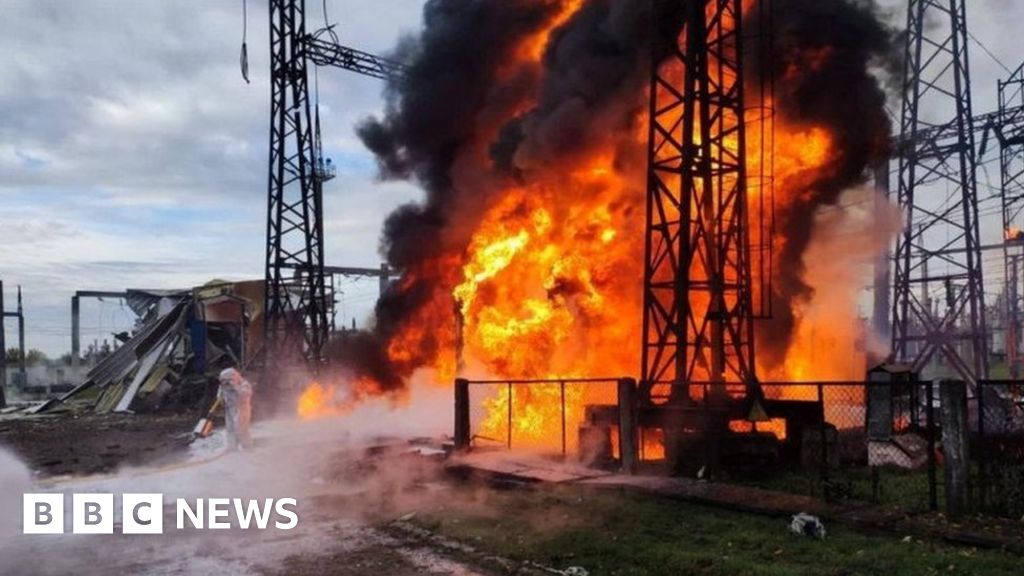
The immediate facts of any strike matter: where it landed, who was targeted, what was destroyed, and how many people were killed or injured. But strategically, the deeper significance lies in what such attacks communicate. Military action in this context functions as both force and message. It tells adversaries what capabilities exist, what thresholds have been crossed, and what future responses might look like.
That is why these Iran strikes resonate so widely. They are part of a broader contest over credibility. States in the region are not only trying to defend territory or retaliate for losses. They are also trying to prove that their warnings mean something. If deterrence looks weak, rivals may press further. If retaliation is too aggressive, the conflict widens. That creates a brutal strategic paradox: doing too little invites pressure, while doing too much invites war.
Key insight: In the modern Middle East, a strike is rarely a standalone act. It is usually a calculated signal aimed at multiple audiences: domestic voters, regional rivals, global powers, and armed proxies.
How regional actors read Iran strikes
Every major player interprets these events through its own security doctrine. That means the same attack can produce very different reactions across the region.
Israel sees a deterrence equation
For Israel, threats linked to Iran are often viewed through the lens of preemption, missile defense, and long-term strategic containment. Israeli planners tend to focus not just on immediate retaliation but on whether adversaries are improving missile reach, drone capacity, or proxy coordination. A strike therefore becomes part of a larger ledger of capability and intent.
Gulf states see economic and infrastructure risk
For Gulf governments, escalation threatens more than border security. It raises alarms around ports, refineries, logistics corridors, and investor confidence. Even when they are not direct participants, they have strong incentives to prevent open conflict because regional instability can hit trade and infrastructure with remarkable speed.
Iran sees pressure and signaling
From Tehran’s perspective, military pressure is inseparable from political messaging. Iran often aims to show that it can absorb pressure while still projecting influence through missiles, drones, and aligned groups. That does not mean every move is about seeking a wider war. In many cases, the objective is calibrated signaling: enough to demonstrate reach, not enough to invite total confrontation.
What makes this cycle more dangerous now
The Middle East has lived through repeated escalatory episodes. What feels different now is the compression of time and the expansion of the threat map. Drones, precision-guided munitions, and long-range missile systems reduce the warning window. Social media and instant political reaction compress decision-making. Leaders often have less time to absorb intelligence, evaluate options, and signal restraint.
There is also a geographic problem. A conflict no longer has to stay where it begins. The networked nature of regional alliances and armed groups means one strike can echo across several fronts. What starts as retaliation in one theatre can lead to pressure in another through proxy attacks, cyber operations, or maritime disruption.
- Faster escalation: Advanced drones and missiles cut the time between launch and impact.
- Broader exposure: Energy facilities, shipping lanes, and airspace all become potential pressure points.
- Political fragility: Governments face domestic demands to respond forcefully, even when restraint may be strategically smarter.
- Alliance entanglement: Partners and proxies can widen a crisis even if core states want limits.
Iran strikes and the energy market reality
One reason the world pays such close attention to Iran strikes is simple: energy still matters. Even if physical damage is limited, the perception of risk can move prices. Traders do not wait for worst-case scenarios to fully materialize. They price in uncertainty early, especially when shipping lanes, refining capacity, or export infrastructure could be affected.
The most sensitive issue is not always actual production loss. It is the fear that conflict could spill into strategic waterways or critical facilities. Insurance costs can rise. Shipping routes can become more complicated. Import-dependent economies start watching the region with increasing unease.
Why this matters: Geopolitical risk in the Middle East is never just regional. It can feed directly into inflation pressure, transport costs, and central bank anxiety far beyond the conflict zone.
The diplomatic dilemma after Iran strikes
Diplomacy after a major strike is often less about immediate peace than about creating off-ramps. Publicly, leaders may sound uncompromising. Privately, their teams are usually trying to define limits: what counts as sufficient retaliation, what targets remain off-limits, and which intermediaries can pass urgent messages.
That is the uncomfortable truth behind most crisis management. The same actors who threaten one another in public often rely on indirect communication to stop events from spiraling. Those channels may include regional governments, intelligence contacts, or established military deconfliction mechanisms. They are rarely elegant, but they are often the difference between a contained clash and a widening war.
Pro tip: When assessing whether escalation will continue, watch not only military statements but also signs of backchannel diplomacy, alert level changes, and language about proportionality.
What businesses and observers should watch next
For companies, analysts, and anyone trying to understand the next phase, the smartest approach is to track indicators rather than rely on rhetoric alone. Political messaging can be intentionally theatrical. Operational moves often reveal more.
Signals that suggest containment
- Retaliation framed as complete or proportionate.
- Limited target sets with no broadening to civilian infrastructure.
- Visible diplomatic activity through mediators.
- No major disruption to shipping or regional airspace.
Signals that suggest widening conflict
- Mobilization across multiple fronts.
- Strikes on high-value infrastructure or symbolic state targets.
- Sustained missile and drone exchanges.
- Sharp increases in military alert posture from external powers.
For decision-makers, this is the practical framework that matters. Not every dramatic headline signals a strategic break. But some do. The challenge is distinguishing between a choreographed exchange and a genuine shift in doctrine.
The information war is part of the conflict
Modern confrontation is not only fought in the air or on the ground. It is also fought through narrative control. States and armed groups rush to define events before independent verification catches up. Claims about damage, success, restraint, and legitimacy appear almost instantly. That makes early information both influential and unreliable.
Readers should be skeptical of immediate absolutes. Battle damage assessments evolve. Casualty figures can change. Strategic intent is often murky in the first hours. The narrative battle matters because leaders use it to build domestic support, reassure allies, and signal strength to adversaries.
E-E-A-T lens: The most credible reading of any crisis separates confirmed facts from strategic interpretation. That distinction is essential when emotions, propaganda, and high political stakes are all colliding.
The bigger lesson from these Iran strikes
The long-term lesson is stark. The regional security architecture is looking thinner and less predictable. Old assumptions about deterrence are being tested by new technologies, fragmented alliances, and political systems under strain. What once might have been absorbed as a shadow conflict now carries a much higher chance of visible escalation.
That does not make a full regional war inevitable. States still have powerful reasons to avoid one. The economic cost would be severe, the military risks immense, and the political consequences unpredictable. But the buffer that once gave leaders time to step back appears weaker than before.
The most important question after these Iran strikes is not who sounded toughest on television. It is whether the key actors still have the discipline, channels, and strategic patience to stop deterrence from mutating into disaster. If they do, this may remain a dangerous but contained episode. If they do not, the region could be entering a period where every exchange carries outsized global consequences.
That is why this moment matters. Not because the Middle East has suddenly become unstable – it has lived with instability for decades. It matters because the mechanics of crisis are changing. The tools are faster, the signals are harsher, and the space for misreading each other is alarmingly wide. For governments, businesses, and ordinary citizens watching from afar, that makes vigilance essential. The next move may be military, diplomatic, or economic. But whatever form it takes, the stakes have already moved well beyond one strike.
The information provided in this article is for general informational purposes only. While we strive for accuracy, we make no guarantees about the completeness or reliability of the content. Always verify important information through official or multiple sources before making decisions.