Iran Tightens Its Grip on Hormuz
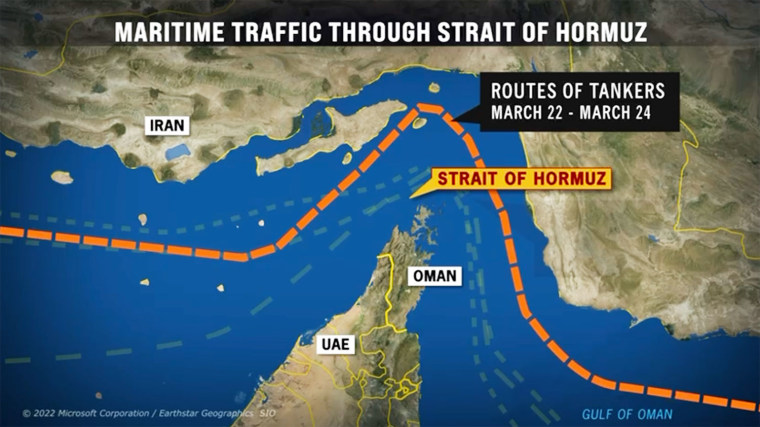
Iran Tightens Its Grip on Hormuz
The Strait of Hormuz has always been one of the global economy’s most fragile pressure points. When Iran signals it may raise the cost of passage, disrupt shipping, or turn geography into leverage, markets do not treat it like regional theater. They treat it like a live wire. For energy traders, insurers, shipping operators, and governments, even a small policy shift in this narrow waterway can ripple outward into fuel prices, inflation, and supply chain risk. That is why the latest Iran Strait of Hormuz toll debate matters far beyond the Gulf. It is not just about maritime traffic. It is about who gets to monetize strategic geography, how far Tehran is willing to test the system, and whether the global economy is prepared for another chokepoint shock.
- The Iran Strait of Hormuz toll issue is bigger than a shipping fee: it tests global energy security and maritime law.
- Oil and insurance markets react fast: even uncertainty can push up freight, risk premiums, and fuel costs.
- Tehran gains leverage without firing a shot: administrative pressure can be nearly as disruptive as military action.
- Importers in Asia and beyond are exposed: a sustained squeeze would hit refiners, consumers, and inflation.
Why the Iran Strait of Hormuz toll threat lands so hard
The Strait of Hormuz is not just another trade route. It is one of the most important maritime chokepoints on Earth, a narrow corridor through which a massive share of the world’s seaborne oil and liquefied natural gas moves. When that corridor looks unstable, the impact is immediate because energy markets price risk long before physical flows stop.
That is what makes the current Iran Strait of Hormuz toll conversation so potent. A formal toll, an unofficial fee structure, tighter inspections, selective enforcement, or heightened threats can all produce the same market result: higher uncertainty and higher cost. Tanker operators may need additional security planning. Marine insurers may raise war-risk premiums. Charter rates can climb. Refiners may begin looking for contingency barrels. Governments may dip into diplomatic channels to calm traders before panic becomes policy.
Geopolitical leverage does not always arrive as a blockade. Sometimes it arrives as friction: paperwork, delay, inspection, ambiguity, and the constant suggestion that worse could follow.
What Tehran may actually be trying to do
Iran understands something many policymakers rediscover in moments of crisis: geography can be monetized politically even when it cannot be fully controlled operationally. The country does not need to permanently close Hormuz to influence global calculations. It only needs to make the waterway feel less predictable.
There are several strategic motives that could be driving this posture.
Economic pressure relief
If sanctions, fiscal strain, or domestic pressures intensify, Tehran has an incentive to remind the world that isolating Iran carries costs. The message is straightforward: if Iran’s economy is constrained, then the global energy system should not expect perfect calm in one of its most critical arteries.
Diplomatic leverage
Raising the stakes around Hormuz can create urgency in international negotiations. It gives Iran a way to force major powers to pay attention, especially when broader regional conflicts or nuclear disputes stall.
Regional signaling
This is also about power projection. By emphasizing its role near Hormuz, Iran signals to Gulf rivals, Western navies, and energy consumers that it remains central to any security equation in the region.
Domestic politics
Foreign pressure often produces internal demands for visible strength. A tougher line on strategic waterways can be framed at home as sovereignty, resistance, and control.
What happens next if costs rise for tankers
The first-order effects are easy to understand. If shipping through Hormuz becomes more expensive or more dangerous, someone absorbs that cost. Usually, it starts with tanker owners and insurers, then moves to refiners, commodity traders, and ultimately consumers.
But the second-order effects are where the story gets more interesting.
Higher shipping risk can distort trade flows. Buyers may seek alternative suppliers, even if those barrels cost more. Strategic reserves can become more politically relevant. Freight markets can tighten. Central banks, already sensitive to energy-driven inflation, may need to re-evaluate assumptions. A local geopolitical threat can quickly become a macroeconomic variable.
The market does not need a full shutdown to panic. It only needs a reason to believe reliability is eroding.
Why energy markets care about friction, not just closure
Public debate often focuses on dramatic scenarios such as a complete blockage of the strait. That makes for compelling headlines, but the more realistic danger is usually incremental disruption. Maritime chokepoints rarely need a cinematic closure to create economic pain.
Consider the components of friction that matter:
- Longer transit times due to inspections or routing changes.
- Higher insurance premiums tied to military or political risk.
- Security costs for escorts, surveillance, or hardened operating procedures.
- Contract uncertainty when cargo timing becomes less reliable.
- Speculative price action as traders hedge against escalation.
That means a policy framed as a toll or transit cost could have consequences well beyond the fee itself. The direct revenue may be less important than the indirect signal: passage through one of the world’s most important energy corridors is no longer politically neutral.
The legal and strategic gray zone
Any attempt to impose new passage costs in an international chokepoint would raise immediate legal and diplomatic questions. Maritime transit rights are not merely regional preferences. They sit inside a larger system of global commerce, naval practice, and international law. Tehran may still calculate that ambiguity works in its favor.
That gray zone is useful. If a state can generate enough uncertainty about what is enforceable, what is symbolic, and what is selectively applied, it can gain leverage without crossing the clean red lines that trigger a unified global response.
For governments dependent on Gulf energy flows, that creates a frustrating problem. Overreact, and they elevate the threat. Underreact, and they normalize coercive behavior in a critical trade route.
Who is most exposed
The countries with the most direct exposure are major energy importers, especially those relying heavily on Gulf crude and gas. Large Asian economies are particularly vulnerable because a meaningful share of their supply chains and industrial demand depend on stable maritime energy imports.
But exposure does not stop there. Europe watches closely because energy shocks travel. The United States may be less directly reliant on Gulf imports than in past decades, yet it remains exposed through global price transmission, financial markets, alliance commitments, and shipping security responsibilities.
Industries likely to feel pressure first include:
- Airlines, through fuel price sensitivity.
- Petrochemicals, where feedstock costs matter.
- Shipping and logistics, via freight volatility.
- Manufacturing, especially energy-intensive production.
- Consumers, through gasoline, goods pricing, and inflation.
Why this matters for business leaders now
Executives do not need to be in the oil business to care about Hormuz. If your business relies on transportation, imported materials, stable energy pricing, or inflation-sensitive demand, this is not abstract geopolitics. It is operational risk.
The smartest companies treat chokepoint instability the way they treat cyber risk: not as a rare black swan, but as a recurring systems threat. That means scenario planning, supplier diversification, freight sensitivity modeling, and realistic communication with investors.
Pro tip for operators
Do not model only the headline scenario of a closure. Model the slower, more probable scenario where costs rise through insurance, delay, and compliance friction. In many cases, that is the disruption that actually hits quarterly results.
Risk teams should be tracking variables such as war-risk premium, charter rate volatility, refinery margin shifts, and inventory cover days. Even a simple internal dashboard can help leadership understand how a regional maritime threat becomes a pricing problem, a procurement problem, and eventually a consumer problem.
The bigger geopolitical message
This moment fits a broader pattern. Strategic chokepoints are back at the center of global power politics. From semiconductors to rare earths to shipping lanes, the modern economy is discovering that efficiency created dependence, and dependence creates leverage.
Iran’s posture around Hormuz is part of that larger story. It highlights how middle powers and sanctioned states can still impose costs on the global system by targeting concentration points. The lesson is uncomfortable but clear: globalization did not erase geography. It made geography more valuable.
When supply chains are optimized to the edge, every chokepoint becomes a bargaining chip.
Can the market absorb another shock
That depends on timing. If global demand is soft, inventories are healthy, and alternative supply is available, markets may treat the threat as manageable noise. But if spare capacity is tight, shipping is already strained, or inflation is politically sensitive, even modest disruption can feel much larger.
Psychology matters here. Energy markets are part math, part narrative. The narrative around Hormuz has always been powerful because traders know how little room for error exists in a chokepoint that important. Once the story shifts from stability to vulnerability, pricing can move fast.
What to watch next
The most important signals are not always the loudest official statements. Watch for practical indicators:
- Changes in marine insurance pricing.
- Shipping company route advisories.
- Naval posture adjustments from regional or Western forces.
- Oil futures volatility and widening risk premiums.
- Refiner sourcing changes that suggest buyers are hedging logistics risk.
If those indicators begin moving together, the market will read it as more than rhetoric.
The bottom line on the Iran Strait of Hormuz toll debate
The most important thing about the Iran Strait of Hormuz toll issue is that it reveals how vulnerable the global economy remains to narrow geographic bottlenecks. A toll is never just a toll in a place like Hormuz. It is a test of legal norms, commercial resilience, and geopolitical nerve.
Iran may be seeking revenue, leverage, deterrence, or all three at once. The rest of the world is left confronting a familiar reality: the energy system still depends on stable passage through places where stability can never be taken for granted. Businesses should not dismiss this as another distant flare-up. Policymakers should not assume market calm means strategic safety. And investors should remember that some of the biggest economic risks begin in very narrow waters.
Hormuz remains small on a map and enormous in consequence.
The information provided in this article is for general informational purposes only. While we strive for accuracy, we make no guarantees about the completeness or reliability of the content. Always verify important information through official or multiple sources before making decisions.


