Iran War Costs Hit the Pentagon
Iran War Costs Hit the Pentagon
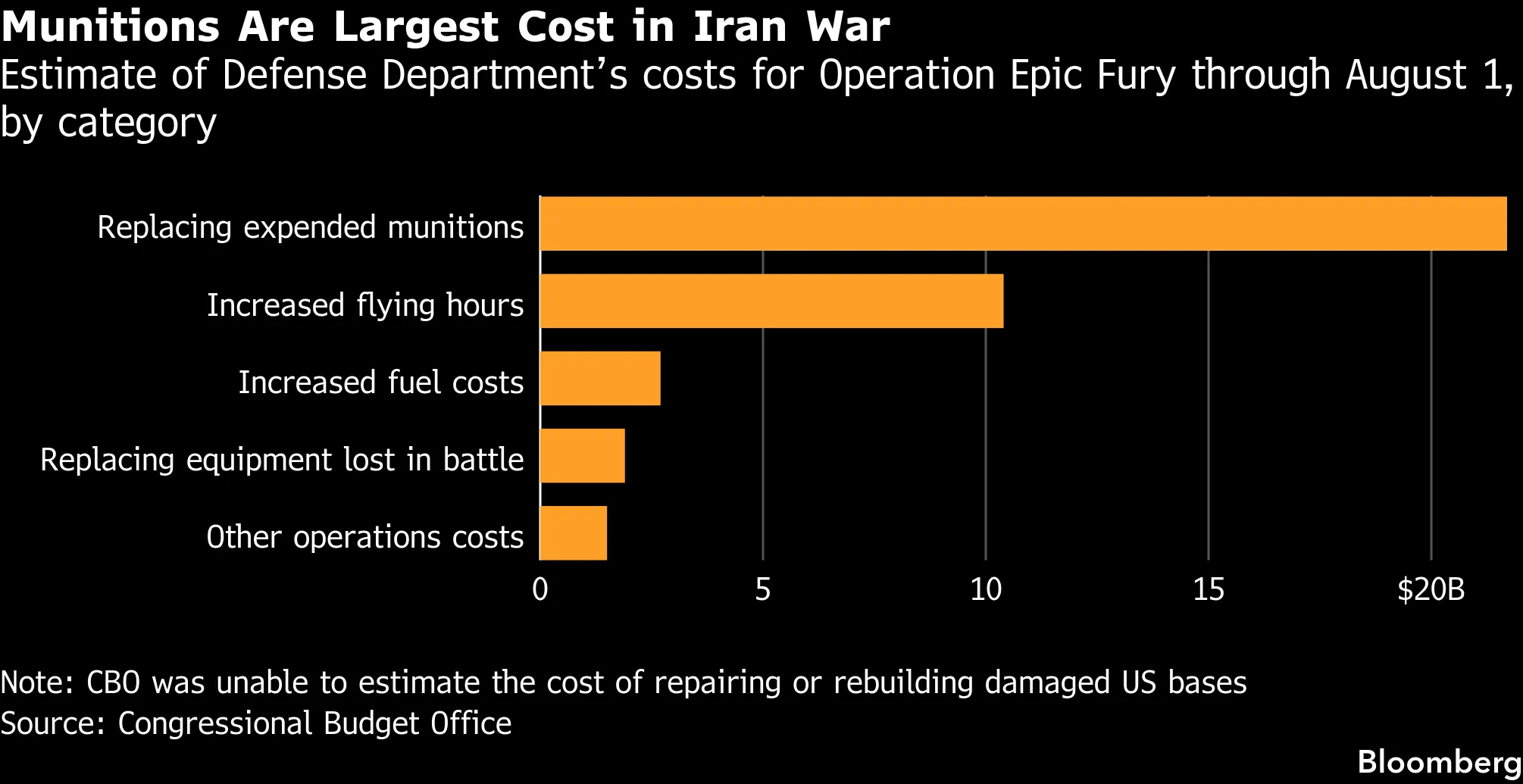
The Iran war cost question is no longer an abstract Washington spreadsheet exercise. It is the pressure point where military planning, congressional politics, oil-market anxiety, and public patience collide. Any serious U.S. conflict with Iran would not resemble a quick punitive strike sold in cable-news segments. It would be an expensive, sprawling test of American power across the Gulf, the Red Sea, Iraq, Syria, cyberspace, and domestic budgets already strained by Ukraine, Taiwan, shipbuilding delays, and recruiting problems. The uncomfortable reality is simple: the Pentagon can plan for almost anything, but it cannot make a regional war cheap. The debate now is not only whether the United States can win. It is whether the bill would reshape every defense priority that follows.
- The Iran war cost is bigger than bombs: logistics, missile defense, naval deployments, cyber operations, and troop protection would drive spending.
- The Pentagon faces a readiness tradeoff: a Gulf conflict could drain weapons and maintenance capacity needed for Europe and the Indo-Pacific.
- Congress would become the financial battlefield: emergency funding, oversight, and partisan blame would shape the war as much as strategy.
- Oil and shipping disruptions could export the cost globally: consumers and businesses would feel the shock beyond the defense budget.
Why the Iran war cost debate is different now
For decades, Washington has discussed Iran through the language of deterrence: sanctions, aircraft carriers, proxies, nuclear thresholds, and red lines. But cost is the clarifying variable. It strips away slogans and forces policymakers to answer practical questions. How many interceptors would be required if Iran and aligned groups launched repeated drone and missile salvos? How long could the Navy keep high-demand ships in theater? How quickly could the defense industrial base replace precision weapons? And what happens when the first emergency supplemental request lands on Capitol Hill?
The Pentagon’s challenge is that Iran is not a conventional target set alone. It is a network problem. Tehran has missiles, drones, naval harassment tools, cyber capabilities, and relationships with armed groups across the region. A conflict could require CENTCOM to defend bases, protect shipping lanes, sustain air operations, support partners, and manage escalation at the same time. Each mission carries its own price tag. Together, they create compounding cost.
Key insight: A war with Iran would be measured less by the opening strike than by the second, third, and tenth week of protecting forces and keeping the region from catching fire.
The Iran war cost is also a readiness problem
The headline number matters, but the hidden cost may be readiness. The U.S. military is already balancing global commitments. The Navy is managing shipyard delays and long deployments. The Air Force is flying aging fleets while trying to modernize. The Army is adapting to lessons from drone-heavy warfare. The defense industrial base is under pressure to produce 155mm artillery, air defense interceptors, anti-ship missiles, and precision-guided weapons at higher rates.
A major Gulf conflict would compete directly with these priorities. Missile defense systems such as Patriot and THAAD are not infinite. Neither are trained crews, spare parts, aerial refueling capacity, or intelligence assets. The Pentagon can surge, but surge is not magic. It is borrowing readiness from tomorrow to solve a crisis today.
This is why cost estimates for a potential war can be politically explosive. They reveal the opportunity cost of strategy. Every dollar used to replenish interceptors after a Middle East escalation is a dollar not available for shipbuilding, base hardening in the Pacific, military housing, or next-generation systems. The bill is financial, but it is also strategic.
The logistics bill nobody wants to campaign on
Wars are often sold through footage of aircraft, ships, and precision strikes. The actual expense lives in logistics. Fuel, sealift, airlift, maintenance, medical support, contractor labor, spare parts, temporary basing, and force protection can turn a limited mission into a long-running account.
In a conflict with Iran, the U.S. would need to secure exposed bases, move equipment across vast distances, and keep ships supplied in contested waters. It would also need to defend against drones and missiles that are cheaper to launch than many U.S. interceptors are to fire. That asymmetry is not just tactical. It is economic. If the United States spends millions to defeat systems that cost far less, Iran can pressure both the battlefield and the budget.
Congress will fight the war over funding
No Pentagon cost debate stays inside the Pentagon. If conflict expanded, the White House would almost certainly face pressure to seek emergency appropriations. That would trigger a familiar but consequential fight: how much money, for how long, with what oversight, and attached to which unrelated political priorities.
Lawmakers who support a hard line on Iran may balk at open-ended spending. Fiscal conservatives may demand offsets. Progressives may challenge the legal basis for military action. Defense hawks may use the crisis to push broader procurement increases. The result would be a funding debate that doubles as a referendum on presidential authority, Middle East policy, and trust in military planning.
Editorial view: If Washington cannot explain the cost before the conflict, it should not pretend the public will accept the invoice afterward.
That is the lesson from recent U.S. wars. Initial estimates often understate long-term obligations. Veterans’ care, equipment replacement, debt servicing, and regional stabilization costs can outlast the combat phase by years. Even a conflict framed as limited could produce enduring expenses if U.S. forces remain on heightened alert or if regional partners require expanded security support.
Emergency funding changes incentives
One reason war costs are difficult to control is that emergency funding can sit outside normal budget discipline. The old OCO model, formally known as Overseas Contingency Operations, became controversial because it allowed spending beyond standard caps. Even without that exact structure, a crisis can create similar incentives: move fast, fund broadly, and sort out oversight later.
That may be necessary in a genuine emergency. But it also risks turning a limited military objective into a rolling budget vehicle. For taxpayers, the danger is not only the first appropriation. It is the second and third, each justified by the need to protect the investments already made.
Oil markets would make the bill global
The Iran war cost would not stop at the Pentagon ledger. The Gulf is central to global energy flows, and the Strait of Hormuz remains one of the most sensitive chokepoints in the world. Even partial disruption, or the credible fear of disruption, could push up oil prices, raise shipping insurance costs, and pressure inflation.
That matters politically. A war sold as a national security necessity can quickly become a kitchen-table issue if gasoline prices climb or supply chains tighten. Businesses would face higher transportation costs. Airlines would feel fuel pressure. Consumers would see ripple effects in goods and services. The economic blast radius could become one of the most immediate ways Americans experience a conflict they may never see directly.
The administration in power would then face a dual communications problem: justify military action abroad while explaining higher costs at home. That is a hard message in any election cycle and an even harder one when public trust in institutions is fragile.
Cyber and drone warfare complicate the estimate
Modern conflict does not fit neatly into old budget categories. Iran and aligned actors have spent years studying asymmetric methods: drones, missiles, cyber operations, maritime harassment, and deniable proxy attacks. These tools are designed to stretch an adversary across domains and make escalation management expensive.
A serious conflict could require expanded cyber defense for military networks, government systems, energy infrastructure, financial institutions, and transportation nodes. It could also demand rapid deployment of counter-drone technologies around bases and embassies. These are not optional extras. They are core costs of operating against an adversary that can impose damage without matching U.S. conventional power.
Pro tip for reading any war cost estimate
Do not focus only on the top-line number. Ask what is included. Does the estimate count weapons replacement? Does it include increased fuel and maintenance? Does it include long-term veterans’ care? Does it price in missile defense for regional partners? Does it assume a one-week strike package or months of heightened operations? The assumptions matter more than the headline.
What the Pentagon should say clearly
The most responsible approach is not to publish every operational detail. Some information should remain classified. But the public deserves a clearer framework for understanding the scale of potential commitments. The Pentagon and civilian leaders should explain the categories of cost, the readiness tradeoffs, and the conditions that could expand or limit the mission.
That transparency would serve deterrence as well as democracy. Allies need to know the United States can sustain commitments. Adversaries need to know the U.S. is not bluffing. Citizens need to know leaders are not hiding a massive financial obligation behind vague language about limited action.
Bottom line: The price of war is part of the strategy. Treating it as an accounting footnote is how governments stumble into commitments they cannot easily unwind.
The strategic takeaway
The Iran war cost debate exposes a larger truth about American power in 2026: capability is not the same as capacity. The United States can project enormous military force, but every deployment now competes with other urgent theaters, industrial bottlenecks, domestic politics, and public skepticism. A conflict with Iran would test not only weapons and commanders, but the entire machinery that sustains U.S. influence.
That does not mean cost alone should dictate policy. Sometimes deterrence fails. Sometimes force becomes necessary. But cost must be confronted honestly before decisions are made, not retrofitted after the bills arrive. If Washington is moving closer to a confrontation with Iran, the first serious debate should not be about slogans. It should be about duration, objectives, escalation, and the real price of getting in and getting out.
The information provided in this article is for general informational purposes only. While we strive for accuracy, we make no guarantees about the completeness or reliability of the content. Always verify important information through official or multiple sources before making decisions.


