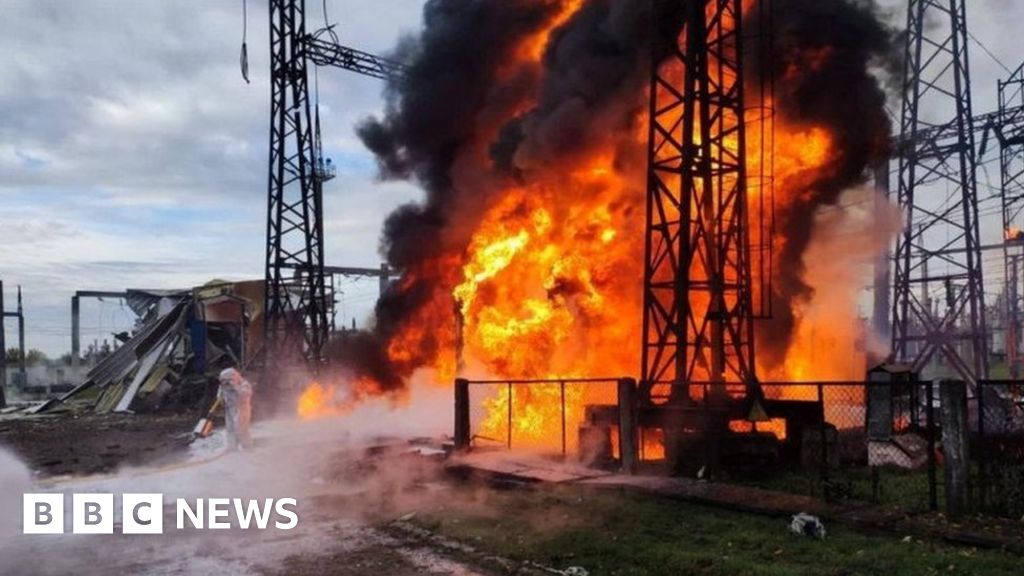
Israel Strikes Iran and Redraws the Risk Map

Israel Strikes Iran and Redraws the Risk Map
The phrase Israel strikes Iran no longer reads like a hypothetical buried in security briefings. It reads like the start of a new strategic era – one where deterrence is tested in public, escalation is no longer abstract, and every capital from Washington to Riyadh has to recalculate the price of misreading the next move. For markets, governments, and civilians, the pain point is brutally simple: when two heavily armed regional powers move from proxy conflict toward direct confrontation, the margin for error collapses. What happens next will not be defined only by missiles or air defenses, but by whether either side believes it can restore credibility without triggering a broader war. That is why this moment matters far beyond the immediate headlines. It is not just about one strike. It is about what kind of Middle East emerges after it.
- Israel strikes Iran marks a significant shift from shadow conflict toward direct military signaling.
- The immediate question is not only military damage, but whether deterrence has been restored or weakened.
- Regional powers and global markets now face a higher probability of escalation, retaliation, and miscalculation.
- The political fallout may prove as important as the battlefield outcome for both governments.
- Energy, diplomacy, and security alliances could all be reshaped by what follows next.
Why Israel strikes Iran is more than a battlefield story
This is the kind of event that instantly breaks out of the defense news silo. Yes, the military dimensions matter: targeting decisions, air defense performance, intelligence penetration, and retaliation options. But the bigger story is strategic. Direct action between Israel and Iran changes the assumptions that have governed regional conflict for years.
For a long stretch, the contest was largely fought in the shadows: cyber operations, covert sabotage, maritime disruption, assassinations, and proxy warfare stretching across Lebanon, Syria, Iraq, Yemen, and Gaza. That model allowed all sides to apply pressure while preserving a narrow zone of deniability. Once that line blurs, crisis management gets much harder.
When direct strikes replace indirect pressure, leaders lose some of the ambiguity that previously gave them room to step back.
That is the core risk. A covert contest can be calibrated. A visible attack can become a test of national credibility, and credibility politics is notoriously dangerous.
The strategic logic behind the strike
Any serious reading of this moment has to start with incentives. Israel’s leadership has long framed Iran as the central long-term security challenge in the region, especially around missile capacity, regional armed networks, and nuclear-related concerns. From that perspective, a strike is not merely tactical. It is meant to communicate that certain thresholds will not be tolerated and that distance is no guarantee of protection.
At the same time, strikes of this kind are never just about the target. They are also about audiences. The message lands in multiple places at once:
- Inside Iran, where leadership must decide whether to absorb the blow or answer it.
- Inside Israel, where public confidence in security doctrine matters politically and militarily.
- In Washington and other allied capitals, where the question is whether deterrence is stabilizing or slipping.
- Across the region, where states are gauging whether the conflict is containable.
This is why a single action can carry several overlapping goals: degrade capability, signal resolve, reinforce deterrence, and shape diplomacy before diplomats even enter the room.
The deterrence equation is fragile
Deterrence sounds clean in policy language, but in practice it is messy and psychological. One side tries to prove that action will be punished. The other side tries to show that punishment does not change its behavior. Both can claim strength while sliding into a more dangerous cycle.
If Israel believes the strike restores deterrence, it may consider the operation a success even before the full damage picture is clear. If Iran believes failing to respond invites further attacks, retaliation becomes more likely even if it carries obvious risks. That is how deterrence can become a trap instead of a stabilizer.
What Iran is likely weighing now
Iran’s response calculus is not binary. It is not simply a choice between war and restraint. More likely, Tehran is evaluating a menu of responses with different costs, visibility levels, and timelines. That menu could include direct military retaliation, calibrated proxy responses, cyber operations, diplomatic pressure, or a delayed answer designed to preserve surprise.
The decision will turn on several factors:
Domestic political optics
No government facing a public attack wants to appear passive. The leadership must project control and resilience, especially when national sovereignty is at issue.
Military practicality
Retaliation has to be survivable. A response that invites overwhelming counterstrikes may satisfy political emotion but fail strategic logic.
Regional coalition risk
Tehran will also assess whether a broad response could tighten security cooperation among its adversaries, including states that would prefer not to be dragged into open conflict.
The most dangerous retaliation is often not the loudest one. It is the one calibrated to impose pain without immediately crossing the threshold into full-scale war.
That means the coming phase may be characterized less by instant clarity and more by uncertainty: threats, alerts, limited actions, and competing claims of success.
Why global markets and governments are paying attention
Whenever Israel strikes Iran, this is not a localized security story. It triggers wider concern because the Middle East sits at the crossroads of energy flows, shipping routes, alliance systems, and military deployments. Even if the direct exchange remains limited, the risk premium rises fast.
Investors and policymakers are watching three major pressure points.
Energy volatility
Oil markets react not only to actual supply disruption but to anticipated risk. If traders believe infrastructure, transit lanes, or production could be threatened, prices can spike before any physical interruption occurs. That affects inflation expectations and political mood far beyond the region.
Maritime security
Shipping concerns can intensify quickly when regional tensions rise. Even limited threats near key waterways can ripple through insurance costs, shipping schedules, and global supply chains.
Alliance stress testing
The United States and regional partners are once again forced into a difficult balancing act: support deterrence, prevent escalation, reassure allies, and avoid being pulled into an open-ended confrontation.
This is why even governments with no direct role in the strike must respond diplomatically. Silence can be read as indifference. Overreaction can harden positions. The middle ground is narrow.
The political stakes for Israel
Military operations of this magnitude are never divorced from politics. In Israel, security action often carries immediate domestic implications. A government under pressure can gain short-term political space from an operation that appears decisive, but that benefit depends on what follows.
If the strike is viewed as disciplined, effective, and strategically justified, leadership may claim that it reestablished initiative. But if the action triggers a wider exchange with prolonged civilian and economic costs, political support can erode quickly.
That is especially true when citizens are already living under high threat awareness. Public resilience has limits. Strategic boldness is often applauded at the outset. It is judged much more harshly if the aftermath looks improvised.
The political stakes for Iran
Iran faces a parallel but distinct challenge. Its leaders must preserve the image of strength while managing the real constraints of military exposure, economic pressure, and diplomatic isolation. That balancing act is familiar, but direct attacks make it harder.
If Tehran responds too weakly, critics can frame that as vulnerability. If it responds too forcefully, it could trigger a cycle that imposes heavier military and economic costs. This is the paradox at the center of the crisis: both sides may believe they cannot afford to look weak, even while both understand the price of uncontrolled escalation.
What to watch next
When a crisis moves this fast, observers often focus only on the next explosion. That is understandable, but it can miss the more revealing indicators. The smarter approach is to watch for signals across military, diplomatic, and economic channels.
- Official language: Are leaders using language of closure, warning, or preparation?
- Force posture: Movements involving air defenses, naval deployments, and reserve mobilization can reveal whether governments expect a prolonged phase.
- Proxy activity: Escalation may emerge through aligned groups before it appears in another direct exchange.
- Diplomatic traffic: Emergency calls, public condemnations, and backchannel messaging often indicate how hard outside powers are pushing for containment.
- Market behavior: Oil, shipping, and regional equities can signal whether investors see a short shock or a sustained crisis.
Pro tip for readers tracking the story
Do not overread the first claim of victory from either side. Early narratives in fast-moving conflicts are usually optimized for public positioning, not full factual clarity. The more useful question is whether actions in the next 24 to 72 hours suggest de-escalation or ladder-climbing.
Why this matters beyond the Middle East
There is a temptation in moments like this to treat the crisis as regionally contained until proven otherwise. That would be a mistake. A direct Israel-Iran confrontation affects global security in at least three ways.
First, it tests the credibility of modern deterrence under intense public scrutiny. Second, it pressures major powers to define how much support they are willing to provide and where they draw limits. Third, it reminds every government that unresolved regional rivalries can move from shadow conflict to overt action far faster than diplomatic systems can adapt.
The real danger is not only escalation by intent. It is escalation by accumulated signals, domestic pressure, and shrinking room to back down.
That broader lesson matters in a period when multiple geopolitical flashpoints are already active. Every new crisis teaches states something about red lines, alliance behavior, and acceptable risk. Adversaries are watching. Allies are watching. Markets are watching too.
The bottom line on Israel strikes Iran
Israel strikes Iran is not a headline that fades cleanly after one news cycle. It is a stress test for deterrence, diplomacy, and regional order. The immediate military facts are important, but the larger significance lies in what both sides now believe they must do next to preserve credibility.
The optimistic read is that a sharp demonstration of force can reestablish limits and open space for de-escalation. The darker read is that direct confrontation has created a new normal where each side feels compelled to answer visibility with visibility. History suggests that once the old buffers weaken, restoring them is far harder than leaders expect.
That is why the coming days matter so much. Not because one strike alone determines the future, but because the responses to it may define the region’s next chapter.
The information provided in this article is for general informational purposes only. While we strive for accuracy, we make no guarantees about the completeness or reliability of the content. Always verify important information through official or multiple sources before making decisions.