Japan Rate Hike Shakes Markets
Japan Rate Hike Shakes Markets
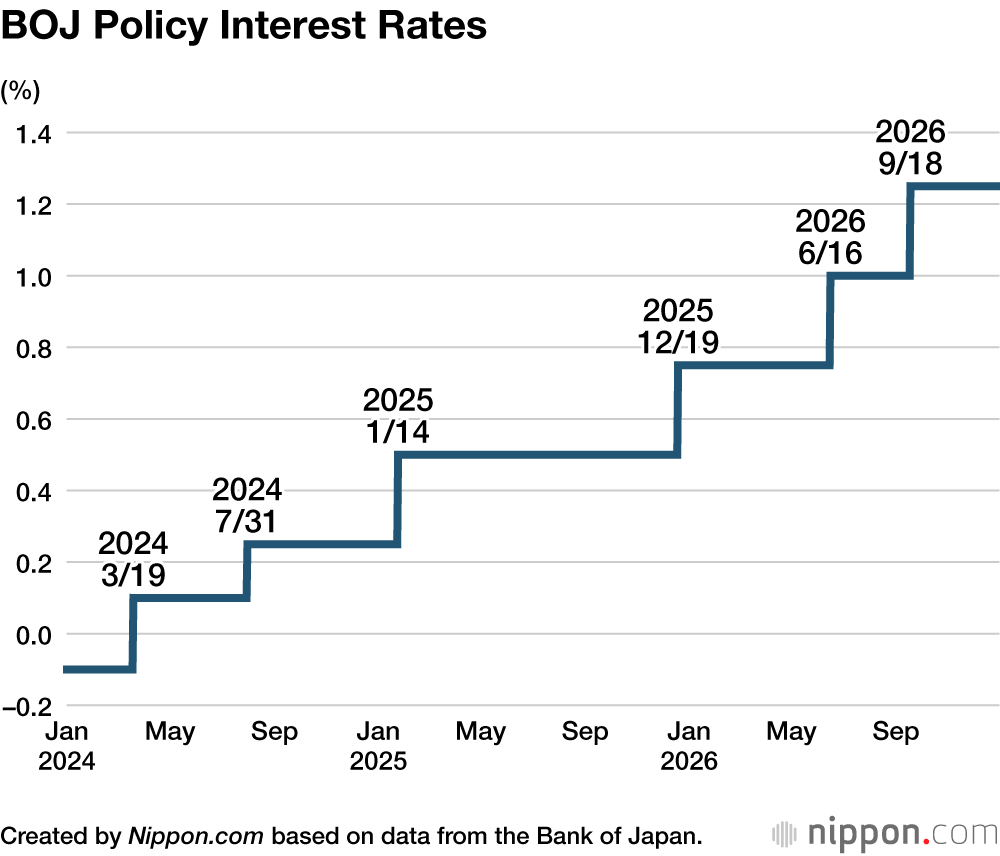
Japan interest rates are no longer the sleepy footnote of global finance. The country that spent decades fighting deflation has pushed borrowing costs to their highest level in 31 years, sending a blunt message to households, companies and currency traders: the era of ultra-cheap Japanese money is ending. For anyone with exposure to the yen, Asian equities, global bonds, mortgages or export-heavy supply chains, this is not a local policy tweak. It is a reset. Rising prices have forced the Bank of Japan to act more like its peers, but the hard part starts now: cooling inflation without crushing a fragile recovery.
- Japan has raised rates to a 31-year high as persistent price growth challenges its old low-rate model.
- The yen, government bonds and bank stocks are likely to remain volatile as markets reprice the path ahead.
- Households face a new trade-off: better savings returns, but potentially higher loan and mortgage costs.
- Global investors should watch Japan closely because its policy shift can ripple through bond markets worldwide.
Why Japan interest rates are breaking from the past
For decades, Japan was the exception. While other central banks raised and cut rates through conventional cycles, the Bank of Japan lived in a world of zero interest rate policy, negative interest rates and huge asset purchases. The mission was simple but brutal: defeat deflation, weaken the yen enough to support exporters and convince consumers that waiting to spend was no longer rational.
That strategy helped stabilize parts of the economy, but it also distorted incentives. Cheap credit protected weak companies, punished savers and made Japan a funding source for global investors hunting yield elsewhere. Now, rising prices have changed the calculation. Food, energy and imported goods costs have pressed consumers, while companies have started passing expenses through more aggressively. Wage growth, long the missing piece in Japan’s inflation puzzle, has also become more visible.
The Bank of Japan is not just lifting a policy rate. It is testing whether Japan can finally operate without the emergency scaffolding built after the asset bubble burst.
The 31-year high matters because it signals institutional confidence, but also discomfort. If inflation were temporary, policymakers could wait. If demand were collapsing, they would not risk tightening. This move suggests the central bank sees inflation as persistent enough to require a firmer response, even if the economy is not roaring.
The inflation problem Japan can no longer ignore
Japan’s inflation story is different from the post-pandemic surge in the United States or Europe. It is not only about overheated domestic demand. A weaker yen has made imports more expensive, especially energy and food. Global supply shocks amplified those costs, and companies that once absorbed price increases have become more willing to raise final prices.
That is a psychological shift. For years, Japanese consumers resisted price rises, and companies feared losing market share if they moved too aggressively. Once that barrier weakens, inflation can become stickier. The Bank of Japan’s challenge is to prevent a healthy escape from deflation from turning into a squeeze on living standards.
Pro Tip: Watch wage settlements and service prices more closely than headline inflation. Energy prices can swing quickly, but rising wages and services inflation are stronger signs that price pressure is embedding itself in the economy.
What higher Japan interest rates mean for the yen
The yen sits at the center of this story. When Japan kept rates near zero while the US Federal Reserve and European Central Bank tightened, the interest-rate gap made the yen less attractive. Traders borrowed cheaply in yen and invested in higher-yielding assets elsewhere, a strategy often described as the carry trade.
Higher Japan interest rates can disrupt that trade. If the yield advantage of foreign assets narrows, investors may unwind positions, buy yen and sell riskier holdings. That can strengthen the currency, but the move is rarely smooth. Currency markets tend to price expectations before policy fully catches up, so volatility can spike around central bank meetings, inflation data and wage reports.
Exporters get a more complicated future
A stronger yen can hurt Japan’s exporters by making cars, electronics and machinery more expensive abroad when profits are converted back into yen. But the picture is not one-dimensional. A firmer currency also reduces import costs, which can help companies that rely on foreign energy, components or raw materials.
The real question is speed. A gradual yen recovery gives companies time to adjust pricing and hedging strategies. A sharp reversal can hit earnings forecasts, unsettle equity markets and force corporate treasurers to rethink foreign exchange hedging assumptions.
For global companies buying from Japan, a stronger yen may mean higher procurement costs. For Japanese firms expanding overseas, it could make acquisitions more affordable. The rate hike therefore has boardroom consequences well beyond Tokyo.
Markets are repricing the end of cheap money
The most immediate market reaction to a rate hike is usually visible in government bond yields. Japan’s bond market is especially important because it has been heavily shaped by Bank of Japan intervention. Years of yield curve control and large-scale bond purchases kept borrowing costs unusually low, even as debt levels remained high.
As rates rise, investors demand higher compensation to hold Japanese government debt. That puts pressure on bond prices and raises questions about fiscal sustainability. Japan can manage high debt partly because much of it is domestically held, but higher servicing costs still matter over time.
Banks may win, but borrowers feel the pinch
Japanese banks have spent years struggling with thin lending margins. Higher rates can improve profitability because banks can earn more on loans and securities. That is why bank stocks often respond positively to a credible tightening cycle.
Borrowers face the opposite dynamic. Companies accustomed to cheap refinancing will need to justify investments under a higher cost of capital. Highly leveraged firms may find that old business models look less attractive when debt is no longer almost free.
- Large banks may benefit from wider lending margins and higher returns on assets.
- Small businesses could face tougher refinancing conditions if banks become more selective.
- Real estate developers may see project economics shift as financing costs rise.
- Insurers and pension funds may welcome better long-term yields after years of pressure.
This is the awkward beauty of normalization: it rewards discipline. Capital becomes more expensive, but also more rationally priced.
The household impact is politically sensitive
For households, higher rates bring mixed news. Savers may finally see better returns on deposits, a meaningful shift in a country where cash and bank savings play a major role in personal finance. Retirees and conservative investors could benefit if banks pass on higher rates.
But the pain shows up in borrowing. Variable-rate mortgages, consumer loans and small business credit can become more expensive. Even if the pass-through is gradual, the direction has changed. Younger households, already dealing with higher food and energy bills, may see less room for discretionary spending.
The social bargain of low inflation and low returns is breaking. Japan now has to manage the politics of higher prices and higher borrowing costs at the same time.
That is why the Bank of Japan must move carefully. Tighten too slowly, and inflation erodes purchasing power. Tighten too quickly, and household confidence weakens. The policy path is narrow, and every data release will matter.
Why wages are the swing factor
The best-case scenario is a cycle where wages rise enough to support consumption while inflation gradually cools. That would allow Japan to normalize rates without tipping the economy into a severe downturn. The worst-case scenario is stagflation-lite: prices stay elevated, wages lag and consumers pull back.
Japan’s annual wage negotiations have become a macroeconomic event because they reveal whether inflation is being matched by income growth. If pay increases broaden beyond large companies into smaller firms, the economy has a stronger foundation. If gains remain concentrated, the recovery looks more fragile.
Japan interest rates now matter to the whole world
It is tempting to treat this as a domestic Japanese story. That would be a mistake. Japan is a major creditor nation, a huge holder of foreign bonds and a key anchor in global liquidity. When Japanese yields rise, domestic investors have more reason to keep money at home rather than buying overseas assets.
That can affect demand for US Treasuries, European bonds and emerging-market debt. It can also change risk appetite across equities and currencies. The global financial system has spent years assuming Japan would remain a low-rate funding base. A durable shift challenges that assumption.
For investors, the key is not one rate hike. It is the trajectory. Markets can absorb higher rates if they are predictable and backed by improving fundamentals. What they dislike is uncertainty: mixed inflation signals, sudden currency moves or a central bank forced into faster tightening than expected.
What to watch next
- Inflation data: Look beyond headline numbers and focus on core measures and services prices.
- Wage growth: Broad-based pay increases would support a more durable normalization cycle.
- Yen movement: Rapid appreciation could pressure exporters, while continued weakness could keep import inflation alive.
- Bond yields: Rising yields will reveal how much tightening markets believe Japan can handle.
- Bank of Japan guidance: Any signal on the pace of future hikes will shape global market expectations.
The bottom line
Japan’s move to raise rates to a 31-year high is not just a reaction to rising prices. It is a historic attempt to leave behind an economic regime built around emergency settings, suppressed yields and chronic caution. That makes it exciting, but also risky.
The optimistic view is that Japan is finally achieving what policymakers wanted for decades: inflation, wage growth and a more normal financial system. The skeptical view is that the country is being forced to tighten because imported inflation and currency weakness left it with fewer good options. Both can be true at once.
What comes next will depend on whether price growth cools without killing demand, whether wages keep rising and whether markets believe the Bank of Japan can steer a slow normalization rather than stumble into a shock. For now, one thing is clear: the age of ignoring Japan interest rates is over.
The information provided in this article is for general informational purposes only. While we strive for accuracy, we make no guarantees about the completeness or reliability of the content. Always verify important information through official or multiple sources before making decisions.