Juul Wins New Lease on Life
Juul Is Back, But the Hard Part Starts Now
Juul’s return to U.S. shelves is not just another product relaunch. It is a stress test for an industry that has spent years getting dragged through courtrooms, regulators, and a public-health backlash that changed vaping forever. The company is betting that updated hardware, tighter age-gating, and a more cautious retail posture can do what branding alone could not: prove it can operate inside the rules without recreating the same risks that made it a household lightning rod. For Juul, this is a high-stakes reset. For the broader vaping market, it is a signal that survival now depends less on growth at any cost and more on compliance, verification, and credibility. The question is no longer whether vaping can scale. It is whether a company like Juul can rebuild enough trust to sell legally, responsibly, and profitably.
- Juul’s comeback hinges on updated hardware and stronger
age-gating. - The company is trying to shift from controversy to compliance, but skepticism remains high.
- Regulatory scrutiny will likely shape how aggressively Juul can market and expand.
- The move matters because it could influence the next phase of legal vape product design.
What Juul Is Trying to Fix
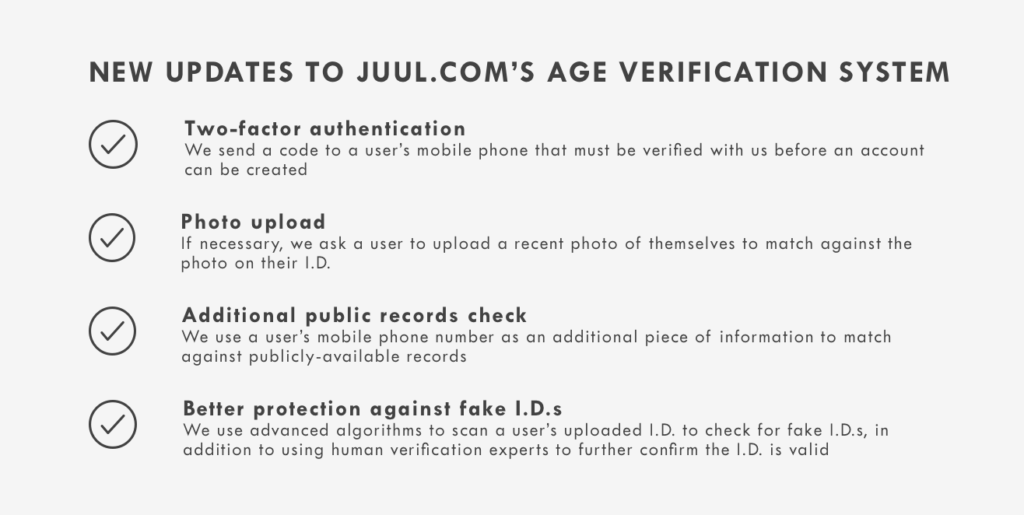
The updated device is more than a cosmetic refresh. Juul is trying to address the central critique that has shadowed the category for years: easy access by underage users. Age-gating is the headline feature here, and that matters because enforcement has become the true battleground in nicotine product policy. A product can be technically legal and still fail the public trust test if it is perceived as too easy to obtain or too easy to misuse. Juul appears to be leaning into a simpler argument: better verification, tighter controls, and a product that is harder to treat like a mass-market impulse purchase.
That is a meaningful shift. The company once symbolized the speed and recklessness of the vaping boom. Now it is trying to present itself as a controlled-access nicotine platform. The business logic is obvious. If regulators are going to allow these products to stay available, vendors will need to demonstrate that they can actually limit access rather than merely claim they can.
Juul’s relaunch is less about nostalgia and more about proving that a nicotine brand can survive under modern compliance standards.
Why age-gating Has Become the Core Product Feature
For years, product innovation in vaping focused on flavor, form factor, and convenience. That era is over. The market has shifted toward verification, tracking, and retail restrictions because public policy has shifted with it. In that environment, age-gating is not a side feature. It is the product. If a device cannot support credible purchase controls, it becomes a liability before it becomes a revenue stream.
That also explains why Juul’s updated device matters beyond one company’s balance sheet. The company is effectively trying to prove a design principle: that hardware can be built around compliance instead of around frictionless adoption. If that works, other manufacturers may follow the same path, making age verification part of the device ecosystem rather than a simple checkout step.
The compliance logic
Modern nicotine regulation increasingly expects manufacturers to help enforce the rules, not just obey them on paper. That means stronger platform controls, better retailer oversight, and product features that reduce the odds of misuse. A device that is easier to audit, easier to restrict, and easier to tie to a verified user is far more defensible in today’s environment than one optimized only for convenience.
The business logic
There is also a blunt commercial reality here: a category under constant legal threat cannot attract reliable partners without visible safeguards. Retailers, distributors, and investors all want the same thing – fewer headaches. If Juul can show that its updated device lowers risk at the point of sale, it has a better shot at regaining distribution and staying on shelves.
Juul’s Comeback in a Market That Has Changed
This is not the same vaping market Juul once dominated. The category has fragmented, competition has intensified, and public tolerance for nicotine innovation has dropped sharply. Consumers who remain in the category are more aware of regulatory risk, while retailers are more cautious about what they stock. Meanwhile, public health officials remain deeply skeptical that any comeback story can avoid the mistakes of the past.
That makes Juul’s current strategy both narrower and smarter. It is no longer trying to be the cultural shorthand for vaping. It is trying to become a regulated, adult-only nicotine brand with a narrower mission and a more defensible product line. That’s a tougher sell in some ways, but it’s also the only realistic one.
The company is also navigating a credibility gap that cannot be solved by software updates or design tweaks alone. Trust in the nicotine space is cumulative, and Juul has spent years burning through it. That means every feature announcement will be judged not just on technical merit, but on whether it genuinely reduces harm, improves access control, and avoids repeating old mistakes.
Why This Matters Beyond Juul
Juul’s relaunch could become a reference point for the next generation of nicotine and age-restricted products. If regulators see the updated device as a credible step forward, it may encourage more precise product requirements across the category. If they see it as window dressing, the reaction could be the opposite: more restrictions, more skepticism, and less room for innovation.
The broader lesson is simple. Consumer tech companies operating in regulated spaces are running out of excuses. It is no longer enough to build a product and bolt compliance on later. The most durable products are being designed with restrictions, verification, and accountability baked in from the start.
In regulated consumer tech, the winners will not be the companies that move fastest. They will be the ones that can prove control.
The Real Test Is Enforcement, Not Announcement
Juul can announce updated features all day. The harder part is making sure those features actually work in the messy real world of retail checkout flows, e-commerce friction, and enforcement gaps. Age verification is only as strong as its weakest link. If the process is easy to bypass, the technology becomes theater.
That is where the scrutiny will focus. Can the system stand up in stores? Can it be audited? Does it meaningfully reduce the chance of improper access? Those are the questions that matter more than marketing language. The updated device will be judged on outcomes, not intentions.
What to watch next
- Whether retailers adopt the updated
Juuldevice broadly or remain cautious. - How regulators respond to the company’s new verification posture.
- Whether other vaping brands copy the same compliance-first approach.
- If enforcement data shows real reductions in improper access.
The Strategic Signal for Tech and Health Policy
Juul’s move sits at the intersection of consumer hardware, health policy, and platform governance. That is why it matters so much. It shows how products in sensitive categories are evolving under pressure: not by becoming more open or more playful, but by becoming more controlled and more traceable. That evolution is happening across the technology landscape, from identity verification to parental controls to age-restricted commerce.
For founders and product teams, the lesson is unmistakable. If your product touches health, age, or safety, compliance is no longer a back-office function. It is part of the user experience, part of the architecture, and part of the brand promise. Juul is discovering that the market rewards seriousness only after years of punishing recklessness.
Bottom Line
Juul’s updated device and age-gating push are a pragmatic attempt to rebuild a shattered business inside a much stricter regulatory reality. It is a notable step, but not a clean redemption arc. The company still has to prove that its controls work, its motives are credible, and its product can exist without inviting the same controversies that defined its rise. The comeback may be real. The trust recovery, however, is still very much on probation.
The information provided in this article is for general informational purposes only. While we strive for accuracy, we make no guarantees about the completeness or reliability of the content. Always verify important information through official or multiple sources before making decisions.