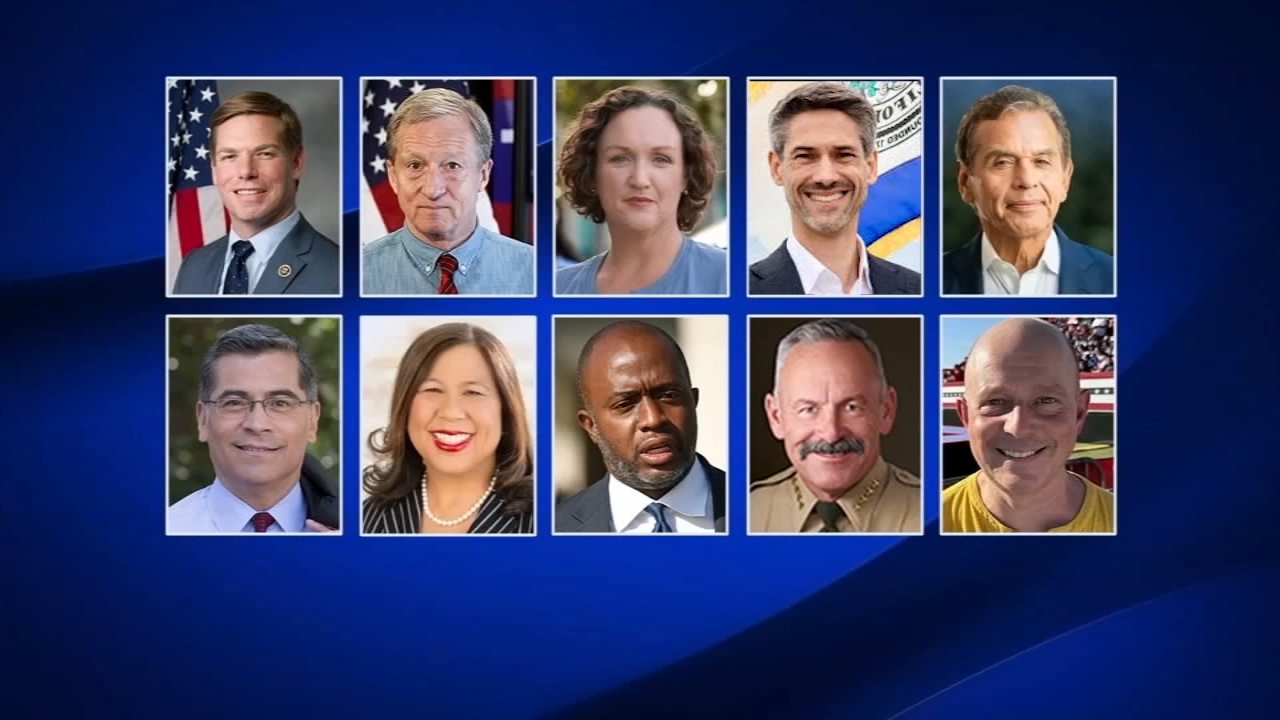
Kamala Harris Reshapes California Governor Race
Kamala Harris Reshapes California Governor Race
The California governor race was already going to be one of the most consequential contests in American politics. Then Kamala Harris entered the frame and turned a routine succession fight into a national stress test for the Democratic Party. California is not just another governorship – it is a policy engine, a donor hub, and a proving ground for the party’s next era. That means any move by Harris lands far beyond Sacramento.
For Democrats, the pressure is obvious. They need a leader who can manage housing, climate, immigration, public safety, and an economy larger than most countries. For rivals, the challenge is even sharper: how do you build oxygen in a race suddenly dominated by one of the most recognizable names in modern politics? The answer will define not just who governs California next, but what kind of Democratic politics survives the decade.
- Kamala Harris changes the math of the
California governor raceby consolidating attention, donors, and institutional support. - California’s governorship matters nationally because the state acts as a political laboratory for Democratic policy and messaging.
- The race is about more than name recognition: voters will still demand answers on affordability, homelessness, energy, and governance.
- Other Democrats now face a strategic choice: confront Harris directly, differentiate on policy, or wait for a lane to open.
- What happens here could preview the party’s next generation and its governing style after years of internal tension.
Why the California governor race suddenly looks national
California politics rarely stays inside California. The state exports ideas, regulations, campaign talent, and media narratives. A serious shift in the California governor race instantly becomes a national event because the office itself sits at the intersection of policy and ambition.
That is especially true with Harris. She is not entering public life as an unknown statewide official looking for a breakout. She arrives with universal name recognition, a long record, and a coalition map that other candidates would spend years trying to assemble. Even before the first debate stage is built, her presence alters donor behavior, media coverage, and the strategic timelines of everyone else in the field.
The race stops being a normal governor contest the moment a figure like Harris gets involved. It becomes a referendum on leadership style, party identity, and whether prominence can still translate into durable state-level support.
That tension matters. California voters are deeply Democratic, but they are not passive. They expect fluency on local crises. A candidate can walk in with a national résumé and still get punished for sounding detached from gas prices, insurance markets, wildfire response, or rent burdens.
Kamala Harris and the power of political gravity
Every major political race has gravity. Some candidates create enough of it to bend the field around them. Harris does that almost by default. Her network spans national donors, elected officials, labor, activist circles, and communities that have seen her rise through California politics for years. That kind of embedded infrastructure is not easy to match.
Name recognition is an asset, not a strategy
This is where elite political coverage often gets lazy. Name recognition helps, but it does not solve the problem of trust. Voters know Harris. The question is what they want from her now. Running for governor is not the same as running on symbolic history or on broad national coalition politics. It is operational. Californians will want a manager, not just a messenger.
That means any Harris campaign would need to answer basic but brutal questions clearly:
- How will she tackle
housing affordabilityat scale? - What is her model for handling
homelessnessbeyond rhetoric? - Can she balance
climate regulationwith affordability and grid reliability? - What does
public safetylook like in a state with stark regional differences? - How would she manage California’s role in fights over
immigration, technology, and federal power?
If those answers are precise, her stature becomes a multiplier. If they are vague, stature becomes a liability because expectations are so much higher.
The donor class will move fast
One underappreciated effect of a heavyweight candidate entering a race is timing compression. Donors hate uncertainty almost as much as candidates do. A Harris candidacy would likely accelerate endorsements and fundraising commitments, forcing lesser-known contenders to either harden their lanes immediately or risk irrelevance.
That does not mean the race is over before it begins. It means the burden on challengers changes. They can no longer campaign as if this is a fragmented field where patient coalition-building will eventually pay off. They need a reason to exist right now.
What Democrats are really fighting about
On the surface, the contest is about who becomes governor. Underneath, it is a fight over what modern Democratic competence actually looks like. The party has spent years navigating a split between moral urgency and managerial credibility. California is where that split is exposed most clearly.
Progressive voters want aggressive movement on climate, inequality, labor rights, and the social safety net. Moderates and institutional players want proof that government can still execute: build homes, process permits, reduce visible disorder, and keep utility bills from exploding. The next governor will be expected to do both.
This is not simply a left-versus-center argument. It is a performance argument: can Democrats govern a complex state in a way that feels effective, affordable, and humane at the same time?
Harris is uniquely positioned in that debate because she can speak to multiple Democratic constituencies. But that broad appeal can also create a classic risk: becoming so coalition-friendly that the campaign message blurs into abstraction. The candidate who names the tradeoffs most honestly may gain more traction than the candidate who tries to promise everything.
Where rivals can still find a lane
If you are running against Harris, you cannot win by pretending she is ordinary. You have to make the race about something she does not automatically own. That means finding one of three lanes.
The executive lane
A challenger can argue that California needs a governor with immediate hands-on governing experience tied directly to state operations. This lane is less about celebrity and more about implementation. It appeals to voters exhausted by chronic dysfunction.
The reform lane
Another strategy is to run as the candidate willing to confront entrenched systems: zoning, procurement, transit delays, energy bottlenecks, or local resistance to housing growth. This approach works only if paired with specifics. Generic reform branding burns out fast.
The outsider-insider hybrid lane
This is the trickiest path but often the most potent. A candidate presents as experienced enough to govern yet distant enough from Sacramento habits to challenge them. In a state where voters want expertise but dislike bureaucracy, that balance can be powerful.
Pro Tip: In high-profile statewide races, the first viable contrast often matters more than the first endorsement. If a rival defines a sharp problem Harris appears less suited to solve, the race becomes competitive faster than pundits expect.
Why California voters may be harder to win than national observers assume
There is always a temptation to read California through national partisan shorthand: deeply blue state, massive Democratic advantage, familiar headline figure. But California’s electorate is more skeptical and more issue-driven than that script suggests.
Voters here live with contradictions that resist easy slogans. They support strong climate policy, but they also worry about cost. They want public investment, but they punish visible waste. They demand compassion, but they also want order. They are proud of the state’s scale and influence, yet increasingly frustrated by how difficult ordinary life can feel.
Any candidate in the California governor race must therefore campaign in two modes at once:
- Aspirational: protecting California’s status as a progressive leader.
- Transactional: proving government can deliver results people can measure in monthly budgets and neighborhood conditions.
Harris has the profile to own the first mode. The second will decide whether that profile converts into durable voter enthusiasm.
What a Harris governorship could mean for policy
Speculation should be disciplined, but it is fair to ask how a Harris-led administration might shape California’s agenda. The likely answer is not ideological rupture. It is selective consolidation: using established Democratic priorities while trying to sharpen delivery and national relevance.
Housing and affordability
This would be the make-or-break issue. Any successful platform would need to connect housing production, zoning reform, infrastructure, and renter pressure into a coherent story. Californians are tired of hearing that the problem is complicated. They know it is. They want visible progress anyway.
Climate and industrial policy
California has long tried to lead on emissions, clean energy, and electric vehicles. The harder question now is whether the state can lead without deepening affordability strain. A future governor must frame climate policy not just as regulation, but as economic design.
Federal confrontation and alignment
Given Harris’s national stature, any governorship would be interpreted through the lens of Washington. That creates upside and risk. She could amplify California’s leverage. But every state decision would also be scrutinized as a proxy for future national ambition.
A California governor with Harris’s profile does not just run a state. She inevitably becomes a signal about where Democratic governance is heading next.
The bigger strategic reality for Democrats
The party’s bench has looked uneven in recent years: deep in talent, but often uncertain in branding. Harris entering the California governor race would offer Democrats an unusually clear, high-visibility test case. Can a nationally known Democrat return to state executive politics and make competence feel exciting again?
That question matters because the party is under pressure on multiple fronts. Voters want stronger responses to affordability. Younger activists want urgency. Older institutional voters want steadiness. Governors increasingly look more relevant than senators in shaping the party’s future because they operate where rhetoric meets systems.
California is the ultimate systems state. If a Democratic leader can show progress there, it strengthens the argument that blue-state governance can still be ambitious and functional. If not, critics inside and outside the party will use the state as evidence that scale has become a permanent handicap.
Why this race matters beyond Sacramento
The easiest mistake is to treat this as a celebrity reshuffle in a safe state. It is not. This is a contest over whether Democrats can translate values into administration in one of the hardest governing environments in the country. Harris raises the stakes because she personifies both the promise and the pressure of that challenge.
She brings history, infrastructure, and instant relevance. But she also brings the expectation that leadership must now be measurable. California voters are not likely to reward symbolism alone. They want lower pressure on daily life and higher confidence that institutions still work.
If Harris can frame herself as the candidate who understands both the symbolism and the spreadsheets, she becomes extraordinarily difficult to beat. If she cannot, the race opens into something far more volatile and revealing.
That is why the California governor race deserves close attention now. It is not just about who gets the office. It is about whether the next phase of Democratic power will be defined by fame, fluency, or execution – and which of those voters still value most when the stakes are finally local.
The information provided in this article is for general informational purposes only. While we strive for accuracy, we make no guarantees about the completeness or reliability of the content. Always verify important information through official or multiple sources before making decisions.