Kennedy Center Delays Deepen
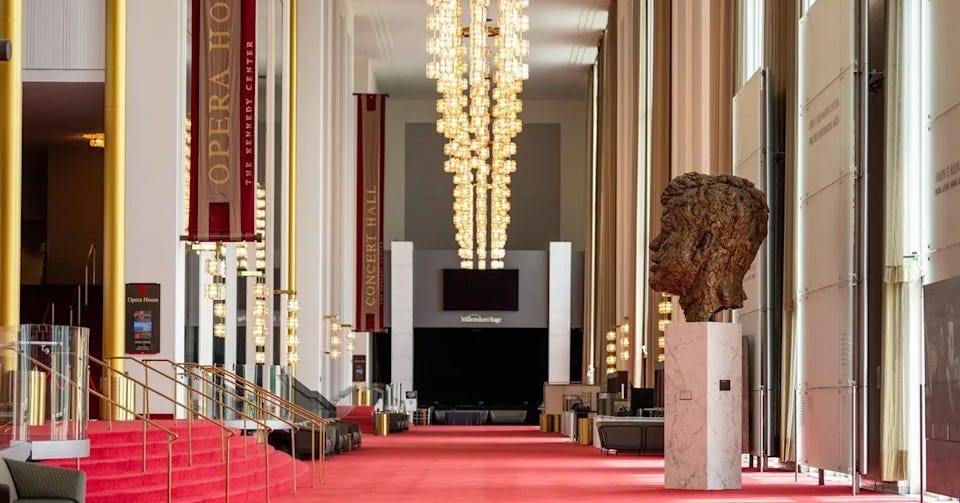
Kennedy Center Delays Deepen
The Kennedy Center delays are no longer just a backstage annoyance. They have become a public test of whether one of the country’s most visible arts institutions can explain what is happening, who is responsible, and when audiences will see meaningful progress. When a federal judge starts asking pointed questions about operations, programming, and renovation plans, the issue is bigger than construction schedules. It is about stewardship, transparency, and whether a cultural landmark can still operate with the confidence donors, artists, and the public expect. Add the image of a giant tarp around a complex that is supposed to represent national prestige, and the optics get worse fast.
- The
Kennedy Center delaysare now a governance problem, not just a facilities problem. - Pressure is building for clearer answers on operations, programming, and renovation timelines.
- Leadership credibility matters because uncertainty can ripple into fundraising and bookings.
- The optics of a prolonged construction or cover-up phase can damage public trust.
- What happens next could shape how major cultural institutions handle large-scale projects.
Why the Kennedy Center delays matter now
The Kennedy Center is not a local venue trying to patch a leaky roof between seasons. It is a national stage with symbolic weight, where delayed decisions can echo far beyond Washington. That is why the current scrutiny matters. Delays in operations and programming are not isolated administrative hiccups. They can affect everything from artist commitments and ticket sales to donor confidence and institutional momentum.
The core problem is simple: when an institution cannot clearly explain what is delayed, why it is delayed, and how long the slowdown will last, speculation fills the gap. That is especially dangerous in a high-visibility cultural complex. Patrons want certainty. Staff want direction. Artists want a reliable calendar. And overseers want assurance that renovation work is not consuming the mission itself.
What the judge is really asking for
At the center of this story is a demand for answers. That may sound procedural, but in practice it cuts to the heart of institutional accountability. Questions about programming delays, operational disruption, and renovation status are not merely technical. They are strategic. They force leadership to show whether there is a coherent plan or just a series of reactions to problems as they arise.
The presence of a giant tarp over parts of the complex adds a visual shorthand for that uncertainty. To the public, it can read like temporary work that has quietly become permanent. To insiders, it can signal phased construction, contingency planning, or even stalled execution. The danger is that without a clear explanation, the most visible symbol becomes the story itself.
When a marquee institution cannot narrate its own renovation, the optics start doing the talking for it.
Operations cannot drift while the brand stays fixed
Major cultural institutions often struggle with a familiar mismatch: their brand remains polished while their internal operations become messy. That mismatch is exactly where reputational damage starts. If programming is delayed, staff members absorb the friction first. Then audiences notice. Then funders ask whether their support is sustaining excellence or covering dysfunction.
The lesson is not that renovation is bad. The lesson is that renovation without disciplined communication becomes a liability. In a setting like the Kennedy Center, timing is everything. Small delays can be absorbed. Repeated delays suggest structural issues in planning, budgeting, or oversight.
The renovation question is bigger than construction
Renovation stories often get framed like facilities updates, but that is too narrow. A major arts complex renovation affects programming capacity, accessibility, audience flow, labor coordination, and even the institution’s identity. If the project is complex enough to require visible coverings and adjustments, then it must also be accompanied by equally visible management.
That is where many large institutions stumble. They treat the construction timeline as a separate universe from the public-facing mission. It is not. If rehearsals move, if halls close, if events are reconfigured, then the mission is being shaped by the work. Transparency should move at the same pace as the construction barriers.
For leadership, this means answering a few practical questions:
- What exactly is the renovation scope?
- Which operations are affected now, and which are coming next?
- How is programming being prioritized during the disruption?
- What milestones define progress, not just activity?
Those are not just operational details. They are the minimum requirements for public trust.
Leadership under pressure at the Kennedy Center
When an arts institution enters a period of scrutiny, leadership becomes the product. Not the ticket sales. Not the renderings. Leadership. The public wants to know whether executives can manage complexity without losing sight of the artistic mission. A strong arts leader should be able to translate construction updates into a coherent institutional story.
That means balancing three competing needs: keep the lights on, keep the calendar moving, and keep stakeholders informed. Miss any one of those, and the institution starts to look reactive. Miss two, and you are in crisis management territory.
This is where the Kennedy Center story becomes instructive for the broader sector. Cultural institutions often rely on prestige to cushion operational ambiguity. But prestige only goes so far. Once delays become visible, prestige can even backfire because the gap between expectation and reality gets wider.
Why communication is now a core operations skill
Modern arts management is not just about curation and fundraising. It is also about crisis communication, project sequencing, and institutional transparency. If a renovation affects audience access or program delivery, leadership has to explain the tradeoffs in plain language. Otherwise, the public assumes the worst.
That is especially true when a visual symbol like a tarp becomes part of the story. People do not need an engineering brief to understand that something is unfinished. They need reassurance that unfinished does not mean unmanaged.
In public-facing institutions, silence around delays can be more damaging than the delay itself.
What this says about the future of major arts venues
The Kennedy Center situation is not an isolated case. Across the cultural sector, institutions are juggling aging infrastructure, higher operating costs, and rising expectations for accessibility and programming quality. Renovations are often unavoidable. The question is whether leaders can execute them without letting the institution lose momentum.
This is where the future gets interesting. Big venues will likely need to adopt more transparent project management practices, including clearer milestone reporting and more frequent stakeholder updates. They may also need to rethink how they phase work so that construction does not eclipse the public mission for too long.
There is also a reputational lesson here. Donors and audiences are increasingly attuned to whether institutions are operationally competent, not just culturally significant. A complex that appears stuck under layers of construction can quickly become a metaphor for bureaucratic drag. That is hard to reverse.
Pro tips for reading this kind of institutional crisis
If you are following the Kennedy Center delays as a case study, focus on the signals that separate routine disruption from deeper dysfunction:
- Watch the timeline. A short delay is normal. Repeated slippage is a warning sign.
- Track the language. Vague promises usually mean the plan is not fully baked.
- Look at programming changes. When the calendar shifts, the mission shifts with it.
- Pay attention to visuals. Tarps, barriers, and closures are not just cosmetic. They shape public perception.
- Follow governance, not just construction. The real issue may be oversight, not the renovation itself.
Why this matters beyond one building
It would be easy to dismiss this as a niche arts-management dispute. That would miss the larger point. Institutions like the Kennedy Center sit at the intersection of public trust, private support, and cultural authority. When they stumble, the fallout touches everyone who depends on them: performers, staff, audiences, and civic leaders.
The real stakes of the Kennedy Center delays are about whether elite institutions can still execute complex projects without losing transparency. If the answer is yes, then the current scrutiny could lead to better governance. If the answer is no, then the tarp is more than a construction cover. It is a symbol of a deeper institutional stall.
Either way, the demand for answers is the right one. A national arts center should not ask the public for patience without also offering clarity. The next phase will reveal whether leadership can turn scrutiny into a reset, or whether the delays keep compounding until the institution’s story becomes one of drift instead of direction.
The information provided in this article is for general informational purposes only. While we strive for accuracy, we make no guarantees about the completeness or reliability of the content. Always verify important information through official or multiple sources before making decisions.