Louisiana Senate Race Reshapes Republican Power
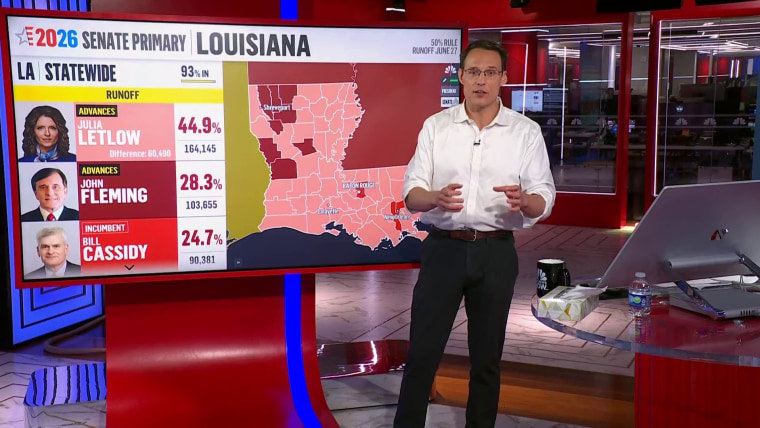
Louisiana Senate Race Reshapes Republican Power
The Louisiana Senate race is not just another regional contest: it is turning into a live stress test for the Republican Party’s internal hierarchy, donor class, and ideological future. When a sitting senator faces pressure from ambitious in-state rivals, the fight quickly stops being local. It becomes a proxy battle over who still controls the GOP brand, how much room there is for dissent, and whether political survival now depends more on policy results or tribal loyalty. That is why Louisiana matters far beyond Baton Rouge or Washington committee rooms. What happens here could preview how Republican primaries evolve in the next cycle: more confrontational, more personality-driven, and more expensive. For voters, operatives, and party insiders, this is the kind of race that reveals where power actually sits when the campaign slogans fall away.
- The Louisiana Senate race is shaping up as a broader Republican power struggle.
- Incumbency may not be enough if party activists and donors decide ideological alignment matters more.
- Potential challengers change the race before they even announce by forcing early positioning and coalition testing.
- National Republicans will watch Louisiana closely for clues about candidate viability and party discipline.
Why the Louisiana Senate Race Matters Now
Every Senate race carries some local texture, but only a few become national diagnostic tools. Louisiana is one of them. The state is deeply conservative, the Republican bench is active, and the incentives for ambitious politicians are obvious: if there is even a hint of vulnerability, contenders will explore it.
The central question is not simply who can win a seat in a Republican-leaning state. It is who can define what a winning Republican looks like in the current era. Is the party rewarding traditional conservative governance, institutional seniority, and policy fluency? Or is it increasingly favoring candidates who can channel grievance, command media attention, and demonstrate total alignment with the movement’s emotional center?
This is what makes the Louisiana Senate race strategically important: it is less about one office and more about the rules of promotion inside the modern GOP.
That distinction matters because Senate primaries are now often contests over signaling. Voters do not just compare records. They evaluate posture, combativeness, and whether a candidate appears culturally and politically synchronized with the base.
The Republican Collision Taking Shape
Louisiana Republicans are not operating in a vacuum. A possible clash involving established figures and rising alternatives immediately creates several layers of pressure. First, it tests whether incumbents can still rely on conventional assets like fundraising networks, committee influence, and a long voting record. Second, it gives challengers an opening to argue that experience has become caution, and caution has become weakness.
That is the basic dynamic haunting many incumbents across both parties, but especially Republicans in highly conservative states. If an incumbent has ever broken with the dominant faction, even tactically, that break can become the centerpiece of a challenger message. A vote, a statement, or even a perceived hesitation can be repackaged into a loyalty referendum.
Incumbency Still Matters, But Less Than It Used To
There was a time when incumbency offered a near-automatic advantage in Senate races. It still helps. Name recognition matters. Donor relationships matter. Constituent service matters. But in the current political environment, incumbency is no longer a shield if the activist ecosystem decides a senator has drifted.
That shift is especially relevant in a state like Louisiana, where voters often respond strongly to authenticity, clear ideological identity, and a candidate’s perceived willingness to fight. The old argument – that seniority brings influence and influence brings benefits back home – is still real, but it now competes with a more combustible argument: that influence is meaningless if it comes with compromise.
Potential Challengers Can Redefine the Race Early
One of the most underrated features of a high-profile Senate contest is that it changes before anyone casts a ballot. The mere possibility of a challenge forces donors to pause, consultants to pick sides, and allied interest groups to assess risk. That creates an invisible primary long before filing deadlines.
In practical terms, a threatened incumbent may have to accelerate fundraising, sharpen messaging, and spend more time proving ideological credibility than promoting legislative accomplishments. Meanwhile, a possible challenger can gain leverage simply by looking plausible.
That is how power moves in modern politics: not only through declared campaigns, but through anticipation.
What Louisiana Tells Us About the GOP’s Direction
The Louisiana Senate race also offers a clean lens into a broader Republican tension. The party is still sorting out how to balance governing competence with movement expectations. In many primaries, those values are not complementary. They can be in direct conflict.
An incumbent can point to legislative work, coalition building, and policy outcomes. A challenger can counter with a simpler and often more emotionally potent critique: results do not matter if voters believe the senator failed a core loyalty test. That formula has become one of the defining patterns in contemporary Republican primaries.
The candidate who best frames the race as a judgment on identity, not résumé, often gains the early advantage.
That does not mean experience is irrelevant. It means experience now has to be translated into base-compatible language. A senator cannot merely say, “I delivered.” The senator may also need to say, “I fought the right enemies, took the right risks, and never forgot who sent me.”
The Trump Factor Without Saying the Same Thing Twice
No serious analysis of a Republican Senate primary can ignore the gravitational pull of Donald Trump. Even when he is not physically present, his influence shapes endorsements, donor behavior, and voter assumptions. Candidates are judged in relation to him, whether they want to be or not.
That dynamic complicates any race involving an incumbent with an independent streak or a nuanced record. Nuance is difficult to market in a primary where clarity of allegiance is often more valuable than legislative complexity. Challengers understand this. They tend to simplify the race into a binary choice: with the movement or against it.
That framing may be reductive, but it is politically effective because it lowers the information burden on voters. Instead of evaluating dozens of policy details, they assess a candidate’s tribe.
How the Campaign Math Could Work
If this race intensifies, expect three tracks to emerge quickly: money, message, and machine.
Money
Fundraising will be a major signal, not just a practical necessity. Early dollars indicate whether national groups believe the race is competitive and whether local elites think an incumbent is stable or exposed. A flood of money into a challenger operation would not just finance ads. It would validate the candidacy.
Message
The strongest message in a Republican primary is usually the one that feels least processed. Voters reward emotional clarity. If an incumbent leans too heavily on Senate procedure, committee seniority, or bipartisan optics, that message can sound dated unless it is paired with sharper political language.
A challenger, by contrast, will likely focus on contrast. The formula is familiar because it works:
- Cast the incumbent as disconnected from the base.
- Turn selected votes or statements into a character argument.
- Offer a more confrontational style as proof of conviction.
Machine
Louisiana politics still rewards organization. Endorsements, local networks, faith-based outreach, and parish-level relationships can all matter. A campaign that combines national enthusiasm with a durable local machine can be dangerous. A campaign that has only television money and social buzz may discover that attention does not automatically become turnout.
Why This Matters Beyond Louisiana
The temptation is to treat this as another colorful Southern power struggle. That would miss the larger point. The Louisiana Senate race could become a case study in how Senate Republicans police internal dissent and evaluate electability versus purity.
If an incumbent with national experience and establishment support struggles, other senators will notice. They may become more reluctant to break with the party’s dominant mood. They may also invest earlier in base reassurance, knowing that independence can be reframed as betrayal.
On the other hand, if a challenger overplays the purity case and fails to build a broader coalition, the result could remind party strategists that not every primary can be won through intensity alone. There is still such a thing as donor fatigue, message oversaturation, and ideological overreach.
Louisiana may be deciding more than a nominee. It may be helping define the acceptable boundaries of Republican behavior in the Senate.
The Voter’s Real Choice
For all the insider intrigue, voters are being asked a fairly direct question. Do they want a senator who argues that experience, influence, and policy craftsmanship still matter in Washington? Or do they want a senator whose primary value proposition is confrontation, symbolic clarity, and movement alignment?
That is not a trivial distinction. It affects how a senator legislates, how they negotiate, how they communicate, and how they represent a state during moments of national tension. A politics built entirely on conflict can energize a base, but it can also narrow the practical room to govern. A politics built entirely on institutionalism can appear competent, but it can also look detached in an era that rewards visible intensity.
What to Watch Next
The next phase of this race will likely be defined by signals rather than final decisions. Watch for endorsement whispers, fundraising tallies, strategic travel, and changes in tone. A politician preparing to run often starts by changing how they talk. An incumbent preparing for a serious challenge usually starts by tightening every public message.
There are a few especially telling indicators:
- Whether major Republican donors unify early or hedge.
- Whether conservative activists frame the contest as unfinished business.
- Whether the incumbent leans into accomplishment or pivots hard to contrast.
- Whether national party figures try to cool the race or quietly encourage it.
Those signals will reveal whether Louisiana is heading toward a routine renomination or a bruising referendum on Republican identity.
The Bottom Line on the Louisiana Senate Race
The most important thing about the Louisiana contest is not who can produce the sharpest ad or land the cleanest debate line. It is whether Republican voters still place a premium on institutional strength, or whether every major race is now vulnerable to a loyalty-based insurgency.
That is why this campaign already matters. It captures the instability inside a party that is still powerful, still disciplined in many ways, but deeply unsettled about what kind of leadership it wants to reward. The winner will claim a Senate seat. The real prize, though, may be the authority to define what Republican legitimacy looks like in the next chapter.
The information provided in this article is for general informational purposes only. While we strive for accuracy, we make no guarantees about the completeness or reliability of the content. Always verify important information through official or multiple sources before making decisions.