Mali Attacks Expose a Worsening Security Vacuum
Mali Attacks Expose a Worsening Security Vacuum
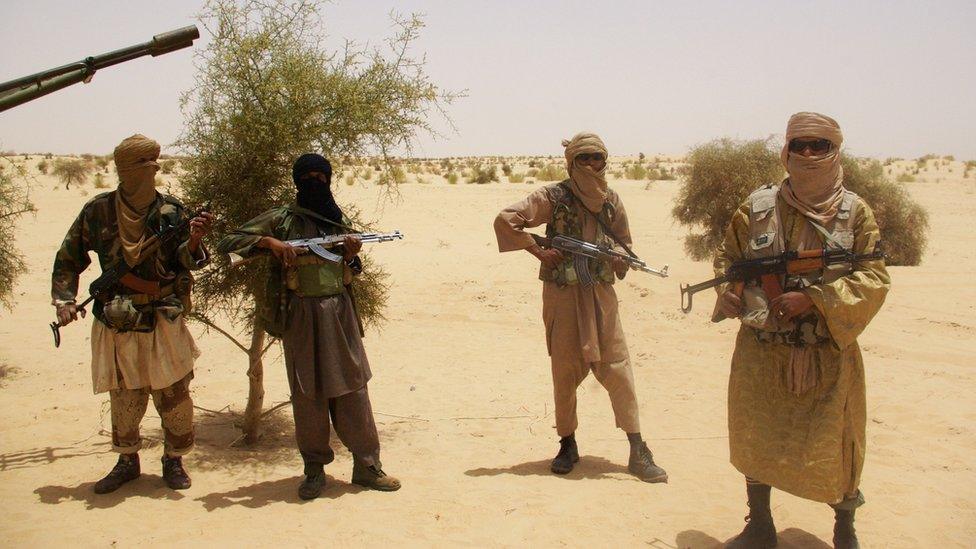
The latest Mali attacks are not just another grim headline from the Sahel. They are a warning shot about a state losing its grip over territory, civilians caught between armed groups, and a security strategy that still is not delivering safety where it matters most. Reports of at least 30 people killed in coordinated violence in central Mali point to a familiar but increasingly dangerous pattern: attackers exploiting weak infrastructure, thin military presence, and local fear to strike fast and disappear.
For observers of West Africa, this is the real pressure point. When central Mali destabilizes further, the fallout does not stay local. It affects trade routes, regional military planning, humanitarian access, and the broader credibility of governments promising order in the Sahel. The tragedy is immediate, but the implications are strategic.
- Mali attacks in the country’s center highlight worsening insecurity despite years of military operations.
- Civilians remain the primary victims as armed groups exploit weak state control and local fragmentation.
- The violence reinforces how central Mali has become a core battleground in the wider Sahel crisis.
- Short-term tactical responses are failing to solve deeper governance, intelligence, and protection gaps.
Why the latest Mali attacks matter far beyond one incident
Central Mali has become one of the most volatile theaters in the Sahel because it combines nearly every structural weakness a modern state struggles to manage at once: contested territory, communal tension, underdeveloped roads, limited public services, and multiple armed actors with overlapping motives. When fresh Mali attacks hit this region, they reveal more than a death toll. They reveal the durability of the insurgent playbook.
That playbook is brutally effective. Strike isolated targets. Hit civilians, villages, or transport arteries. Undermine confidence in the state. Force local communities into self-protection, displacement, or accommodation with armed groups. Repeat until fear becomes governance.
This is why central Mali remains such a difficult security challenge. It is not simply a battlefield. It is an environment where authority is constantly negotiated at the village level, where rumor can move faster than official communication, and where military gains often prove temporary if institutions do not follow.
When attacks continue in areas under sustained security focus, the message is stark: force alone is not creating durable control.
What happened in central Mali
According to the source report, armed fighters killed at least 30 people in attacks in central Mali. While details in fast-moving conflict reporting often evolve, the broad outline fits a now familiar trend in the country: coordinated violence by non-state armed actors targeting vulnerable communities in areas where response times are slow and deterrence is weak.
The significance is not just the casualty figure, though that alone is devastating. It is the fact that such attacks remain possible after years of counterinsurgency campaigns, foreign military involvement, political upheaval, and repeated promises to restore order. Central Mali continues to operate under a persistent threat environment, and local communities are paying the price.
The tactical logic behind these assaults
Armed groups in Mali do not need to hold every road or town permanently to shape reality on the ground. They need only demonstrate that the state cannot reliably protect people. A successful assault can have effects that extend well beyond the attack site:
- Psychological impact: fear spreads faster than official reassurance.
- Economic disruption: markets, transport, and farming activity stall.
- Political damage: public trust in authorities declines.
- Operational advantage: security forces are stretched into reactive deployments.
This is one reason casualty numbers, while crucial, tell only part of the story. The strategic objective of such violence is often to reshape civilian behavior and weaken state legitimacy.
The deeper problem is governance, not only firepower
Mali’s leadership, like many governments facing insurgencies, confronts a hard truth: military action can disrupt armed groups, but it rarely resolves the conditions that let them regenerate. Central Mali has long suffered from weak administrative reach, limited justice mechanisms, land and resource tensions, and distrust between communities and state institutions.
That matters because insurgent movements thrive where the state is present mainly through force, absent in services, and inconsistent in accountability. If residents experience officials as distant, corrupt, or ineffective, armed actors can manipulate those grievances, even when they bring their own coercion and brutality.
Why local protection keeps breaking down
Several structural issues make civilian protection extraordinarily difficult in central Mali:
- Distance and terrain: many at-risk communities are hard to reach quickly.
- Intelligence gaps: actionable local information is difficult to gather and verify.
- Fragmented armed landscape: multiple groups and militias complicate attribution and response.
- Trust deficits: civilians may hesitate to share information if they fear retaliation.
- Institutional weakness: security gains often are not reinforced by courts, schools, health services, or local administration.
Put simply, the state can clear an area without truly securing it. That distinction is central to understanding why recurring Mali attacks remain possible.
The Sahel pattern is becoming harder to ignore
Mali is not an isolated case. Across the Sahel, governments are confronting a security environment where insurgent and militant networks adapt faster than conventional state responses. Central Mali sits inside that broader regional arc, where instability crosses borders more easily than policy coordination does.
For policymakers, this raises an uncomfortable question: what counts as success in a conflict where militant capacity can survive leadership losses, shift routes, recruit opportunistically, and exploit local disputes? If the benchmark is simply the number of operations conducted, the answer can look better on paper than it feels on the ground.
The real metric is whether ordinary people can travel, farm, trade, and sleep without fear. By that measure, central Mali is still in crisis.
Why regional consequences matter
The implications of renewed violence in Mali extend beyond national borders:
- Displacement pressure: attacks can trigger new population movements.
- Trade disruption: insecurity affects informal and formal commerce routes.
- Security spillover: armed actors can exploit porous frontiers.
- Diplomatic strain: neighboring states face pressure to coordinate despite differing priorities.
This broader context is why each major incident in central Mali deserves sustained attention rather than episodic outrage.
What authorities need to do next
There is no clean, one-step fix for central Mali. But there are clear areas where response quality matters. Governments and security planners tend to overvalue visible deployments and undervalue the slower work of building credible local resilience. A more effective strategy would combine immediate protection with institutional follow-through.
Priority one: faster civilian protection
Rapid response capability matters. Communities under threat need clearer reporting channels, quicker deployment capacity, and stronger coordination between local authorities and security units. In practical terms, effective crisis response increasingly depends on systems that are basic but often missing: reliable communication networks, road access, and trusted local liaison structures.
Pro Tip: In fragile security environments, warning systems only work if people believe reporting danger will produce action. Trust is part of infrastructure.
Priority two: hold territory with services, not slogans
Retaking or patrolling an area is only the first phase. Durable control requires schools reopening, dispute resolution functioning, markets operating, and local administration returning in ways people see as fair. Otherwise, security operations become circular: deploy, disrupt, withdraw, repeat.
Priority three: improve information quality
Conflict zones run on incomplete information. False attribution, delayed reporting, and politically useful narratives can all distort response. Authorities need stronger local intelligence networks, but also stronger verification standards. Even simple operational workflows can matter:
report incident - verify source - assess threat radius - dispatch response - communicate publicly
That kind of chain sounds obvious. In fragile environments, it often breaks at multiple points.
Why this matters for civilians first
It is easy for coverage of conflict to slip into abstractions: insurgency, stabilization, sovereignty, counterterrorism. But the practical reality of repeated Mali attacks is much more immediate. People change how they live. Farmers avoid fields. Traders cancel routes. Children miss school. Families flee at rumor alone because the cost of waiting for confirmation is too high.
That cumulative damage is what turns insecurity into social collapse. Long before a state formally loses control, daily life starts reorganizing around fear. That is the real strategic win for armed groups and the real strategic loss for any government trying to prove it governs.
Security failure is not only measured in territory lost. It is measured in ordinary routines abandoned.
What to watch next after these Mali attacks
The next phase matters almost as much as the attack itself. Analysts should watch for several signals in the aftermath:
- Whether officials provide a clear and credible public account of what happened.
- Whether security forces increase protection in surrounding communities, not just at the attack site.
- Whether displacement rises in nearby areas.
- Whether local leaders call for self-defense measures, which can deepen fragmentation.
- Whether the incident prompts policy changes or simply another cycle of condemnation.
If the response is limited to statements and short-lived deployments, the structural picture likely remains unchanged. If authorities pair accountability with visible protection and governance measures, there is at least a path toward rebuilding confidence.
The bottom line on the security crisis in Mali
The latest violence in central Mali is devastating on its own terms, but it also functions as a larger stress test. It tests whether the state can protect civilians. It tests whether military pressure can translate into durable stability. And it tests whether the broader Sahel strategy has moved beyond reactive force into something more credible and lasting.
Right now, the answer looks troubling. The persistence of major Mali attacks suggests that the underlying security vacuum remains very much alive. Until governance, intelligence, civilian trust, and rapid protection improve together, each new attack will feel less like an exception and more like the system working exactly as it currently does.
That is the real warning from central Mali: insecurity is no longer just recurring. It is becoming normalized – and that may be the most dangerous development of all.
The information provided in this article is for general informational purposes only. While we strive for accuracy, we make no guarantees about the completeness or reliability of the content. Always verify important information through official or multiple sources before making decisions.


